This article details a production-grade coupon optimization system for e-commerce checkout, replacing greedy algorithms with bounded DFS search, four-layer pruning, and DDD-modeled rule engine separation to handle complex heterogeneous constraints while ensuring stability via hard limits, timeout fallback, snapshots, and gradual rollout.
XXL-JOB v3.1.0 introduces AI executors with built-in handlers for Ollama, Dify, and OpenClaw, letting developers schedule LLM calls as standard cron jobs with unified retry, logging, and dynamic parameter configuration — no separate AI orchestration system needed.
The article explains that MCP's readOnlyHint is a server-declared hint, not an enforceable guarantee; clients must treat annotations as untrusted unless from verified servers, and true read-only enforcement requires execution-layer permissions like database roles, while also noting data exfiltration risks via openWorldHint.
This article introduces FastExcel, a high-performance Java library for Excel processing that succeeds EasyExcel, detailing its streaming API, entity mapping, read/write code examples, PDF conversion, and performance advantages over its predecessor.
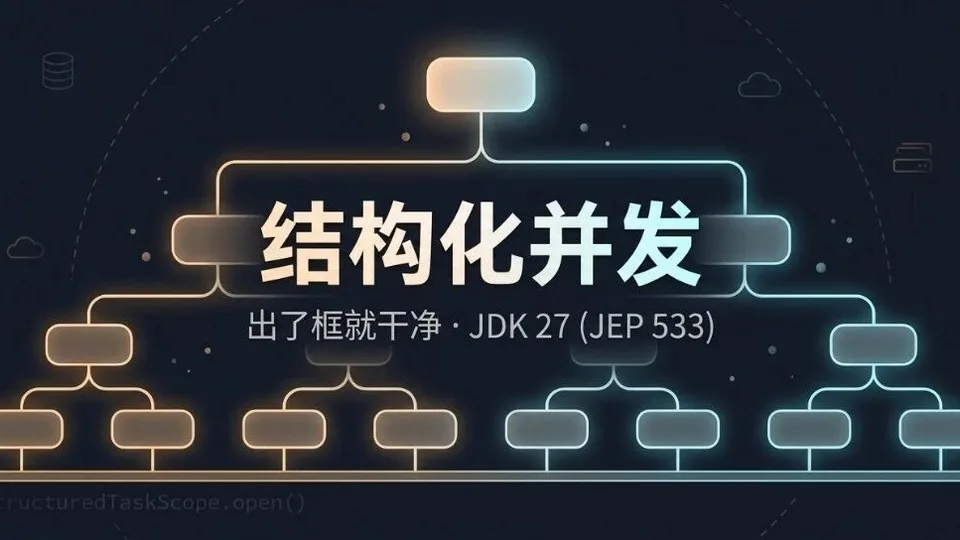
This article explains Java's Structured Concurrency API (StructuredTaskScope) introduced in Project Loom, covering its core concepts, Joiner policies for failure handling, cancellation propagation via thread interruption, timeout configuration, ScopedValue for context propagation, JSON thread dump debugging, and API evolution across JDK 19-27.
The article details OntoL7.0's technical architecture after migrating business data to MySQL8, maintaining a single codebase with two isolated data stores (MySQL for business, SQLite for system) plus graph and vector storage, using a dialect translation layer to convert SQLite syntax to MySQL at the driver level.
This tutorial explains how to install Java 7 and Java 8 on Windows, configure version-specific environment variables (JAVA_HOME7, JAVA_HOME8), set classpath and PATH dynamically, remove system Java executables, and verify the active JDK version using the command line.
The article explains why scaling a single agent to thousands requires load-testing capacity, releasing resources during waits, using bounded queues and backpressure, enforcing tenant quotas and isolation, handling cancellations without duplicating external actions, and validating failure scenarios like cold starts and process crashes.
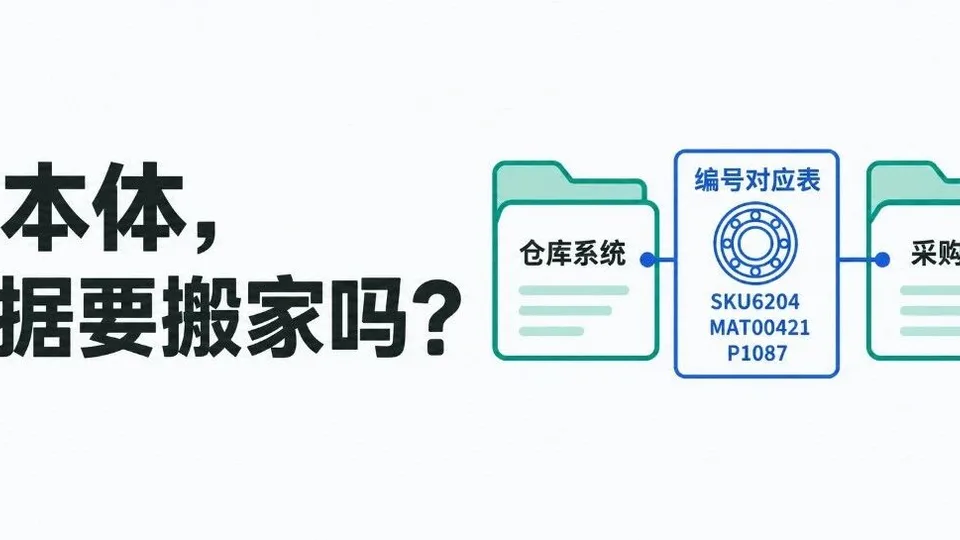
This article explains how to integrate ontologies with existing systems by reusing master data and interfaces, verifying product and warehouse identities, aligning quantity units, choosing appropriate data access patterns (direct query, cache, or replica), and establishing reconciliation and permission checks — without requiring a full data migration.
This article demonstrates how to implement Redis cache warming in Spring Boot using an abstract cache class, ApplicationContextAware utility, and CommandLineRunner to preload hot data at startup, with a concrete NewsCache example showing RedisTemplate integration and automatic cache reload on expiration.
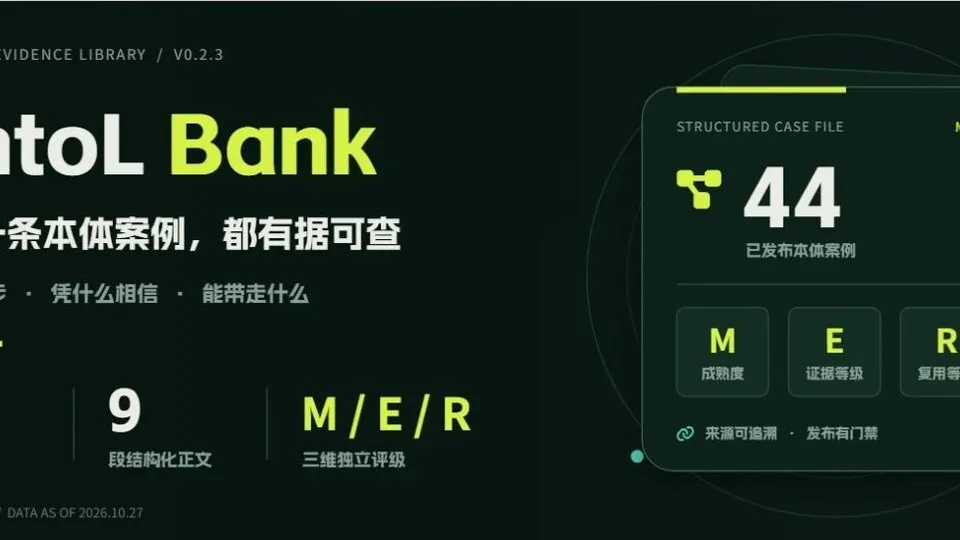
OntoL Bank 0.2.3 exposes 44 ontology cases with a three-dimensional M/E/R rating system, nine-section structured details, strict publish gates, an AI assistant that only edits drafts, and a deployment stack on SQLite/MySQL with self-hosted frontend.
This article details the evolution of a unified login system covering phone-based registration, third-party OAuth integration, a normalized database schema separating user profiles from authentication methods, and carrier-based one-click login that reduces authentication time from 20 seconds to 2 seconds.
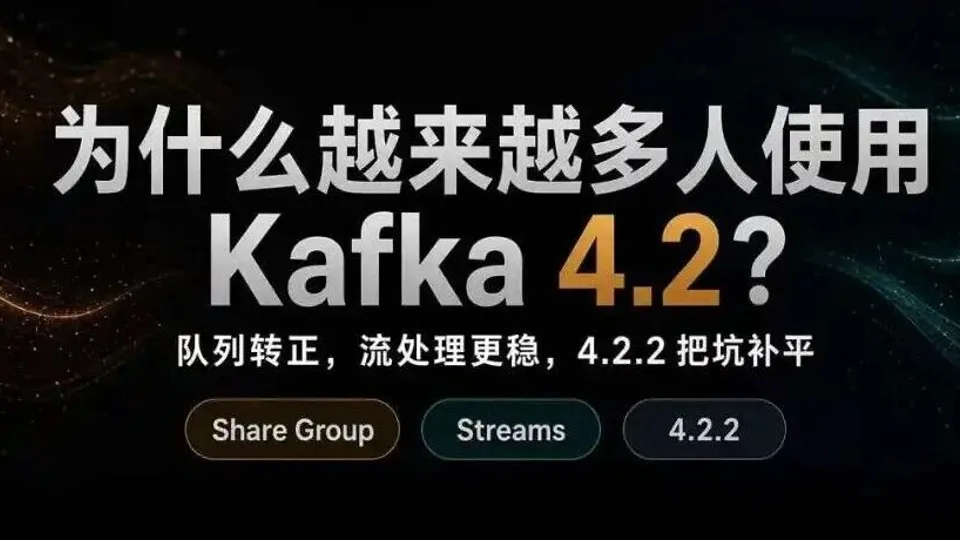
Kafka 4.2 introduces Share Groups (KIP-932) allowing multiple consumers to process records from the same partition concurrently using fetch locks and explicit acknowledgments (ACCEPT, RELEASE, REJECT, RENEW), while Kafka Streams gains server-side rebalancing (KIP-1071) and dead-letter queues (KIP-1034); version 4.2.2 adds 33 fixes including exactly-once checkpoint cleanup, deadlock resolution, and latency metric corrections.
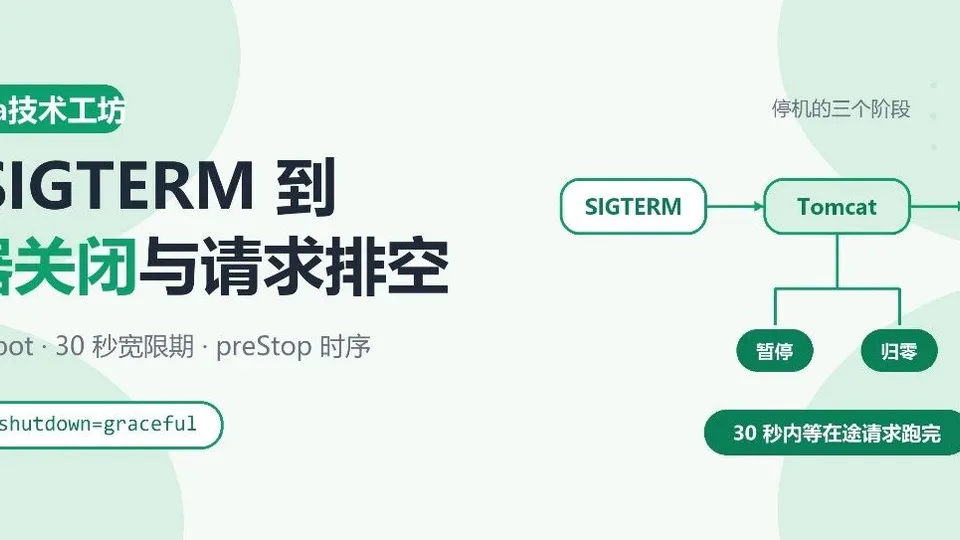
This article dissects Spring Boot's graceful shutdown process, explaining how SIGTERM triggers request draining, the interplay between server.shutdown modes, Lifecycle phases, thread pool behavior, SmartLifecycle ordering, and Kubernetes terminationGracePeriodSeconds, with reproducible experiments showing how misconfigured timeouts cause deployment errors.
This article explains how JD-hotkey detects hot keys in milliseconds using a lightweight worker cluster, pushes them to application JVM caches via Caffeine, and reduces Redis read pressure by over 50% during high-concurrency events like flash sales.
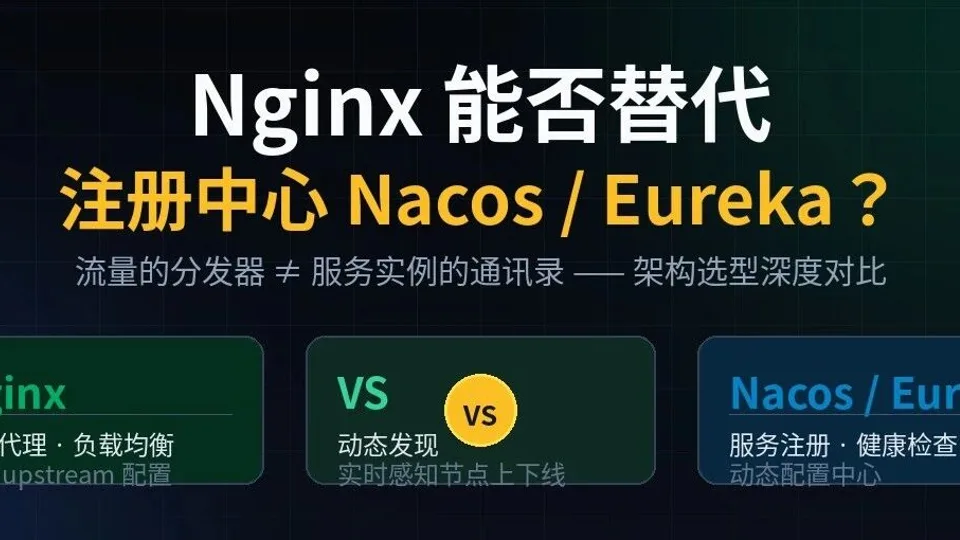
This article explains why Nginx cannot fully replace service registries such as Nacos or Eureka, detailing differences in dynamic instance awareness, load balancing approaches, core responsibilities, and health checks, while noting scenarios where Nginx alone suffices for simple, static backends.
This article analyzes IndexMap, a Rust crate providing an insertion-order preserving hash map with HashMap-level lookup performance and significantly faster iteration, covering its API, internal design using a dense entry vector plus hash index, benchmark results against HashMap and BTreeMap, and practical use cases like deterministic serialization and order-book queues.
vLLM's PR #63199 introduces a dedicated FP8 W8A8 Blockscale GEMM kernel for AMD's gfx1151 (RDNA 3.5) architecture, accelerating specific small-batch matrix multiplications by 1.70–2.54x and improving end-to-end generation throughput by ~6.8% on Ryzen AI MAX+ 395, though the PR remains in draft and covers only a subset of FP8 operations.
This article shares practical lessons from implementing unitized architecture for an e-commerce platform's cross-region dual-active deployment, covering sharding strategies, traffic routing, data classification, consistency trade-offs, hidden risks, and a decision checklist for when to adopt unitization.