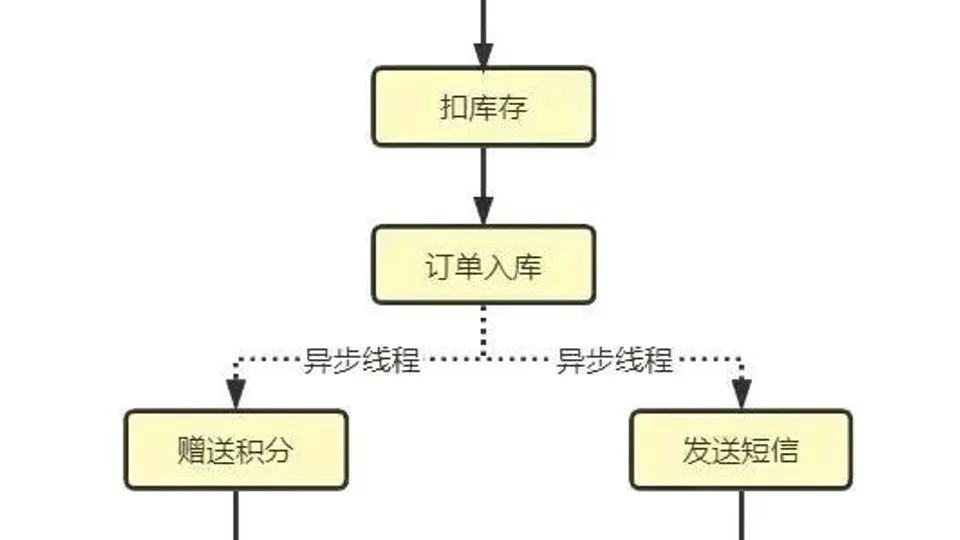
This article explains cache preheating concepts and demonstrates a complete Spring Boot implementation using an abstract cache class, ApplicationContext utility, CommandLineRunner for startup loading, and a concrete NewsCache example with RedisTemplate to load hot data at startup, reducing cache penetration and database load.
This article explores eight ways to implement asynchronous programming in Java, including Thread, Future, CompletableFuture, Spring @Async, ApplicationEvent, message queues, Hutool ThreadUtil, and Guava ListenableFuture, with code examples and trade-offs for each approach.
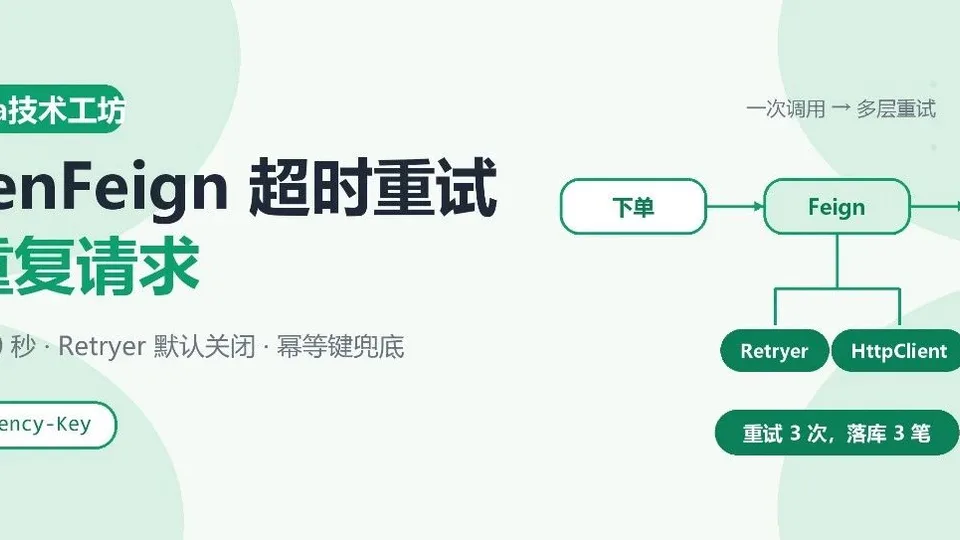
This article analyzes how OpenFeign's default timeout and hidden retry layers (Feign, LoadBalancer, HttpClient, Nginx) cause duplicate requests, demonstrates a reproducible case where a 12-second downstream service triggers three retries creating duplicate orders, and presents a database unique-index idempotency pattern to prevent duplicates.
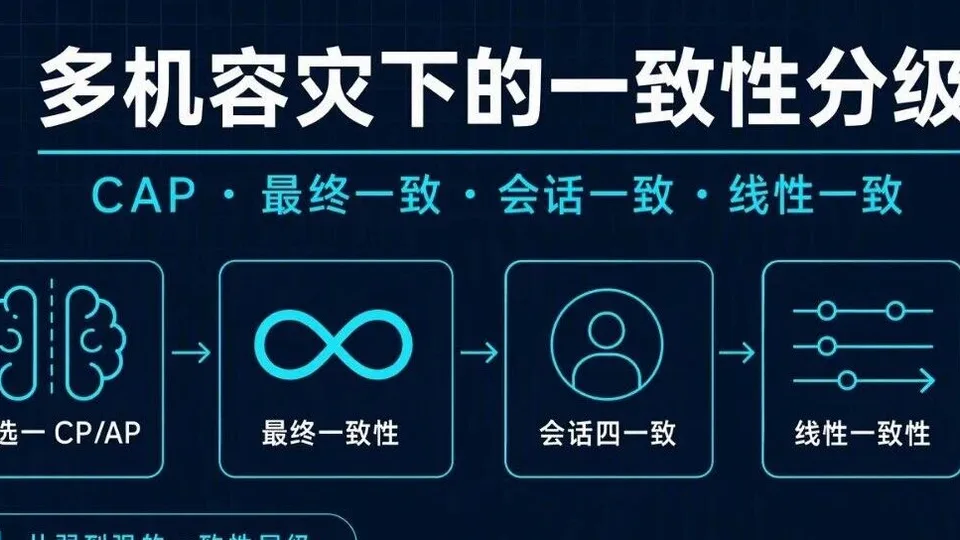
This article explains why CAP theorem is insufficient for architecture decisions, critiques eventual consistency's vagueness, defines four session-based consistency models, details linearizability as the gold standard, and provides a decision chain for selecting consistency levels based on business needs and cost.
This article details the four conditional gates—client capability extension, feature flags, session type, and call origin—that determine whether an MCP tool call becomes a persistent task in Claude Code, explaining why tasks work in terminal CLI but silently degrade in CI, VS Code, or subagents, and provides decision tables for deployment scenarios.
This document transforms the 'Business-Finance Single Account' design slides into an executable implementation blueprint for the OntoL ontology product, detailing a five-layer architecture, core object models, action schemas, semantic layer governance, budget control gates, simulation capabilities, and a four-phase rollout plan with acceptance criteria.
This article analyzes Kero, a Go-based cross-platform terminal that uses a persistent kerod daemon to manage AI agent sessions, detailing its agent-driven CLI, session state tracking, remote host support, and the author's fork adding UI enhancements like a frog sprite, transparency controls, session history, and directory browsing.
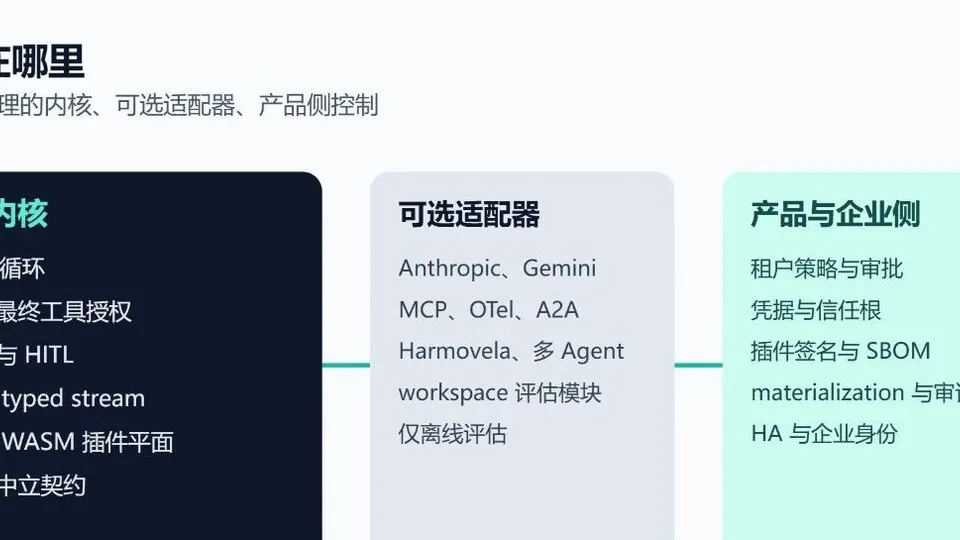
PRAXO-CORE 2.5.0 introduces a conformance test suite, hardens its local filesystem VFS against path traversal edge cases, and formalizes event/OpenTelemetry schemas plus plugin trust/SBOM handoffs to make agent governance boundaries explicit and verifiable in Go products.
This article explores Jetty 12's architectural rewrite decoupling core from Servlet, and details Jetty 12.1's new features including Jakarta EE 11 support, a pluggable compression layer with gzip, Brotli, and Zstandard, a unified deployer, multi-authenticator flexibility, and a showcase combining virtual threads, EE11 servlets, and multi-algorithm compression.
This article explains why silent token refresh is needed to prevent sudden logouts, demonstrates backend automatic token renewal using Java JWT (jjwt 0.9.1) with Maven dependencies, details the dual-token (AT/RT) frontend pattern for security and convenience, and discusses handling edge cases like long-idle form submissions that cause 401 errors.
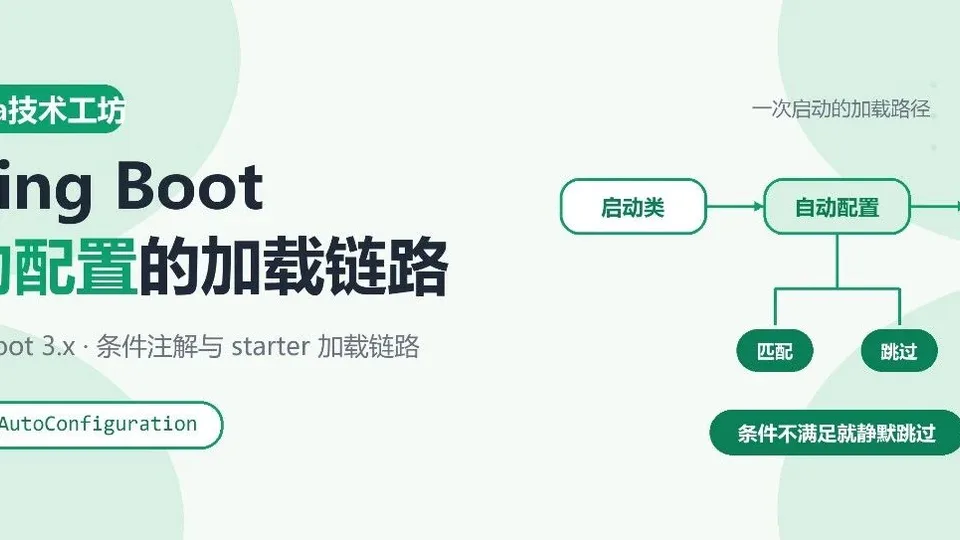
This article explains Spring Boot's auto-configuration mechanism, covering how @EnableAutoConfiguration triggers AutoConfigurationImportSelector, loads candidate classes from META-INF imports files, evaluates conditional annotations like @ConditionalOnClass and @ConditionalOnMissingBean at different phases, orders configurations via @AutoConfigureBefore/After, binds properties with @ConfigurationProperties, and troubleshoots silent failures using --debug and ConditionEvaluationReport.
This article explores how formal verification tools like Gobra and Viper enable machine-checked correctness proofs for Go programs, using preconditions, postconditions, loop invariants, and permission logic to verify functional correctness, memory safety, and concurrency properties, and discusses how AI agents can assist in generating specifications while verification tools provide independent guarantees.
This article walks through a system design interview for a URL shortener, covering requirements analysis, capacity estimation (20K read QPS, 15TB storage), API design, NoSQL data modeling, key generation via auto-increment ID with base62 encoding, hash-based partitioning, Redis caching with LRU eviction, load balancing strategies, and lazy expiration cleanup.
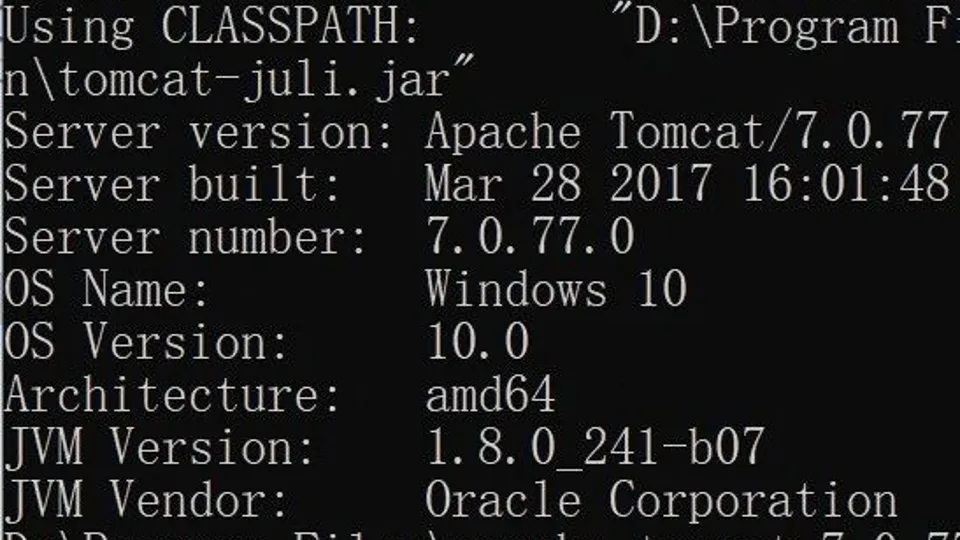
The author documents a step-by-step troubleshooting journey for a Java service crashing with EXCEPTION_ACCESS_VIOLATION (0xc0000005) in plcommpro.dll, trying minidump enablement, JDK downgrade from 8u241 to 8u191, JIT compilation exclusion for Hibernate, heap sizing, GC switch to ParallelOldGC, and DLL version checks, with each fix extending uptime but not fully resolving the native crash.
JetBrains' official 'Java and Kotlin by IntelliJ IDEA' plugin runs IntelliJ's language server inside VS Code via LSP, delivering code completion, navigation, refactoring, debugging, and Gradle/Maven project import for Java and Kotlin developers who cannot use the full IDE.
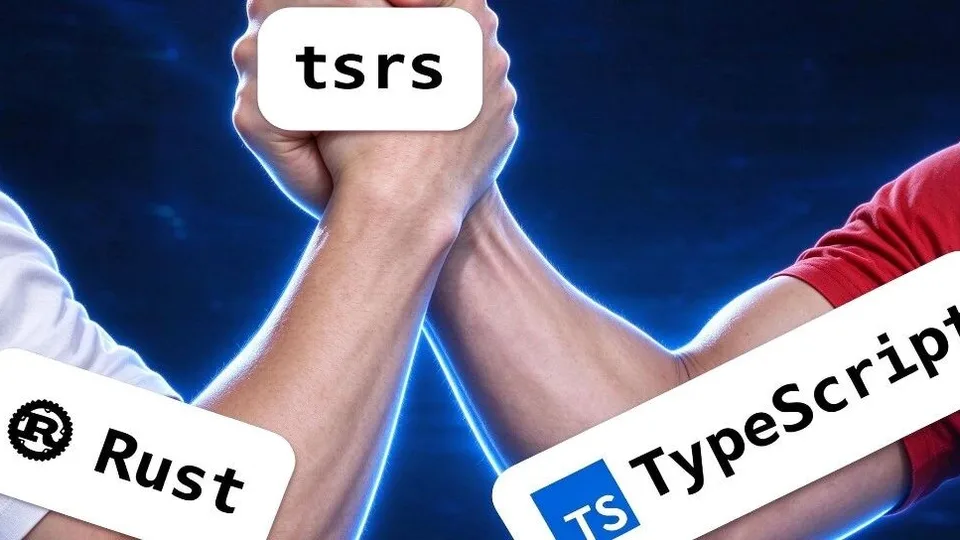
Cloudflare's VoidZero team develops tsrs, a Rust port of the TypeScript compiler that reduces memory usage by 70% and achieves up to 8x faster type checking than the Go-based version, while adding WebAssembly support for browser-based type checking.
This article explains software scaffolding as a meta-programming approach that generates boilerplate code, details why principles like reuse, DRY, and open-closed make scaffolding essential, and compares tools like Vue CLI, Maven, Netty, and Spring Boot with a real-world case study of replacing a custom persistence layer with Spring Data.
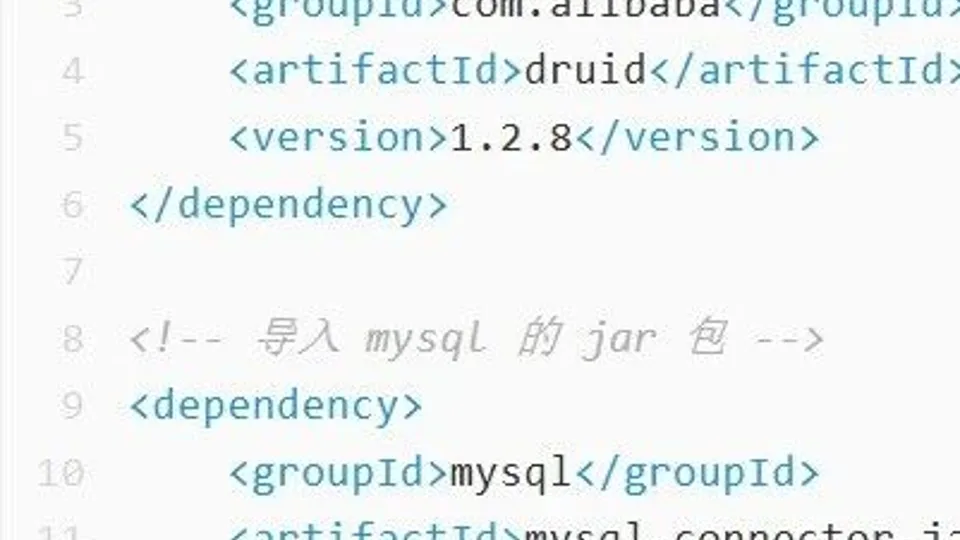
This tutorial demonstrates configuring and using Alibaba's Druid connection pool in Java applications, covering Maven dependencies, properties configuration, basic connection retrieval, a reusable helper class with query and execute methods, and JUnit test cases for CRUD operations.
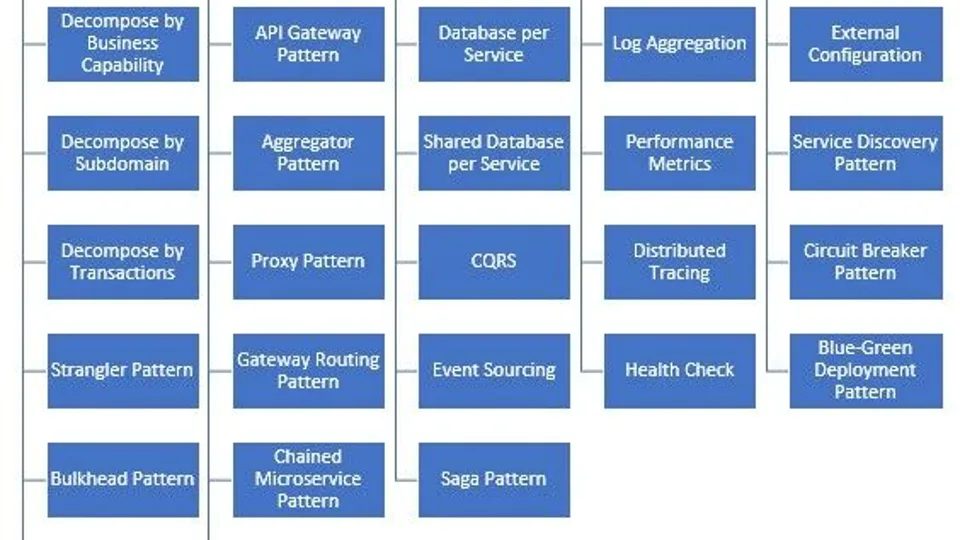
This article systematically categorizes and explains core microservice design patterns across decomposition, integration, database, event-driven, observability, and cross-cutting concerns, providing practical guidance for architects building resilient, scalable distributed systems.