After mapping code relationships in a legacy import system, the author demonstrates how to verify actual runtime behavior through isolated experiments using a three-row sample, testing partial success, duplicate submissions, lost responses, timeouts, and process interruption after write—revealing a duplicate-write bug that only appears when progress isn't persisted before a crash.
This article dissects JVM runtime data areas — heap, metaspace, thread stacks, direct memory — with object memory layout details, five OOM types mapped to regions, three production incident case studies, and practical measurement tools (JOL, NMT) for capacity planning.
This article analyzes three approaches to e-commerce inventory deduction—single-row MySQL, sharded MySQL, and Redis with Lua scripts—detailing why database row locks fail under high concurrency and providing a complete Redis-based implementation with distributed locking for cache initialization and atomic stock decrement.
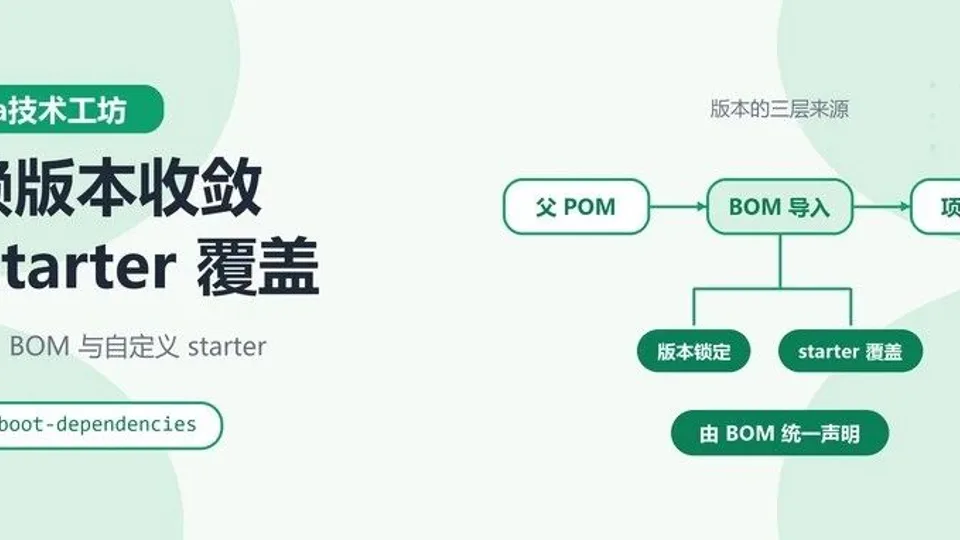
This article explains how Spring Boot achieves dependency version convergence through BOM (spring-boot-dependencies), details starter aggregation mechanics, and outlines four version override methods with priority rules, Maven arbitration behavior, conflict troubleshooting via dependency:tree, and risks of overriding tested version combinations.
Node.js adds an experimental Green Threads module (node:green_threads) that runs thousands of isolated V8 isolates on a shared pool of 8 OS threads, cutting per-instance memory from 6.2 MB to 1.4 MB and achieving higher QPS than Worker threads while providing strong fault isolation for multi-tenant scripting.
This tutorial introduces FastCSV, a zero-dependency Java library for high-speed CSV parsing and writing, demonstrating Maven setup, sequential and paginated reading, writer/reader configuration, bean mapping via streams, GZIP compression, and robust handling of malformed data like empty lines and field-count mismatches.
PHP 8.6 introduces partial function application with placeholder syntax, a native Time\Duration class, clamp() for range constraints, enum debugInfo, precise JSON error locations, native I/O polling, SortDirection enum, URI builder, and multiple performance optimizations.
Next AI Draw.io embeds an AI chat panel directly into draw.io, producing editable nodes and connections that developers can manually refine or further modify via AI, supporting architecture diagrams, cloud topologies, and MCP integration for AI coding tools, with Docker and desktop deployment options.
This article details a production-grade Agent Scheduler design covering multi-tenant fairness via Weighted DRF, reliable dispatch using Outbox pattern and fencing tokens, fault takeover with attempt epochs, tool gateway for side-effect safety, and phased rollout from single-cell to multi-cell deployments.
This article comprehensively explains message queue fundamentals including decoupling, async communication, reliability, and buffering; details architecture roles, queue types, persistence, acknowledgment, and protocols; compares ActiveMQ, RabbitMQ, Kafka, RocketMQ, and Pulsar with performance metrics; and provides selection guidance for e-commerce, finance, and big data scenarios.
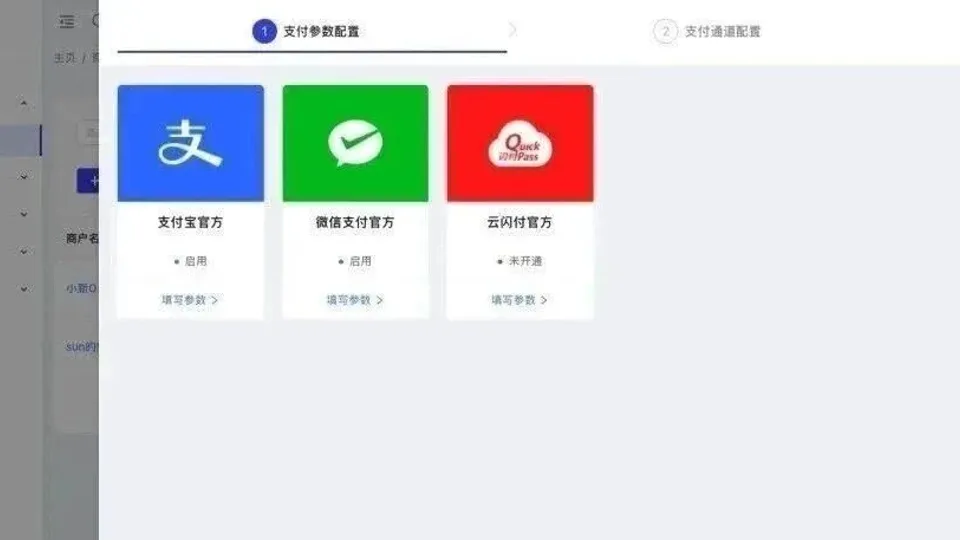
This article breaks down payment system design into business decomposition, sequence modeling, data structure design, and key technical patterns like TCC transactions, locking, and fund settlement, using e-commerce scenarios to illustrate each layer.
The article shares three hard-learned lessons on generating realistic test data: modeling business rules as state graphs for banking payments, matching production distributions with generative models for load testing, and building dialogue trees with LLM fine-tuning for AI intent recognition—proving that data fidelity, not volume, determines test validity.
This tutorial demonstrates how to replace manual Postman API testing with an automated workflow using OpenAI Codex and the Postman MCP server, enabling natural-language-driven test execution and schema validation against swagger.json specifications.
The article details five code-level constraints — enum whitelists, required parameters, schema allowlists, read-only DB accounts, and parameterized queries — to prevent hallucinated columns, full-table scans, SQL injection, and unauthorized mutations in Text2SQL systems, with a runnable Python skeleton demonstrating error feedback loops.
This article outlines the six most common ontology tasks in ERP systems: master data semantic modeling (TBox), cross-system entity disambiguation (ABox), BOM structure reasoning with change impact propagation, federated semantic queries across business documents, axiom-based rule validation, and end-to-end process ontology for compliance checking.
This article compares eight distributed ID generation approaches—UUID, database auto-increment, segment mode, Redis, Snowflake, Baidu UidGenerator, Meituan Leaf, and Didi TinyID—detailing their mechanisms, pros, cons, and real-world implementations to help choose the right solution for scalable systems.
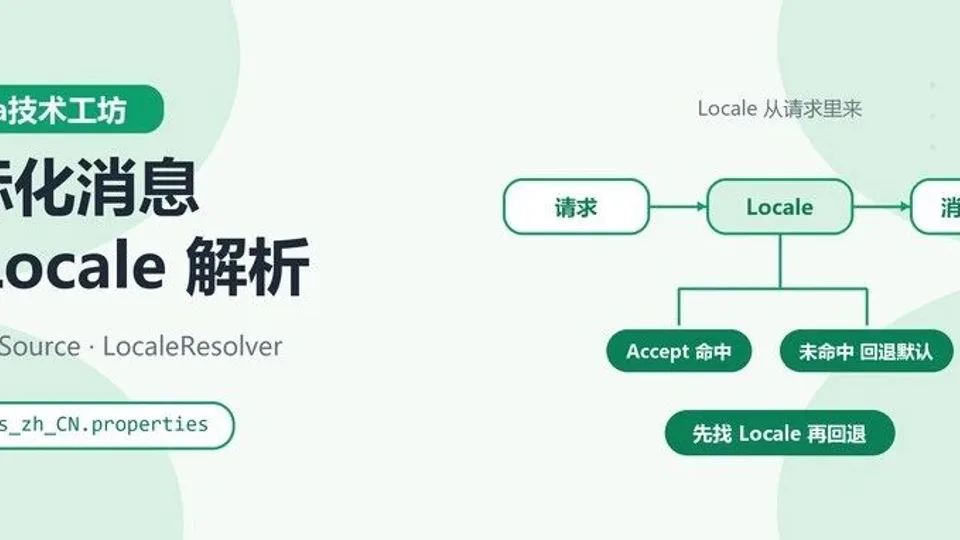
This article provides a comprehensive deep dive into Spring Boot internationalization, covering MessageSource message resolution with resource bundle loading and fallback strategies, four LocaleResolver implementations for determining request locale, LocaleChangeInterceptor for runtime language switching, and the complete source-code-level request-to-response flow with practical configuration and code examples.
A community-driven fork of Deno called Ende removes all Node.js and npm compatibility layers, retaining only Web standards and a native Ende namespace, while facing immediate ecosystem friction when third-party libraries like Hono still depend on Node.js built-ins such as async_hooks.
This article benchmarks UUIDv4, UUIDv7, and ULID as primary keys in a 1-million-row H2 database, showing UUIDv7 and ULID insert 3.5× faster than UUIDv4 due to timestamp-ordered B-tree writes, while explaining monotonic generation, security trade-offs, and Java implementation with uuid-creator.
This article explains how the C# compiler transforms async/await methods into state machines implementing IAsyncStateMachine, detailing the role of AsyncTaskMethodBuilder, the importance of ConfigureAwait(false), the dangers of async void, and how lifted local variables cause heap allocations and GC pressure in high-concurrency scenarios.