Xiaohongshu, with over 350 million monthly users and daily logs in the billions, migrated its data platform from AWS to Alibaba Cloud and iterated four times—from a ClickHouse‑based ad‑hoc layer to a Lambda architecture and finally a Lakehouse with incremental compute—cutting architecture complexity, resource cost and development effort each to about one‑third while delivering second‑level analytics on trillion‑scale data.
The article details how Alibaba’s production‑grade Verify‑Data Agent Skill replaces manual, multi‑SQL data validation with a single natural‑language command, automating table discovery, SQL generation, execution, and review‑level reporting, achieving up to 30‑minute turnaround, comprehensive coverage, and robust risk controls for big‑data pipelines.
A real‑world incident where an ADS table stopped updating triggered a three‑second root‑cause discovery and a three‑hour data‑warehouse rebuild using a Claude‑based Skill that eliminated about 70% of the manual, repetitive steps traditionally required in data development, testing, deployment, and operations.
Zhihu migrated thousands of Spark SQL jobs to the open‑source Gluten/Velox engine, achieving up to 2.7× speedup, 44% CPU savings and 57% memory reduction while fixing numerous consistency, performance, and stability issues through custom optimizer rules and targeted patches.
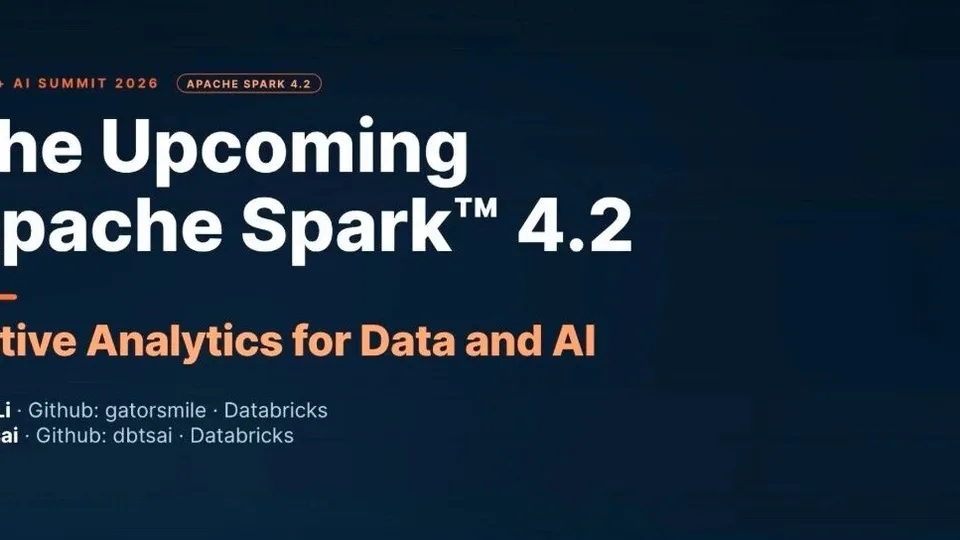
Apache Spark 4.2 introduces a lightweight Spark Connect architecture, native AI integration, enhanced Metrics View for unified semantics, Arrow‑first performance gains, advanced SQL extensions like vector search and QUALIFY, robust geospatial support, and a revamped streaming engine with auto CDC and sub‑millisecond state cleanup.
This article details Zhihu's end‑to‑end experience of migrating Spark SQL workloads to the open‑source Gluten framework, covering background performance benchmarks, the architecture of Gluten and Velox, consistency and performance challenges encountered during migration, the concrete fixes applied, and the resulting resource savings and future plans.
The article analyzes the fourfold challenges of game‑industry data analysis—high timeliness, massive concurrency, heterogeneous sources, and petabyte‑scale volumes—and explains how SelectDB’s evolution to an AI‑Ready, Agentic platform with MCP and a semantic layer addresses these issues through real‑time OLAP, multimodal processing, and autonomous decision loops.
The article details Xiaohongshu's step‑by‑step migration from a simple ClickHouse‑based analytics stack to a Lambda‑style 2.0 architecture and finally to a Lakehouse‑based 3.0 design, highlighting concrete performance numbers, cost reductions, and the definition of a generic incremental‑compute model (SPOT) that underpins the evolution.
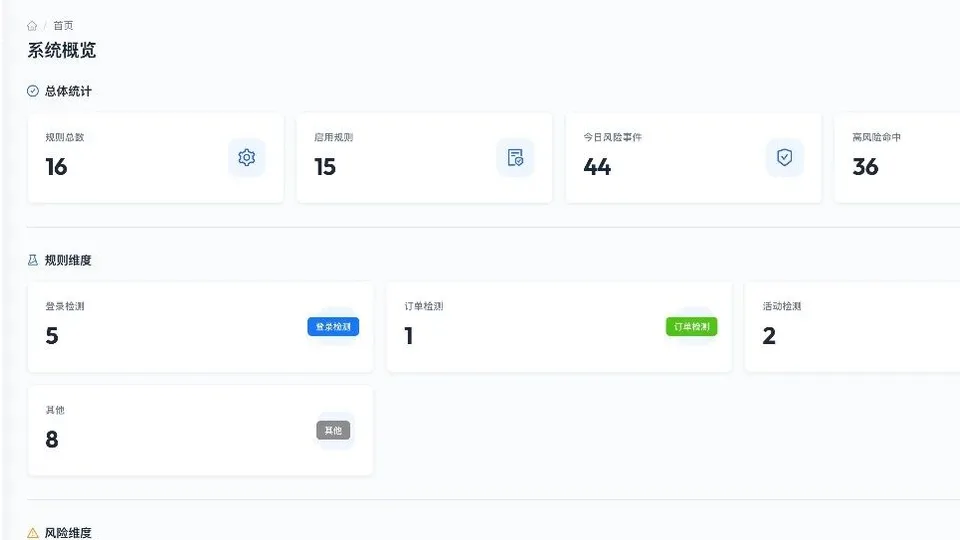
This article details a real‑time risk control system for e‑commerce and finance built on Apache Flink 2.2.1 and CEP, featuring a dynamic Aviator rule engine, three Kafka event streams, multi‑channel output to Redis, MySQL and Kafka, a Spring Boot‑React management UI, and step‑by‑step deployment instructions.
The article examines how Xiaohongshu, Kuaishou and Meituan adopted Yunqi Lakehouse’s General Incremental Computing and Single‑Engine architecture to achieve near‑real‑time data warehouses, cutting resource usage to as low as 1/20 of full‑batch jobs, reducing data latency from days to minutes, and improving query performance.
In the AI‑driven era, enterprises need a data foundation that supports both real‑time consumption and long‑term historical analysis, and the emerging "zero‑ETL" trend moves generic ingestion capabilities from external Flink/Spark jobs into a streamlined Kafka‑to‑Iceberg pipeline, reducing complexity while preserving low latency, consistency, schema evolution, CDC semantics and open‑ecosystem compatibility.
In the AI era, enterprises need a data foundation that supports both low‑latency streaming and long‑term analytics, and the combination of Kafka, Iceberg and object storage is emerging as a preferred solution; by moving ingestion capabilities closer to the message layer and eliminating external ETL jobs, a "zero‑ETL" approach reduces architectural complexity, improves consistency, and streamlines schema evolution and small‑file management.
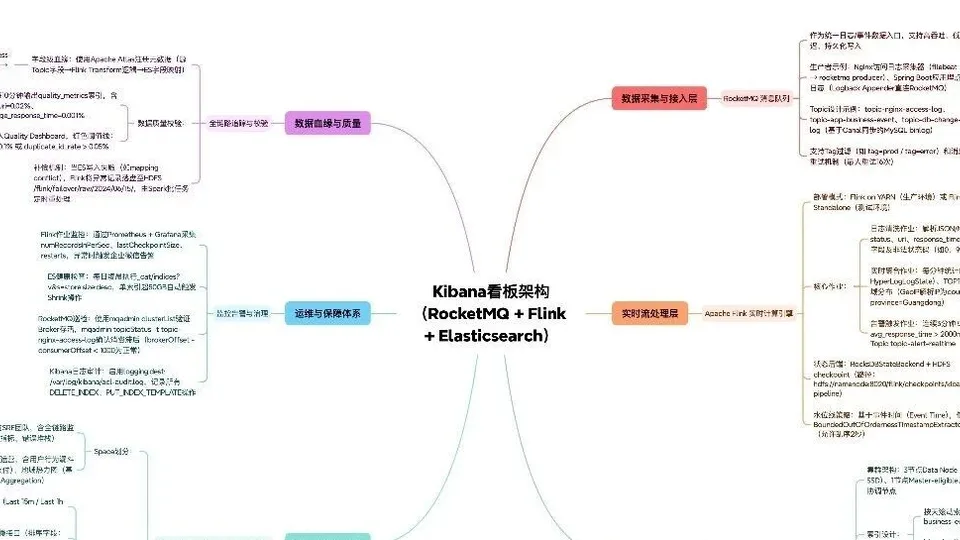
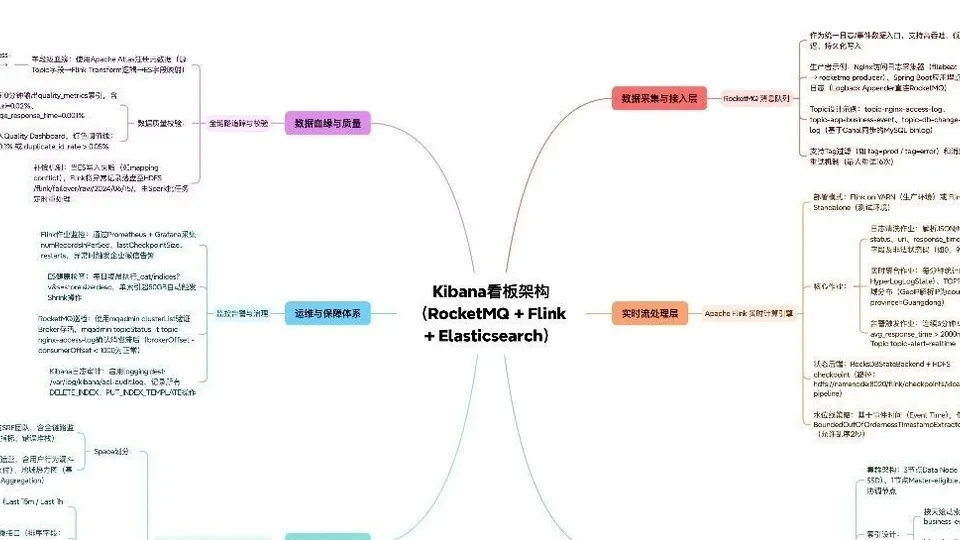
This article walks through setting up the foundational environment for a real‑time data visualization pipeline using RocketMQ, Flink, Elasticsearch and Kibana, covering code configuration, index verification, Kibana dashboard creation, and practical production tips.
The article explains how Alibaba Cloud's MaxCompute transforms a traditional data warehouse into a cloud‑native, multimodal Data+AI platform by introducing a four‑layer architecture, SQL‑based AI functions, the Python‑native MaxFrame framework, and a series of industry case studies that demonstrate performance gains and flexible resource scheduling.
This article analytically compares three open table‑format projects—Paimon, Hudi, and Iceberg—examining how each addresses multimodal data lake challenges such as massive volume, sparse access patterns, and combined scalar‑vector retrieval, and provides concrete feature breakdowns and selection guidance.
This article explains how Kafka maintains order within partitions using keys and offsets, why ordering across partitions can break, and how to preserve strict sequencing through producer configuration, idempotent producers, and exactly‑once transactional processing.
Although national data production reached 52.26 ZB in 2025 and keeps growing, the term “big data” is disappearing because it no longer serves as an organizational credit that hides the need for real value, responsibility, and measurable business impact, especially in the AI era.
This article walks through setting up a real‑time dashboard stack using RocketMQ, Flink, Elasticsearch and Kibana, covering environment preparation, order data simulation, Flink job creation with source, transformation and Elasticsearch upsert sink, and visualisation considerations.
This article presents a lake‑stream integrated solution that combines Apache Fluss, Apache Paimon, and StarRocks to achieve second‑level data freshness, tenfold storage cost reduction, and a single‑query access pattern for both real‑time and historical data, detailing its architecture, advantages, query modes, and future roadmap.
This article walks through eight fundamental data modeling methods—regression, classification, clustering, PCA, factor analysis, association rules, time‑series, and cluster analysis—detailing their typical use cases, core logic, key considerations, and practical tips for effective implementation.