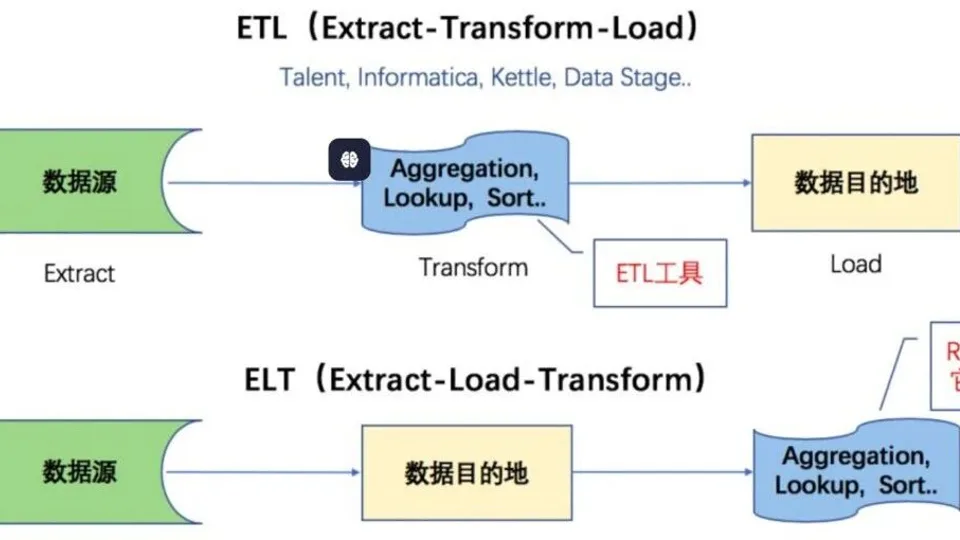
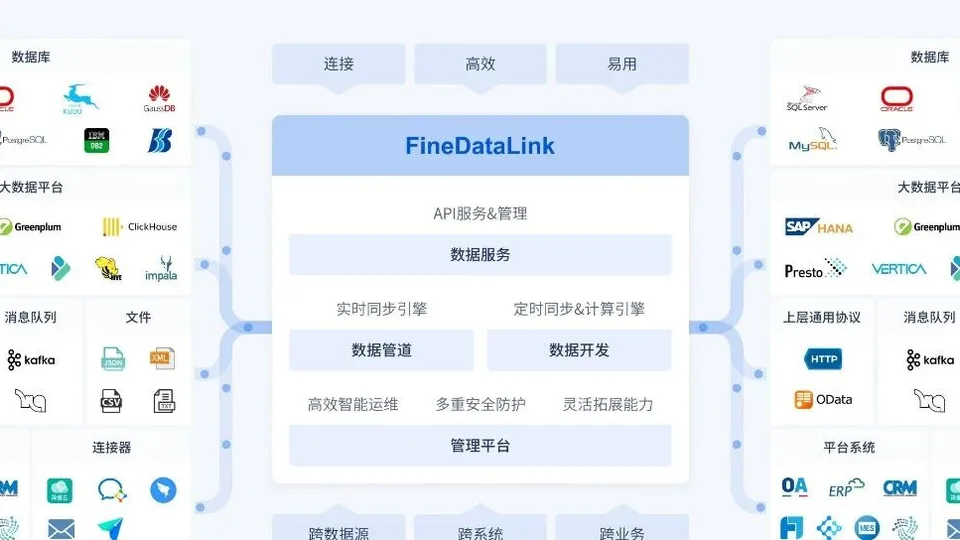
The article breaks down the distinct purposes of data synchronization, ETL, ELT, and full data integration, explains the problems each solves, provides criteria for choosing the right approach, and highlights how a unified platform can manage the entire data pipeline.
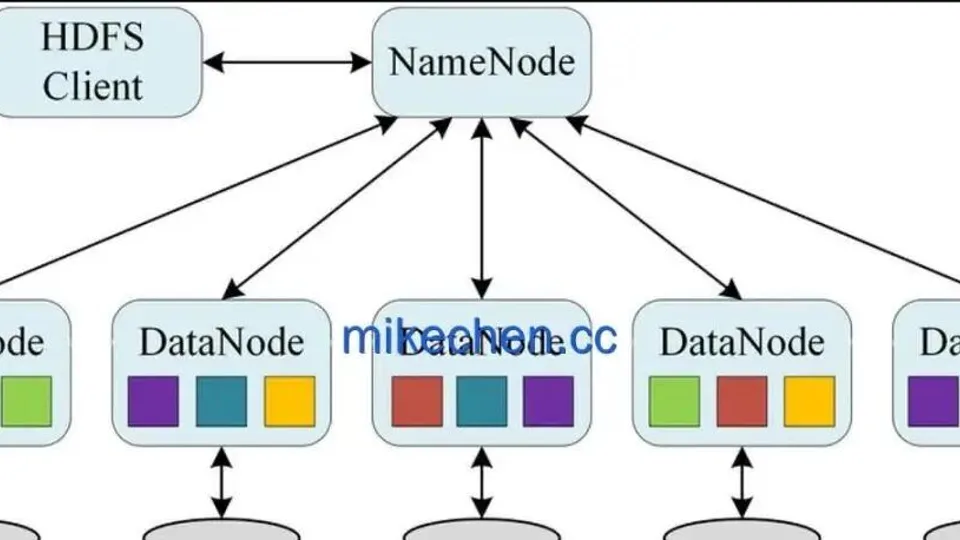
The article examines four key distributed storage solutions—HDFS, Ceph, GlusterFS, and FastDFS—detailing their design principles, typical use cases, strengths such as scalability or simplicity, and limitations like handling small files or low‑latency random access.
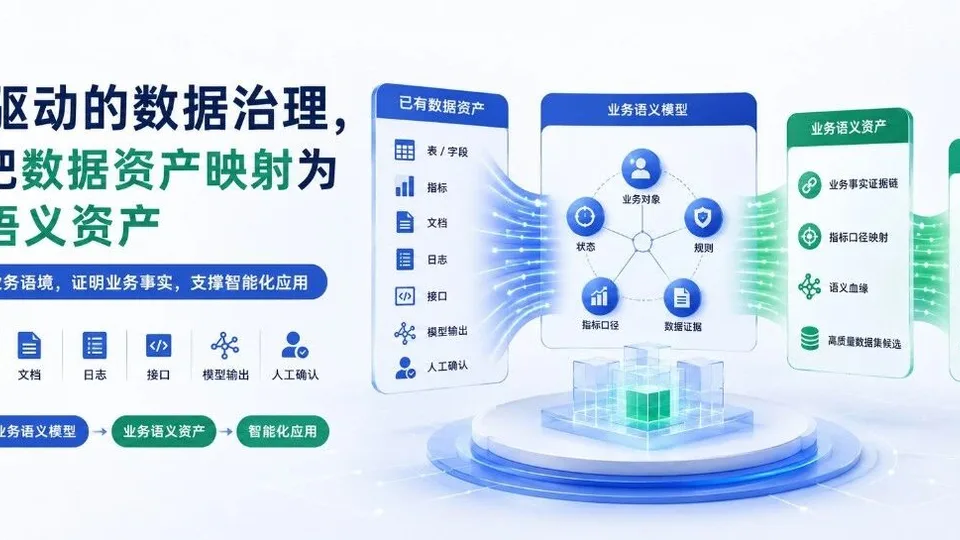
This article details the third step of ontology-driven data governance: mapping existing data assets — tables, fields, documents, logs, APIs, model outputs, and human confirmations — to a business semantic model through object, attribute, state, relationship, rule, evidence, and service-action mappings, producing semantic lineage, evidence chains, and high-quality dataset candidates for semantic queries, quality validation, and agent services.
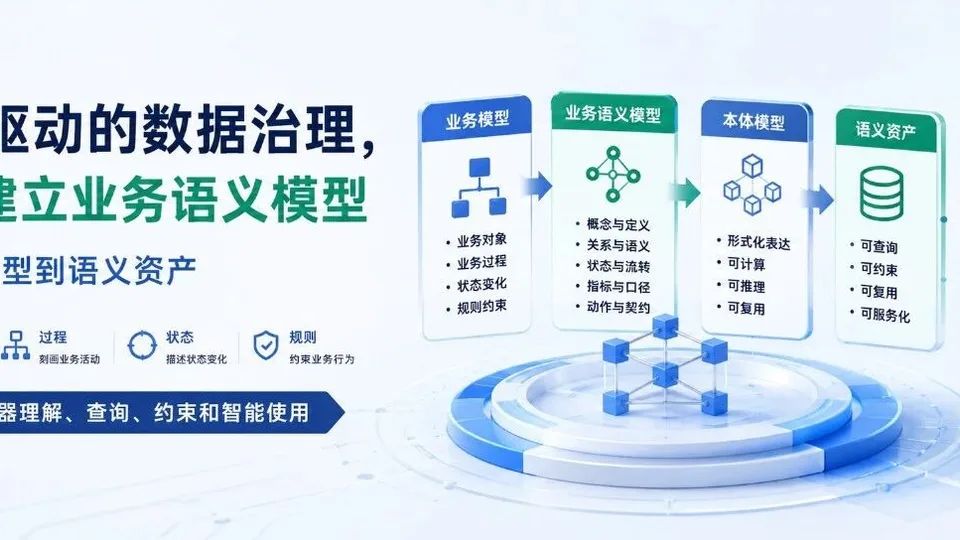
The article explains how to transform business models into machine-understandable business semantic models for ontology-driven data governance, covering eight key content types including concepts, relationships, states, processes, rules, metrics, evidence, and action contracts, plus transformation steps, granularity control, and deliverables such as semantic glossaries and relationship models.
The article details how Taotian Group’s senior data engineer Zhu Ao designed a lake‑stream integrated architecture using Fluss for second‑level real‑time storage, Paimon for minute‑level lakehouse persistence, and StarRocks as a unified OLAP query layer, achieving over 50% faster development and more than 80% cost reduction.
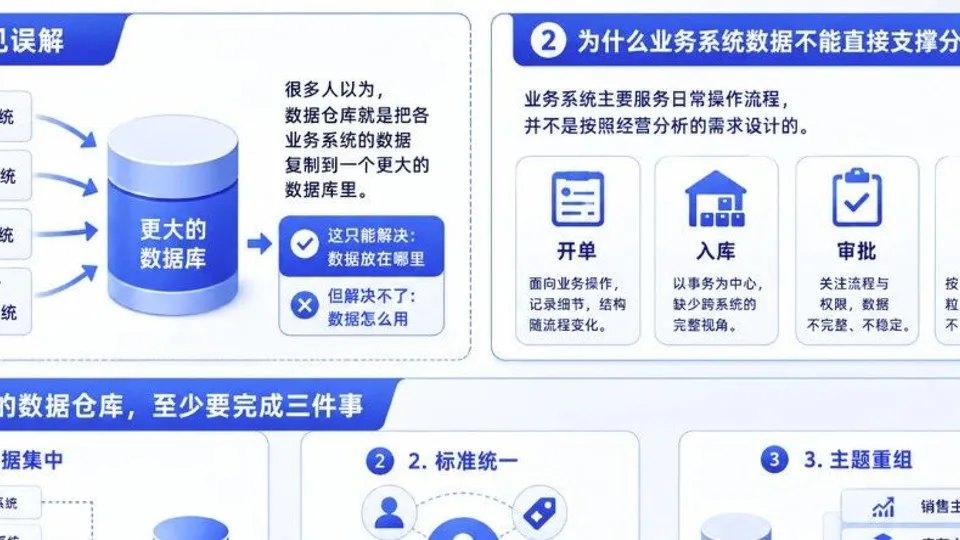
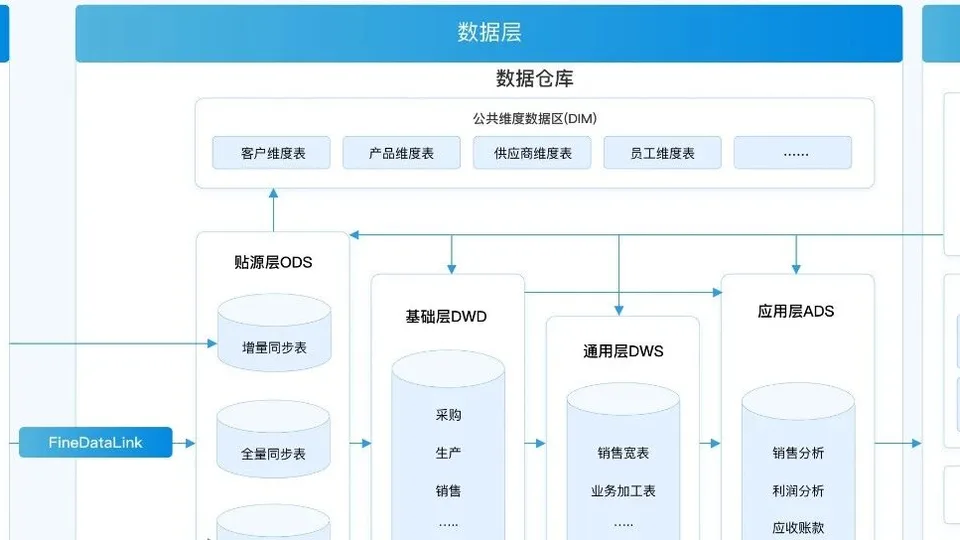
Many companies start data‑warehouse projects by merely extracting data, building a few tables and adding a BI report, only to face inconsistent metrics, unreadable tables, mismatched numbers and endless Excel rechecks; the article outlines a full end‑to‑end process—from source‑data inventory and stable ingestion to layered storage, modeling, metric unification and quality monitoring—to ensure trustworthy, reusable analytics.
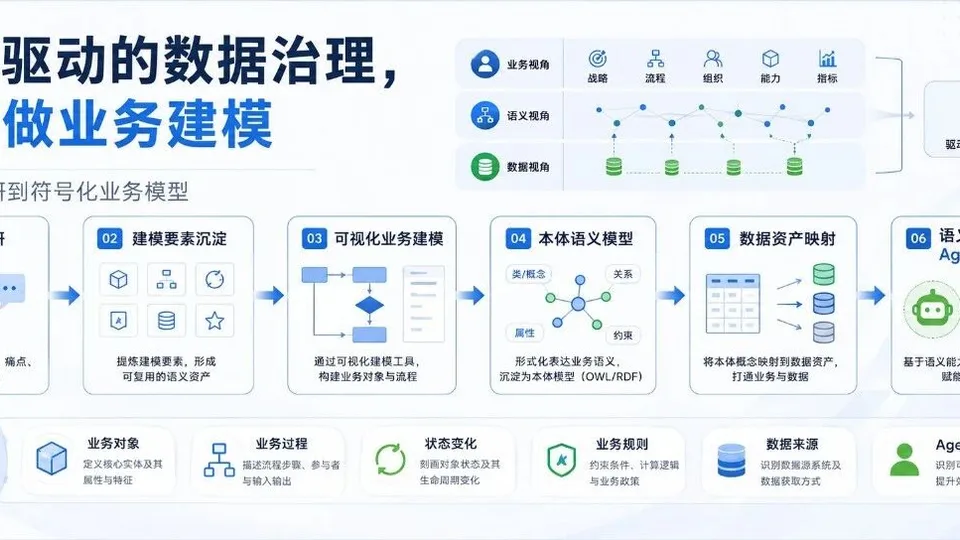
This article explains how ontology-driven data governance requires thorough business research and modeling before database design, detailing a six-element framework (objects, processes, states, rules, data sources, Agent opportunities) and visual modeling techniques like OPM and BPMN to create stable semantic foundations for data mapping and AI agents.
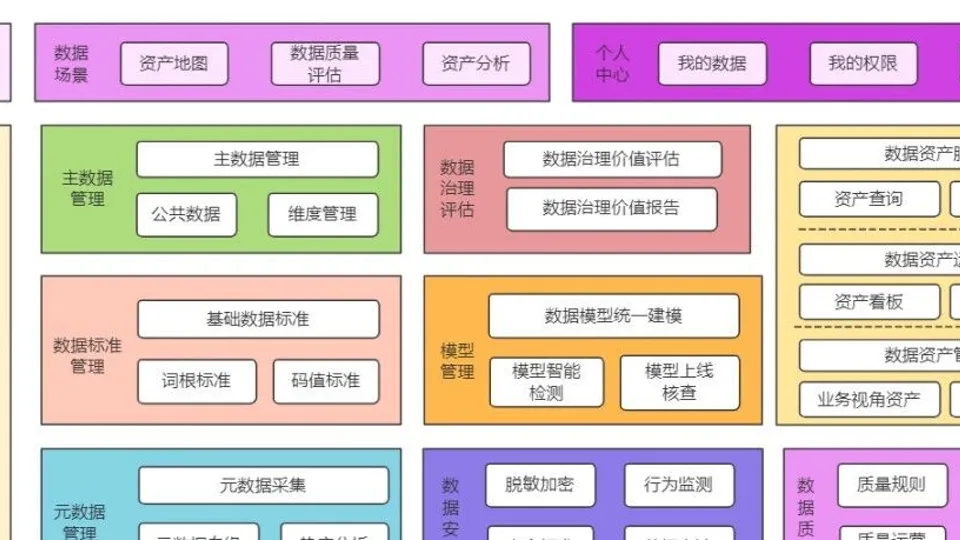
Enterprises often build many systems and reports, but without a systematic data‑asset management framework—comprising a data catalog, unified standards, quality controls, and lineage tracing—issues like inconsistent metrics, unknown data sources, and hard‑to‑diagnose report errors persist, undermining reliable decision‑making.
Xiaohongshu transformed its data platform from a simple ClickHouse‑based stack to a Lambda‑enhanced architecture and finally to a Lakehouse with incremental compute, cutting architecture complexity, resource and development costs by two‑thirds while delivering second‑level analytics on petabyte‑scale data.
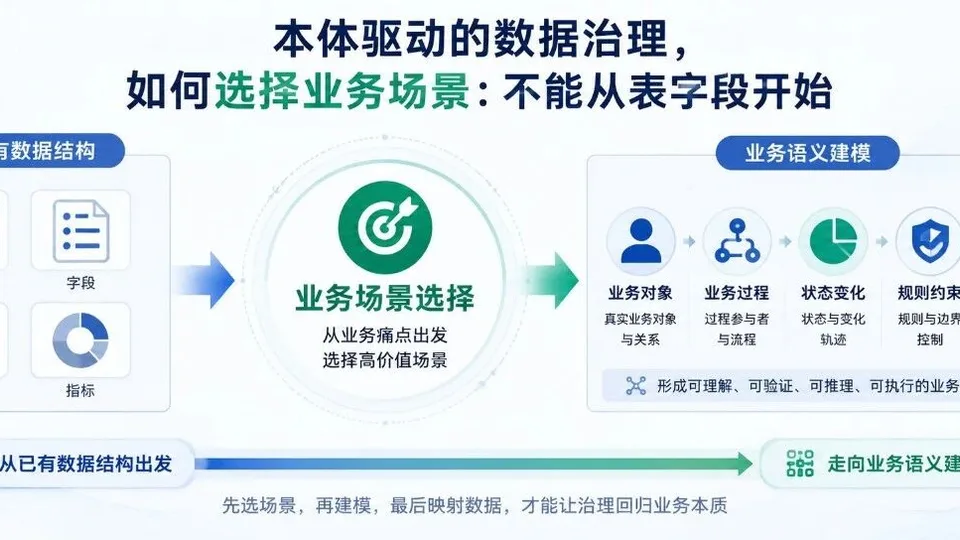
This article explains why ontology-driven data governance should begin by selecting high-value business scenarios rather than analyzing existing table fields, detailing five selection criteria, a pain-point mapping method, and a value-opportunity formula with concrete examples like equipment monitoring and legal case review.
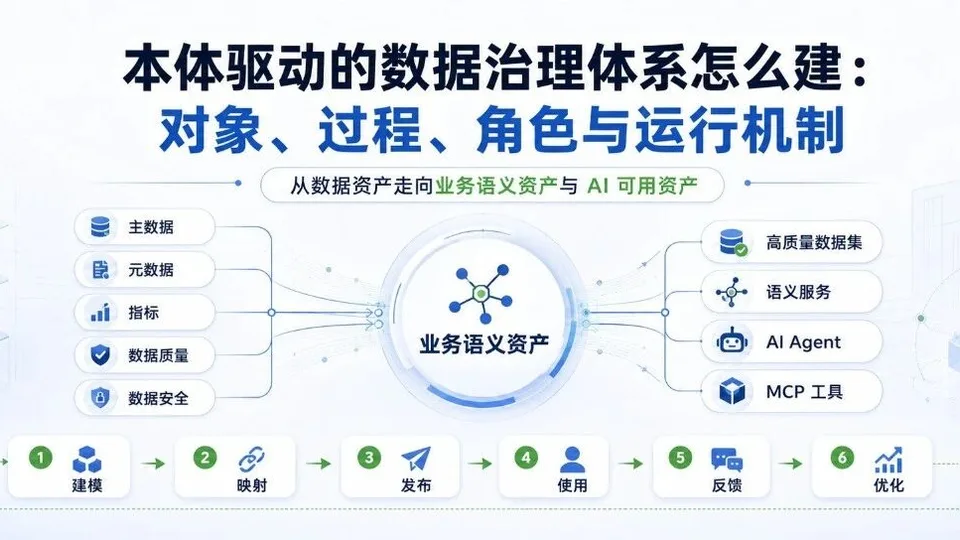
This article presents a comprehensive framework for ontology-driven data governance that extends beyond semantic modeling into a continuous operating system covering three governance object categories, a six-step scenario-based process, eight cross-functional roles, seven operating mechanisms, and integration with existing data governance capabilities to support AI-ready semantic assets and Agent actionability.
Polars outperforms Pandas on large‑scale ETL by using a multithreaded lazy execution model, columnar Arrow storage, and query optimizations, delivering up to 94× speedups on 10 GB workloads, while Pandas remains suitable for smaller datasets and tight ML ecosystem integration.
The article details Xiaohongshu’s journey from a simple ClickHouse‑based ad‑hoc analytics stack to a Lambda‑style architecture and finally to a lakehouse with generic incremental compute, cutting architecture complexity, resource cost and development effort each to roughly one‑third while achieving sub‑10‑second query latency on petabyte‑scale data.
The 2026 China University Computer Competition's Big Data Challenge revealed the monthly star award winners, each receiving a prize, and the top teams detailed their feature engineering, model selection, training validation, and portfolio combination tactics that led to their success.
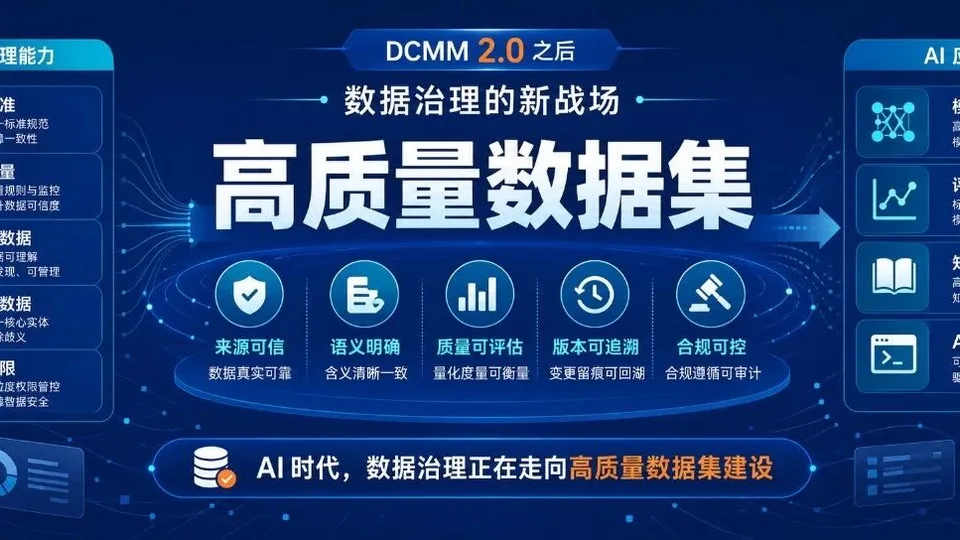
The article argues that post-DCMM 2.0, data governance must evolve from asset management to building high-quality datasets—trustworthy, semantically clear, quality-measurable, version-traceable, and compliant—to reliably support AI training, evaluation, knowledge augmentation, and agent workflows, requiring semantic foundations and AI data engineering.
The 2026 China University Computer Competition Big Data Challenge announced its Monthly Star winners, and the top teams detailed their data preparation, StockTransformer and LightGBM modeling pipelines, feature engineering, validation strategies, ensemble techniques, and key lessons learned from the competition.
The article compares five data‑architecture concepts—data warehouse, big data platform, data lake, data middle platform, and lake‑warehouse integration—explaining the specific problems each solves, their core characteristics, advantages, risks, and guidance on when to adopt each solution.
By adopting Volcano Engine EMR's serverless Spark Bolt engine, YouJing Technology cut weekly compute consumption by 50% and reduced core task duration by 40%, while MiMan Technology lowered resource use over 60% and sped up key SQL jobs by more than 20%, all without code changes.
The article explains why data quality is critical for business value, defines the four core dimensions—completeness, accuracy, consistency, timeliness—details metrics and evaluation methods for each, presents case studies, outlines a weighted scoring model, and describes practical implementation steps and tool support for systematic data‑asset quality assessment.