This article explains the fundamentals of blockchain technology, the structure of blocks, Bitcoin mining and transaction processes, the evolution to Ethereum with smart contracts, and the concept and regulatory concerns of ICOs, providing a comprehensive overview for newcomers to the crypto space.
Blockchain technology, originally linked to cryptocurrencies, is now reshaping digital information handling across sectors—from finance and IoT to advertising, healthcare, and creative industries—by providing secure, trustless transactions, reducing intermediaries, enhancing data integrity, and enabling new business models.
This article explains how JD's ZRobot leverages alliance‑chain blockchain to address leasing business challenges such as breach disputes by providing real‑time, immutable evidence, legal endorsement, and secure data storage, while outlining the broader regulatory and industry context in China.
This tutorial walks you through installing geth, synchronizing the Rinkeby testnet, creating accounts, writing and compiling Solidity contracts, deploying an ERC20 token, and performing common operations such as balance queries, transfers, approvals, and delegated transfers using the console and web3.js.
The article presents Ctrip’s Blockchain Service Platform (CBaaS), detailing its motivation, architecture, and the advantages of using Hyperledger Fabric’s modular design—including contract execution, consensus, permission control, and multi‑chain capabilities—to simplify enterprise blockchain adoption and enable secure, data‑rich on‑chain applications.
This article surveys multiple double‑spend attack vectors discovered on major public blockchains such as Bitcoin, EOS, and NEO, classifies them into verification flaws, VM execution inconsistencies, and consensus weaknesses, and proposes an efficient mitigation method based on write‑operation hashing.
In this interview, blockchain expert Wang Yuanming discusses his transition from cloud infrastructure to blockchain, outlines current technical challenges and front‑end trends such as storage, consensus, layer‑2 solutions, and smart contracts, and offers practical advice for engineers and investors while highlighting the upcoming GIAC conference in Shanghai.
This article introduces blockchain as a secure data‑block structure and presents a concise overview of five popular programming languages—C++, Java, Python, Ruby, and Solidity—highlighting why each is suited for building blockchain applications.
This article explains the fundamentals of Bitcoin wallet key management, covering the relationships between private keys, public keys, and addresses, the different wallet types, and the essential BIP standards (BIP‑0032, BIP‑0039, BIP‑0043, BIP‑0044) that define deterministic key derivation and mnemonic generation.
This article outlines the three evolutionary stages of blockchain architecture—1.0 focusing on digital currency, 2.0 introducing smart contracts with Ethereum, and 3.0 expanding to enterprise‑wide applications—highlighting key components, consensus mechanisms, and the shift toward industry‑specific solutions.
This article proposes a consortium blockchain solution for financial risk data sharing that records query transactions as token‑based entries, enables post‑audit and reversal mechanisms, defines a multi‑type token settlement system, and discusses institution onboarding and future evaluation capabilities.
In this InfoQ interview, seasoned front‑end engineer CSS Magic explains how his ten‑year web background led him to explore decentralized applications, compares DApp architecture with traditional web apps, outlines blockchain’s unique traits, public‑chain selection criteria, required skills, and offers career advice for developers considering the blockchain wave.
The article analyzes the shortcomings of current seller‑driven financial risk data sharing, proposes a blockchain consortium architecture using Hyperledger Fabric, compares a 1.0 token‑based design with an improved 2.0 version that adds a service layer, secure multi‑party computation, and regulatory oversight to achieve fair pricing, data quality, security, and efficient transaction processing.
This article proposes a blockchain-based alliance for financial risk data sharing, detailing the post‑transaction accounting and audit mechanisms, token‑based settlement processes, various transaction types, and the scalability considerations for onboarding new institutions, aiming to improve data quality, pricing fairness, and ecosystem governance.
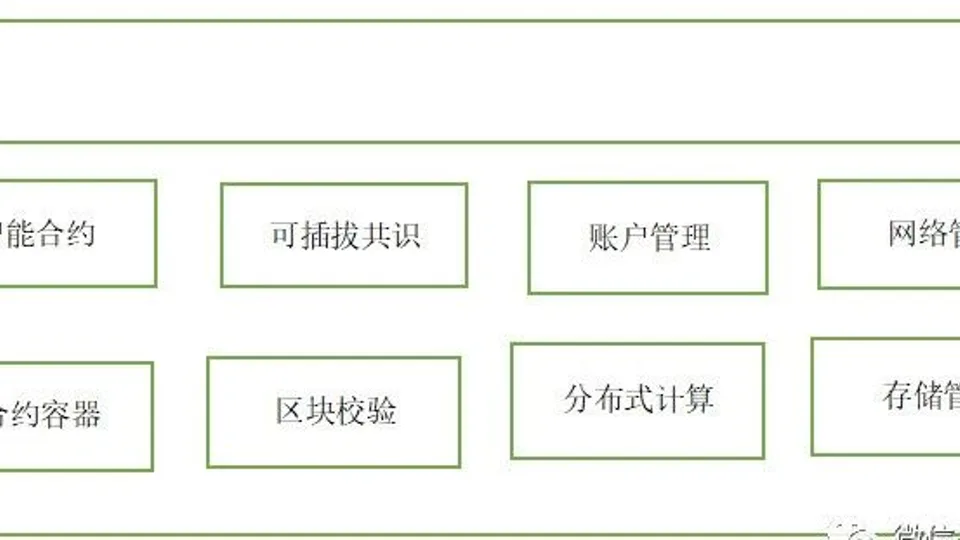
This article details the end‑to‑end evolution of 58BaaS, covering blockchain fundamentals, the three‑stage Hyperledger Fabric network deployment, Kubernetes‑based chaincode container management, a simplified client API with configuration files, performance and robustness enhancements, debugging tools, and a Prometheus‑Grafana monitoring solution.
This guide walks through the step‑by‑step process of linking Remix to a local private Ethereum node, explains the typical "Not possible to connect to the Web3 provider" error, and provides two practical solutions—including adjusting the URL scheme and adding the --rpccorsdomain flag to the Geth startup command.
The article describes the business scenario of financial risk data sharing, identifies pain points of current query‑based pricing models, and proposes two blockchain consortium designs—Version 1.0 and an improved Version 2.0—detailing token‑based pricing, smart‑contract accounting, service‑layer architecture, and deployment on Hyperledger Fabric.
The article analyses the shortcomings of traditional seller‑driven financial risk data queries and proposes a blockchain consortium that uses distributed ledger, consensus, smart contracts and token‑based pricing to enable fair, secure, and efficient data sharing and settlement among financial institutions.
The article dissects the sophisticated DoS attack that let a player win the Fomo3D Ethereum game by flooding the transaction pool with high‑gas‑price garbage calls, detailing the game mechanics, Ethereum gas economics, block‑by‑block execution, and the extensive technical preparation required.