Startup stock options often suffer from opaque information, informal promises, and uncertain vesting, but Web3 technologies like ERC‑1400 can bring on‑chain transparency, immutable smart‑contract enforcement, and tokenized liquidity, offering a trustless solution to the equity incentive crisis.
This guide walks you through cloning the Uniswap V3 core repository, setting up the development environment, compiling Solidity contracts, and executing the comprehensive test suite to deeply understand the protocol's core mathematics and logic.
This guide explains why compiling third‑party contracts from node_modules fails and shows a robust method to deploy precompiled artifacts directly using Hardhat and ethers.js, with step‑by‑step code examples for UniswapV3Factory.
This article explains the concept of Ticks in Uniswap V3, detailing how they discretize price ranges, enable concentrated liquidity, affect gas costs through tick spacing, and impact both liquidity providers and traders in the DeFi ecosystem.
Explore the intricate architecture of Uniswap V3 by dissecting its core contracts—v3-core and v3-periphery—covering factories, pools, callbacks, interface definitions, state variables, and practical learning steps, revealing how its modular design underpins modern DeFi security and flexibility.
This guide explains why accessing on‑chain data directly is the most trustless method, outlines the steps to query a Uniswap V3 ETH/USDC pool using Web3.py, provides full Python code, and offers practical tips for extending the approach to other pools and historical data.
Learn how to streamline Ethereum smart contract debugging by using Hardhat’s interactive console, covering setup, querying chain state, interacting with deployed contracts, reading and writing functions, and advanced features like manual mining, all with practical code examples to boost development efficiency.
This article compares command‑line consoles like geth attach and hardhat console with full‑featured visual block explorers such as Blockscout, outlining their use cases, advantages, drawbacks, and guidance on selecting the right tool for private Ethereum‑compatible networks.
This guide explains Hardhat Ignition's declarative deployment model, compares it with traditional imperative scripts, and provides a detailed line‑by‑line walkthrough of a sample Lock module, including code snippets, visual flow, and best‑practice conclusions for Ethereum developers.
The article explains how ERC-1400 extends ERC-20 with built‑in compliance features—such as KYC checks, transfer restrictions, tranche handling, on‑chain document storage, and forced transfer mechanisms—to enable legally compliant tokenization of real‑world assets like equity, bonds, and real‑estate.
Base, Coinbase’s newly launched Ethereum Layer‑2, leverages strong backing, superior transaction volume, higher profitability, active developer community, and the OP Stack’s optimistic rollup architecture to challenge rivals like Arbitrum and Optimism, while fostering a unique “Based” culture and aiming for Superchain interoperability.
This article examines Geth's export and import commands for Ethereum node backup and recovery, detailing their syntax, use‑cases, limitations, and compares them with snapshot sync and filesystem‑level backups to help operators choose the most suitable strategy.
This tutorial walks you through the hardware requirements, software setup, signature verification, and execution steps needed to launch a Hyperliquid non‑validator node on the testnet, obtain test USDC from the faucet, and start risk‑free trading experiments.
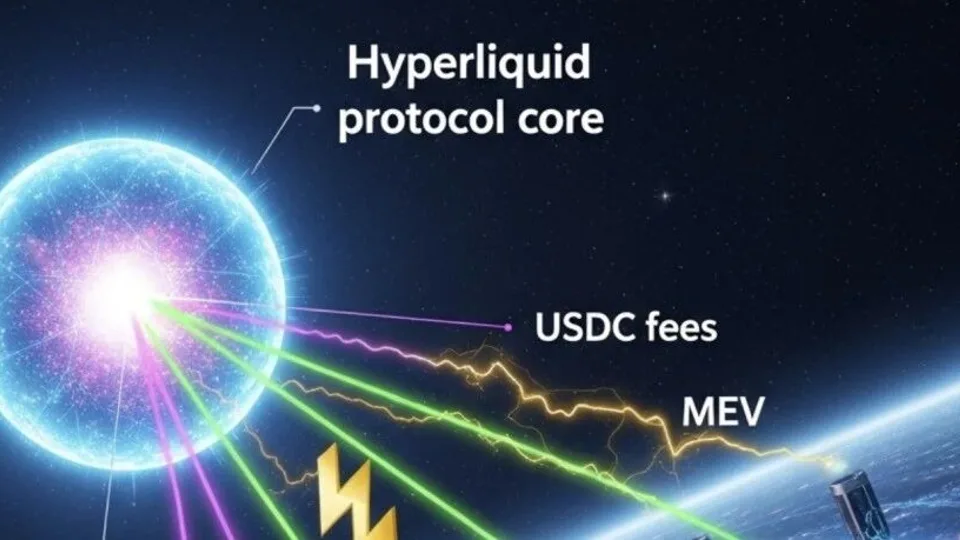
This article analyzes Hyperliquid's zero‑gas design, explaining how its custom high‑performance Layer 1 architecture internalizes costs and rewards validators through token inflation, trading‑fee sharing, and MEV opportunities, creating a sustainable economic loop for network security.
The article explains Hyperliquid's native HYPE token, its governance, staking, fee‑discount and incentive roles, clarifies that most platform activity involves USDC‑backed perpetual contracts rather than direct HYPE spot trades, and offers practical guidance for traders and investors.
This guide explains what the Anchor Version Manager (AVM) is, why it’s essential for Solana developers, and provides step‑by‑step instructions for installing AVM, switching Anchor versions, and managing multiple projects to ensure reproducible builds and avoid deployment issues.
This guide walks you through launching a local Solana test validator, explains each line of its console output—including node identity, gossip and TPU addresses, slot commitment levels, snapshots, transaction counts and SOL balance—and offers practical tips for debugging and resetting the sandbox environment.
This article explains why Ethereum can seemingly generate unlimited addresses by detailing the 160‑bit address space (2^160 possibilities), comparing its size to real‑world quantities, describing the local cryptographic generation process, the on‑demand activation model, and why address collisions are practically impossible.
This article explains the cryptographic mechanisms—ECDSA, secp256k1 elliptic curve operations, and Keccak‑256 hashing—that make Ethereum addresses one‑way functions, ensuring that deriving a private key from a public address is computationally infeasible.
This step‑by‑step guide explains how to safely export a MetaMask private key, import it into the Clef signing tool for a local private Ethereum chain, and execute transactions while emphasizing critical security warnings and best‑practice precautions.