This guide walks through setting up a private Ethereum network, configuring Geth with the external signer Clef, and safely moving funds from a funded genesis account to a Clef‑managed address while demonstrating each command, approval step, and verification of balances.
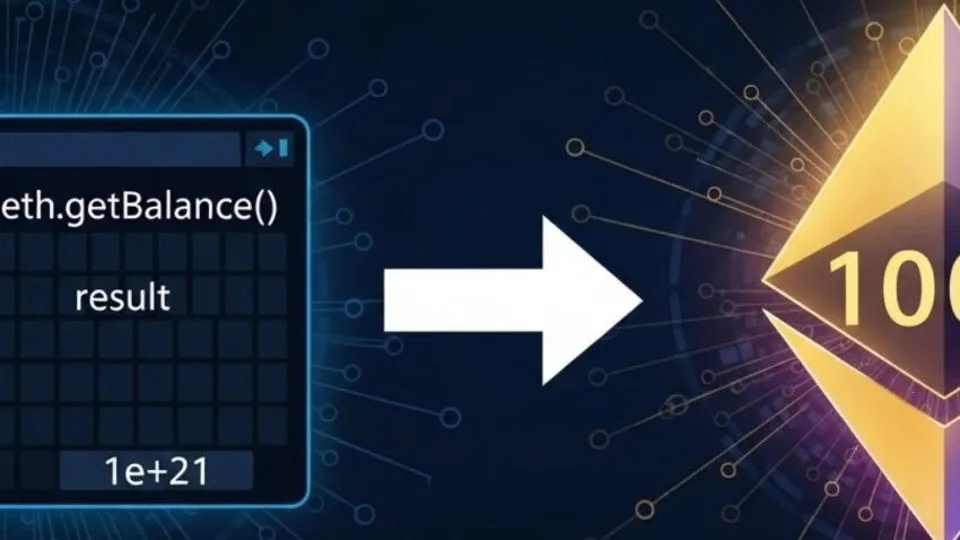
This guide walks you through connecting to a private Ethereum node with geth, using eth.getBalance to retrieve an account's balance, and converting the scientific notation 1e+21 Wei into a readable Ether amount, while explaining the underlying concepts and useful shortcuts.
This tutorial walks developers through installing Geth, crafting a genesis.json file, initializing a private Ethereum chain, launching the node with custom parameters, and interacting via the console, providing a fast, cost‑free environment for smart‑contract testing.
This article explains how a MetaMask wallet address, built on the Ethereum 0x format, can be used across many EVM‑compatible blockchains, receive different versions of USDT, and move assets via cross‑chain bridges, effectively acting as a universal digital passport.
This guide shows beginners how to explore contract details on the Sepolia testnet using Etherscan's read‑only interface and then how to programmatically retrieve the same data with a Node.js script that leverages Web3.js, covering setup, code examples, and next‑step possibilities.
This guide shows blockchain developers how to obtain a verified smart contract's ABI on the Sepolia testnet by using Etherscan’s block explorer and its API, covering preparation, request construction, JavaScript code examples, and practical tips for handling unverified contracts.
Etherscan offers three powerful features—Decompile Bytecode, Opcodes View, and Similar Contracts—that let developers and security researchers translate compiled contract bytecode back into readable code, inspect low‑level instructions, and locate related contracts on the blockchain, enhancing transparency and auditability.
This article breaks down the technical foundations of DeFi, explaining how smart contracts enable decentralized exchanges, comparing order‑book and automated market‑maker architectures, and detailing supporting components such as oracles, stablecoins, and lending protocols with concrete examples and formulas.
This guide breaks down Ethereum gas mechanics, explains the calculation formula, walks through a step‑by‑step example converting Remix gas numbers to USD, and offers practical tips for developers to optimize contract costs.
This article walks through a typical Hardhat test run, explaining each section of the console report—from compilation details and individual test results to gas usage, network configuration, and deployment costs—so developers can assess contract correctness, performance, and optimization opportunities.
This article explains how decentralized exchanges use a constant‑product AMM model that makes prices slide, why users must set slippage tolerance, and how MEV sandwich attacks exploit that tolerance to extract value.
The article explains how Ethereum’s built‑in issuance rules, total ETH staked, and market dynamics such as priority fees and MEV combine to push staking APY from early double‑digit levels down to the current 3‑4% range.
This guide explains why syncing a full testnet is unnecessary for beginners and shows how to use local development networks with frameworks like Hardhat and Truffle to quickly compile, debug, and test Ethereum smart contracts on a personal computer.
This article examines Cosmos' vision of an Internet of Blockchains, detailing its three foundational components—Tendermint Core, Cosmos SDK, and IBC—while highlighting their technical advantages, real‑world use cases, and the broader impact on scalability, sovereignty, and interoperability in the multi‑chain ecosystem.
This article explains the post‑Merge Ethereum architecture, detailing the distinct roles of Execution Clients (EL) and Consensus Clients (CL), their core responsibilities, popular implementations, the Engine API communication process, and why modular client design improves security, efficiency, and upgradeability.
This guide walks you through why a test node is essential, the recommended server hardware, required software, and detailed step‑by‑step commands to install Geth and Prysm on Ubuntu, configure JWT authentication, create systemd services, and monitor a fully synchronized Ethereum Holesky test network.
This article walks you through a real DeFi transaction on Etherscan, explaining each field, event log, and the underlying smart‑contract interactions so you can confidently interpret blockchain activity without feeling overwhelmed.
This article analyzes the current Web3 ecosystem, compares major blockchain stacks, and proposes a strategic T‑shaped learning roadmap that starts with Solidity/EVM for immediate employability and then adds Rust to build long‑term technical depth.
This article analyzes Union, a zero‑knowledge‑based interoperability layer that aims to replace fragmented cross‑chain bridges with a trustless, efficient solution, detailing its architecture, user experience, security benefits, and practical advice for developers and investors in the evolving blockchain ecosystem.
This article explains what stablecoins are, how they maintain price stability, their rapid market growth, real‑world use cases, the impact on the international monetary system, China's RMB strategies, tech giants' deployments, regulatory challenges, and the likely evolution of the financial ecosystem.