Tencent Cloud details seven papers accepted at SIGCOMM and NSDI that tackle cloud networking challenges for massive AI compute clusters, covering disaggregated DPU architecture, bare-metal AI cloud networking, full RDMA virtualization offload, accelerated flow setup, scalable session tables on commodity DDR, microscopic tracing for heterogeneous gateways, and sub-second failure rerouting.
The article analyzes how Alibaba Cloud’s CPFS, KVCacheStore, AgenticFS, OSS Agent and CDE Agent together address exploding AI data scales, accelerate model training and inference, and support massive AI Agent workloads with concrete performance numbers and architectural details.
The article analyzes how Google Cloud’s new BigQuery Graph with Measures expands the traditional Semantic Layer—moving from unified metric definitions to a governed business‑relationship model that lets data agents trace why metrics change across entities and paths.
The article analyzes how Google Cloud’s BigQuery Graph with Measures expands the traditional semantic layer—moving from unified metric definitions to a governed business‑relationship model that enables agents to answer not only what happened but also why it happened.
The article analyzes how Google Cloud’s new BigQuery Graph with Measures expands the traditional semantic layer—adding explicit business entities and relationships—to enable agents to trace why metrics change, illustrated with retail case studies, Graph‑Measure integration, and Knowledge Catalog enhancements.
The article explains how the traditional Semantic Layer, which focused on unifying metric definitions, is expanding in the Agent era to include business entities and relationships by integrating Google BigQuery Graph with Measures, enabling agents to trace why metrics change as well as what they are.
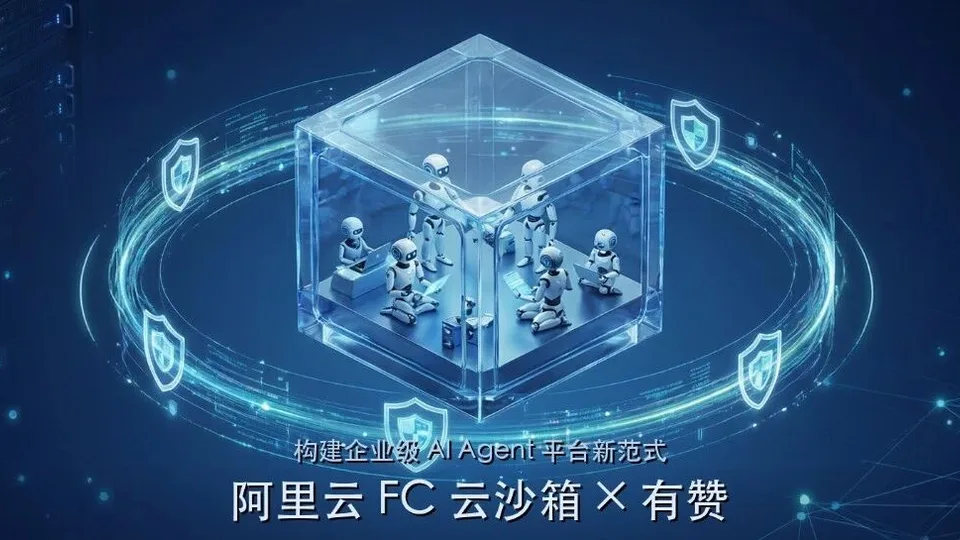
Youzan unified over 190 AI Agents on Alibaba Cloud's FC sandbox, achieving extreme elasticity, six‑dimensional security isolation, seamless migration of existing workflows, and a dramatic reduction in compute costs with 87% of resources in low‑cost sleep mode.
The paper presents Sonata, a software‑centric vSwitch data plane that decouples from specific NICs, enabling a single implementation to handle heterogeneous, multi‑generation hardware while delivering 2.13‑2.51× software CPS gains and an additional 4.3‑11.5× boost with hardware offload, all validated on hundreds of thousands of production servers.
The article analyzes why Cloudflare only supports HTTP/3 on the client‑to‑edge path, detailing the protocol split, CPU and hardware offload costs, UDP restrictions, and why HTTP/3 remains viable despite not being used for origin fetches.
A CFO used Claude Code to launch a SaaS product in two days, but a hidden bug caused the system to repeatedly retry successful LLM calls, turning a single day's AI usage into a month's worth of server expenses, prompting a detailed post‑mortem on cloud cost and retry‑storm pitfalls.
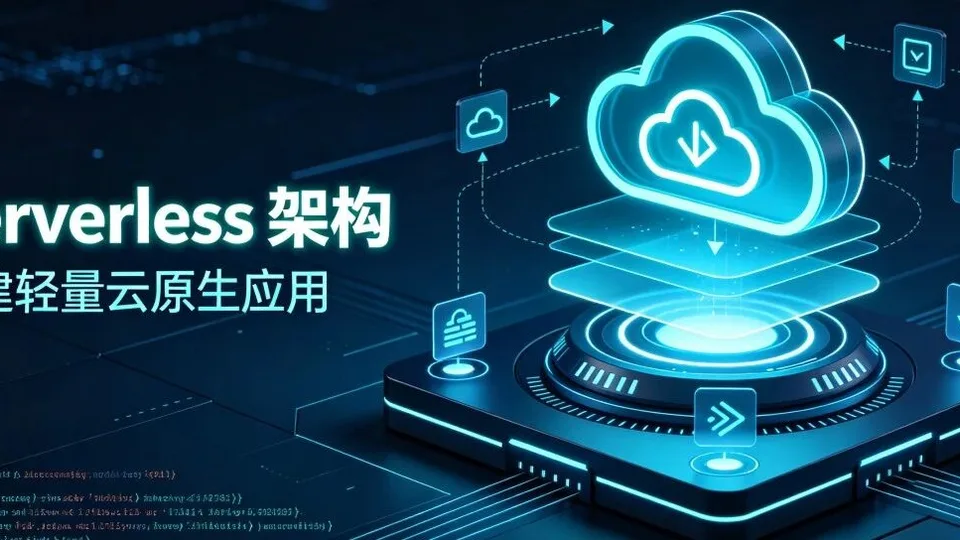
This article explains the serverless execution model, compares major providers such as AWS Lambda, Vercel Functions, and Cloudflare Workers, and offers practical code examples and cold‑start mitigation techniques for building and operating serverless applications.
The article analyzes how the rise of AI agents transforms storage needs from massive, static data lakes to fast, state‑centric lakes, outlining three workload phases, new storage paradigms, and the three pillars—Sandbox Store, Artifact Store, and Agent Observation & Evaluation—that enable scalable, low‑latency, and observable agent execution.
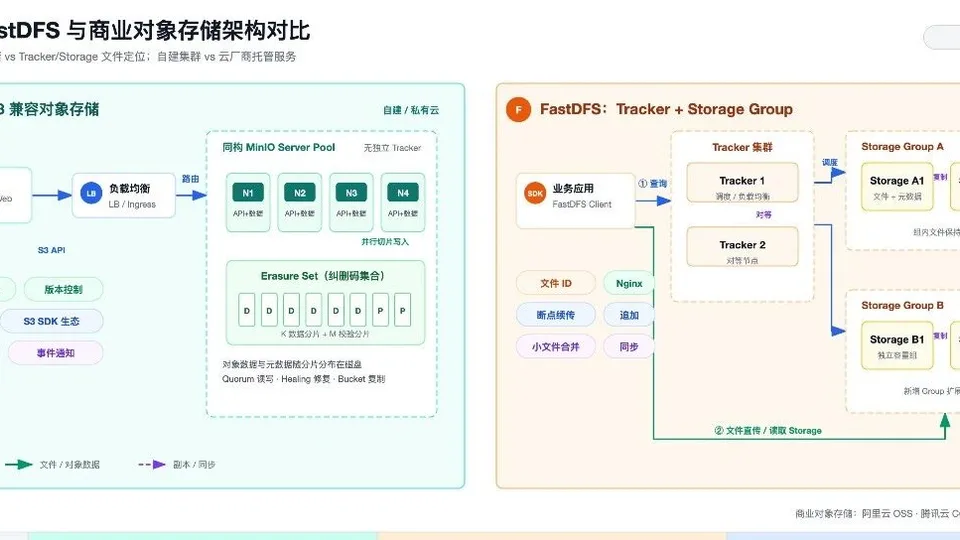
The article compares open‑source MinIO with commercial object storage services such as Alibaba OSS, Tencent COS, Huawei OBS, and Amazon S3, analyzing architecture, maintenance responsibilities, total cost of ownership, and suitability criteria to help enterprises decide which storage path aligns with their control needs and operational capabilities.
A CTO discovers a three‑fold surge in AI model token bills with no clear usage breakdown, prompting a deep dive into Tencent Cloud's AI Gateway, which offers multi‑dimensional quota governance, real‑time cost monitoring, semantic caching, and a unified cost‑management dashboard to make every token expense transparent and controllable.
Azure Linux 4.0, now in public preview with a downloadable ISO, builds on Fedora and adds deep Azure‑specific optimizations, SELinux defaults, and Hyper‑V tuning, prompting a debate on whether it can eventually replace Windows Server while still being positioned mainly for evaluation and testing.
The article examines the rapid rise of one‑person companies, explains how AI boosts individual productivity yet leaves product validation and infrastructure selection unresolved, and presents a detailed case study of the "时踪" desktop agent to illustrate how mature cloud toolkits can enable efficient development, deployment, and scaling for solo founders.
The article analyzes how AI agents are moving from code generation to full cloud operations, identifies shortcomings of current cloud consoles, proposes an Agent‑Ready CLI with comprehensive resource coverage, structured JSON output, OAuth authentication, and best‑practice defaults, and demonstrates its use through three practical deployment scenarios.
Since 2024, a growing number of enterprises—especially small‑to‑medium businesses and some large firms—are re‑evaluating the cost‑driven VMware licensing model and migrating to the open‑source Proxmox VE platform, which bundles KVM, LXC, Ceph, backup and clustering into a free, easy‑to‑manage solution that fits modern AI and Kubernetes workloads.
The author explains why a programmer needs a personal blog and technical brand, then details the criteria for choosing a cloud server—price, resources, familiarity, and future expandability—and describes the selection of a 4‑core, 8 GB, 40 GB, 2 Mbps instance as the foundation for a maintainable, extensible personal infrastructure.
This guide walks through the fundamentals of KVM virtualization, compares full and para‑virtualization, details hardware and software requirements, and provides step‑by‑step commands for preparing the host, configuring storage, networking, libvirt, creating and managing VMs, implementing best practices, troubleshooting, monitoring, and backup for a production‑ready private cloud.