The article explains how Koordinator and containerd integrate the Node Resource Interface (NRI) to improve container QoS, avoid noisy‑neighbor issues, and provide a flexible, standardized resource‑management model for cloud‑native workloads, as presented at KubeCon China 2023.
This article explains why Terraform, a multi‑cloud infrastructure‑as‑code tool, is valuable for DevOps teams due to its simple syntax, modularity, platform‑agnostic design, strong community, and features like plan previews that enable safe, efficient, and version‑controlled infrastructure management.
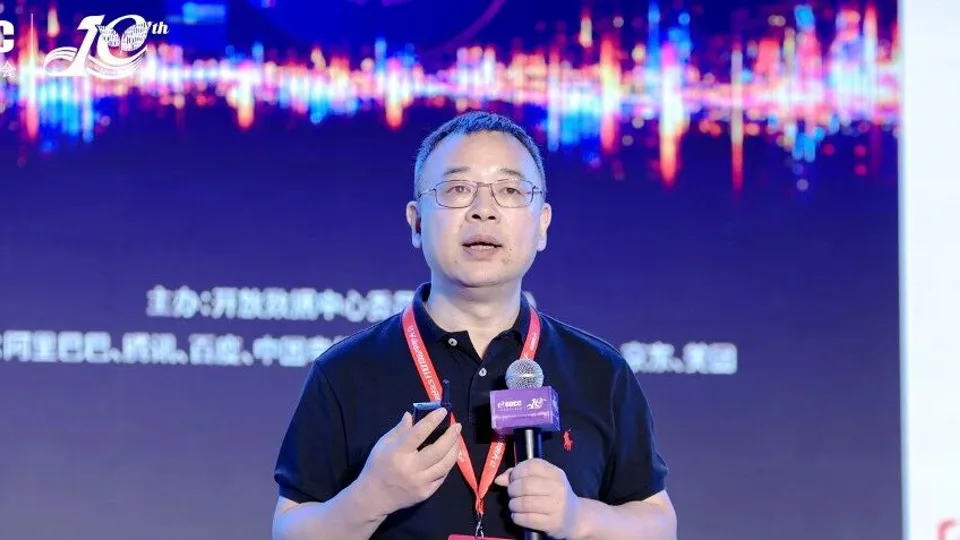
The 2023 Open Data Center Conference in Beijing showcased Alibaba Cloud's AI‑era infrastructure innovations—including high‑density compute clusters, predictable high‑performance networking, intelligent power‑simulation systems, battery diagnostics, liquid‑cooling solutions, and modular server standards—demonstrating how cloud platforms are being rebuilt to meet the demands of large AI models and sustainable operation.
The article analyzes the rapid growth of the global cloud storage market, explains core technologies such as software‑defined storage, distributed storage and hyper‑convergence, reviews major vendors and market forecasts, and discusses the evolving ecosystem of operating systems and open‑source initiatives driving future infrastructure development.
The talk from DataFun Summit 2023 explains how Baidu's CFS storage builds a trillion‑file‑scale distributed file system by revisiting file system fundamentals, POSIX limitations, historical storage architectures, and introducing a lock‑free metadata service with single‑shard primitives, data‑layout optimizations, and a simplified client‑centric architecture that achieves high scalability and performance.
The article recaps Google I/O Connect Shanghai, highlighting Google Cloud's leadership, its generative AI strategy with Vertex AI, developer‑focused tools like Duet AI and Gen App Builder, and Web session insights, while offering practical takeaways for developers and entrepreneurs interested in cloud‑based AI services.
The 2023 Inclusion·Bund Conference examined the surge in large‑model demand, GPU scarcity, and the resulting energy challenges, presenting policy initiatives, industry collaborations, and AI‑driven techniques aimed at building an end‑to‑end green computing ecosystem across the cloud and data‑center stack.
The article presents Ant Group’s edge‑cloud collaborative risk‑control solution, detailing its evolution from pure cloud to edge‑cloud and edge‑cloud‑edge models, the challenges of precise, low‑latency detection, privacy protection, and the core AI algorithms such as personalized models, federated learning, and differential privacy.
This article provides a comprehensive overview of Seata, a distributed transaction framework that ensures data consistency across microservices through four transaction modes: AT, XA, TCC, and Saga, each with distinct characteristics and use cases.
Starting February 1, 2024, AWS will charge $0.005 per hour for each public IPv4 address across all services to manage scarce IPv4 resources, encourage IPv6 migration, and introduce a Public IP Insights tool for better usage monitoring.
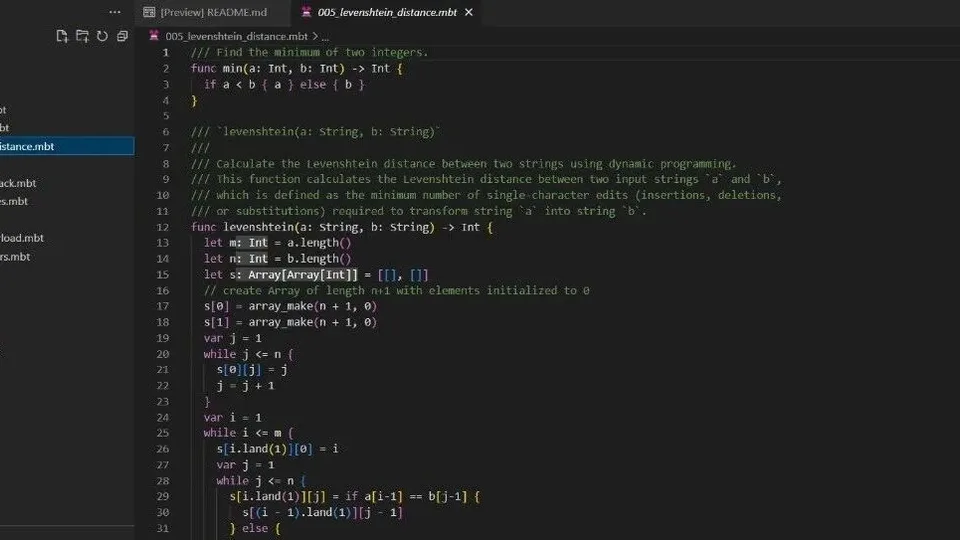
MoonBit, a new WebAssembly‑based programming language from China, targets cloud and edge computing with a vertically integrated toolchain, offering tiny WASM binaries, high runtime performance, advanced compilation speed, and a data‑oriented design, and includes sample code, benchmarks, and future roadmap details.
Magnetic tape, once the music‑distribution workhorse, remains essential for enterprise deep‑archive thanks to its low cost, high capacity, and durability, with LTO and IBM 3592 cartridges housed in large libraries, while cloud object‑storage deep‑archive tiers and Tencent’s Berg cold‑data engine provide API‑driven ingestion, retrieval, erasure‑coding, and fault‑tolerant management for truly cold workloads that tolerate hours‑long latency.
MoonBit, a new WebAssembly‑based programming language created by a Chinese development team, targets cloud and edge computing with an integrated toolchain that includes a compiler, build system, IDE and deployment tools, offering smaller binaries, higher runtime performance, and advanced compile‑time optimizations, as demonstrated by benchmarked Fibonacci implementations in MoonBit, Go, and Rust.
This article explains Baidu's CFS architecture for building a billion‑file‑scale distributed file system, covering basic file system concepts, POSIX limitations, metadata service modeling, performance metrics, evolution of metadata architectures, and CFS's lock‑free design that achieves high scalability, low latency, and balanced load in cloud storage.
The article explains the overall architecture of remote development, why remote development is needed, how cloud‑based environments improve security, consistency, and resource control, and details JetBrains' remote development features that enable instant, reproducible IDE workspaces on remote servers.
The MagicScaler framework, introduced by Alibaba Cloud’s big‑data engineering team and collaborators, combines a multi‑scale attention Gaussian process predictor with an uncertainty‑aware elastic scaling decision engine, delivering significantly higher quality‑of‑service and lower operational costs than traditional autoscaling methods, as demonstrated on real MaxCompute workloads.
A VLDB 2023 Industrial Track paper by Alibaba Cloud introduces MagicScaler, a predictive autoscaling framework that combines multi‑scale attention Gaussian processes with uncertainty‑aware optimization to deliver high QoS at reduced cost for cloud resources.
The award‑winning paper by Alibaba Cloud and North China Electric Power University presents a novel low‑carbon online scheduling strategy for massive heterogeneous workloads in cloud data centers, demonstrating up to 37% energy cost reduction and 14% carbon emission savings through information‑energy coupling and power‑grid coordination.
The article highlights the pivotal role of computing power in the digital economy, summarizes the 2023 China Computing Power Conference hosted by the Ministry of Industry and Information Technology and Ningxia, and details Alibaba Cloud's award-winning AI‑driven services, low‑carbon data‑center research, innovative academic cases, and its commitment to greener, more affordable cloud solutions.
The Forbes 2023 Cloud Computing Top 100 list reveals a shifting landscape where artificial intelligence is propelling new entrants like OpenAI and AI startups to the forefront, boosting established providers, while traditional cloud firms face layoffs and valuation pressures, highlighting both growth opportunities and diversity challenges.