Feign may be set to a 3‑second timeout, but in Spring Cloud versions before 2020.0 the call is handled by Ribbon, whose default 5‑second read timeout and a single retry to another instance double the wait, producing a consistent 10‑second timeout; the article details this behavior and shows how to configure Ribbon, upgrade Spring Cloud, or use a circuit‑breaker to enforce the intended timeout.
This guide explains why mastering etcd is essential for Kubernetes stability and walks through its core concepts, Raft consensus, MVCC storage, deployment, backup and restore procedures, scaling from three to five nodes, performance optimization, monitoring, alerting, troubleshooting, upgrade strategies, security hardening, and real‑world best‑practice recommendations.
This article explains Docker’s client‑server architecture, common command‑line tools, the underlying Linux technologies (namespaces, cgroups, UnionFS) that enable containers, compares containers with traditional virtual machines, and details Docker’s networking modes and image layering.
PinMe is a 3.6k‑star open-source CLI that lets you create and deploy a full‑stack React front‑end, Cloudflare Worker back‑end, and D1 database with a single command, using IPFS for static assets and ENS for domains, while supporting incremental updates and Claude Code integration, though it has upload size limits and requires wallet balance for custom domains.
The article walks through common Kubernetes health‑probe pitfalls for Spring Boot services and presents a concrete set of liveness, readiness, graceful‑shutdown, autoscaling, and configuration‑separation techniques that together raise production availability to 99.9%, backed by real‑world incidents and code snippets.
The article explains why the default Kubernetes scheduler is insufficient for production, details the four scheduling constraints—resource, topology, performance, and governance—covers the scheduler's internal phases, and provides practical patterns, code examples, and troubleshooting steps for robust Deployment node scheduling.
A comprehensive, step‑by‑step guide that explains the most common Kubernetes failure scenarios—from pod crashes and image pull errors to node NotReady and API server timeouts—provides concrete kubectl commands, diagnostic scripts, real‑world case studies, best‑practice recommendations, monitoring metrics, and backup‑restore procedures to keep production clusters healthy.
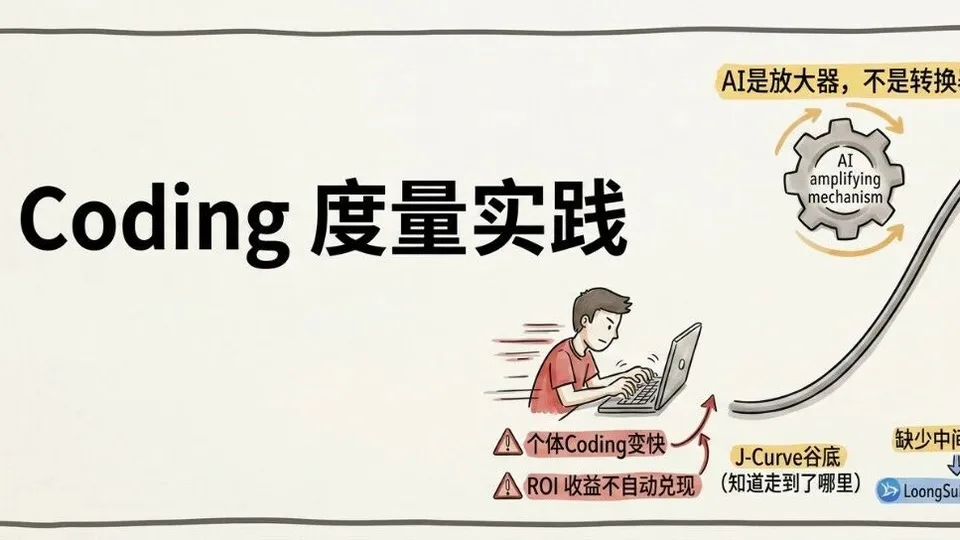
The article explains how to capture event‑level AI coding agent data using LoongSuite‑Pilot, align it with the LoongSuite GenAI semantic conventions, store it in Alibaba Cloud Log Service (SLS), and construct a multi‑layered SQL dashboard that turns personal usage signals into organization‑wide metrics for informed decision‑making.
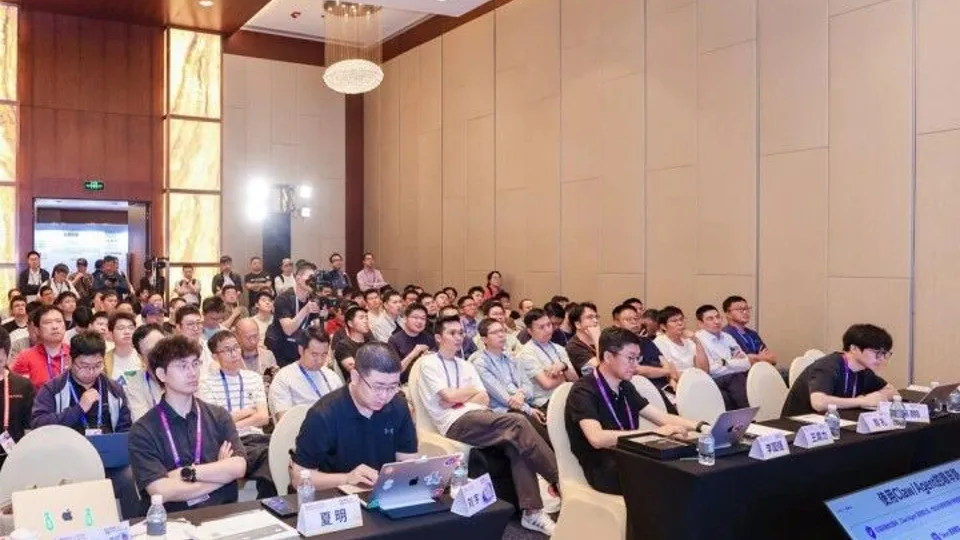
The Agentic AICon event gathered over 180 technical professionals to dissect enterprise‑scale agent engineering, presenting the full lifecycle of Agent Infra—including construction, deployment, observability, and intelligent operations—through detailed sessions on HiClaw, AgentRun, AgentLoop, STAROps, and a RocketMQ‑based asynchronous architecture.
This guide explains how to write Dockerfiles that dramatically reduce image size, speed up builds, and improve security by leveraging layer caching, multi‑stage builds, BuildKit features, proper base‑image selection, and CI/CD integration, with concrete examples for Node.js, Python, Go, and Java projects.
This guide walks you through every step of Docker container deployment, covering installation, environment requirements, daemon configuration, Dockerfile best practices, multi‑stage builds, Compose orchestration, security hardening, resource limits, monitoring, troubleshooting, and production‑grade recommendations to ensure reliable, scalable services.
This guide explains why the kube‑scheduler becomes a bottleneck in large clusters, walks through its architecture, scheduling cycle, queue mechanics, constraint handling, plugin framework, multi‑scheduler designs, production‑grade tuning, observability, and real‑world case studies for achieving stable, high‑throughput pod placement.
This guide explains why ConfigMap and Secret often cause production incidents, outlines their responsibilities, details the propagation chain from the API server to pods, and provides concrete best‑practice patterns—including immutable objects, GitOps workflows, external secret management, reloader controllers, and observability—to achieve safe, scalable configuration governance in Kubernetes.
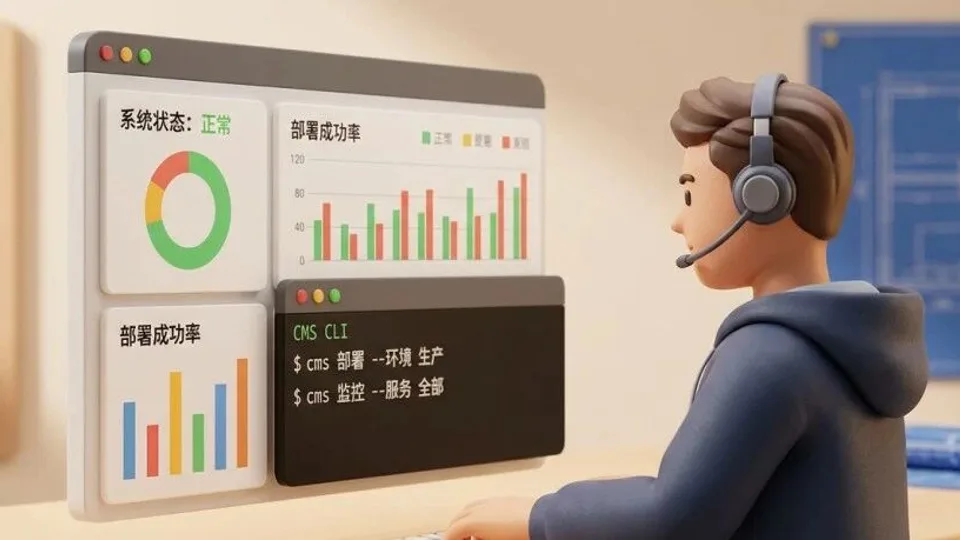
The article shows how Alibaba Cloud's CMS CLI and the AI‑driven alibabacloud‑cms‑manage Skill turn a multi‑step observability setup into a single natural‑language command, detailing the six‑step CLI workflow, the two‑stage confirmation safety, and a full K8s LangChain auto‑integration demo.
This article examines why many Kubernetes failures stem from the container runtime layer, explains the responsibilities of Docker, containerd, runc, and CRI, and provides production‑grade architectures, tuning guidelines, migration steps, security hardening, and observability practices to keep clusters stable and performant.
Rolling updates in Kubernetes go beyond simple image changes, requiring a coordinated strategy across control planes, scheduling, service discovery, traffic routing, and application lifecycle; this article dissects Deployment mechanics, readiness probes, capacity modeling, and practical configurations to build a safe, observable, and controllable production release system.
This guide walks SREs and DevOps engineers through the challenges of log aggregation in containerized Kubernetes environments and shows how Loki, Promtail, and Grafana together provide a low‑cost, label‑based alternative to the ELK stack, covering architecture, deployment, query language, multi‑tenant security, performance tuning, alerting, and disaster recovery.
This article explains how to build a full‑link gray (canary) release for a Spring Cloud microservice system by leveraging Nacos as the service registry, Spring Cloud Gateway filters, a custom Ribbon load‑balancer, and OpenFeign interceptors, complete with demo project structure, configuration files, and three test scenarios.
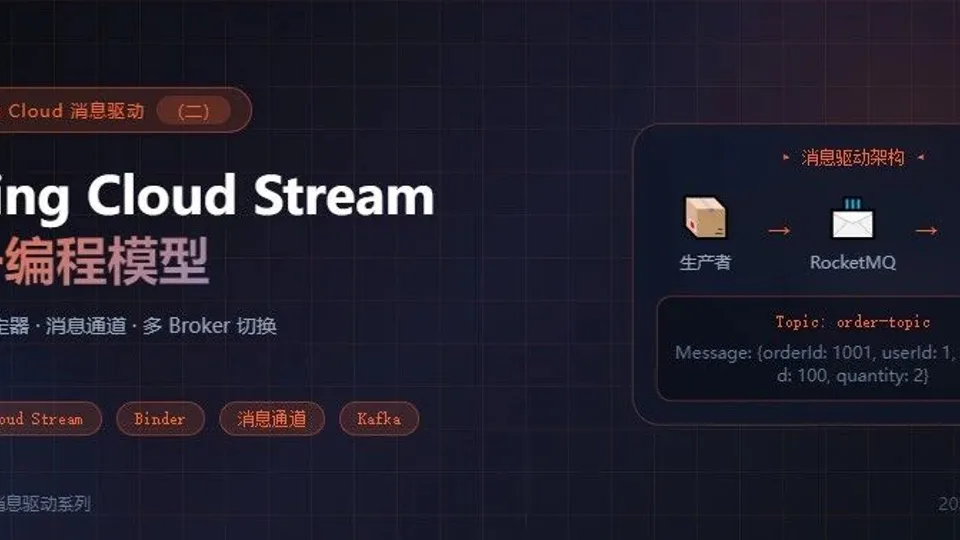
This article demonstrates how Spring Cloud Stream provides a unified programming model that decouples business logic from the underlying message broker, allowing a single codebase to work with RocketMQ, Kafka, or RabbitMQ by only changing configuration, and walks through project structure, implementation, conditional routing, MQ switching, testing, and common pitfalls.