In 2026, rapid AI-driven market changes have squeezed the window for “stable iteration,” forcing CTOs to prioritize change‑response capability over traditional high‑availability metrics and to adopt modular, evolving architectures that isolate fast‑moving layers while keeping the infrastructure layer rock‑solid.
This article explains why missing ResourceQuota and LimitRange cause cluster-wide failures, walks through core concepts, provides step‑by‑step commands for quota inspection, creation, and validation, shares a real‑world outage case study, and offers best‑practice recommendations, advanced configurations, monitoring, and rollback procedures for Kubernetes resource management.
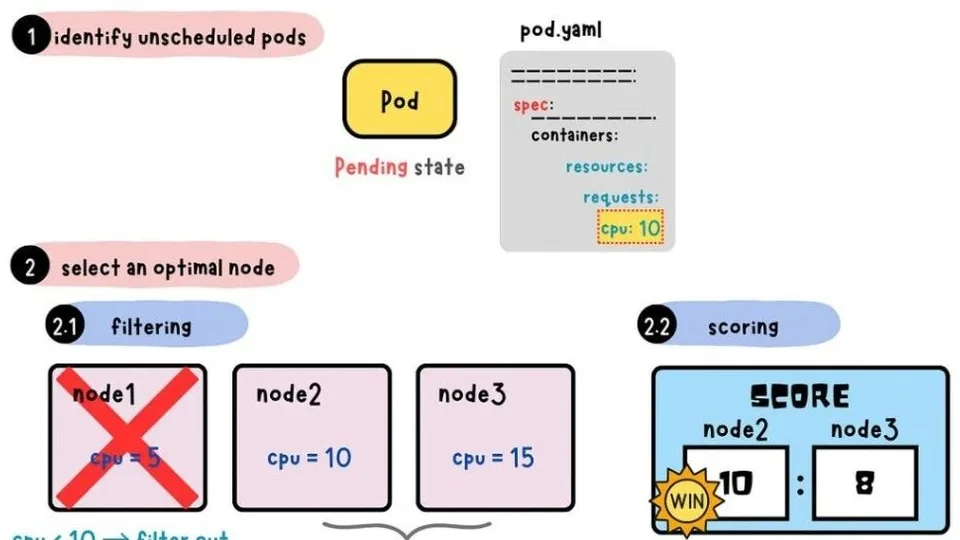
The article explains Kubernetes pod scheduling in detail, covering how the kube‑scheduler filters and scores nodes, binds the pod, and how kubelet launches containers, plus common reasons for pods staying Pending and useful troubleshooting commands.
The article analyzes the shortcomings of Kubernetes' native HPA and presents a comprehensive AI‑Agent architecture that predicts load, makes autonomous scaling decisions, and integrates with the K8s API to achieve proactive, adaptive, and globally coordinated pod autoscaling.
This comprehensive guide dissects the Kubernetes API Server’s request flow, storage model, consistency guarantees, and extension mechanisms, then walks through a real P0 incident, capacity‑planning tables, APF flow‑control, webhook design, etcd tuning, and concrete code samples to help platform teams build and operate production‑grade control planes.
The article analyzes the rapid growth of AI Agents, outlines the four core challenges of production‑grade agents—cost overruns, fault‑location inefficiency, security risks, and quality measurement—and presents Alibaba Cloud’s AI Agent Observability solution with a four‑layer architecture, end‑to‑end tracing, real‑time health dashboards, and Agentic Ops capabilities to address these issues.
When Docker fails to start because its default bridge networks clash with existing subnets, you can diagnose the issue by checking logs and routing tables, then resolve it by adjusting the daemon.json subnet settings, recreating the conflicting networks, and optionally rebuilding the ingress network.
The article explains how to design a production‑grade, unified batch‑task platform on Kubernetes that goes beyond a simple job UI, covering unified abstractions, multi‑tenant governance, state‑machine modeling, scalable scheduling, high‑concurrency handling, observability, security, and a phased roadmap for incremental implementation.
This article explains how to design and operate a scalable, multi‑tenant batch processing platform on Kubernetes using Argo Workflows, covering core concepts, DAG scheduling, concurrency control, controller scaling, artifact handling, event‑driven triggers, and practical best‑practice patterns for production reliability and cost efficiency.
This guide details the ten most frequent issues encountered when converting Docker‑Compose configurations to Kubernetes, explains why direct mappings often fail, and provides concrete examples, correct configurations, validation steps, and best‑practice recommendations to help teams avoid weeks of troubleshooting.
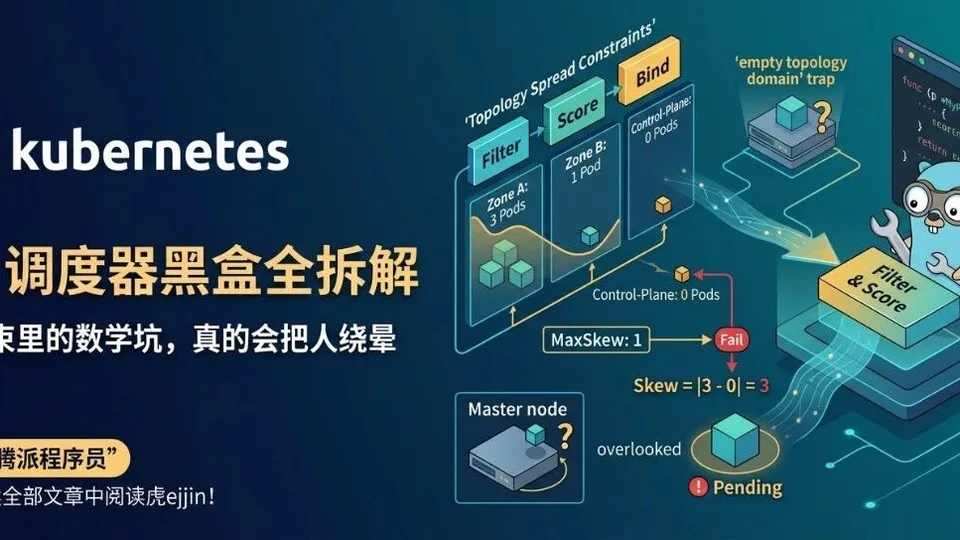
The article explains why Pod anti‑affinity often falls short, how TopologySpreadConstraints enforce a maxSkew balance across topology domains, why an “empty topology domain” can cause Pods to stay Pending, and provides a step‑by‑step guide to tightening domain scope and building custom Go scheduler plugins with the Kubernetes Scheduling Framework, while warning about dependency and version pitfalls.
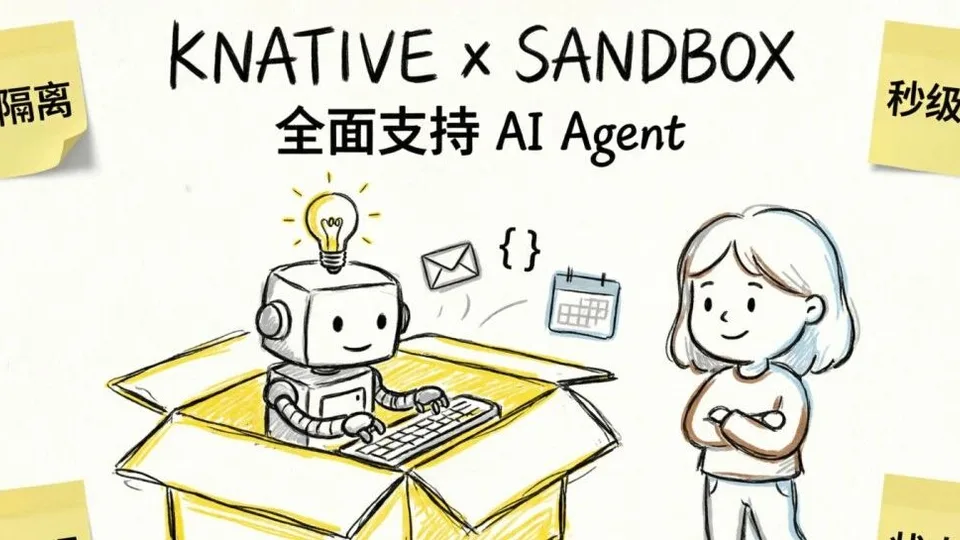
Alibaba Cloud's Knative now integrates a dedicated Agent Sandbox workload type, enabling stateful AI agents to run in a serverless Kubernetes environment with per‑user isolation, automatic scaling, instant pause/resume, and warm‑pool pre‑warming for zero‑cost idle periods.
This article explains how Kubernetes Jobs and CronJobs work under the hood, outlines production‑grade design principles such as idempotency, failure modeling, scaling, observability, and security, and provides concrete YAML configurations and Go code examples for building a reliable, high‑throughput batch processing platform.
When a Kubernetes Pod remains in the Pending state, this guide walks through seven systematic troubleshooting directions—covering node resource shortages, taints and tolerations, node selectors and affinity, PVC binding issues, image pull problems, quota limits, and priority or topology constraints—providing concrete commands, examples, and remediation steps to get the pod running.
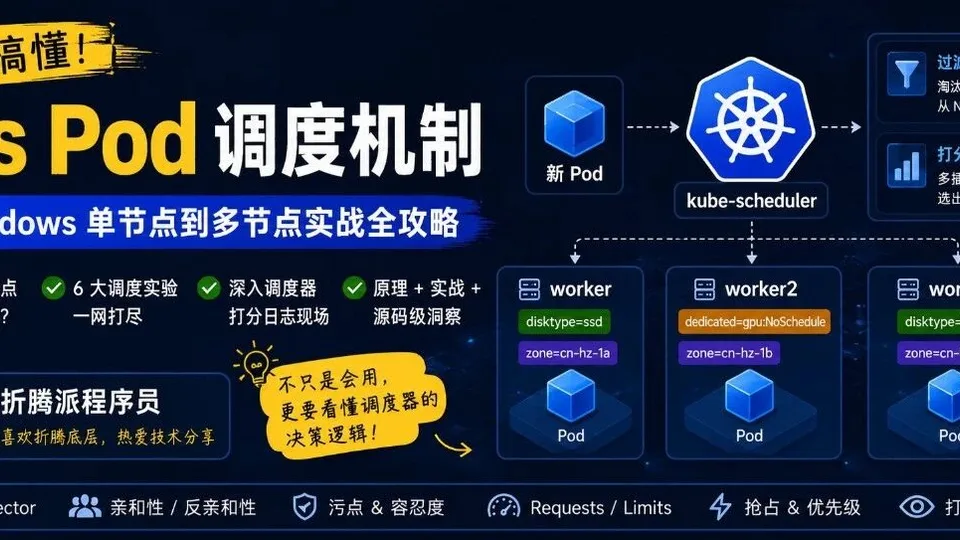
This article explains why single‑node clusters cannot demonstrate true Kubernetes pod scheduling, recommends using Kind to create multi‑node clusters on Windows, and walks through the scheduler’s filtering and scoring steps with concrete experiments such as nodeSelector, affinity, taints, requests/limits, and preemption.
This article explains that CrashLoopBackOff is a symptom, not the root cause, and walks through a production‑grade troubleshooting workflow—including checking pod status, describing events, examining logs (current and previous), and exec‑ing into containers—while covering common failures such as OOMKilled, liveness‑probe misconfiguration, bad config files, database connection issues, image command errors, and disk‑pressure problems, and warns against premature pod deletion.
Blade AI, the new open‑source intelligent layer for ChaosBlade, lets SREs describe fault scenarios in natural language and automatically handles target discovery, safety checks, execution, verification, and recovery, reducing a typical 20‑30 minute chaos experiment to a few seconds and enabling daily resilience testing.
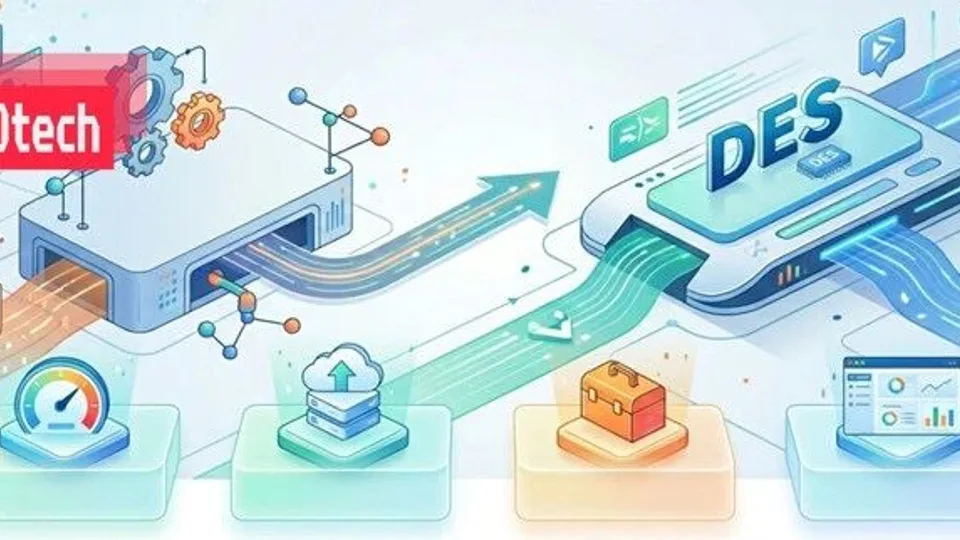
The article details the evolution from the first‑generation RedProcess scheduler to the Distributed Execution Scheduler (DES), explaining how architectural redesigns in storage layering, push‑based dispatch, and systematic disaster‑recovery transformed Xiaohongshu’s video‑cloud task scheduling from merely usable to highly efficient and resilient.
The article examines how AI‑native scientific agents demand flexible, secure, and observable infrastructure, and how Alibaba Cloud’s Serverless‑based AgentRun platform delivers extreme elasticity, cost reduction, stateful long‑running support, sandbox security, and full‑chain tracing to enable rapid deployment of tens of thousands of research tools.
The article analyzes a real-world sports‑venue management platform, detailing how multi‑level caching, asynchronous processing with RocketMQ, database sharding, service splitting, and Kubernetes auto‑scaling together reduced average response time from 1200 ms to 150 ms, increased throughput eightfold, and achieved 99.95% availability under tens of thousands of QPS.