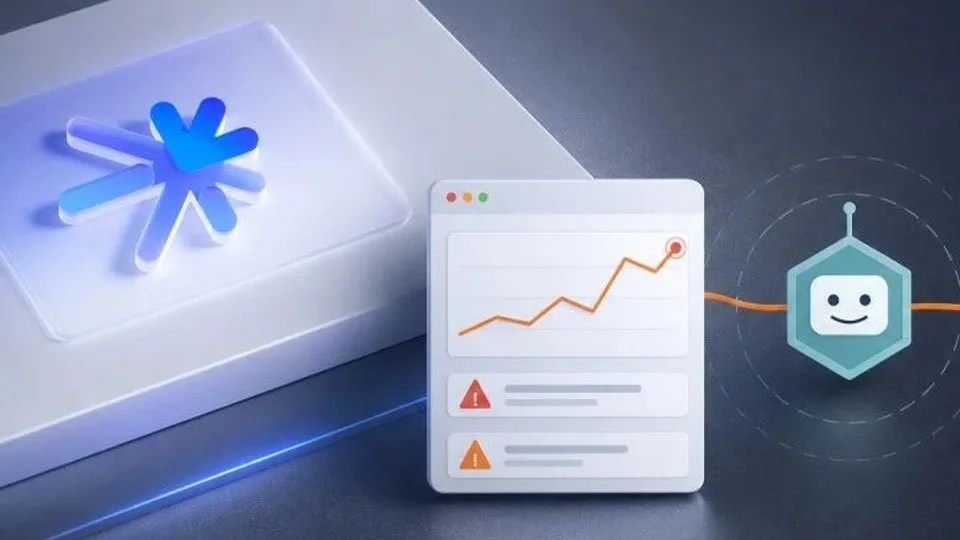
Alibaba Cloud Monitor MCP exposes nearly 200 tools via Model Context Protocol, letting AI agents query alerts, metrics, traces, and dashboards directly from a remote endpoint — eliminating local CLI setup and cutting a real-world checkout latency investigation from hours to 20 minutes.
This article explains how a pre-gateway routes requests to the correct container type, how dual storage tracks (shared filesystem for development, object storage for runtime) prevent file inconsistencies, and why a same-region file proxy handles I/O operations, including design trade-offs and common pitfalls.
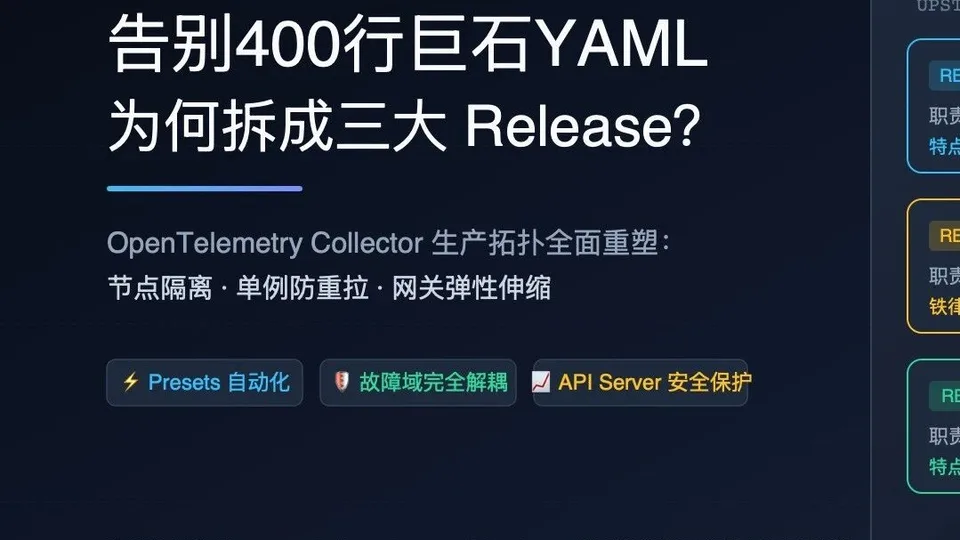
This article explains why OpenTelemetry Helm charts now recommend deploying Collector as three separate releases—otel-agent (DaemonSet for node metrics), otel-cluster (singleton Deployment for cluster metrics), and otel-gateway (scalable Deployment for trace ingestion)—detailing Presets simplification, lifecycle isolation, failure domains, and when to consolidate to two releases.
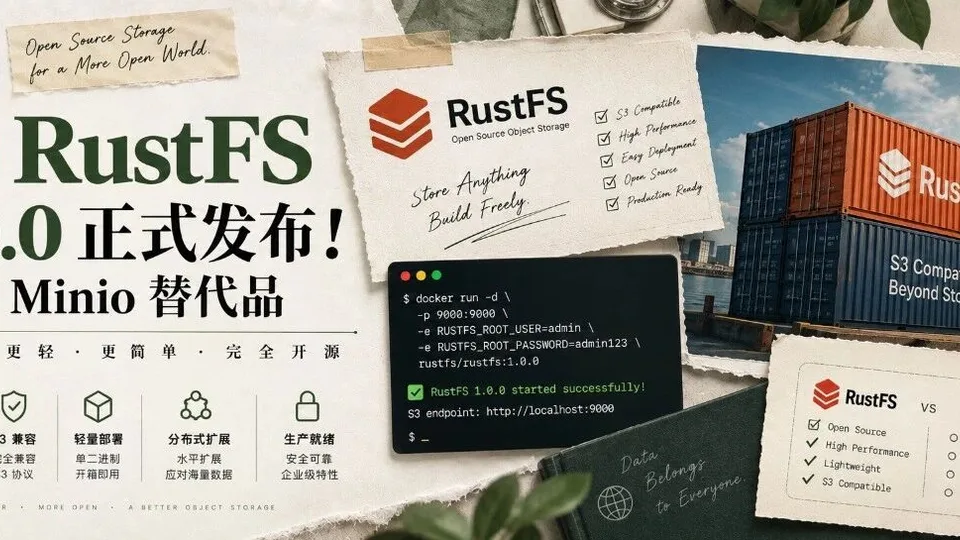
RustFS 1.0 GA launches as a production-ready, Apache 2.0-licensed, S3-compatible object storage written in Rust, offering MinIO migration paths, 2.3x faster 4KB object performance, and a roadmap targeting AI data infrastructure with S3 Tables and vector storage.
This article presents a practical guide for performance stress testing in domestic microservice containerization, addressing three core challenges—lack of unified computing power conversion, non-linear multi-core scalability, and frequent base software iterations—through standardized baselines, quantitative modeling, multi-core optimization, and continuous governance frameworks.
Cloud in a Bottle is a personal cloud OS that turns a single machine into a smartphone-like platform for deploying AI-generated web apps, using Docker and a minimal manifest to provide isolated, self-hosted applications with unified login and default-zero-trust security.
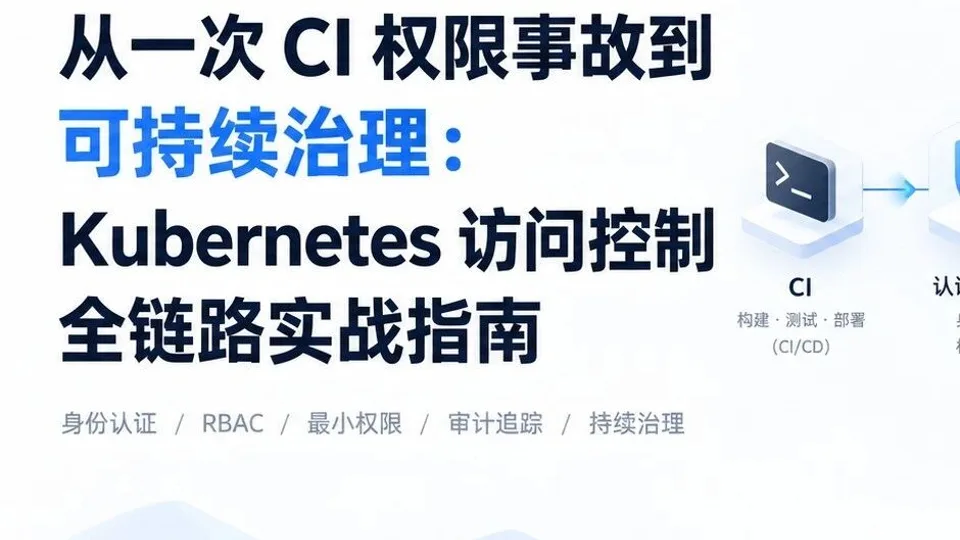
This guide analyzes a real CI permission breach and provides a comprehensive Kubernetes access control framework covering identity separation, least-privilege RBAC, Pod Security Admission, ValidatingAdmissionPolicy, NetworkPolicy, secret protection, and audit-driven validation for production clusters.
Lemon, a food retail SaaS provider serving 20,000+ stores, unified logs, metrics, and traces into a full-chain digital twin using Alibaba Cloud CloudMonitor 2.0 and STAROps, deploying four intelligent operations layers that cut alert noise by 70% and reduced incident response and MTTR to minutes.
This article analyzes how GraalVM Native Image 23.0 and Spring Boot 3.5 enable millisecond cold starts, 80% smaller containers, and production-ready serverless Java across AWS, Alibaba Cloud, Tencent Cloud, and Azure — with benchmarks, migration steps, and pitfall solutions.
This chapter teaches how to deploy and manage AI agents on DeepSeek's Agent Cloud Platform (ACP), covering architecture, cloud agent creation via UI/CLI/API, Cron and webhook triggers, API gateway integration, monitoring, alerting, and billing models.
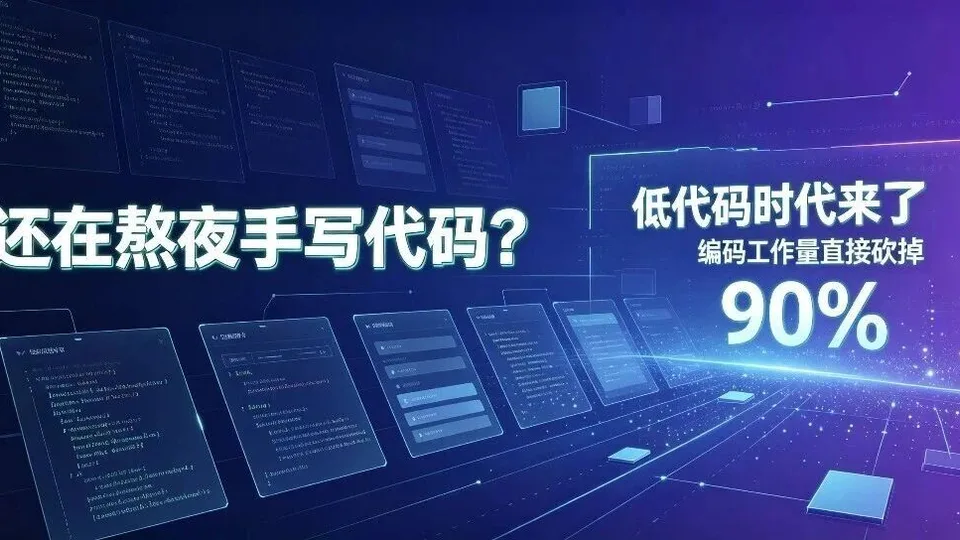
The article demonstrates how AI low-code tools like Cursor accelerate building a Kubernetes management platform, reducing development from 7-10 days to 1-2 days, with code examples for Go/FastAPI backend, Vue3 frontend, plus cases for Prometheus alert forwarding and CRUD backends, while stressing human oversight for security and logic.
Food retail digitalizer Lemon unified logs, metrics, and traces into a digital twin using Alibaba Cloud CloudMonitor 2.0 and STAROps with UModel, deploying unified alert governance, natural language observability, automated inspections, and AI-driven root cause analysis to achieve 70% alert convergence and minute-level MTTR across 20,000+ stores.
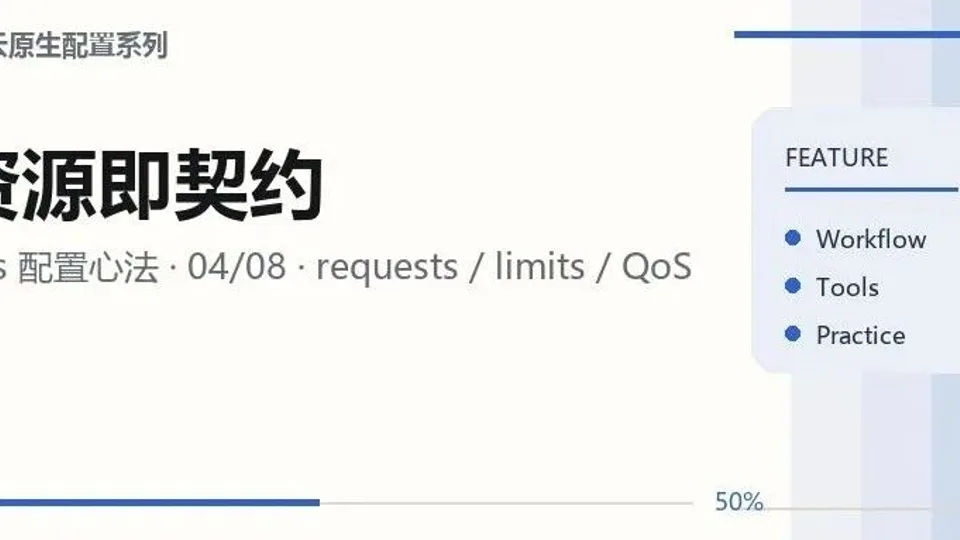
This article explains how Kubernetes requests and limits act as a contract between workloads and the scheduler, detailing their distinct roles, the divergent consequences of CPU throttling versus memory OOMKills, the three QoS classes that determine eviction priority, and how LimitRange and ResourceQuota enforce resource policies at the namespace level.
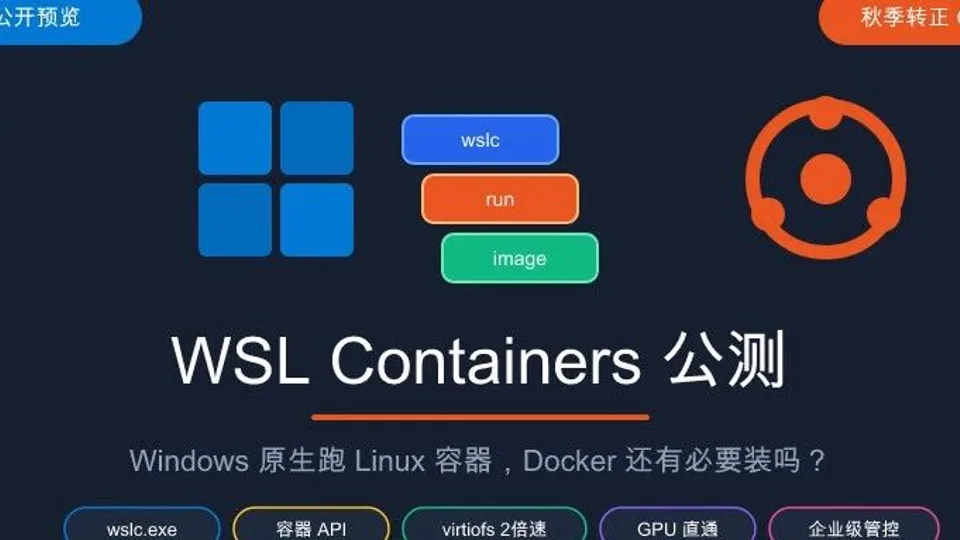
Microsoft's new WSL Containers feature brings native Linux container support to Windows via a Docker-compatible CLI (wslc) and API, but lacks docker compose, USB passthrough, and full networking, making it a preview complement rather than a Docker replacement until its 2026 GA release.
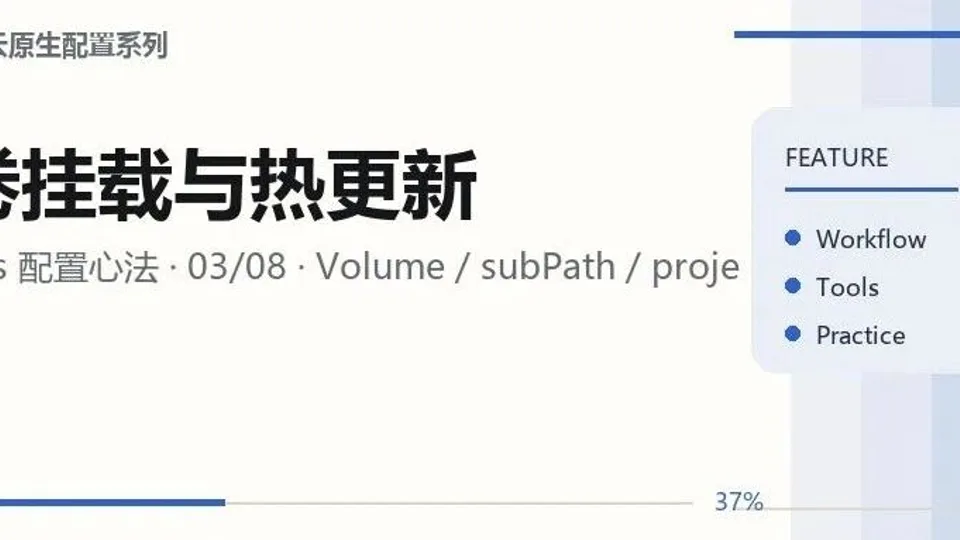
This article explains Kubernetes volume mounting for ConfigMaps and Secrets, detailing how directory mounts achieve hot reloads via atomic symlink switching, why subPath mounts never update, and how projected volumes merge multiple configuration sources into a single directory.
Ray History Server solves the loss of observability when ephemeral Ray clusters terminate by archiving logs, events, and dashboard snapshots to object storage, enabling long-term querying, debugging, and unified access to both live and historical clusters via a reconstructed dashboard.
This article provides a comprehensive interview‑style walkthrough of Spring Cloud OpenFeign, covering its purpose, advantages over HttpClient and RestTemplate, timeout configuration, fallback vs fallbackFactory, JDK dynamic‑proxy internals, interface requirements, @EnableFeignClients scanning, custom interceptors/encoders/decoders, load‑balancing strategies, common pitfalls, Ribbon vs Spring Cloud LoadBalancer, FeignContext isolation, mandatory name attributes for @PathVariable/@RequestParam, why GET cannot use @RequestBody, and Resilience4j circuit‑breaker integration.
The article demonstrates how STAROps' full-stack correlation combined with Yaochi Agent's deep database diagnosis enables cross-layer root cause analysis across three real incidents: an RDS missing index, a Redis Lua script blocking the single thread, and an EVAL command causing CPU saturation, showing command-level diagnostic precision.
The article explains how container performance testing must evolve from simple load simulation to chaos‑engineered, observability‑driven capacity planning, introduces a 4‑dimensional capacity model, and shows automated SLI‑based scaling using real‑world e‑commerce and finance case studies.