In a SaaS analytics platform with a 45‑billion‑row, 1.2 TB events table, the author shows how moving to native PostgreSQL range partitioning by event_time, combined with zero‑downtime migration steps, reduced the typical P99 query latency from 43 seconds to about 0.3 seconds while enabling easier data lifecycle management.
This guide walks you through a complete emergency response, root‑cause analysis, and long‑term mitigation for MySQL connection‑limit exhaustion, covering Linux diagnostics, SQL commands, quick‑kill scripts, monitoring with Prometheus/Grafana, and best‑practice configuration of connection pools and max_connections.
Most online Redis tutorials compile and run as root, creating serious security risks, so this guide walks through a complete, non‑root deployment and upgrade process—including backup, source compilation with a private prefix, configuration reuse, environment setup, post‑upgrade hardening, and a one‑click rollback—to safely patch high‑severity vulnerabilities on common Linux distributions.
The article outlines six major challenges introduced by database sharding—cross‑database joins, pagination, distributed transactions, global ID generation, data migration, and aggregation—along with practical solutions such as binding tables, cursor pagination, Seata AT mode, Snowflake IDs, dual‑write scaling, and summary tables, providing interview‑ready answers.
PostgreSQL is attracting renewed interest not because it magically becomes an all‑purpose AI database, but because AI applications in production demand a unified, consistent platform that can manage business records, vector embeddings, agent state, permissions and tooling, and PostgreSQL’s extensible ecosystem—pgvector, serverless architectures, branching, and MCP—offers exactly that blend of relational reliability and AI‑native capabilities.
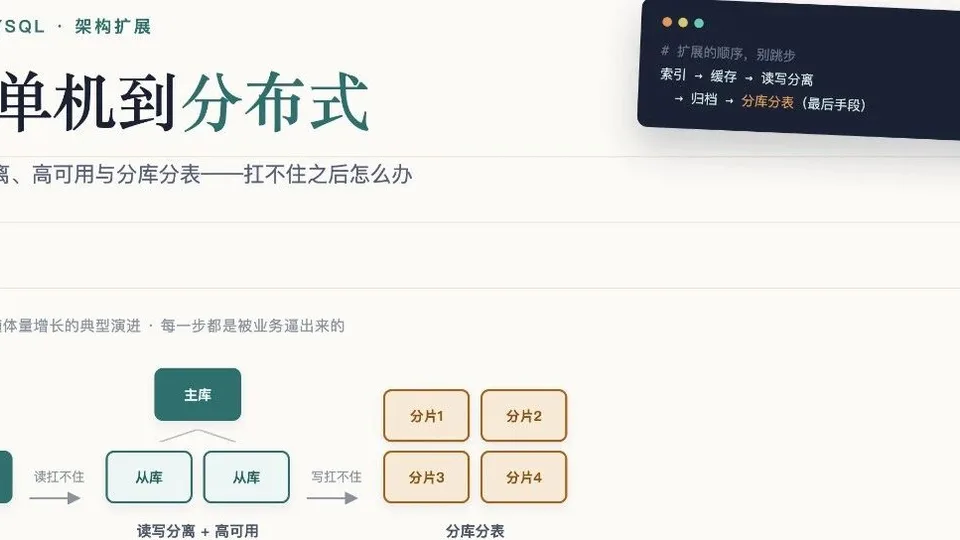
The article explains why a single MySQL server eventually hits read, write, or availability limits, outlines a step‑by‑step evolution—from SQL tuning and caching to read‑write splitting, high‑availability setups, and finally vertical or horizontal sharding—while warning against premature distribution.
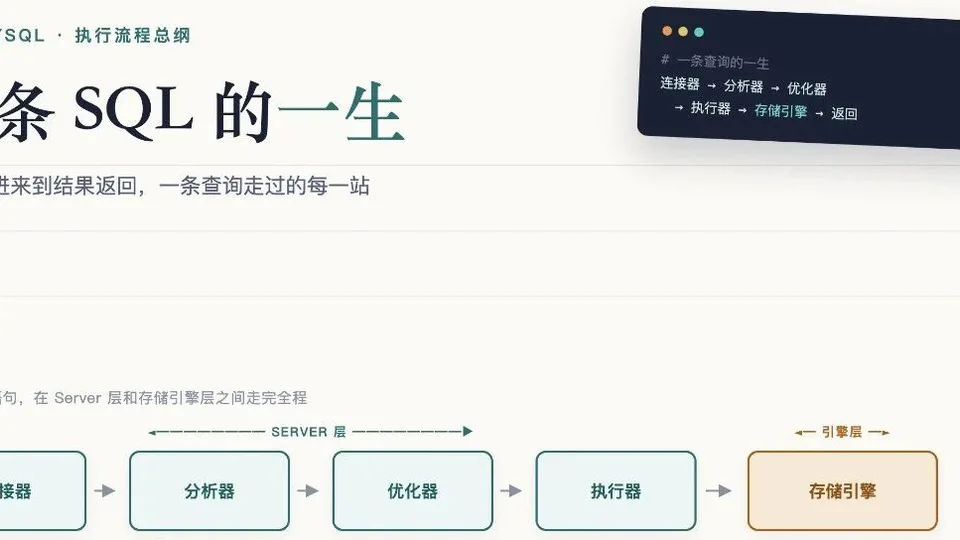
This article walks through every stage a MySQL statement undergoes—from client connection, authentication, and (now‑removed) query cache, through parsing, optimization, execution, and storage‑engine access—highlighting the roles of InnoDB vs MyISAM, logging mechanisms, and best‑practice table design tips.
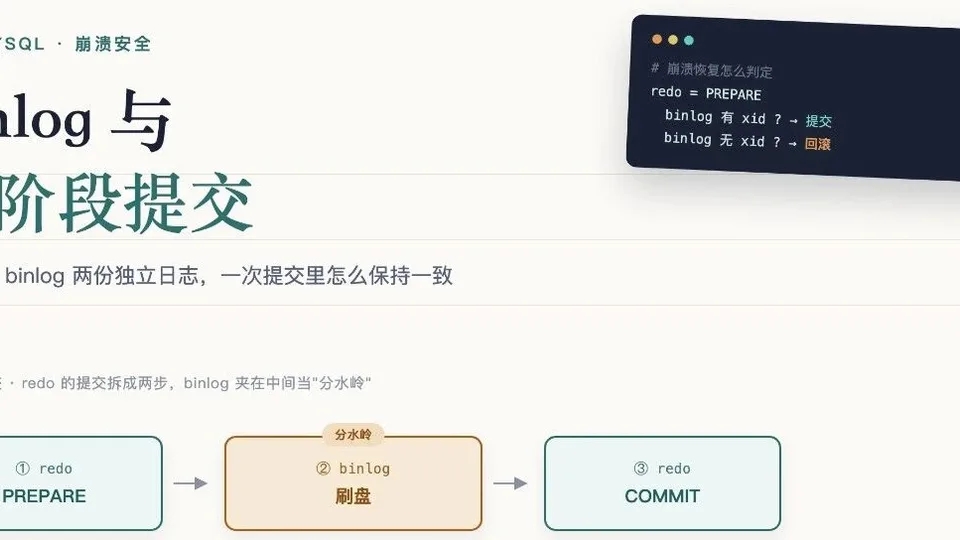
This article explains what MySQL's binary log (binlog) is, how it differs from the redo log, the three binlog formats, the full execution flow of an UPDATE statement, why MySQL uses a two‑phase commit, and how crash recovery ensures data consistency across primary and replica servers.
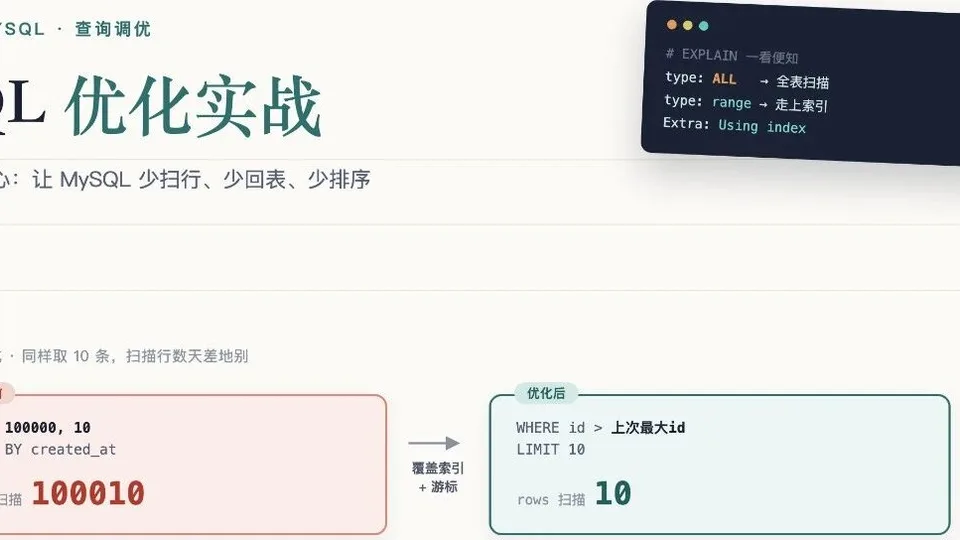
The article explains how to make MySQL do less work by reducing scanned rows, avoiding back‑and‑forth lookups with covering indexes, and minimizing sorting or temporary tables, while detailing common index pitfalls, deep pagination tricks, COUNT usage, ORDER BY/filesort handling, JOIN strategies, and step‑by‑step methods for finding and fixing slow SQL statements.
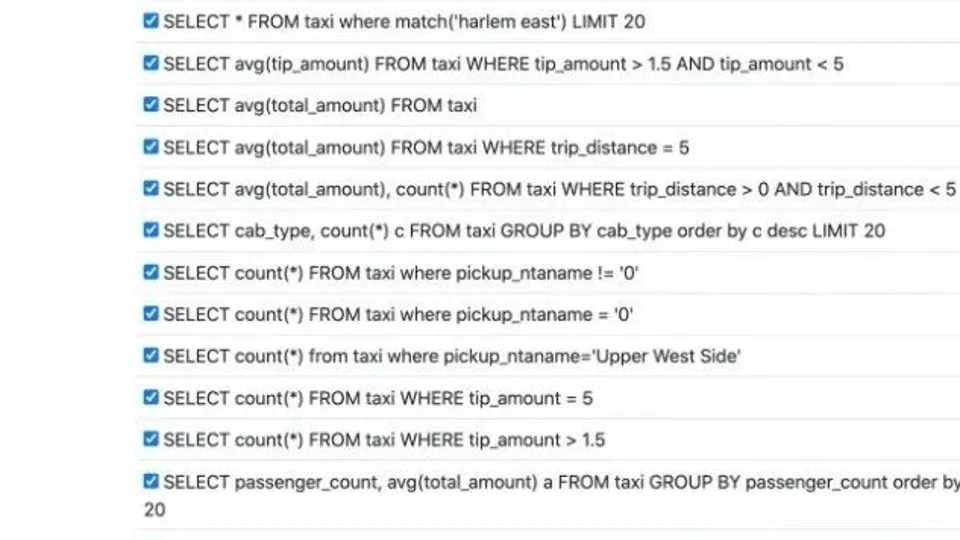
Manticore Search, a C++‑based open‑source search engine forked from Sphinx, claims to outperform Elasticsearch by up to 15× in various scenarios, offers modern multithreaded architecture, SQL compatibility, extensive client libraries, and easy Docker deployment, positioning itself as a fast, lightweight, full‑text search solution.
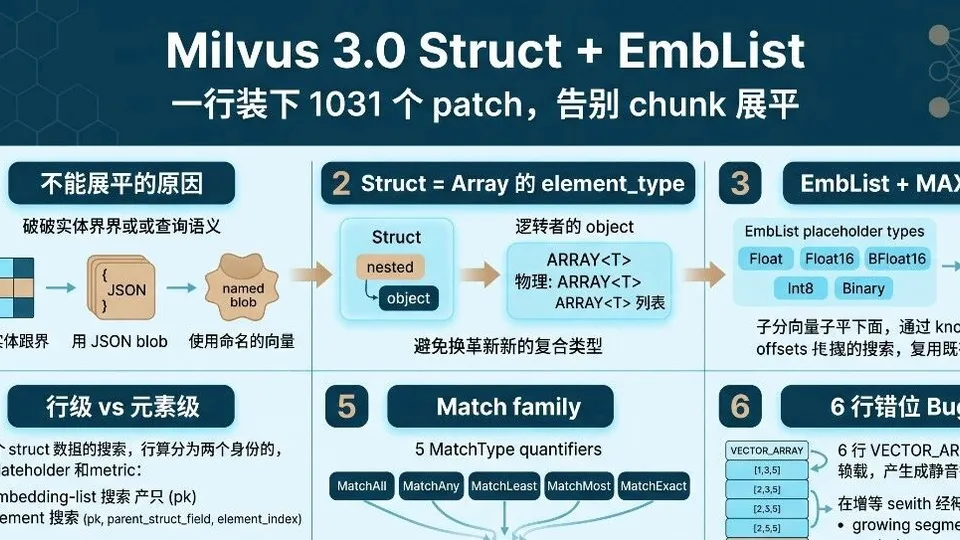
The article dissects Milvus 3.0's Struct and EmbList design for storing and querying multi‑vector documents, compares flattening, JSON and named‑vector approaches, explains storage constraints, row‑level vs element‑level search semantics, MAX_SIM integration, a sealed‑segment bug, and practical checklist recommendations.
In PostgreSQL versions prior to 14, a DELETE without a partition filter on a table with 20,000 partitions caused the server to allocate over 120 GB of memory within 60 seconds; the article shows how to reproduce the issue, diagnose it with MemoryContextStat and perf, and explains the fix introduced in PG14.
The article examines how databases, after five decades of human‑centric design, are undergoing a fundamental transformation driven by Agentic AI, requiring new semantics, multimodal storage, memory capabilities, and integrated engines, illustrated through insights from Yang Yu of KuKe Data.
The article explains the differences between database sharding, table sharding, and combined sharding, outlines interview expectations, details vertical and horizontal splitting strategies, discusses when to apply each technique, and reviews practical tools such as ShardingSphere and MyCat for Java projects.
The article provides a detailed 2026 H1 review of global database trends, highlighting the shift to AI‑native and lake‑house architectures, summarizing major version releases across RDBMS, NoSQL, big‑data ecosystems and domestic solutions, and analyzing their technical features, compliance, performance and market implications.
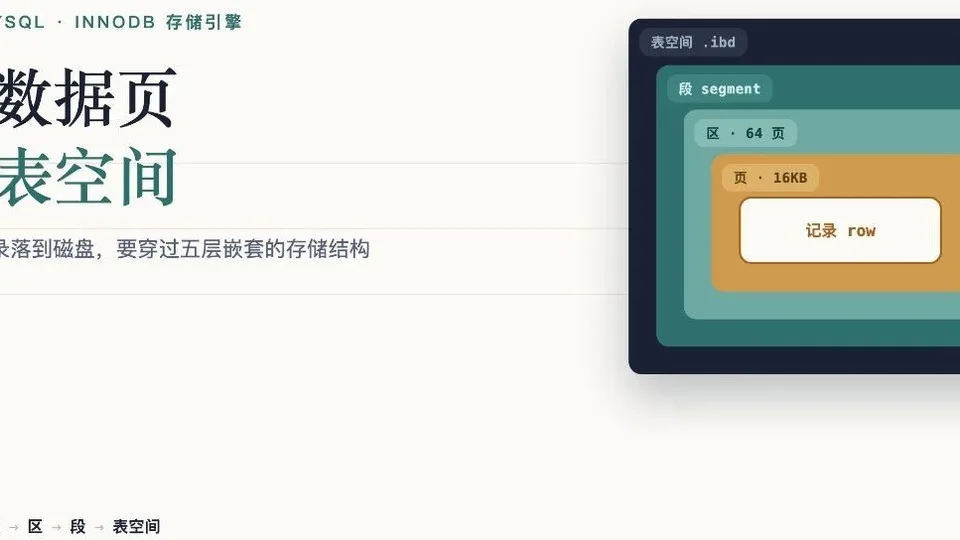
This article walks through MySQL InnoDB's five‑level storage hierarchy—record, page, extent, segment, tablespace—explaining page internals, record chaining, page directories, headers, trailers, extent and segment management, and the system tablespace and data dictionary across MySQL 5.7 and 8.0.
This article explains how to capture and stream row‑level changes from PostgreSQL using its Write‑Ahead Log, compares the approach with MySQL binlog CDC, and provides a step‑by‑step guide—including configuration, logical decoding, snapshot handling, replication slots, and production‑grade correctness considerations—to build a reliable CDC pipeline.
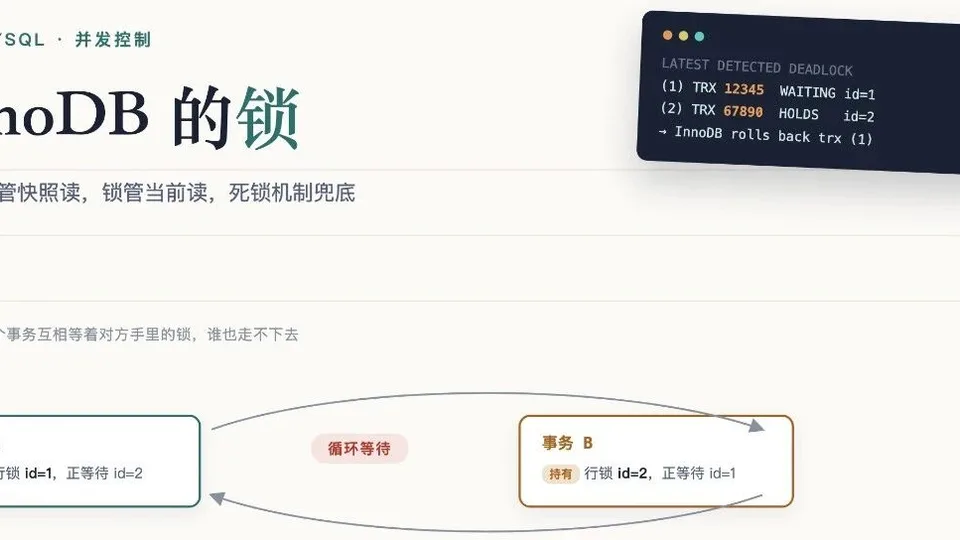
This article explains why MySQL needs locks beyond MVCC snapshot reads, categorizes lock granularity, mode and design, details global, table and row‑level locks—including intention, gap, next‑key, and implicit locks—then compares pessimistic and optimistic locking, shows how to choose the right lock, and covers deadlock causes, detection, and best‑practice avoidance.
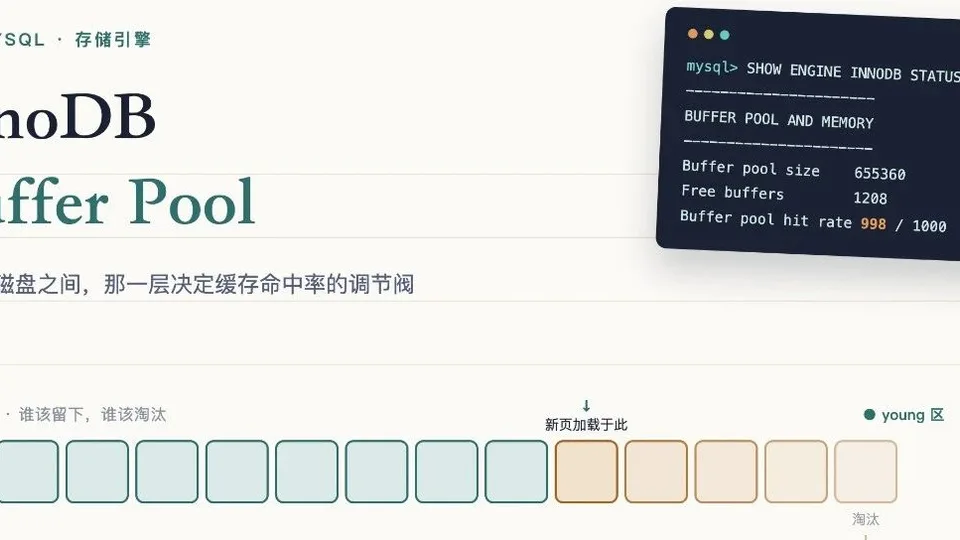
The article explains why InnoDB must cache disk pages in a Buffer Pool, details the pool's internal structure, eviction policies, dirty‑page flushing mechanisms, multi‑instance and chunk sizing for large workloads, and how to monitor its health with SHOW ENGINE INNODB STATUS.
Databasus is an open‑source backup management platform that unifies PostgreSQL, MySQL, MariaDB and MongoDB backups with a web UI, offering logical, physical and incremental backups, automated scheduling, AES‑256‑GCM encryption, multi‑cloud storage, RBAC collaboration, and optional agents for secure, out‑bound connections.