This guide walks through a systematic approach to uncovering and fixing MySQL slow queries, covering slow‑query‑log configuration, log analysis with mysqldumpslow and pt‑query‑digest, EXPLAIN‑based execution‑plan inspection, index design principles, SQL rewrites, configuration tuning, and ongoing monitoring to prevent performance regressions.
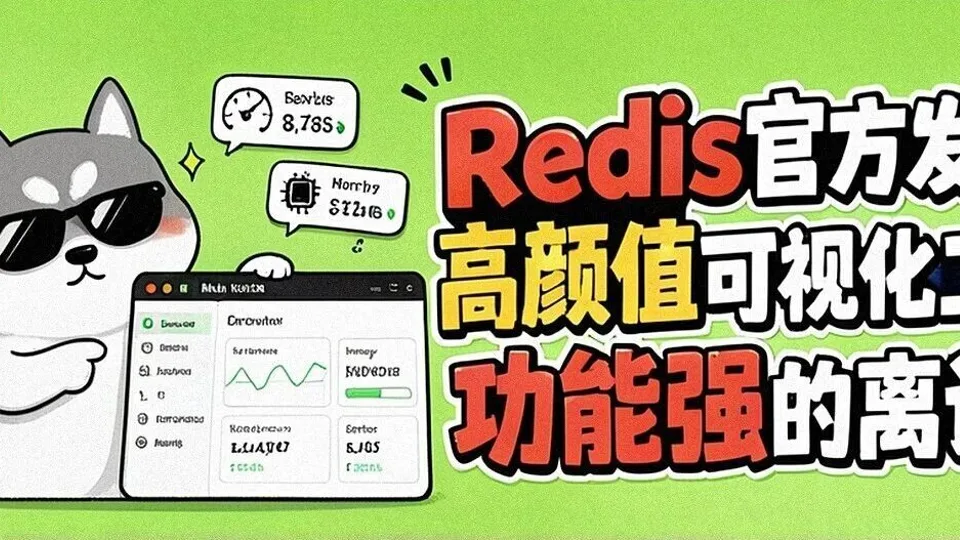
RedisInsight is a visual GUI for Redis that uniquely supports Redis Cluster, offers SSL/TLS connections, memory analysis and an integrated CLI; the article walks through downloading the package, configuring environment variables, starting the service on Linux, deploying it on Kubernetes with a YAML manifest, and using the UI to monitor and operate Redis instances.
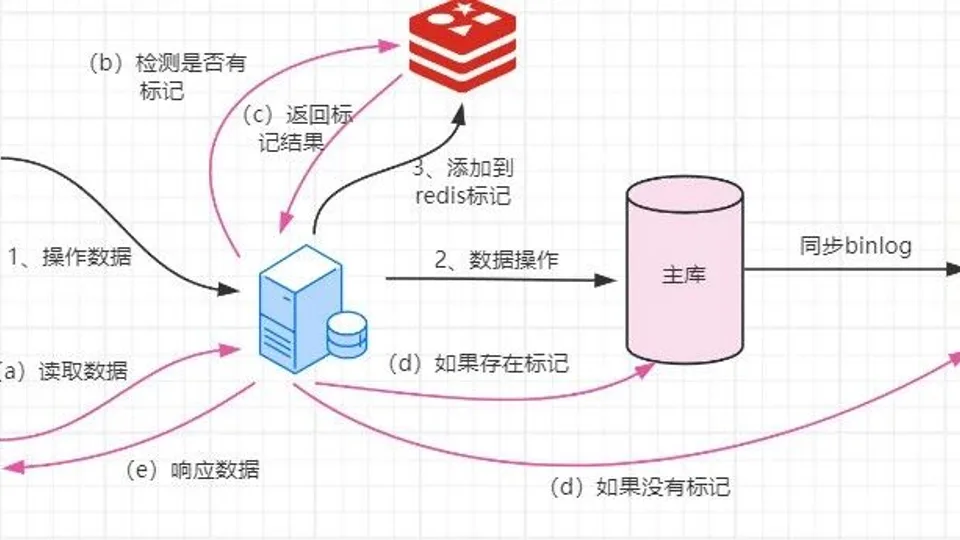
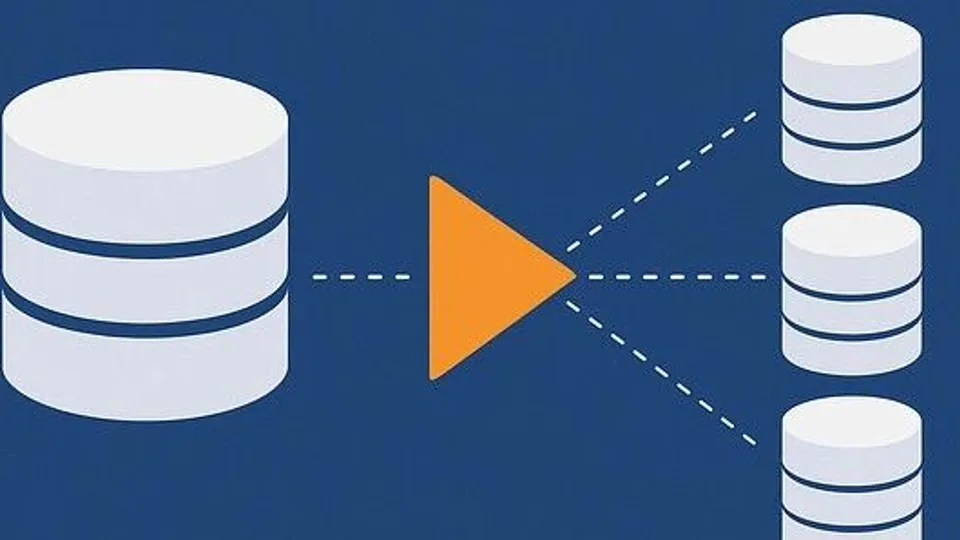
To address MySQL master‑slave replication lag, the article explains enabling parallel replication (setting slave_parallel_workers), routing reads to the master for latency‑sensitive operations, and using a Redis short‑term marker to direct recent writes to the master, while outlining configuration steps and trade‑offs.
This article walks through setting up ClickHouse 24.8‑alpine, explains the MergeTree storage model, demonstrates data import and ADS queries, and then directly compares ClickHouse’s performance and semantics with Apache Doris on an identical orders CSV dataset, offering practical selection guidance and troubleshooting tips.
The article explains how partitioning splits tables within a single database and how sharding distributes data across multiple database instances, comparing their types, advantages, limitations, and trade‑offs, and provides practical examples and a decision framework for choosing the right strategy.
This article breaks down MySQL’s locking mechanisms—table, row, and gap locks—explaining their principles, performance trade‑offs, when they are triggered, how they relate to index usage, and provides practical deadlock avoidance techniques and a concise cheat‑sheet for common concurrency problems.
This article walks through a complete production‑grade view of MySQL 8.4 LTS, explaining how a chain of traffic spikes, connection‑pool exhaustion, long transactions and replication lag can cause an avalanche, and then detailing the five core modules, seven production mechanisms, architectural evolution steps, incident post‑mortems, and concrete configuration and code examples to build a resilient MySQL service.
This comprehensive guide walks MySQL administrators through the fundamentals of backup and recovery, covering RPO/RTO concepts, tool comparisons (mysqldump, mydumper, xtrabackup), step‑by‑step scripts for full, incremental, and binlog backups, encryption, compression, troubleshooting, and best‑practice monitoring to ensure data safety and rapid restoration.
When MySQL replication latency jumps from milliseconds to 10 seconds, blindly raising replica_parallel_workers won’t help; the article walks through diagnosing the delay, then applies three concrete parallel‑replication optimizations—enabling WRITESET on the source, configuring LOGICAL_CLOCK with appropriate applier workers, and optionally preserving commit order—while showing the required SQL commands, monitoring queries, and rollback steps.
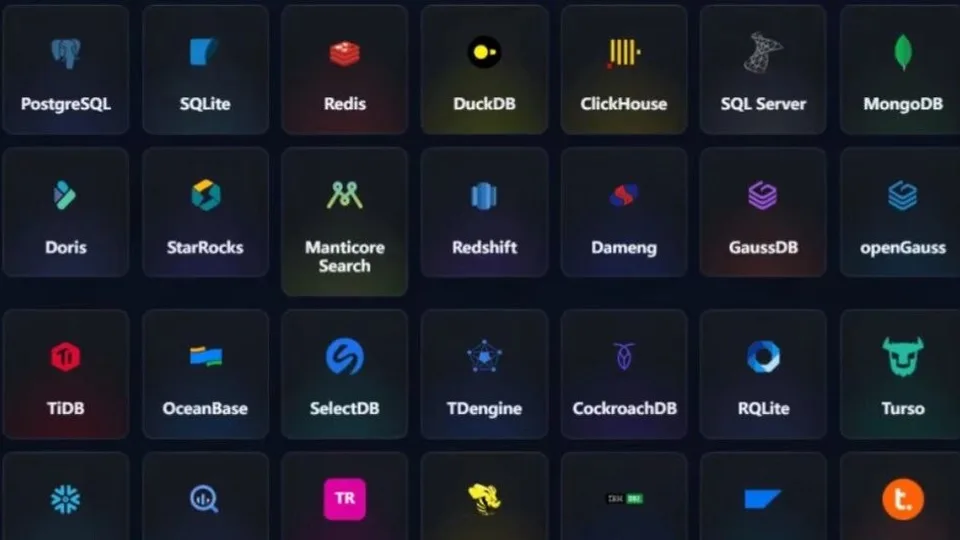
The article reviews the open‑source database client dbx—built with Rust, Vue 3, and Tauri—highlighting its tiny 20 MB footprint, native AI assistant, support for over 60 databases, cross‑platform installers, and detailed feature comparison against DBeaver, Navicat, and DataGrip.
This article explains why database transactions are a core backend skill, breaks down the four ACID properties, clarifies dirty read, non‑repeatable read and phantom read, compares the four isolation levels, and offers practical guidelines for choosing the right level in production.
The article explains that AI will not replace data warehouses but will transform them by introducing automated modeling, AI‑generated SQL, intelligent resource scheduling, and natural‑language query interfaces, enabling business users to interact with data directly and turning warehouses into self‑optimizing, intelligent decision engines.
MetaDB, the unified metadata layer for Baidu Cloud Storage, was accepted to NSDI'27 after more than five years of production use, delivering up to 10.7× higher same‑directory throughput, halving the required metadata machines, and addressing three fundamental shortcomings of generic distributed databases in handling file‑system metadata.
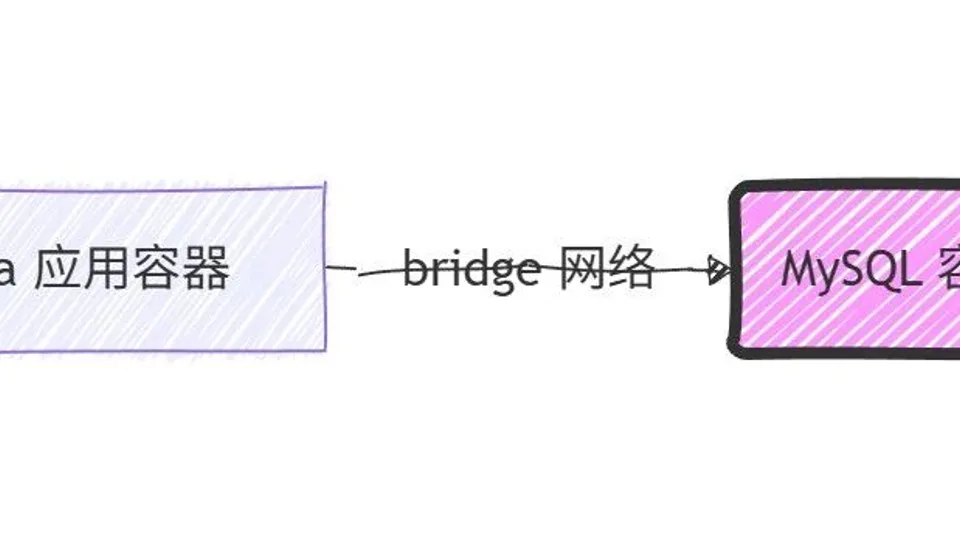
This article analyzes the risks of running MySQL in Docker—data loss, I/O performance degradation, networking overhead, and HA gaps—and provides production-ready solutions including Docker Compose configs, custom my.cnf, backup scripts, Kubernetes StatefulSet examples, and a troubleshooting matrix for interview preparation.
A MySQL query on a varchar column with an unquoted numeric literal triggered implicit type conversion, forcing a full scan of 2 million rows instead of an index lookup; adding quotes cut latency from 19 seconds to 50 ms. The article explains the mechanism, lists four other common index-invalidation patterns, and provides a quick EXPLAIN-based diagnosis checklist.
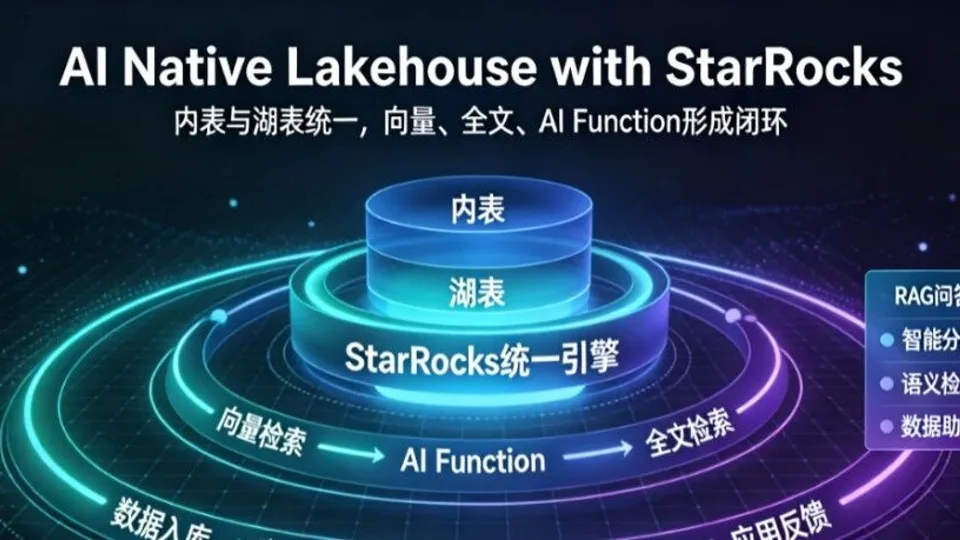
Alibaba Cloud's EMR Serverless StarRocks Stella 2.2 unifies vector search, full-text search, and AI functions across both internal and lake tables (Paimon, Iceberg, Lance), enabling a single SQL interface for multimodal retrieval, AI-powered analytics, and RAG workloads without data movement.
This guide details a production-ready MySQL accidental deletion recovery process: immediate damage control via read locks and replication break, then binlog flashback using position-based extraction or binlog2sql for reverse SQL generation, plus delayed replica failover, with prevention strategies including sql_safe_updates, delayed replicas, and backup drills.
MySQL servers can trigger alarming disk‑space warnings even when the data directory is small, because unchecked binary logs rapidly consume storage; this article explains the log’s purpose, why it grows, how to diagnose the issue, and provides step‑by‑step cleanup, configuration, replication, monitoring, and recovery best practices.
This comprehensive guide covers MySQL table creation best practices including naming conventions, field type selection, index design principles, constraint strategies, and solutions for large-table performance, JSON querying, and logical deletion conflicts, with production-ready SQL templates and interview-focused insights.
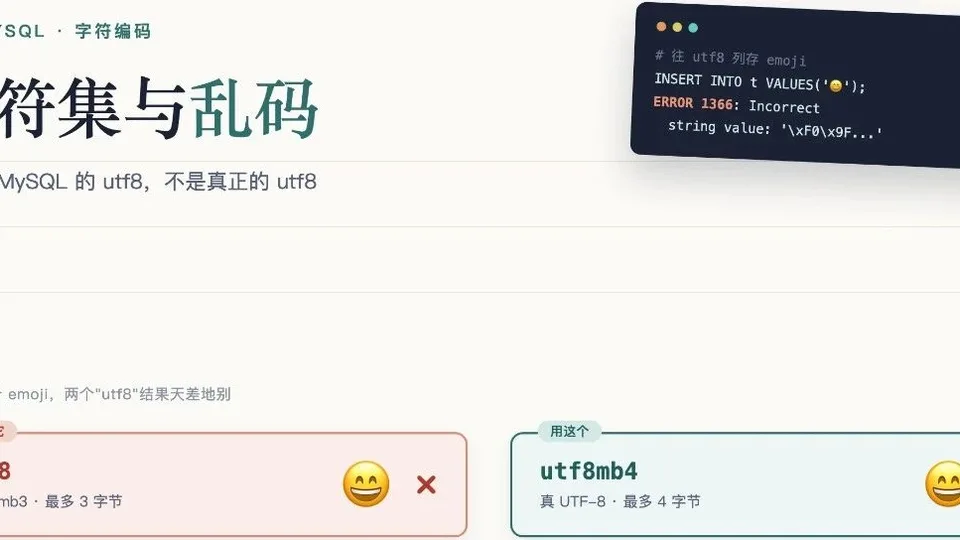
The article explains the difference between character sets and encodings, shows that MySQL’s utf8 is actually an alias for utf8mb3, demonstrates how using the wrong charset or collation causes garbled data, and provides practical steps to consistently use utf8mb4 across versions and connections.