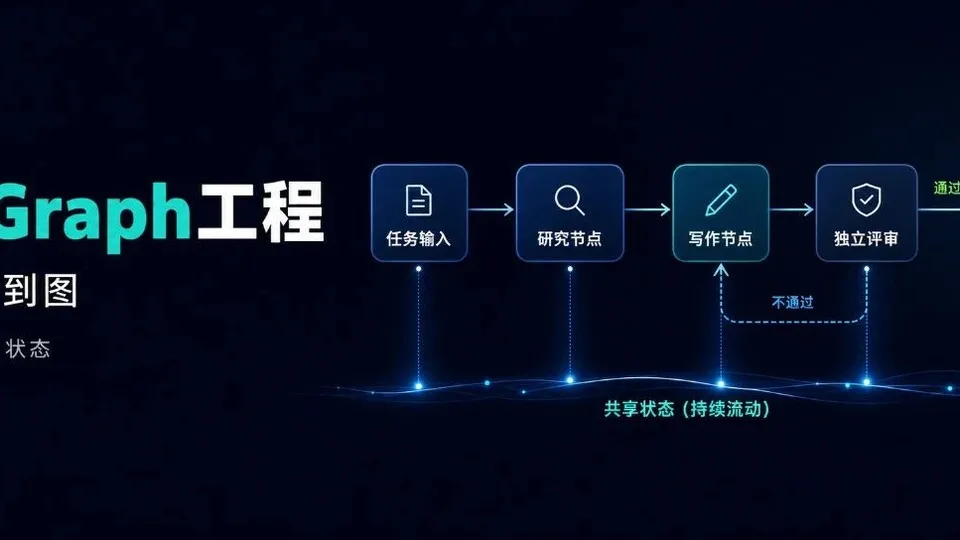
This article walks through using Graph engineering to unify AI tools across a software development workflow, detailing each pipeline stage, node design, code examples, real‑world metrics, rollout phases, and common pitfalls for practical adoption.
The author details a two-month experiment using WorkBuddy to automate five repetitive task categories — document filing, weekly reports, article drafting, boilerplate code, and scheduled jobs — cutting daily admin time from three hours to twenty minutes, sharing exact prompts, iteration lessons, and tasks where AI falls short.
This article details the architecture of an enterprise governance platform for Codex AI coding assistants, covering local encrypted collection with 90ms hooks, server-side parsing with tenant isolation, tiered content access (L0–L3) requiring multi-party approval, and operational use cases from deployment health monitoring to employee offboarding with zero-residue verification.
The article outlines ten critical capabilities required for Frontline Deployment Engineers (FDE) to successfully deliver AI projects, covering business research, problem breakdown, scenario judgment, solution design, rapid demo, data preparation, system integration, process orchestration, security governance, and impact review, emphasizing end-to-end delivery from vague requirements to measurable business value.
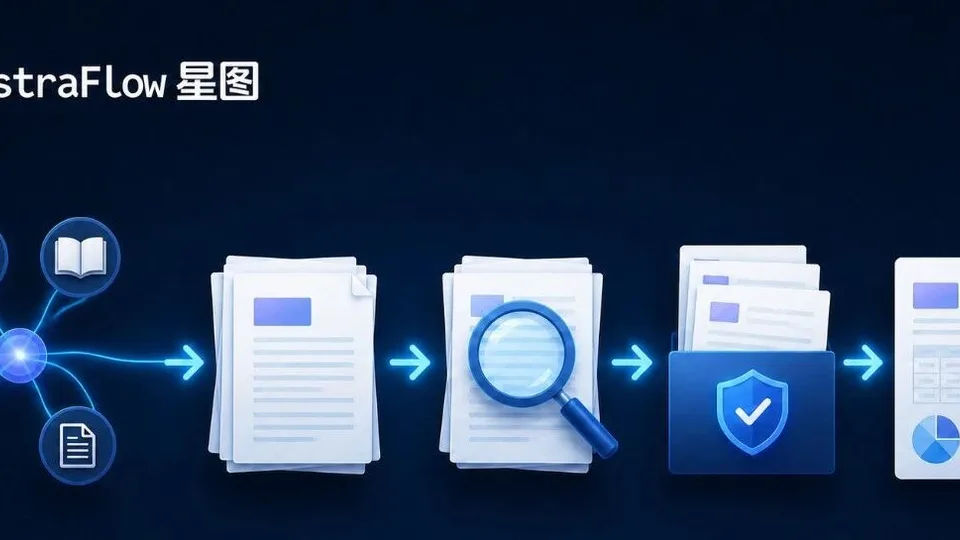
The article demonstrates how the AstraFlow Xingtu client automates systematic literature reviews by generating database-specific queries, retrieving and deduplicating records, applying evidence gates to prevent premature conclusions, and delivering structured outputs including evidence matrices and Zotero-ready citations, with human oversight at critical decision points.
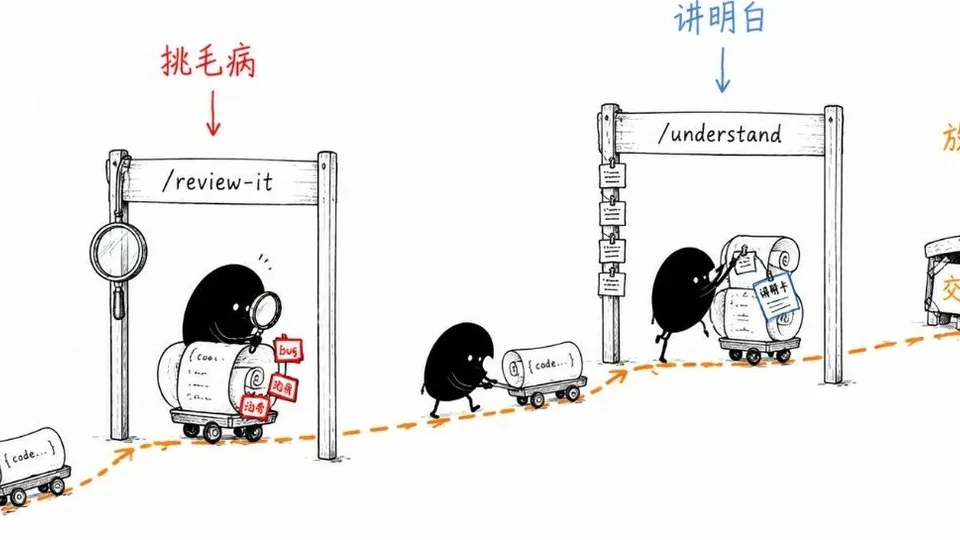
The article explores the growing gap between AI's rapid code generation and developers' slow comprehension, detailing the risks of unread AI code and introducing the /understand tool that creates interactive, line-anchored explanations to help engineers truly own AI-generated changes.
JD Health's Li Xun reveals how 80% of production issues originate in requirements, costing 100x more to fix later, and demonstrates a six-phase AI agent system that intercepts 70% of defects at requirements stage, cuts test design time by 50%, and reduces production escapes by 65% through business knowledge-fed AI agents.
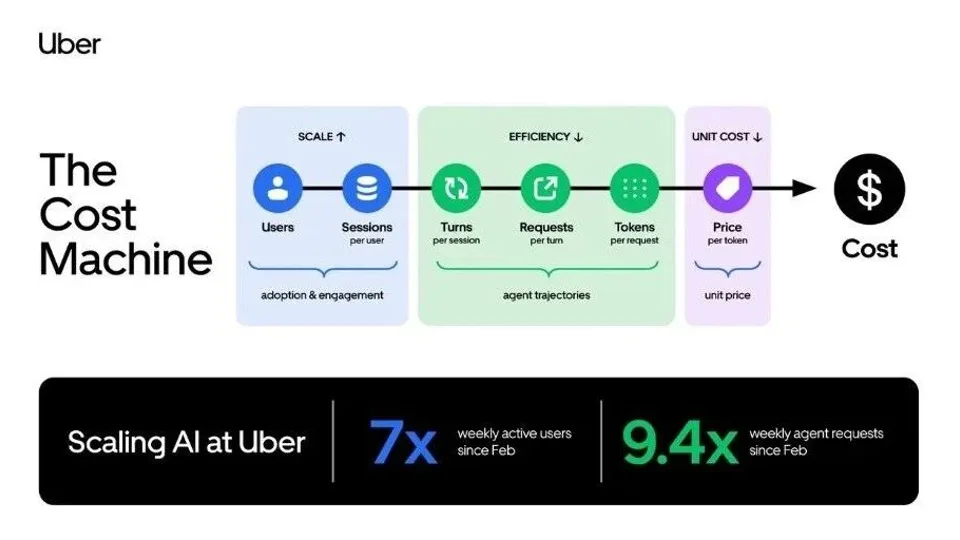
Uber details how they scaled AI agent adoption 7x and reduced per-session costs 52% through a four-layer agent architecture, a six-factor cost equation, benchmark-driven model routing, token optimization via caching and CLI tools, a massive context graph for code navigation, and real-time cost dashboards detecting 16 waste patterns.
The article examines Matt Pocock’s open‑source “skills” repository—its structure, key commands, real‑world workflow integrations, installation steps, and practical scenarios—showing why it has amassed over 230 000 stars and 18 million installations among AI‑assisted developers.
The article explains why most IT departments are seen as cost centers, identifies three fatal internal problems, and outlines concrete steps—binding to business metrics, joining design, and building a value‑measurement system—to transform IT into a true value‑creating function.
Ctrip's flight frontend team built Lumos, an AI-driven platform integrating CI/CD with Dify workflows to automatically generate and update documentation from code changes, creating a unified vector knowledge base across 74 repositories that reduces manual documentation effort by 80% and accelerates onboarding by 60%.
The article outlines seven counter-intuitive principles for maintaining code quality when using AI coding agents, arguing that faster AI generation demands stronger engineering discipline, automated quality gates over long prompts, context isolation via short-lived agents, human-defined architecture boundaries, iterative development over detailed planning, junior developers mastering fundamentals before directing agents, and adapting principle thresholds to AI workflows.
This article traces a multi-year evolution from using early LLMs to generate flowcharts from chat logs, through piloting Cursor and Markdown for requirements, to a 'zero-day delivery' method where a running system anchors scope definition, concluding that AI shifts the bottleneck upstream: requirements definition becomes about deciding what to build, not documenting it.
Anthropic’s AI‑Native SDLC Playbook shows how agents can accelerate coding but also expose new challenges in intent definition, specification, verification, release gating, production monitoring, and permission management, illustrated with a payment‑duplicate‑callback case and internal productivity data.
This article argues that system architecture starts from business goals and quality attributes, not technology choices, using a refund processing example to illustrate trade-offs across system boundaries, collaboration patterns, and six architectural perspectives, emphasizing that observability, fault tolerance, and security must be designed in and validated with independent evidence throughout the system's lifecycle.
Anthropic discovered that Claude now generates about 80% of their code, turning traditional development bottlenecks into new challenges, so they created an AI‑Native SDLC Playbook that restructures the entire delivery pipeline into a traceable, reviewable, rollback‑able, and continuously improvable closed loop across six stages.
The FDE series introduces a responsibility loop for enterprise AI deployment, connecting semantics, agents, business research, engineering, production validation, handover, and product feedback, arguing that successful AI requires an engineering responsibility model embodied by Forward Deployed Engineers.
The article argues that while AI tools like Cursor let product managers quickly prototype demos, building a production‑grade system still demands engineering tasks such as architecture design, reliability, performance testing, and ongoing maintenance, which AI alone cannot guarantee.
The article explains how every line of code adds constraints and maintenance cost, turning code into technical debt, examines why developers often avoid repaying it, and offers practical strategies such as writing less, reusing existing components, and regularly removing dead code to keep debt under control.
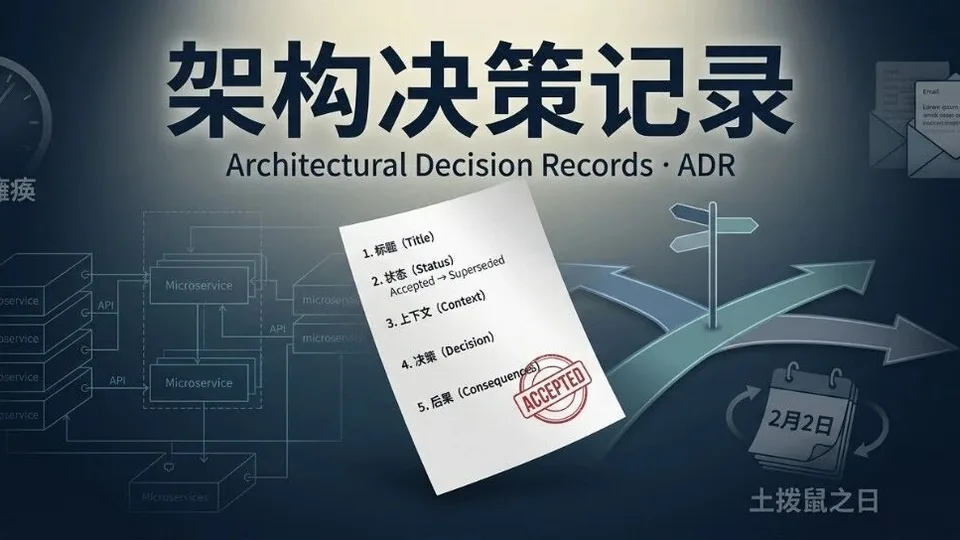
This article defines architectural decisions, distinguishes them from technical decisions using architectural significance criteria, outlines three anti-patterns (Covering Your Assets, Groundhog Day, Email-Driven Architecture), and details the ADR framework with its seven sections, storage strategies, and applications for standards and legacy systems.