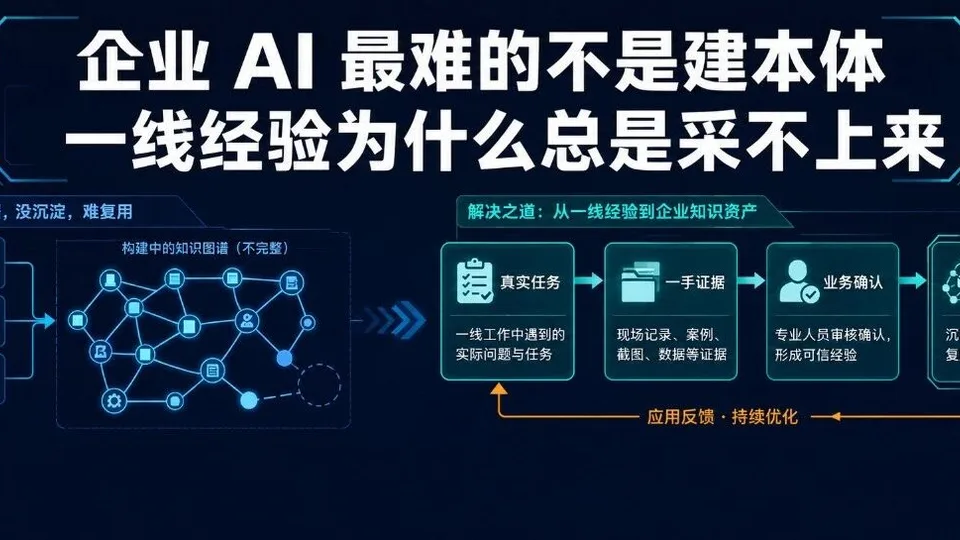
This article argues that enterprise AI projects fail not from poor ontology modeling but from lacking a knowledge collaboration loop where frontline judgments are captured with context, verified by authorized roles, transformed into testable assets, and continuously refined through operational feedback — without transferring accountability from experts.
A technical management team discovers that AI code reviews approve bug fixes that violate architectural intent because AI cannot grasp unwritten team conventions, revealing that AI's limitations mirror human failures in documenting context, standardizing processes, and managing knowledge.
As AI agents move into production, CTOs must shift from managing engineers to governing autonomous agents — building permission frameworks, evaluation systems, token budgets, and security guardrails while redefining architecture for dynamic, probabilistic workflows.
The article argues that investing time in creating Codex research skills is worthwhile only for repetitive tasks like weekly paper tracking, experiment reproduction, and team onboarding, advising researchers to start small, validate with real runs, and prioritize traceability over automation speed.
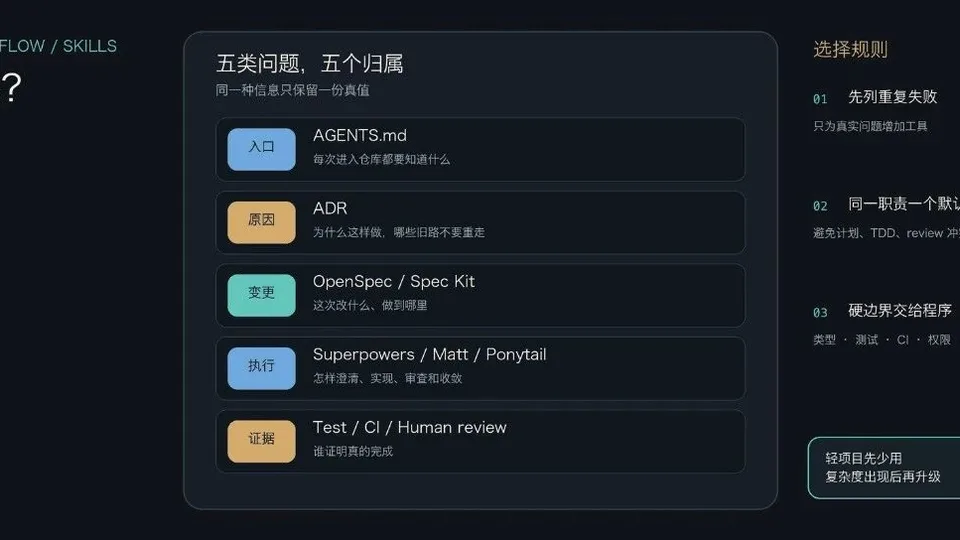
The article analyzes AI-assisted programming workflows, comparing tools like AGENTS.md, ADR, OpenSpec, Spec Kit, Superpowers, Matt Skills, and Ponytail, mapping each to specific project problems, and provides a selection guide for three project types with practical examples.
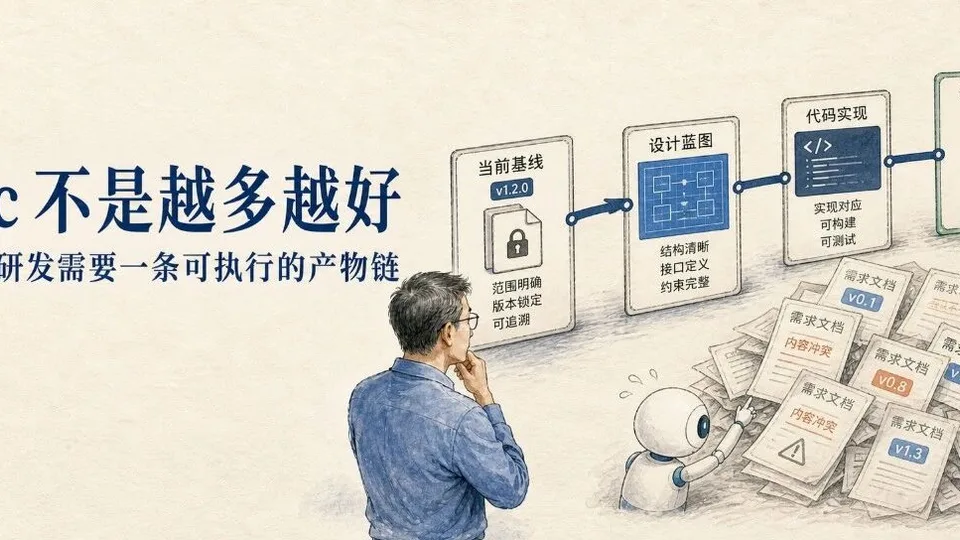
The article argues that in AI-native development, value lies not in generating more specification documents but in creating a traceable artifact chain linking business intent, requirements, design, plans, code, and evidence — with clear authoritative sources, state management, and dependency-based invalidation propagation to prevent agents from working on stale rules.
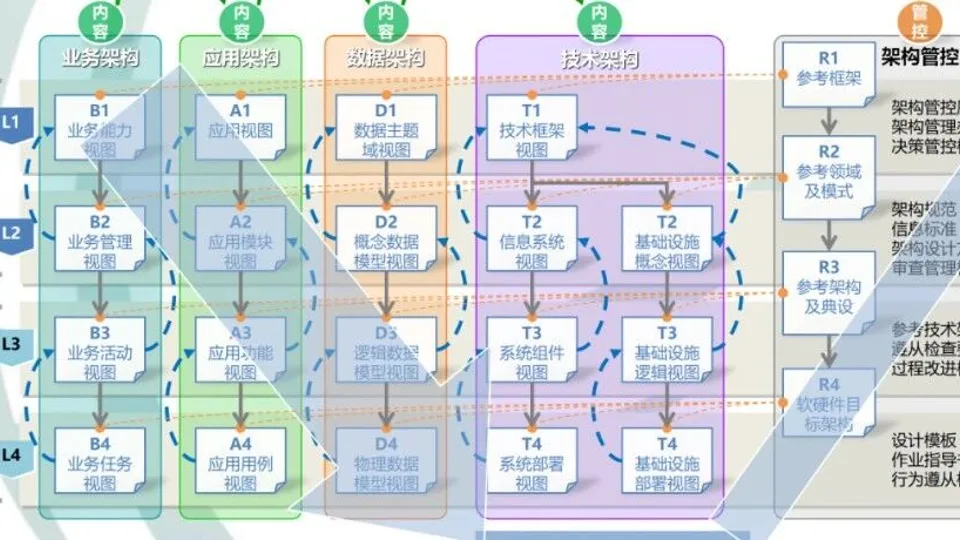
This article outlines enterprise architecture fundamentals using a 'four horizontal, five vertical' framework, detailing business domain design principles, typical design methods for business, data, application, and technical architectures, and governance practices including principles, reviews, and asset management to align IT with business strategy.
This article presents a structured approach for evaluating new technology frameworks, emphasizing problem definition, cost-benefit analysis, and decision records with fields for goals, evidence, constraints, risks, and exit paths, advocating for pilot projects or deferred adoption when evidence is insufficient.
This article explores why AI-generated code often feels like a construction site—functional but lacking architectural foresight—and argues that AI's effectiveness depends entirely on how well teams codify their unwritten rules, context, and standards, likening AI to a legendary horse that only excels under a skilled rider.
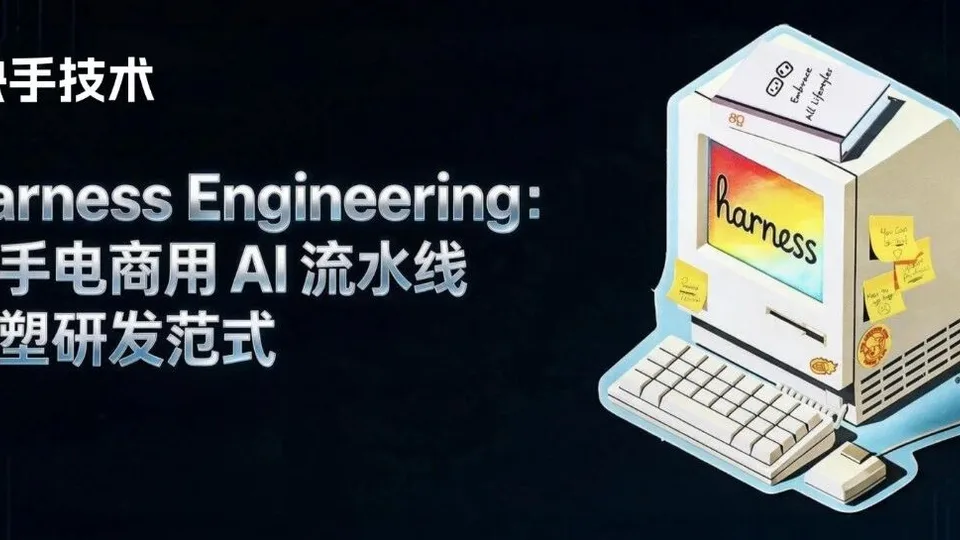
Kuaishou E-commerce's merchant team details their end-to-end AI delivery pipeline (Harness Engineering) combined with organizational restructuring, achieving 30% throughput gains and 40% delivery-time reduction by shifting from functional silos to full-stack 'super individuals' across requirements, spec, dev, test, and oncall phases.
As AI speeds up code generation, bottlenecks shift from coding to requirements clarity, design validation, verification evidence, and release accountability; the article argues for an AI-native SDLC built on authoritative artifacts, independent evidence, risk-based responsibility gates, and production feedback loops rather than simply adding agents to each phase.
The author shares a 15-step AI-assisted workflow for code quality control, starting with spec-driven development, automated skills for code review, regression checks, test data rehearsal, non-functional requirements validation, mandatory manual review, and optional security/extensibility checks, all orchestrated via AI-written skills and git integration.
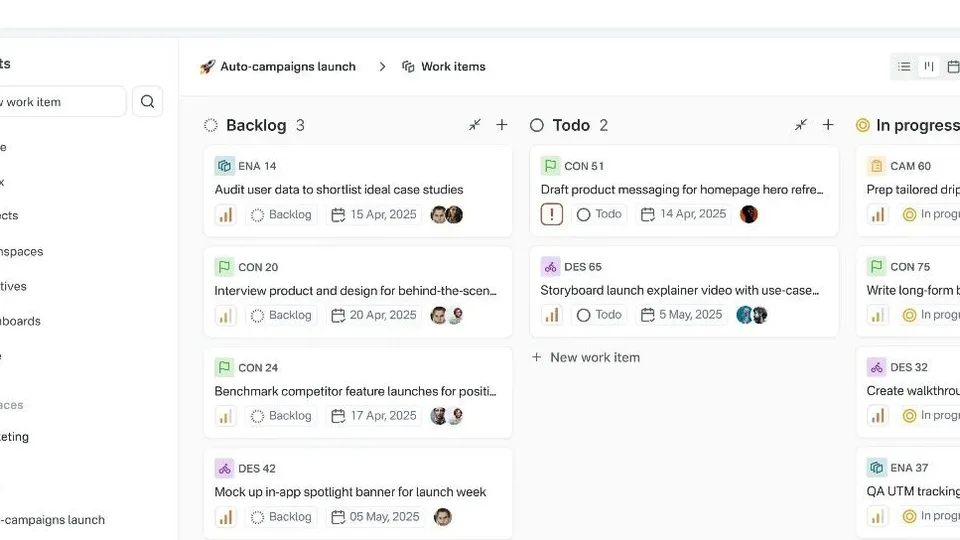
Plane is a 58k-star open-source project management platform offering tasks, cycles, modules, multiple views, docs, analytics, and integrations, with self-hosted deployment via Docker or Kubernetes, providing a Jira/Linear alternative that keeps data on-premise.
The article argues that seemingly incompetent programming mistakes often stem from exhausting work environments, unrealistic deadlines, and lack of learning time, not innate inability, urging empathy over mockery and highlighting how technical debt accumulates from systemic pressures.
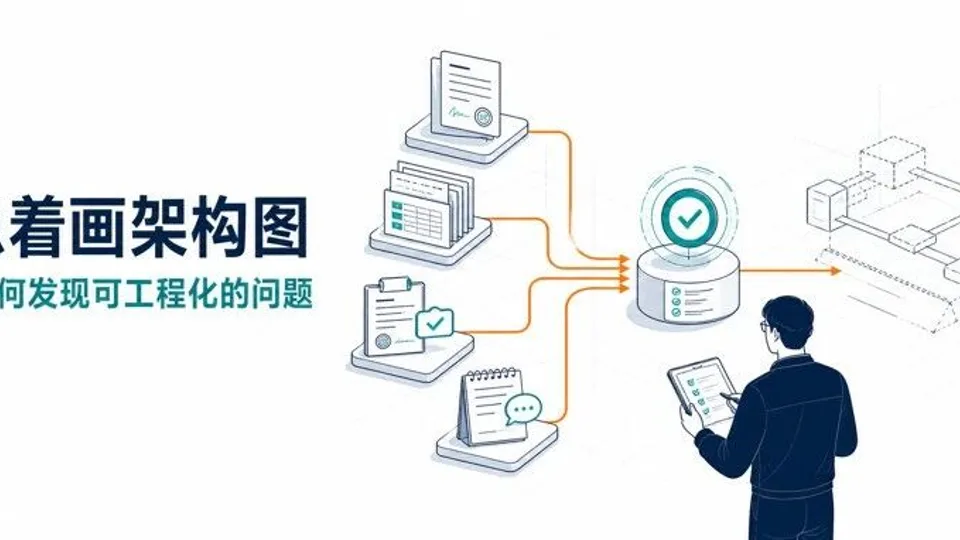
The article presents a six-category framework for classifying field claims during FDE discovery—wishes, facts, constraints, risks, unknowns, and non-do items—emphasizing evidence discipline, traceability, and explicit management of unknowns and permissions before architecture design.
This article analyzes four types of developers who fall behind in the AI coding era — those who don't learn, don't know what to learn, learn without goals, or only learn without acting — and contrasts them with a continuous growth flywheel of input, direction, goals, action, feedback, and iteration.
This article details Dewu's 'Delivery Harness' system—Version Contract, Execution Boundary, Evidence Gate, and Repair Loop—that enables a solo developer to manage AI-assisted full-stack delivery across multiple runtimes with verifiable contracts, evidence-gated promotions, and feedback-driven system upgrades, proven via a multi-SKU order fulfillment case study.
The author argues that a newly hired architect should begin by actively coding small components, then medium and large ones, because hands‑on experience reveals system details and consistency challenges that pure business or team briefings cannot provide.
The article analyzes how a technical director’s role differs from a frontline manager’s, emphasizing result‑oriented evaluation, a five‑dimensional capability model, and core responsibilities such as strategic topic selection, team building, resource coordination, coaching, and mechanism matching.
The article explains how ORCHADYN acts as an Enterprise Capability Planning Compiler, turning business goals into first‑class semantic objects, decoupling capabilities from implementations, separating planning from execution, and enabling accountable delegation, while explicitly limiting its scope to avoid replacing existing catalogs, identity systems, or runtimes.