This article outlines the IPD methodology’s origins, its six‑phase product development process, and provides a detailed guide to creating a project charter—including required contents, tools, techniques, outputs, and a sample template for R&D project initiation.
This article argues that CIOs fail not due to technical gaps but lack of business cognition, outlining seven essential understandings—profit logic, customer value, end-to-end processes, industry cycles, organizational politics, business-language communication, and a systematic four-step methodology—to transform from cost centers into strategic value creators.
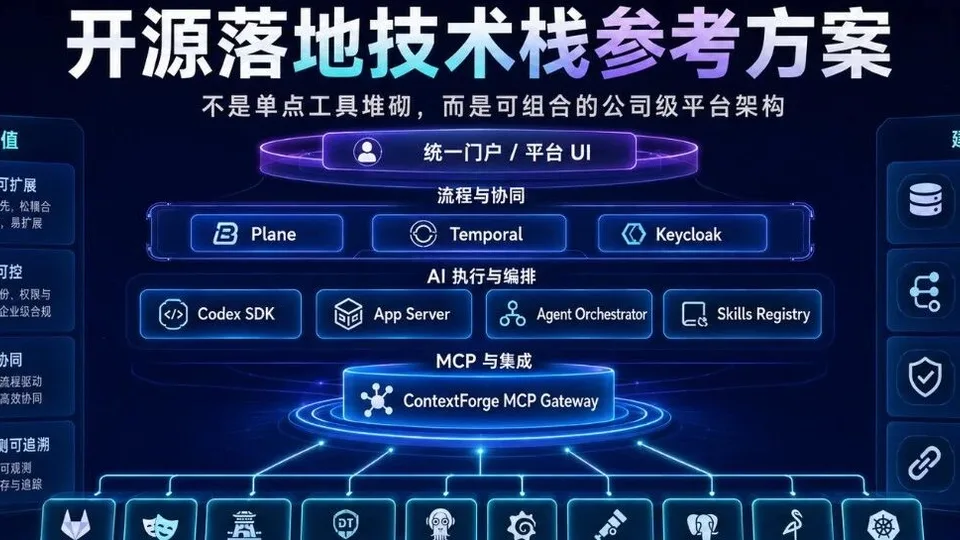
This article details the technical architecture of a company-level AI R&D delivery platform V1.0, positioning it as an AI-native operating system that orchestrates Codex agents via Temporal workflows, connects enterprise systems through an MCP gateway, enforces quality via deterministic CI gates, and ensures full traceability from requirements to production incidents.
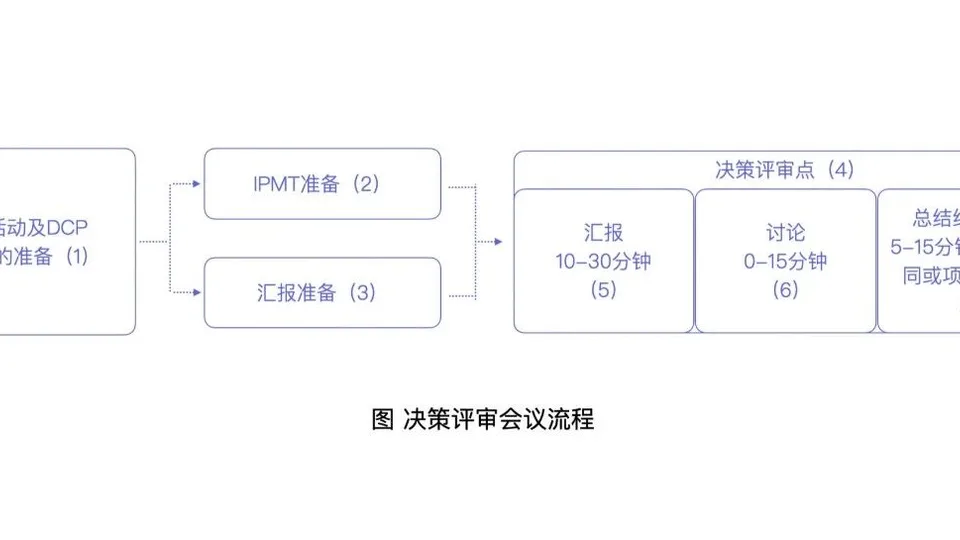
The article explains the IPD (Integrated Product Development) framework—originating from PACE theory and refined by IBM—detailing its six-phase lifecycle, the purpose and criteria of decision review points, a step‑by‑step meeting flow, and the essential attendance and voting rules that ensure disciplined product decisions.
The article explains that seemingly relaxed leaders have spent years paying the complexity upfront by enduring early intense workload, cultivating core talent, and establishing streamlined processes, which later frees them from daily firefighting and makes their teams operate autonomously.
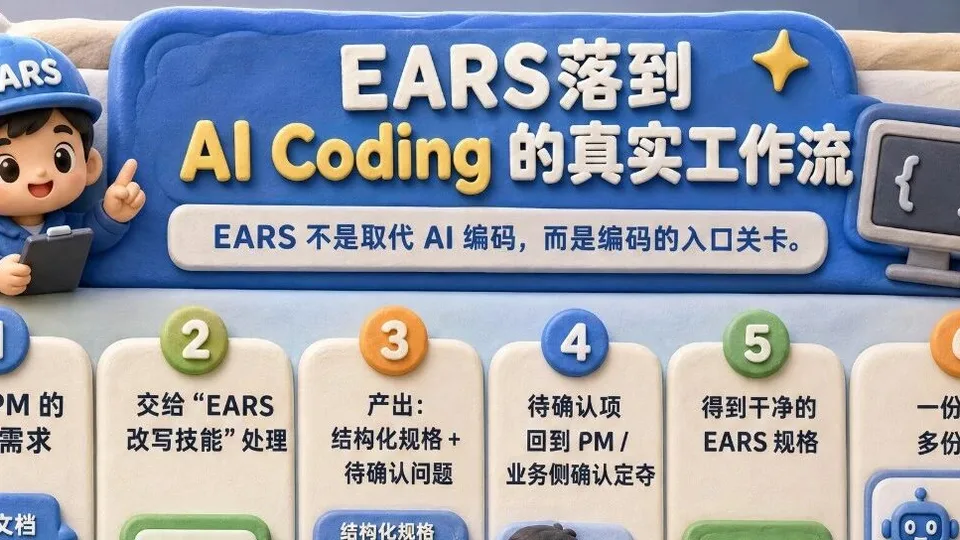
The article explains why vague requirements cause AI coding failures, introduces the EARS (Easy Approach to Requirements Syntax) method with six sentence patterns, and shows a step‑by‑step process and real examples that transform raw PM specs into clear, testable specifications, dramatically improving AI‑generated code quality.
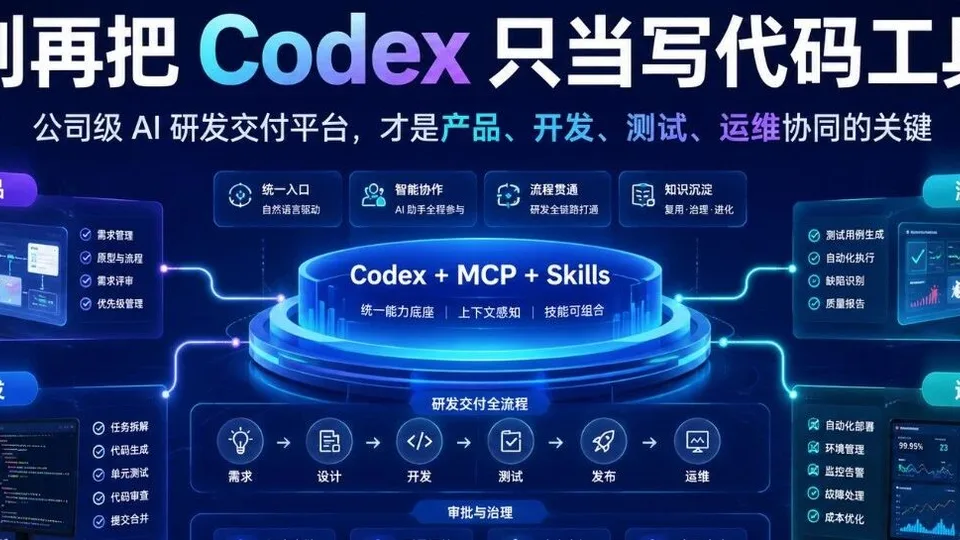
The article argues that companies using Codex need an enterprise AI R&D delivery platform integrating project management, stage workflows, Codex as execution engine, MCP for system connectivity, Skills as standardized methods, and quality gates with human approvals to achieve auditable, traceable, and reversible delivery.
The article presents a case study of separating architecture and development roles in AI-assisted programming, emphasizing decision boundaries, design baselines, deliverables, and evidence-based handoffs. It shows how architecture handles requirements and design while development implements, with gaps returned to architecture, and how mid-project changes require unified baseline updates to avoid conflicting local facts.
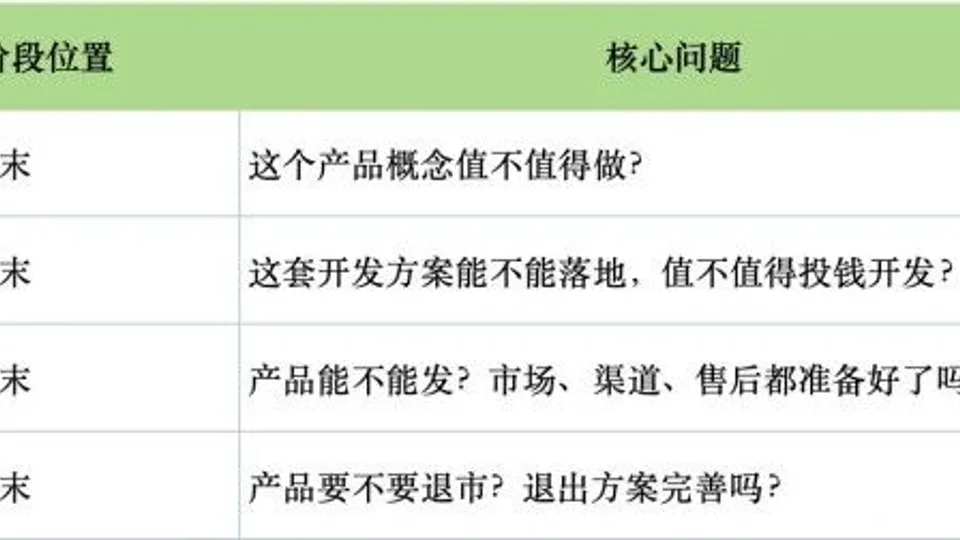
The article explains Integrated Product Development (IPD) decision review points—CDCP, PDCP, ADCP, and LDCP—their purpose, evaluation criteria across six dimensions, and how they guide product concepts from market opportunity through launch, operation, and eventual retirement.
The article analyses how managers who rely on forceful decision‑making create a cycle of performative leadership and a collective “innocent” mindset, leading to authority illusion, responsibility vacuum, and ultimately organizational failure.
The Rust project introduced a detailed LLM usage policy that permits AI for analysis while forbidding AI‑generated code creation, outlines five mandatory rules for AI‑derived contributions, sets safety red lines for security‑critical changes, and explains the community’s reaction and broader governance implications.
The article analyzes nine pitfalls encountered while building a CLI tool for AI, derives a core principle of separating deterministic execution from ambiguous judgment, and presents concrete design rules, a skill‑packaging approach, and two real‑world case studies that illustrate the solution.
The article examines recent four‑day workweek pilots at leading tech firms, presenting global trial data, dissecting how teams cut waste, redesign collaboration, leverage AI tools, and outlines scenarios where the model may not work, concluding that smarter reduced hours can sustain productivity when engineering foundations are mature.
WorkBuddy’s rapid rise isn’t just due to its AI features; it stems from a proven CodeBuddy‑derived agent architecture, high‑certainty coding tasks that validate the framework, and a reorganized small‑team workflow where AI handles execution while humans define goals, manage context, and ensure quality through explicit task contracts.
The article explains how Integrated Product Development (IPD), derived from the PACE theory, structures product development into six phases and uses standardized decision review points—managed by an Integrated Product Management Team—to align business goals, monitor progress, and guide investment decisions.
The article explains how bosses often view a feature as a single button while developers see a cascade of hidden complexities—such as permission checks, database changes, and legacy compatibility—that drive longer development cycles, and it outlines why mature teams estimate longer, focus on risk, and how better communication can bridge the gap.
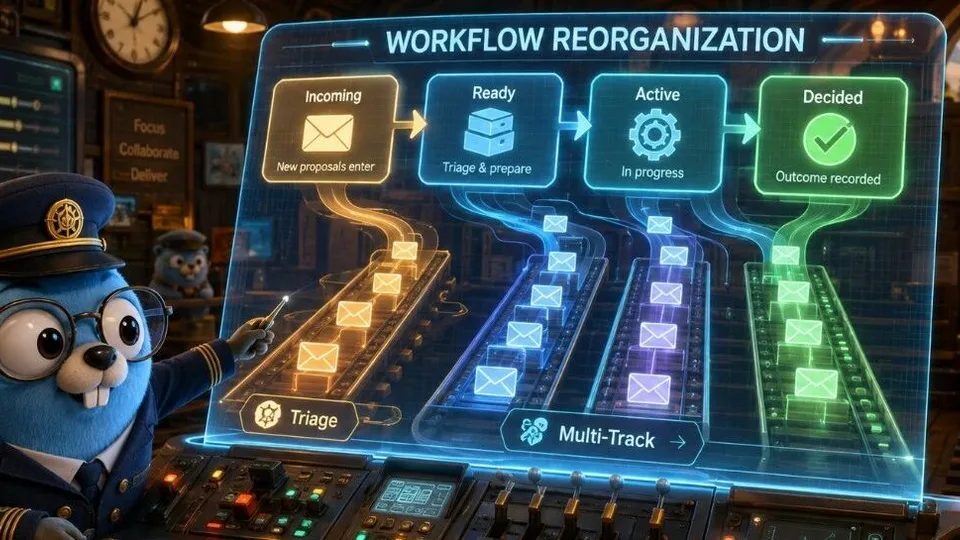
The Go proposal system is clogged with a 23% annual backlog growth and a median wait time over two years, prompting Austin Clements to propose a four‑stage lifecycle, formal triage groups, weighted emoji voting, multi‑track review, and controversy‑based queueing to restore efficiency and transparency.
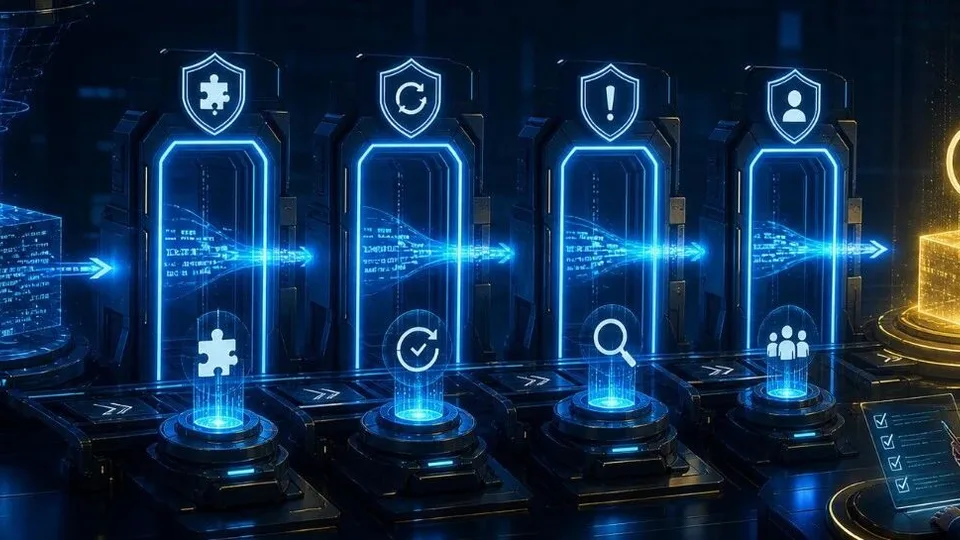
This article argues that AI-generated code passing tests is insufficient for delivery, proposing a four-layer acceptance framework—functional, regression, risk, and business verification—backed by a six-part evidence chain and risk-based quality gates to ensure reliable, auditable software releases.
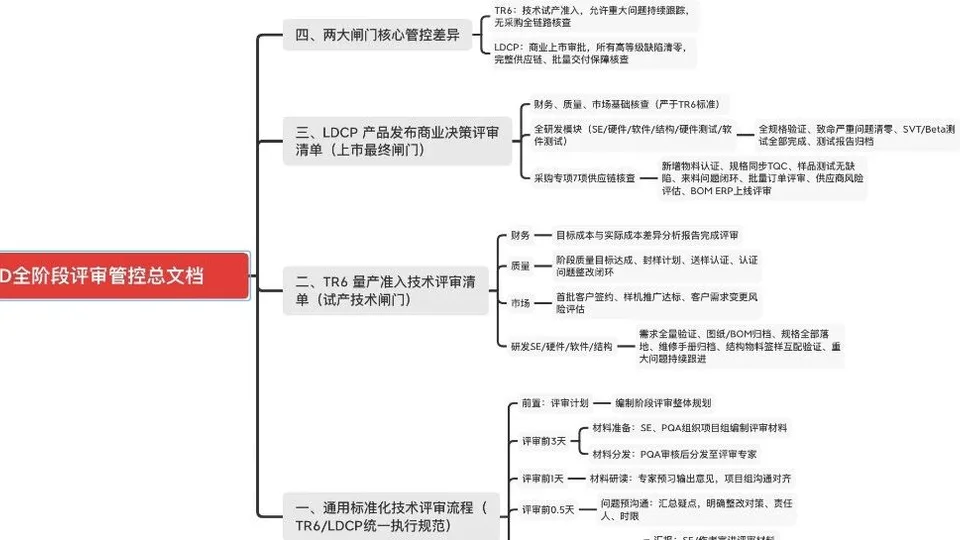
This article outlines the IPD‑based product development framework, detailing the six‑stage lifecycle, decision‑gate reviews, and a standardized technical review process—including pre‑meeting preparation, three‑phase meetings, and post‑review archiving—to ensure traceable, compliant product releases.
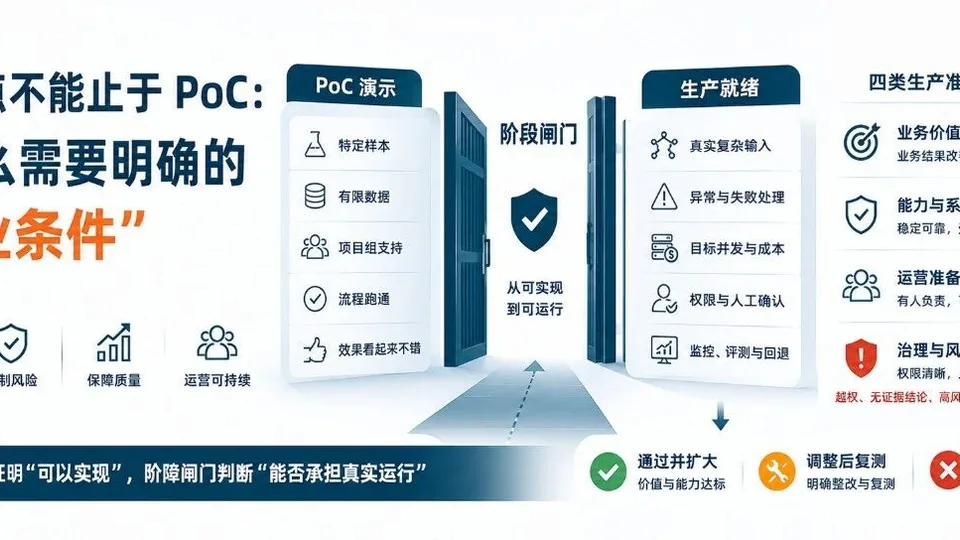
This article argues that AI pilots require predefined graduation criteria across business value, system quality, operational readiness, and governance to move beyond PoC, using phase-gate reviews to decide whether to expand, adjust, or stop investment, illustrated with an equipment temperature alert agent example.