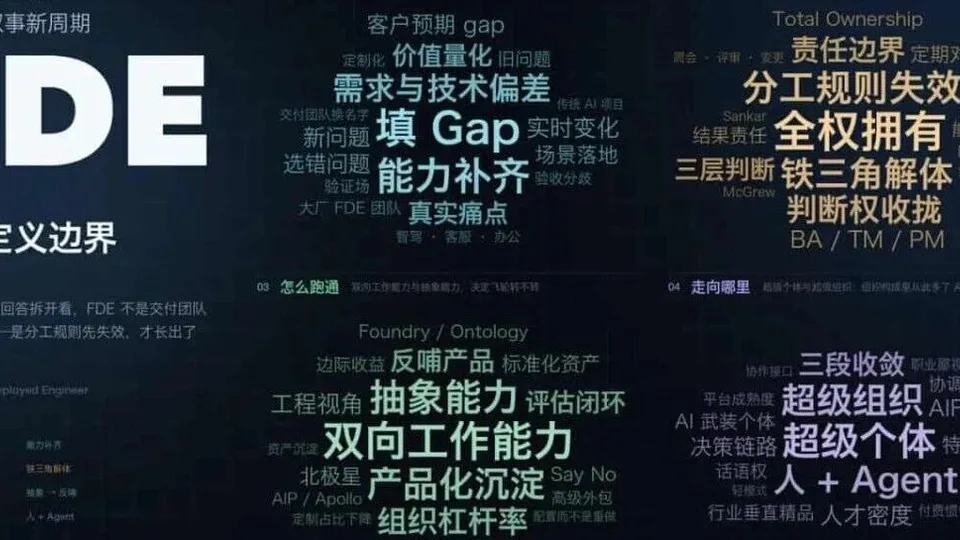
This article analyzes the Forward Deployed Engineer (FDE) role through nine roundtable questions, covering real-world deployment scenarios in Chinese tech, common delivery pitfalls, organizational structure shifts from iron triangles to fused roles, talent models, cost reduction via platformization, AI PM skill evolution, team maturity metrics, AI-native collaboration patterns, and why China's FDE path diverges from Palantir's model.
Despite 62% AI code generation rates, developers still work overtime because coding only occupies 30% of their time; the remaining 70% spent on requirements clarification, environment setup, deployments, and communication remains untouched by AI, while metrics like generation rate incentivize gaming rather than real productivity gains.
This article introduces the C4 model as a practical methodology for creating clear, audience-focused architecture diagrams, covering context, container, component, and code levels with concrete examples from an Alibaba engineering team to solve common diagramming ambiguities.
This article explains how to manage conflicting but valid business metrics by sharing entity identity while maintaining distinct definitions, implementing explicit query conventions, preventing inference leaks through access controls, versioning definition changes, and validating systems with ambiguous query tests.
This article catalogs common pitfalls and anti-patterns that erode evolutionary architecture, including the last 10% trap in low-code tools, component reuse bottlenecks, vendor lock-in, leaky abstractions, resume-driven development, inappropriate governance, and business-driven coupling, with concrete case studies and fitness function strategies.
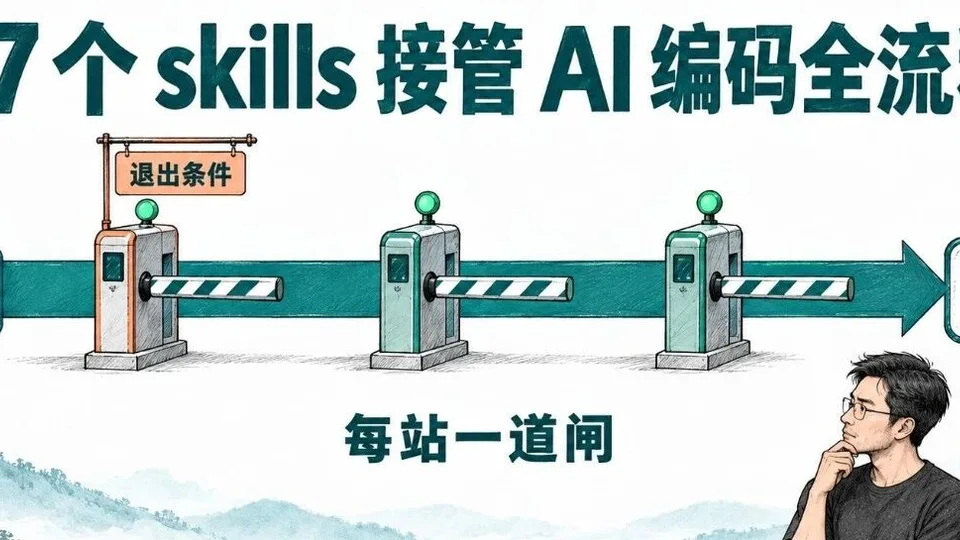
This article analyzes Matt Pocock's 27-agent skill framework that imposes explicit exit criteria across eight development activities — from requirement clarification to retrospective — to prevent AI coding failures like misalignment, verbosity, broken code, and architectural decay.
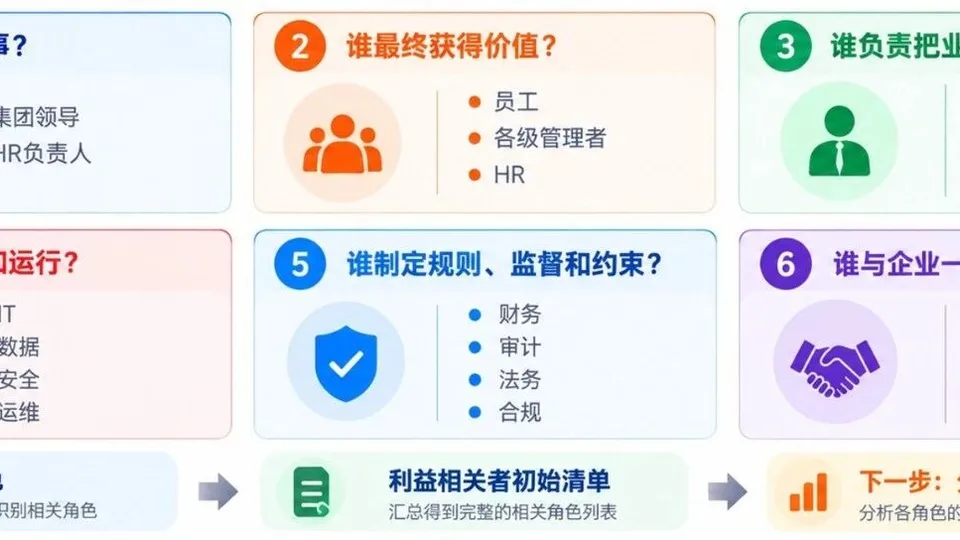
This article explains TOGAF 10's stakeholder concept using an HR system case study, detailing how to identify stakeholders by defining system boundaries, six key questions for discovery, mapping stakeholder concerns, and converting those concerns into architecture requirements through the Stakeholder→Concern→Architecture Requirement chain.
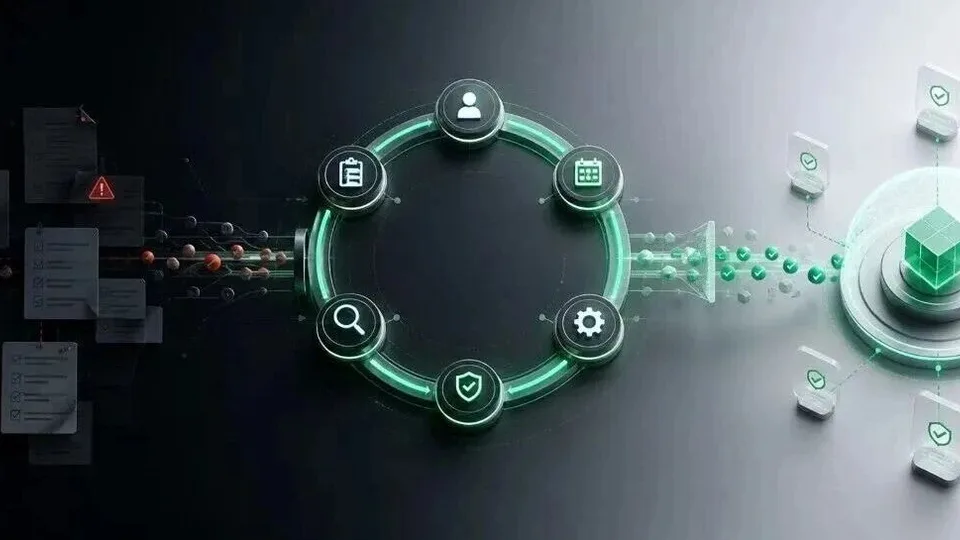
The author argues that ineffective AI agent usage stems from missing management practices, not model limitations. Based on 100 days with WorkBuddy, they adapt PMP's WBS for task breakdown and human-AI division, TOGAF-inspired delivery agreements for quality standards, and Scrum sprints for controlled skill iteration—creating a repeatable, scalable human-AI collaboration loop.
The article explains why individual AI coding speed fails to reduce team delivery cycles, identifying organizational handoffs and waiting as the real bottlenecks. It details Fenxiang Xiaoke's restructuring of R&D systems into an AI-callable knowledge environment, agent-driven root-cause diagnosis, and cross-repo task execution, shifting from human-centric alerts to agent-first diagnostics and splitting large tasks into independently verifiable value slices.
Google Labs head Josh Woodward reveals how Google structures its experimental AI team, evaluates product ideas through three lifecycle stages, and avoids the common 'three-year decay' of corporate innovation labs by maintaining organizational independence and clarifying lab objectives.
The article explores how AI widens the gap between experienced and junior developers by automating entry-level coding tasks, and proposes a six-step practice framework for newcomers to develop critical engineering judgment—clarifying requirements, designing before prompting, incremental implementation, self-verification, explaining logic, and reflective logging—rather than relying solely on AI-generated output.
This article details a four-step framework for turning vague AI transformation ideas into a validated, two-week MVP: inventory repetitive tasks with a structured table, score pain points using a weighted formula, assess feasibility across data, rules, and risk dimensions, and select a small, high-value scenario that can be delivered quickly.
This article argues that the most important capability for a technical lead is not coding or architecture skill, but the ability to make correct decisions amid complex business, system, and organizational dynamics — defining direction, boundaries, and collaboration rules to manage complexity.
Atlassian's 2026 survey shows 87% of developers code faster with AI, yet 75% face unchanged or worse delivery friction because bottlenecks shift to code review, testing, deployment, and cross-team coordination, requiring DORA metrics and platform engineering to fix.
OpenAI's Forward Deployed Engineering team embeds with enterprise customers to close the deployment gap, turning AI demos into production systems across agriculture, semiconductors, and tax, then systematically replaces custom code with reusable Skills and evaluations, driving model improvements and reducing future deployment effort.
This article teaches architects and engineers to solve problems by stripping away assumptions and reasoning from fundamental truths, illustrating with real cases like a CDN timeout caused by missing origin headers, a database connection leak from a forgotten transaction, and a homepage speed issue that was actually a product design problem.
This article argues that while AI makes knowledge access trivial, true mastery requires three advanced learning capabilities—traceability to first principles, layered focus on relevant abstractions, systemic cross-layer integration—all governed by critical thinking to verify AI outputs and avoid blind dependence.
The article explains why simply adding a reviewer AI agent after a developer agent fails when both share requirement misunderstandings, and proposes a structured multi-agent review process: independent judgment against acceptance criteria first, automated mechanical checks, risk-based review division, actionable findings with trigger conditions and verification steps, reverse test validation via mutation and negative testing, and review conclusions tied to specific commits with expiration tracking.
The article argues that correct digital requirements cannot be produced by business units alone; they emerge from a four-level penetration process — requests, needs, rigid needs, and pain points — requiring cross-functional collaboration, organizational capabilities, and shared accountability.