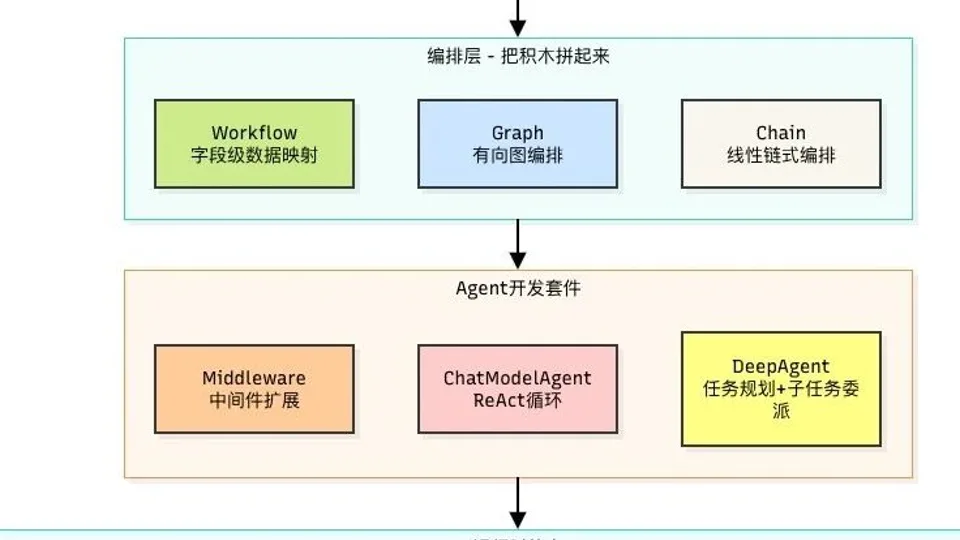
This article provides a comprehensive analysis of Eino, ByteDance's Go-native AI application framework, detailing its four-layer architecture, type-safe graph orchestration, automatic streaming handling, Agent runtime with ReAct loop, middleware support, interrupt/resume capabilities, code examples, comparison with LangChain, pros and cons, and recommended use cases for Go microservices.
This article presents a systematic approach to memory optimization across three dimensions—reducing allocation frequency, accelerating allocation speed, and improving memory usage efficiency—with practical C++ techniques including stack allocation, object pools, size-class allocators, huge pages, data structure packing, and false sharing prevention.
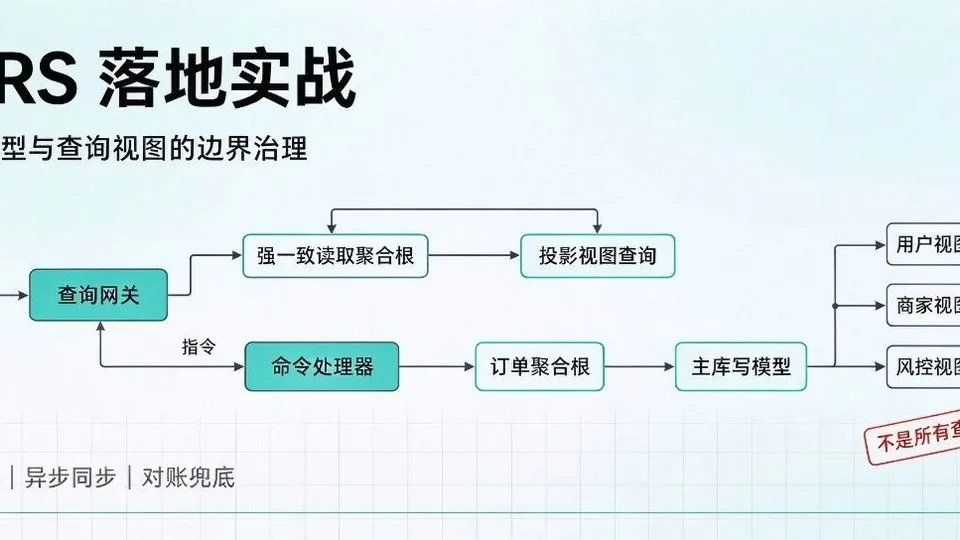
The article explains CQRS as domain model separation rather than database read/write splitting, detailing command/query model boundaries, event-driven synchronization challenges, consistency trade-offs, engineering pitfalls like event reliability and view explosion, when to avoid CQRS, and a reference e-commerce order implementation with consistency-based query routing.
This article demonstrates how to build a Java Agent using the Instrumentation API and ASM for bytecode manipulation, covering premain/agentmain entry points, dynamic class redefinition via Attach API, and explores Arthas trace command's implementation using the bytekit framework for non-invasive method profiling.
This article explores Go's new experimental SIMD packages (simd/archsimd and simd), explaining SIMD hardware concepts, vector register operations, common SIMD patterns like broadcast and fused multiply-add, compiler intrinsic mapping, and demonstrates a dot product implementation achieving 9x speedup over scalar code.
This tutorial demonstrates how LiteFlow v2.16+ integrates AI agents as native components, enabling developers to orchestrate LLMs like DeepSeek, Qwen, and OpenAI models using familiar LiteFlow operators (THEN, WHEN, IF) within Spring Boot applications.
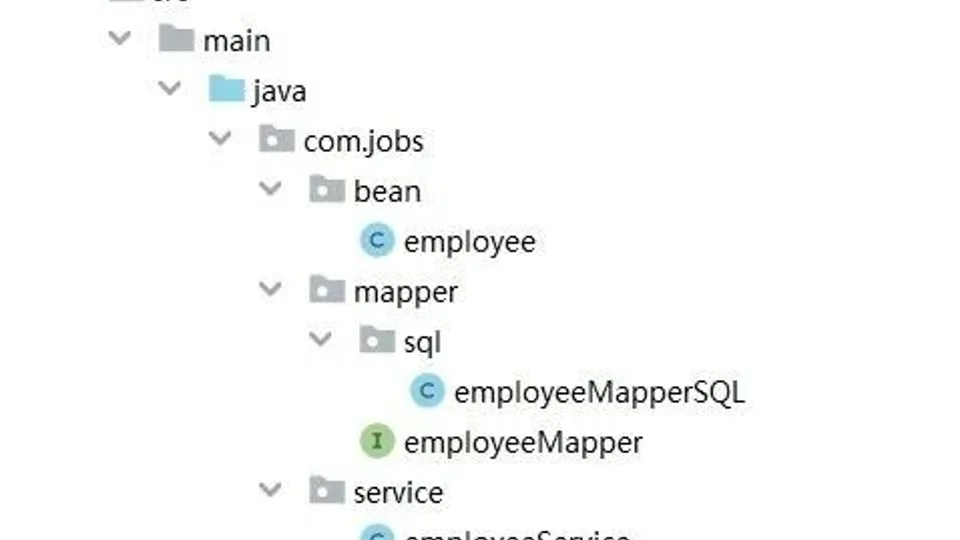
This tutorial demonstrates how to configure MyBatis SQL statements using Java annotations instead of XML, covering Maven dependencies, project structure, core configuration files, entity mapping, dynamic SQL providers, mapper interfaces with @Select/@Insert/@Update/@Delete annotations, service layer implementation, and JUnit testing.
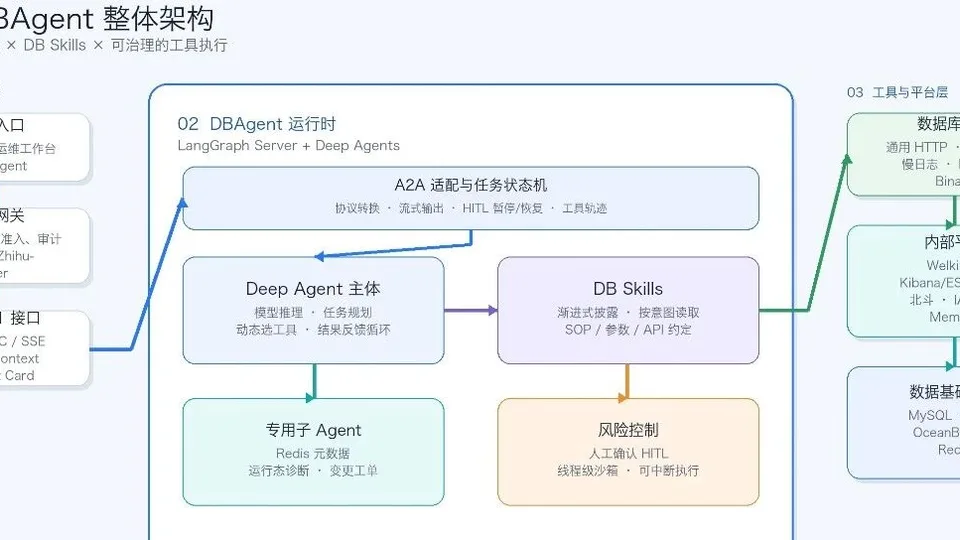
Zhihu's DBAgent employs Deep Agents for dynamic planning, modular DB Skills for codified runbooks, and A2A protocol for task management to orchestrate real-time database operations across MySQL, TiDB, OceanBase, and Redis with human-in-the-loop governance and full audit trails.
Anthropic's user profiles shift enforcement from organization to end-client level, but only on platforms that verify profile IDs per request; gateways must create profiles at registration, store IDs on customer records, inject headers at the sole egress point, and handle platform-specific gaps like Bedrock's format-only validation and AWS's missing enforcement reporting.
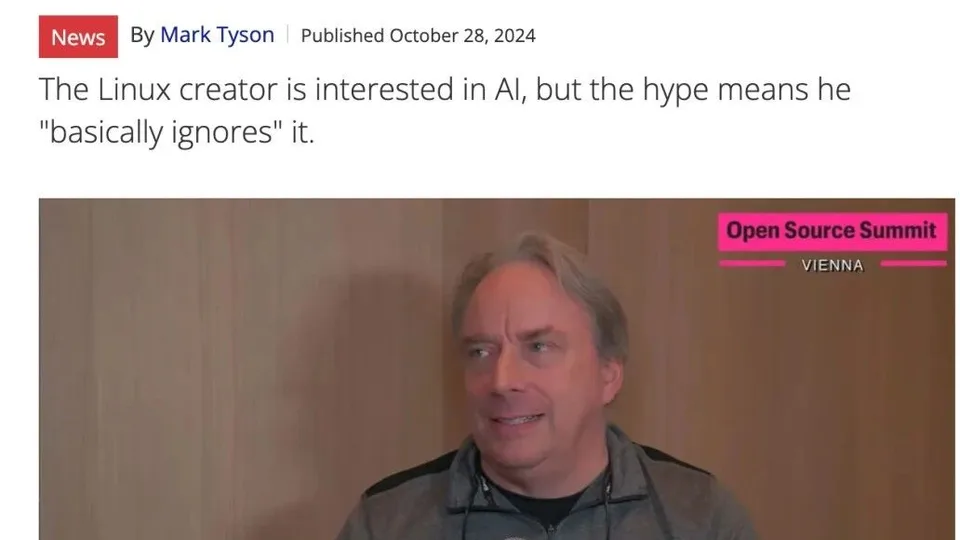
Linus Torvalds, after calling AI 90% hype, used Claude Code to implement an RCU-based fix for Linux kernel page cache contention that tripled throughput and cut cache-line bouncing by 99.6%, but kernel reviewers discovered a subtle race condition causing silent data corruption, requiring a human rewrite.
This comprehensive guide dissects Spring Boot's graceful shutdown internals and health check semantics, revealing why configuring server.shutdown=graceful alone fails to prevent request loss during Kubernetes rolling updates, and provides a complete framework for coordinating shutdown phases, probe groups, and routing convergence to achieve true zero-downtime deployments.
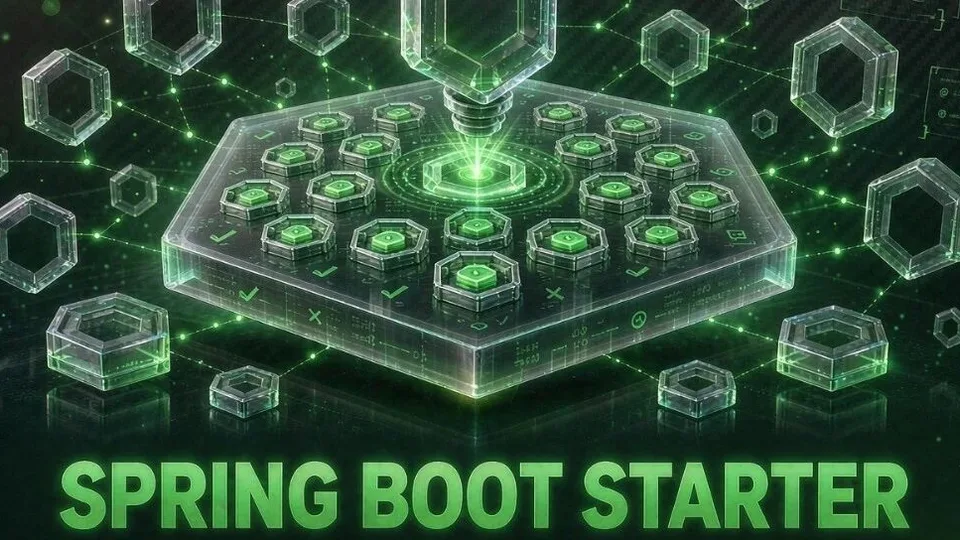
This comprehensive guide walks through creating a production-ready Spring Boot 3.x starter, covering auto-configuration mechanics, conditional annotations, configuration properties, registration files, and a complete token-bucket rate-limiter implementation with AOP, plus debugging tips and common pitfalls.
The article explains why process orchestration is essential for backend systems serving multiple business lines, demonstrating a flow engine with process, success, rollback, and callback nodes that eliminates if-else chains, ensures code isolation, and enables safe extension, with code examples and a Git repository reference.
This article compares four Java local caching solutions — ConcurrentHashMap, Guava Cache, Caffeine, and Ehcache — detailing their features, performance characteristics, and code examples, while addressing cache consistency challenges in two-level cache architectures using MQ or Canal for synchronization.
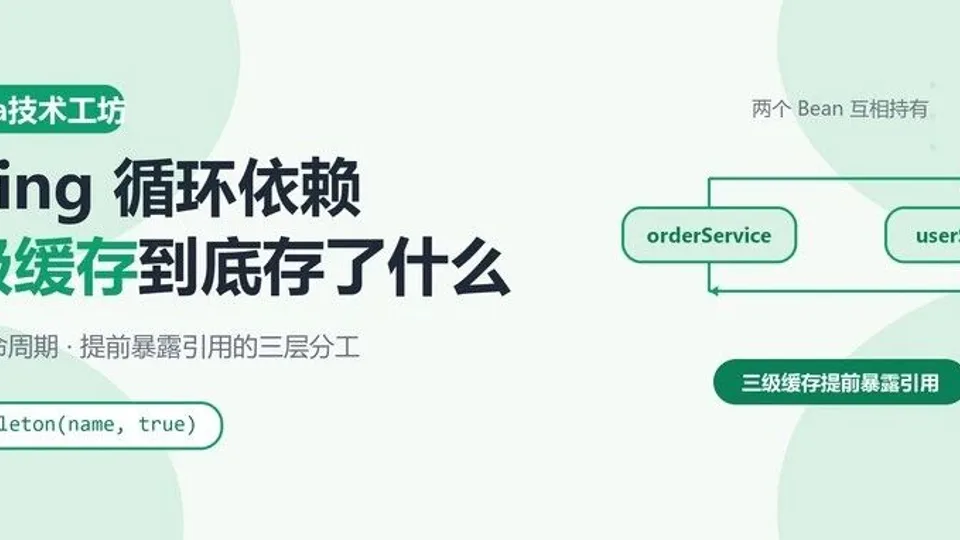
This article explains Spring's three-level cache mechanism that resolves circular dependencies for field/setter injection, why constructor injection fails with BeanCurrentlyInCreationException, how early exposure and ObjectFactory enable AOP proxy creation, and the impact of Spring Boot 2.6's default circular reference blocking.
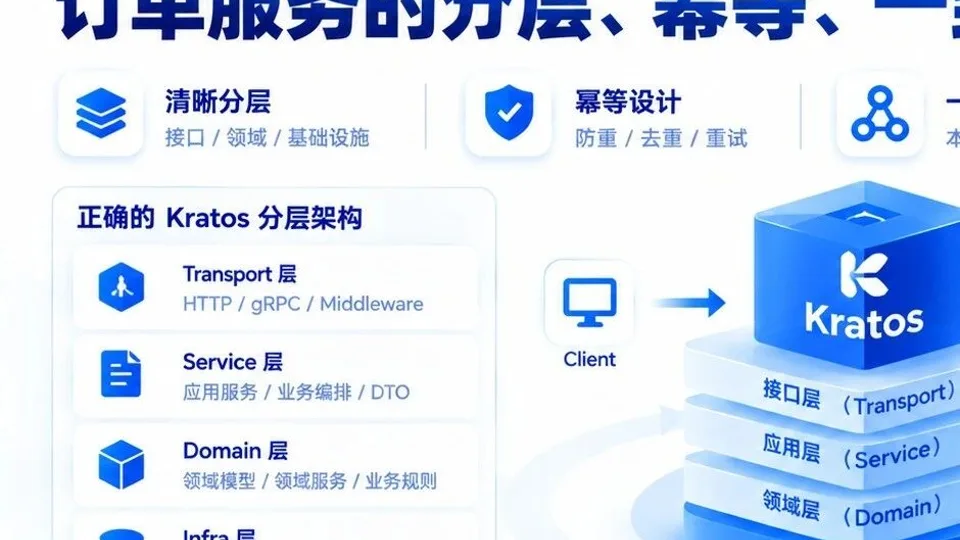
This article details how to build a production-grade order service using Kratos v2, MySQL, Kafka, and Kubernetes, covering idempotency keys, outbox pattern, inventory reservation, state machines, context/timeouts, middleware, observability, Kubernetes probes, capacity planning for 8000 QPS, and automated fault-injection tests.
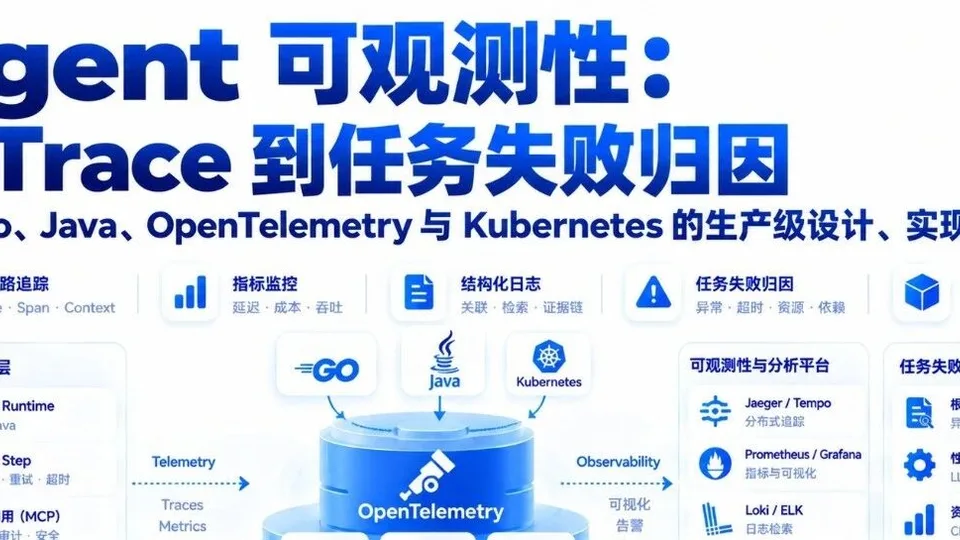
This article presents a production-grade observability design for agent systems, covering task modeling, trace propagation, lease/fencing/checkpoint mechanisms, OpenTelemetry instrumentation in Go and Java, MCP integration, Kubernetes collector setup, PromQL dashboards, Argo CD release correlation, and fault injection experiments for failure attribution.
This article explains how to implement pagination using Redis Sorted Sets (ZSet) and multi-condition fuzzy queries using Hash with HSCAN, then combines both by caching filtered results in pattern-keyed ZSets for efficient paginated retrieval, including TTL-based expiration and data freshness strategies.