The article analyzes how StarRocks, Fluss, and Paimon can replace the traditional Lambda architecture with a unified lakehouse solution that delivers second‑level data freshness, consolidates storage and compute, and provides native read/write paths for high‑performance real‑time analytics and large‑scale ETL.
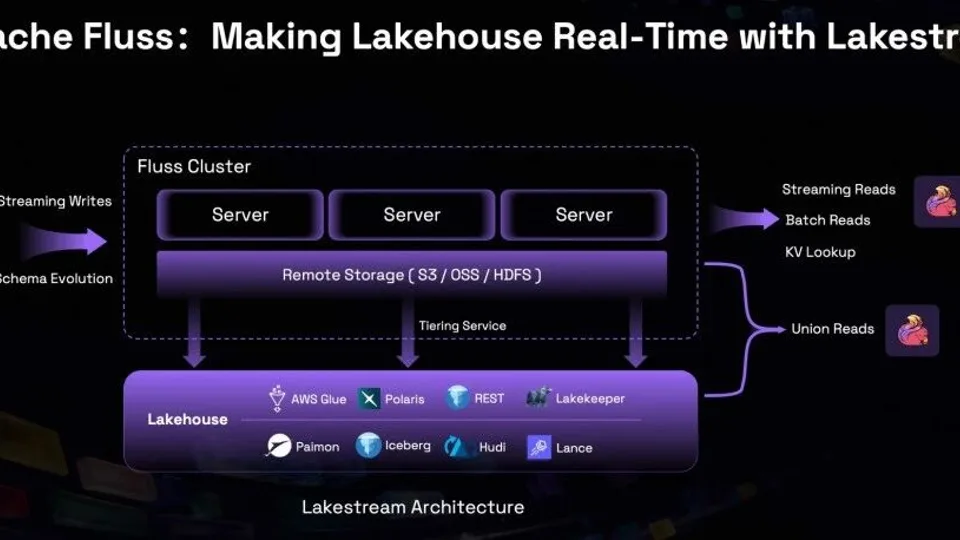
Apache Fluss graduates to a top-level project, introducing the Lakestream architecture that unifies real-time streaming and historical lakehouse storage through tiered hot/cold storage, unified metadata, and Union Read, eliminating Lambda architecture complexity and enabling sub-second analytics on a single logical table.
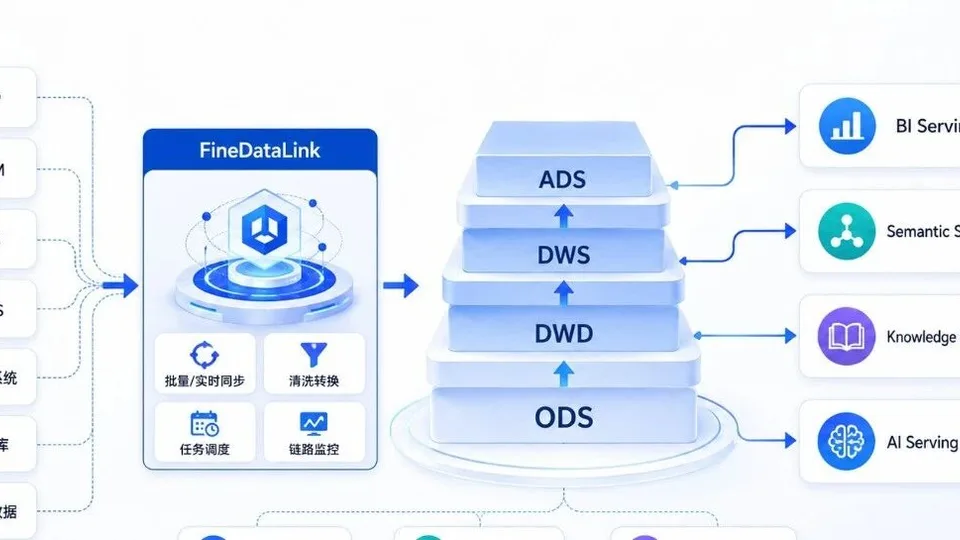
The article examines the traditional ODS‑DWD‑DWS‑ADS architecture, explains why it falls short for AI‑driven analytics, and proposes adding semantic, knowledge, context, and AI serving layers while positioning FineDataLink as the foundational data integration engine.
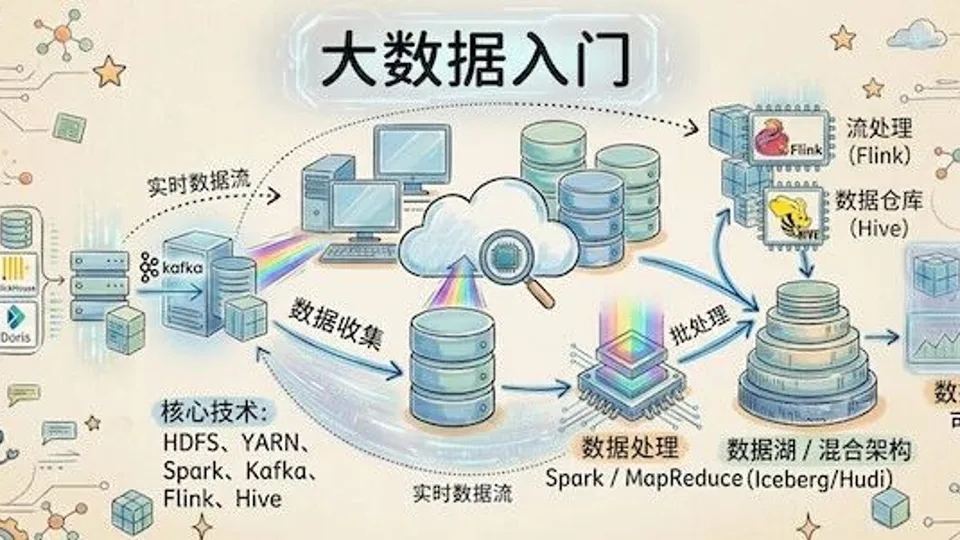
As enterprises add more systems, data volumes explode while accessing it becomes harder; this article defines data architecture, explains how databases, data warehouses, data lakes, and data middle platforms each solve distinct layers, and outlines the key questions and challenges for building a unified, reusable data ecosystem.
This article details migrating from a legacy Canal+Kafka+Flink+Hive stack to a modern Flink CDC + Iceberg real-time data lake, covering Spring Boot orchestration, chunk-based full/incremental sync, Interval Join for wide tables, automated schema evolution, hidden partitioning, Exactly-Once checkpoint tuning, and Kubernetes deployment practices.
The article compares Elasticsearch and ClickHouse for log storage, analyzes cost and performance, and provides a step‑by‑step guide to deploying a Zookeeper‑Kafka‑Filebeat‑ClickHouse pipeline, including common pitfalls and their solutions, showing how the combo reduces server costs by up to half.
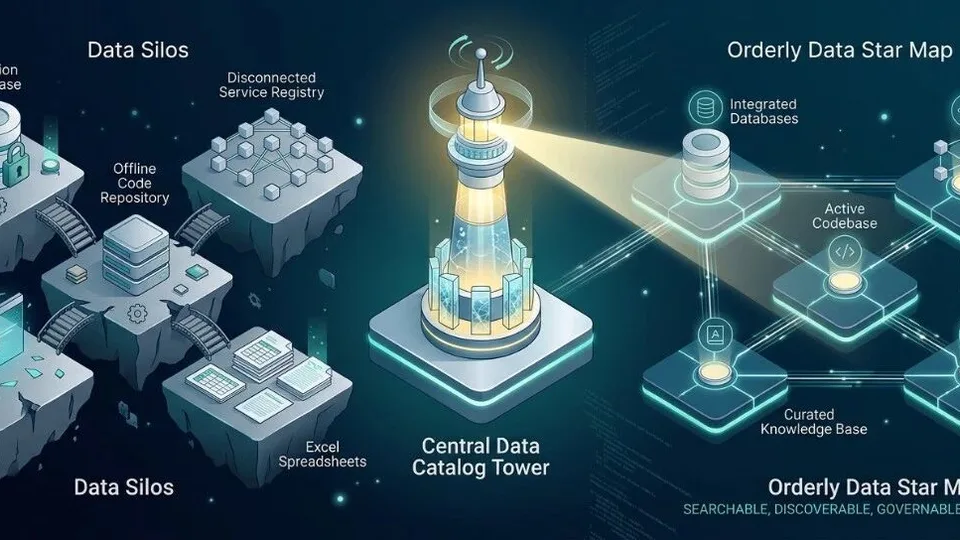
The article explains how scattered, hard‑coded metadata in large‑scale systems leads to unknown impact of changes, and walks through building a unified metadata center with a single source of truth, automatic collection, lineage, impact analysis, asset discovery, active metadata, and governance, while highlighting practical trade‑offs and real‑world tools.
This article shares production lessons from integrating Spring Boot with Apache Doris for real-time data warehousing, covering connection pool tuning, data model selection, ingestion methods, materialized views, Colocate Join optimization, resource isolation, compaction tuning, BI tool integration, and cluster operations.
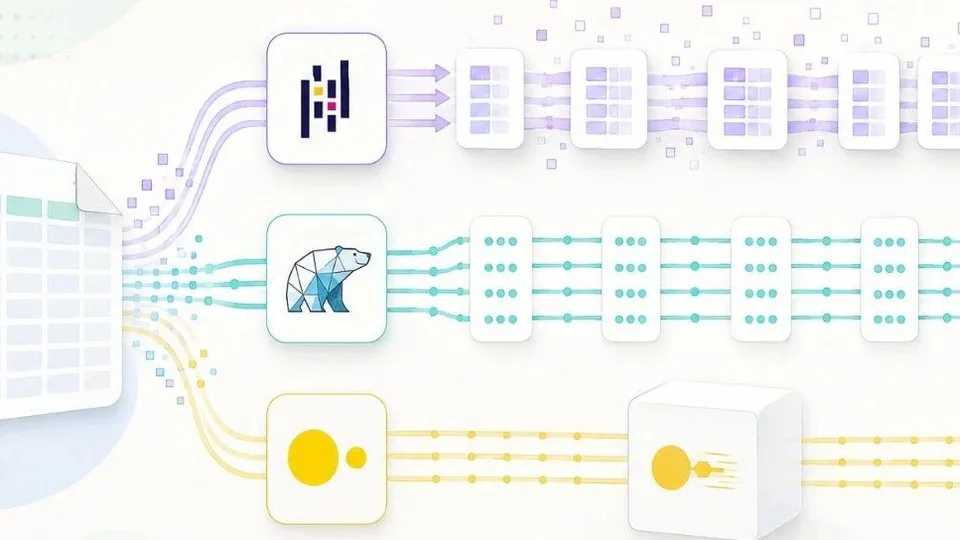
A head‑to‑head benchmark on a 2.3 GB CSV (~1.2 million rows) shows Pandas exhausting memory, Polars completing the pipeline in 8.7 seconds with modest RAM, and DuckDB answering the same query in just 12 milliseconds, highlighting distinct trade‑offs for Python data processing.
In July 2024 Apache Fluss received unanimous approval from the Apache Incubator IPMC and ASF board, graduating to a Top‑Level Project; the article details its community growth, core Lakestream architecture, real‑time streaming storage capabilities, adoption by major enterprises, and how it enables AI agents with fresh, unified data for real‑time decisions.
The article details Ant Group’s Lampara, a next‑generation real‑time data processing platform that embeds end‑to‑end SLA guarantees, active disaster‑recovery, scenario‑driven development and enhanced operators, showing how it improves reliability, efficiency and cost while supporting large‑scale business scenarios such as flash sales, AI agents and marketing campaigns.
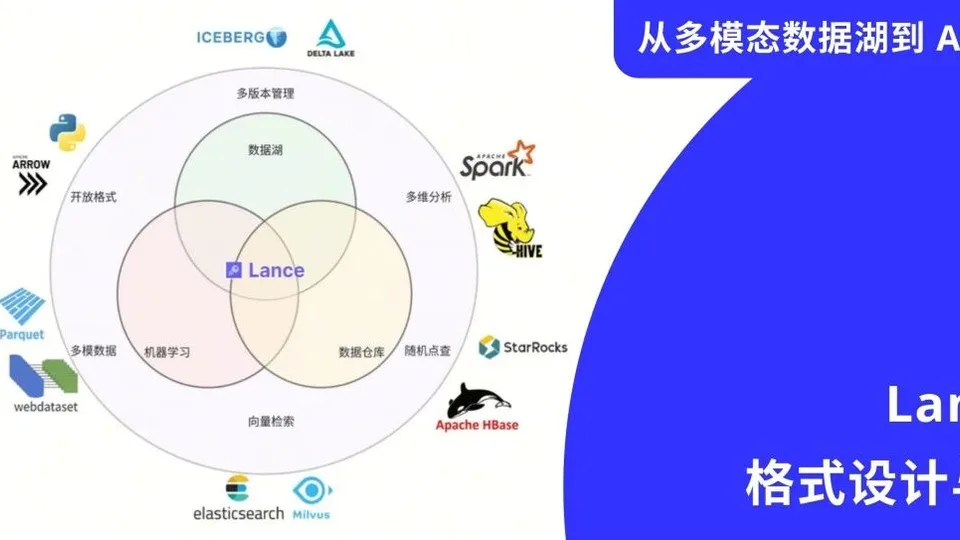
At AICon 2026, Ma Jin explained how Lance’s layered lakehouse format—spanning file, table, index and catalog layers—addresses AI workloads by supporting wide columns, cheap schema evolution, mixed storage and low‑latency random reads, enabling unified handling of training data, RAG retrieval and Agent memory.
The article examines advanced data‑warehouse RAG challenges, explains why pure vector retrieval falls short, details a BM25‑plus‑vector hybrid approach, showcases AI‑driven metric platforms and data‑agent design, and outlines practical factors for building a robust data‑agent foundation.
The article analyses why exporting billions of Elasticsearch documents requires a full‑stack platform rather than a one‑off script, detailing the pitfalls of naive pagination, the benefits of PIT + search_after + slicing, and a complete architecture with Kafka, Redis, MySQL, Kubernetes and observability for reliable, scalable offline data export.
This article (part 1) presents twelve high‑level interview questions from top tech firms covering the shift from AI‑Ready to Data‑Agent‑Ready data warehouses, AI‑centric metadata and lineage, lakehouse formats like Paimon, and key Iceberg features that empower AI‑driven analytics.
The article reviews Tencent Cloud's AI DLC launch, detailing how the serverless Spark + Ray platform unifies data, compute, and agent workflows, introduces four architectural upgrades, showcases core engines (TCRay, Xpark, Meson, Open Engine), and presents benchmark results and real‑world practices from Bosch and WorkBuddy that demonstrate significant performance and productivity gains.
Amid exploding real‑time data demand, the traditional Lambda architecture suffers from high cost, data inconsistency and operational complexity, prompting a shift to a unified incremental computation engine that delivers minute‑level latency, sub‑hourly cost, and sub‑1% result divergence, as demonstrated by Kuaishou and Xiaohongshu production deployments.
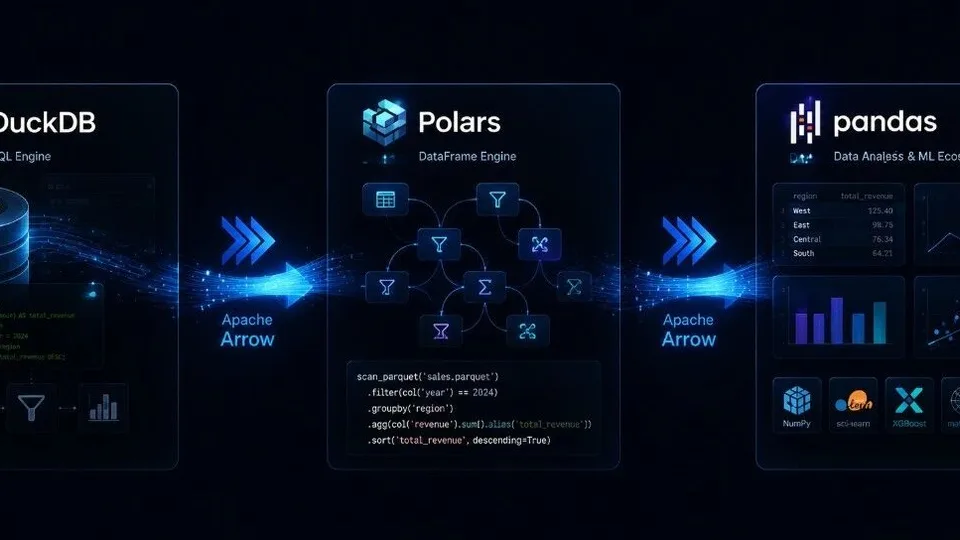
As data volumes explode from megabytes to gigabytes and beyond, the article analyzes why traditional Pandas scripts falter, compares DuckDB, Polars, and Pandas on performance and memory usage, and proposes a layered pipeline that leverages each tool where it excels.
This article walks through using Apache DolphinScheduler 3.2.2 in a lightweight Docker standalone setup to model, create, and run an ODS → ETL → ADS offline workflow via the Open API, demonstrating dependency handling, retries, backfill, and troubleshooting for reliable daily batch processing.
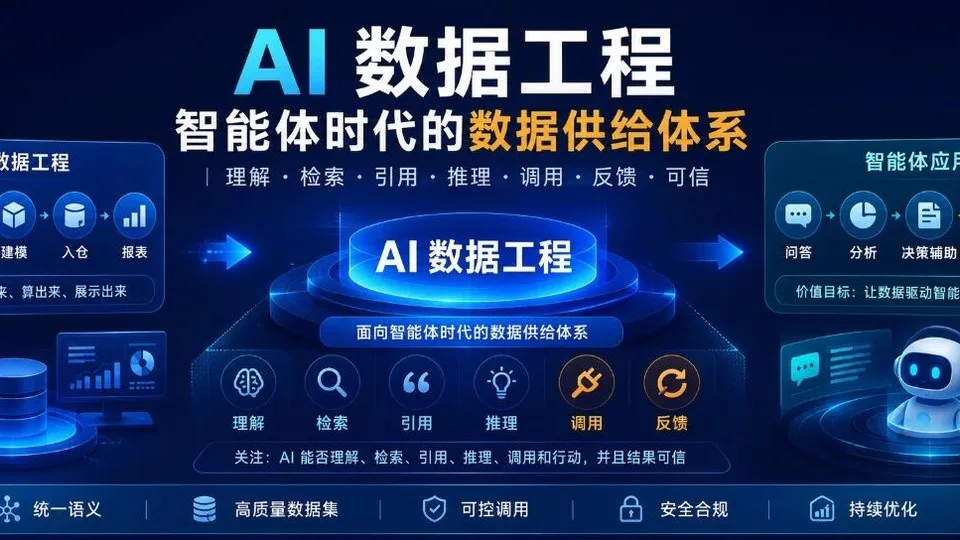
This article defines AI Data Engineering as a data supply system for large models and agents, extending traditional data engineering with semantic modeling, RAG, controlled data services, permission governance, and feedback loops to make data understandable, retrievable, callable, and auditable for reliable enterprise AI deployment.