This article presents a comprehensive framework for building a big data governance platform, covering a five-layer architecture, nine core governance modules, a three-phase implementation roadmap, organizational structure, success metrics, and industry-specific selection guidance to transform chaotic data into trusted, findable, and controllable assets.
Apache Paimon combines a lakehouse table format with an LSM-tree update engine to handle continuous updates, historical snapshots, and multi-engine access in real-time data warehouses, reducing the need for separate Kafka, Hive, and OLAP systems.
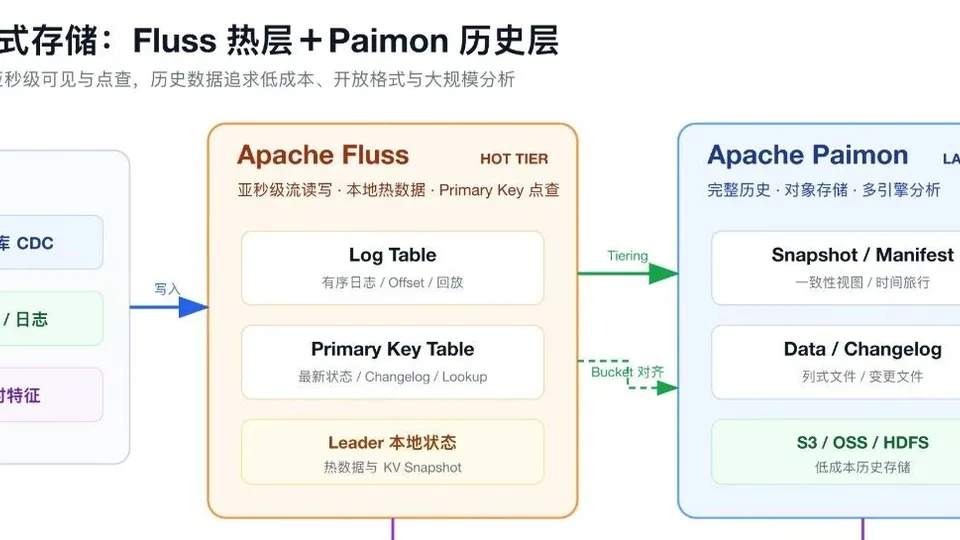
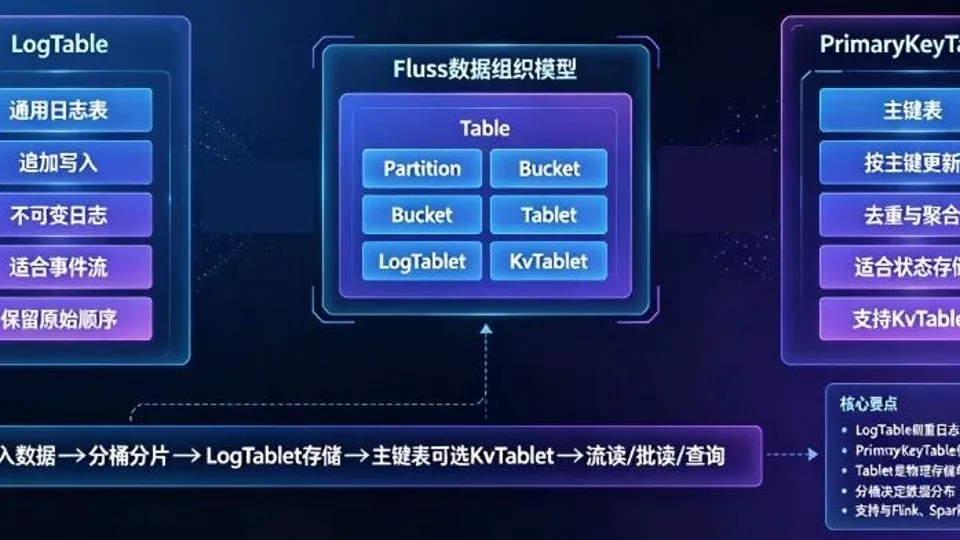
This article details Apache Fluss's dual-table model where LogTable handles high-throughput append-only streaming with columnar storage while PrimaryKeyTable supports real-time updates, partial merges, and CDC changelogs via integrated RocksDB state storage, sharing unified tiering and lakehouse sinking.
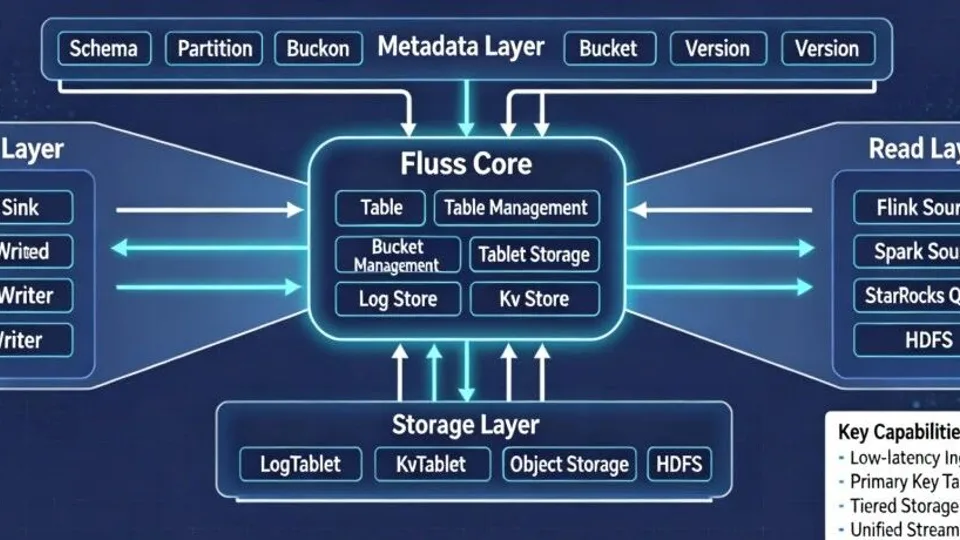
This article deep-dives into Apache Fluss architecture, detailing its Master-Worker design, dual LogStore and KvStore engines, tablet-based sharding, tiered hot/cold storage on remote object stores, and Flink-centric client integration, explaining how these components unify streaming and lakehouse workloads.
The article outlines MaxCompute’s evolution into a Data+AI platform with a unified model management layer, heterogeneous compute quotas, Blob‑type full‑modal storage, AI Function APIs, and an Agentic interface built on MCP, Skills, and metadata, highlighting real‑world pipelines and performance gains.
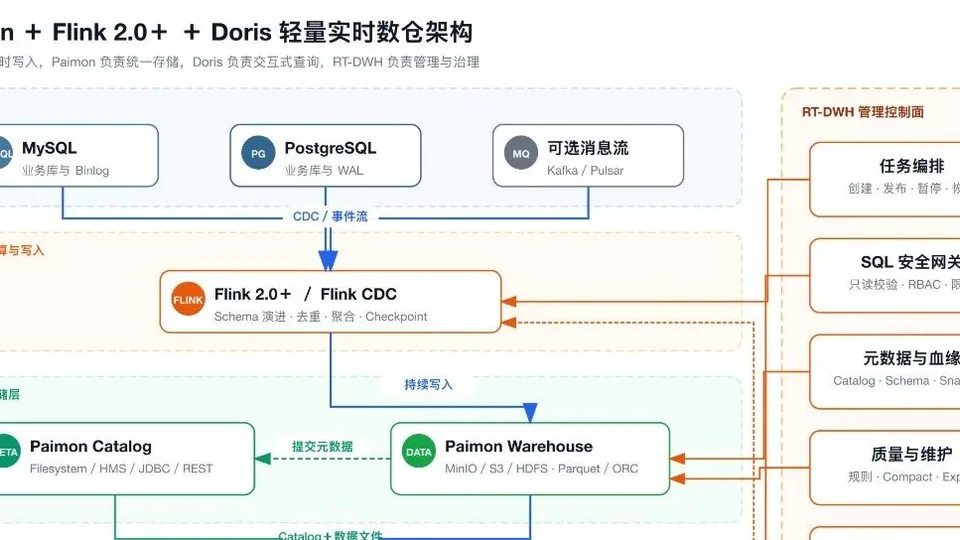
This article details a lightweight real-time data warehouse architecture using Apache Flink 2.0+ for streaming writes, Apache Paimon for lakehouse storage, Apache Doris for interactive queries, and a custom RT-DWH management platform to unify metadata, quality, permissions, and observability — reducing component count and operational complexity for small-to-medium teams.
The article explains how the surge of data in the DT era makes traditional storage insufficient, defines a data warehouse as a subject‑oriented, integrated, stable collection for decision support, outlines its development lifecycle—including integration, modeling, services, scheduling, metadata and quality management—and stresses that building a warehouse is an ongoing, iterative process driven by evolving business needs.
At Apache COC Asia 2026, Didi’s engineers presented three deep‑dive sessions covering the evolution of massive‑scale object storage with Ozone, cost‑effective lakehouse migration using Iceberg and real‑time ingestion, and AI‑friendly enhancements to the open‑source Seata project, detailing architectural choices, performance gains, and open‑source contributions.
Tencent's SuperSQL achieved a 654 million composite score on the TPC‑DS 100 TB benchmark—nearly ten times the previous record—while cutting performance‑per‑dollar cost to 11.04 CNY (about one‑sixth of earlier results), thanks to innovations in query optimization, a vectorized execution engine, adaptive memory and shuffle mechanisms, and AI‑driven diagnostics that together deliver superior speed, scalability, and business value.
The article explains why traditional physical‑table‑plus‑SQL pipelines no longer meet AI‑driven data needs and proposes a semantic‑engineered approach—semantic assets, a governed semantic layer, logical tables, and agents—to make data meaning executable, verifiable, and governable.
This article maps big data applications across ten industries — finance, retail, manufacturing, healthcare, government, transportation, new energy, AI, agriculture, and property — detailing use cases, technical architectures, and measurable value, concluding that AI and new energy form a mutually reinforcing data-driven loop.
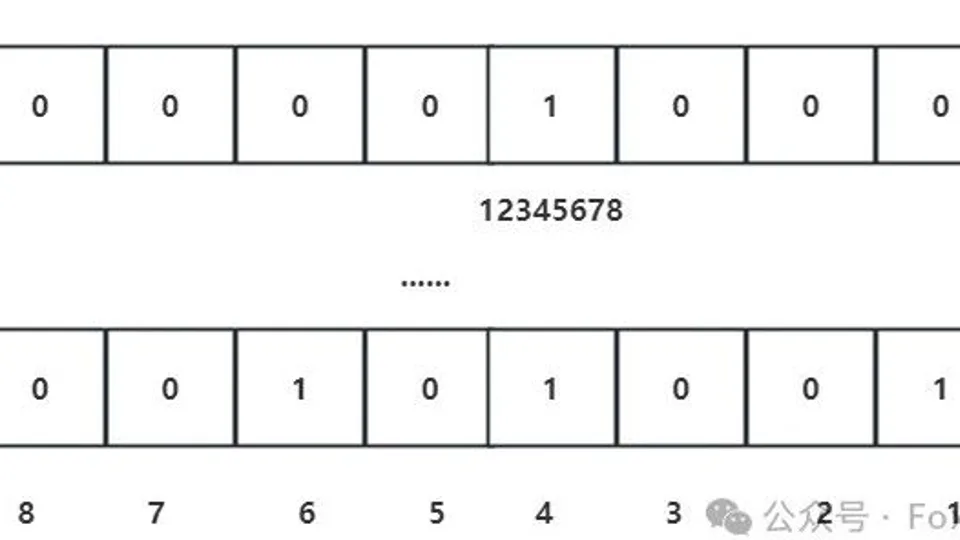
The article explains how to solve the classic massive‑data deduplication problem of 4 billion QQ numbers within a 1 GB memory limit by analyzing memory requirements, comparing BitMap and Bloom filter approaches, and detailing a step‑by‑step BitMap implementation with its pros and cons.
Tencent's SuperSQL achieved a 6.54 × 10⁸ TPC‑DS score—nearly ten times the previous best—while cutting unit performance cost to 11.04 yuan, about one‑sixth of earlier results, making it the global leader in both speed and price‑performance for 100 TB data analytics.
The article details how a live‑streaming data team built an AI‑assisted, metric‑driven system that lets users describe a real‑time data task in under 200 characters, automatically generates DSL and Flink SQL, and supports safe incremental adjustments via a Hook protocol, cutting development time from days to minutes.
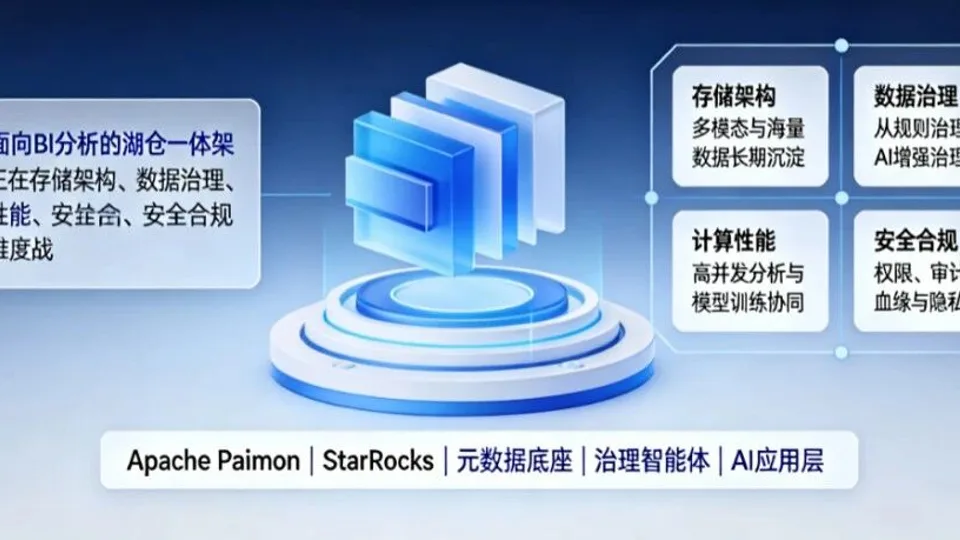
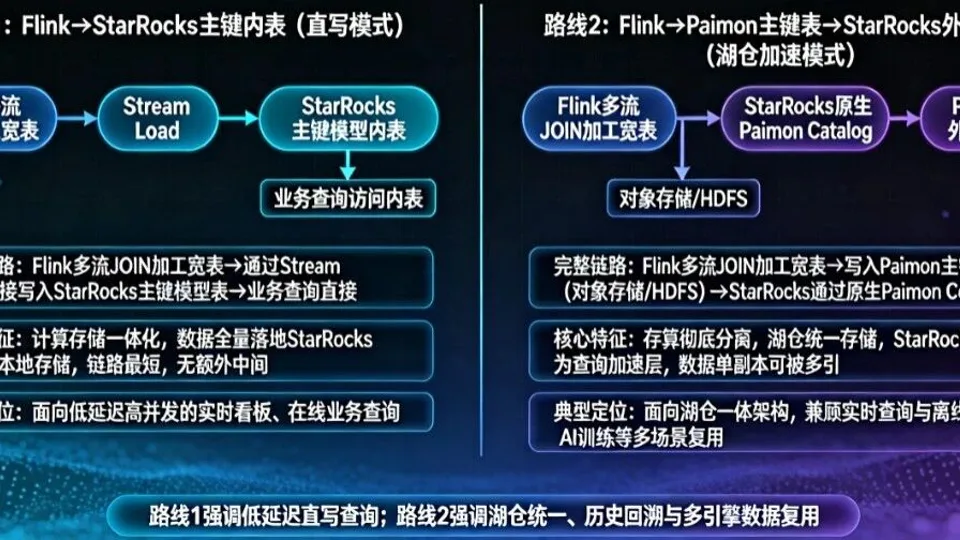
China's high-quality dataset count hit 120,000 totaling 1,565 PB with 60% quarterly growth, exposing four systemic gaps in traditional BI-oriented lakehouse architectures — storage, governance, compute performance, and security — and driving an AI-native reference architecture built on Paimon, StarRocks, tiered storage, operator-level lineage, and multi-modal retrieval.
The article explains how Google’s new BigQuery Graph with Measures extends the traditional semantic layer—once focused on unified metric definitions—into a business‑context‑aware infrastructure that lets agents trace why metrics change through explicit entity relationships.
The article outlines the strategic need for a unified data lake in a digital‑focused enterprise, details functional and non‑functional requirements such as linear scalability, real‑time and batch processing, multi‑tenant support, security and governance, and presents a comprehensive architecture design that integrates storage, compute, and management components.
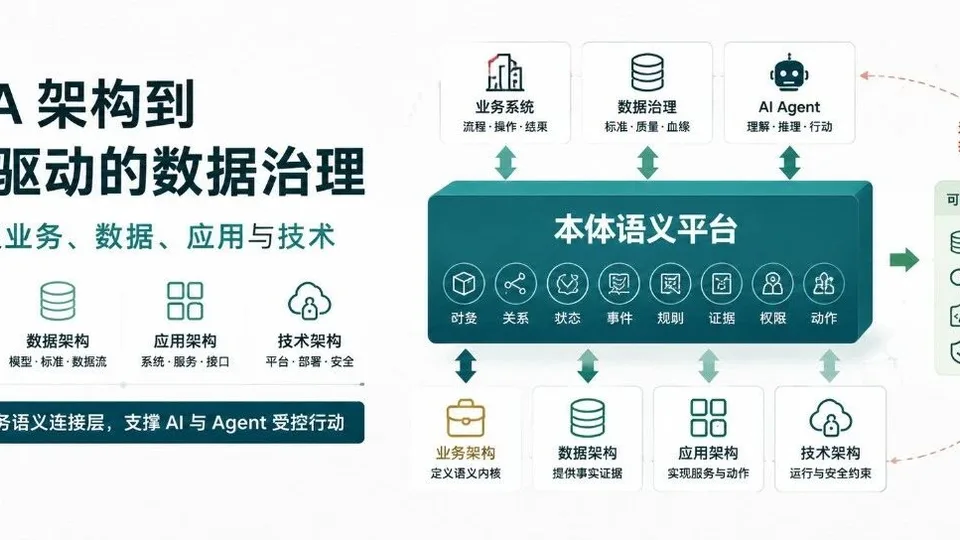
This article presents an eight-step methodology for ontology-driven data governance that connects business, data, application, and technology architectures (4A) by starting from high-value business scenarios, establishing semantic kernels, mapping data evidence, linking application actions, referencing technical constraints, enforcing semantic quality, publishing usable semantic products, and closing the loop with operational feedback.
The article explains how lance‑spark enables Lance's Blob V2 storage by marking a column with blob encoding and setting file_format_version ≥ 2.2, describes the metadata‑driven descriptor schema, the write path that still accepts Spark BINARY, and the size‑based placement of binary data into inline, packed, dedicated or external blob files.