Blockchain technology underpins the FinTech revolution by providing a distributed, decentralized, and immutable ledger that powers Bitcoin’s proof‑of‑work consensus, while also exposing security vulnerabilities and prompting industry initiatives such as R3’s Corda platform to adapt regulated financial infrastructures.
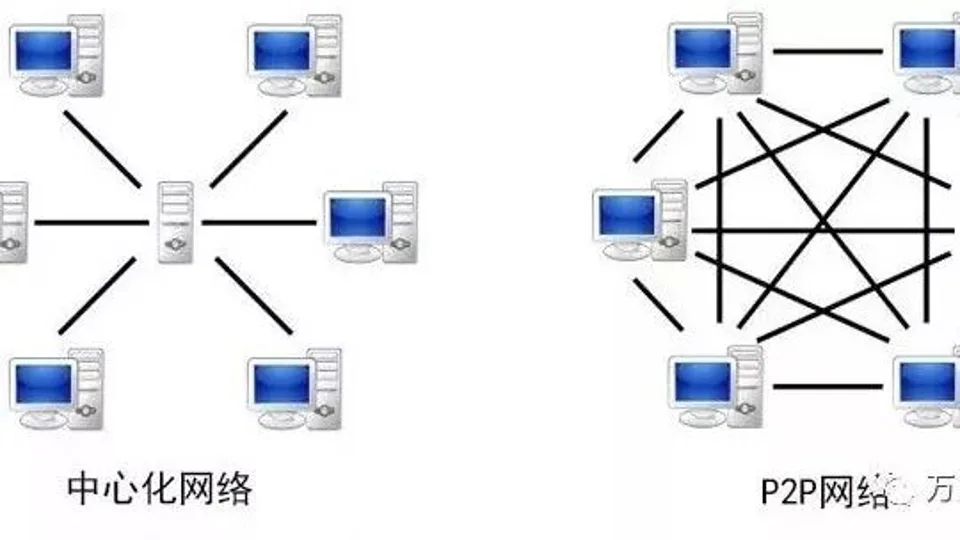
This article provides a comprehensive introduction to blockchain technology, covering its origins, development milestones, formal definition, structural classifications, key characteristics such as decentralization and immutability, as well as security mechanisms and current limitations, supported by references and illustrative diagrams.
This article translates a concise three‑step tutorial that explains blockchain’s core components—the ledger itself, the peer‑to‑peer network, and consensus mechanisms—while illustrating how these elements work together to secure and validate transactions.
An introductory guide explains blockchain as a distributed ledger, describes how it validates and stores data across decentralized nodes, highlights its transparency and security, outlines its significance for governments and industries, recounts its mysterious creator Satoshi Nakamoto, and surveys diverse real‑world applications from finance to diamonds and energy.
Bitcoin’s security relies on proven cryptographic principles—large‑integer public/private key pairs and digital signatures that authenticate transactions locally without exposing secret keys—making brute‑force attacks infeasible and ensuring that only implementation errors, not the mathematics, can compromise the system.
Learn how to build a functional blockchain in Python using Flask, covering environment setup, the core Blockchain class, block and transaction structures, a simple proof‑of‑work algorithm, RESTful API endpoints, node registration, and a longest‑chain consensus mechanism, complete with runnable code examples.
This article explains blockchain as a distributed peer‑to‑peer ledger, its origins with Bitcoin, key protocols like Ethereum and Ripple, how blocks are linked and secured, real‑world uses such as Maersk’s shipping solution, and the distinction between public and private blockchains.
The article examines blockchain's future by highlighting three core technical constraints—high latency, costly computation, and limited storage—that must be overcome for the technology to move beyond speculation and achieve widespread practical use.
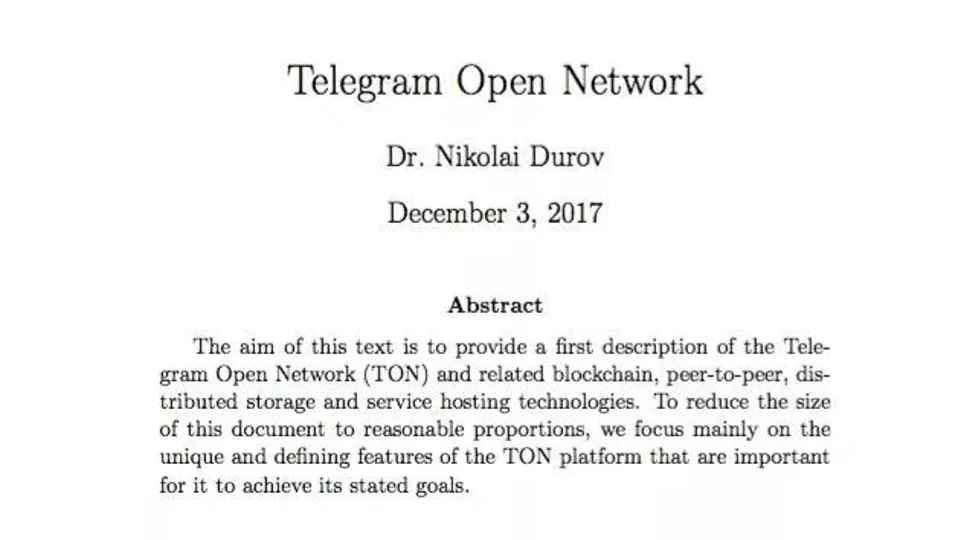
The article examines the TON blockchain whitepaper authored by Nikolai Durov, highlighting its multi‑chain architecture that can support billions of distinct tokens, its smart‑contract‑driven subscription model, and how it compares to other platforms like EOS in terms of performance and scalability.
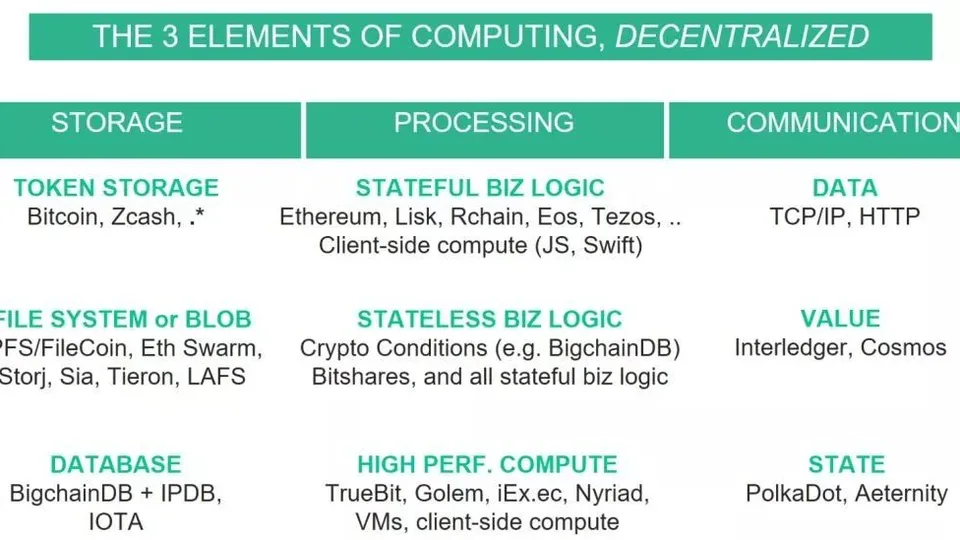
This article presents a first‑principles framework that categorizes blockchain infrastructure components—storage, computation, and communication—by mapping them to concrete projects such as Ethereum, IPFS, BigchainDB, and others, illustrating how these modules interoperate to build efficient decentralized applications.
The article explains that blockchain can serve as an anti‑counterfeiting technology, describes how ICOs issue tokens that grant voting and dividend rights, illustrates token‑driven projects like IPFS, and clarifies that digital currencies such as Bitcoin are not fully anonymous and still require KYC for fiat exchanges.
This article explains the fundamentals of centralized and decentralized cryptocurrency exchanges, describes key concepts like wallets, signatures, and smart contracts, and compares three Ethereum‑based DEX implementations—EtherDelta, Kyber Network, and JOYSO—highlighting their architectures, advantages, and limitations.
This comprehensive guide introduces Ethereum’s core concepts, from blockchain fundamentals and smart‑contract mechanics to DApp development, token standards, client tools, security best practices, and the surrounding ecosystem of projects and protocols.
The article explores how blockchain, as highlighted by Pangea Money Transfer’s VP Joshua Gordon‑Blake, offers far‑reaching benefits beyond digital currencies, including secure asset digitization, reduced transaction costs, improved supply‑chain transparency, digital identity for immigrants, and transformative applications in remittances, healthcare, and government services.
This guide explains where Ethereum stores encrypted private keys, how to create accounts via geth commands or console, the structure and contents of keystore files, and the cryptographic principles behind password‑protected decryption, helping you avoid losing access to your funds.
This guide provides a step‑by‑step learning roadmap for complete beginners and investors, offering videos, articles, podcasts, books, and courses that introduce blockchain fundamentals, security practices, and advanced resources to help readers responsibly explore Bitcoin and other digital assets.
This article explains the fundamentals of blockchain technology, introduces IOTA’s Tangle as a DAG‑based alternative without miners, and discusses its claimed benefits such as decentralised security, quantum resistance, scalability and suitability for IoT micro‑payments.
The article explains Monero’s mysterious origins, its strong privacy technologies that differentiate it from Bitcoin, recent security concerns involving malicious mining, market performance, and upcoming initiatives like the Coral Reef project while also noting competition from other privacy‑focused cryptocurrencies.
This article explains blockchain fundamentals, clears common misconceptions, describes its basic components, outlines the technology’s evolution from 1.0 to 3.0, and highlights current and future application scenarios across various industries.
This article explains that the null return from miner.start in Geth’s dev mode is caused by a new --dev.period parameter introduced in recent versions, and shows how adding --dev.period 1 resolves the issue, allowing continuous block mining.