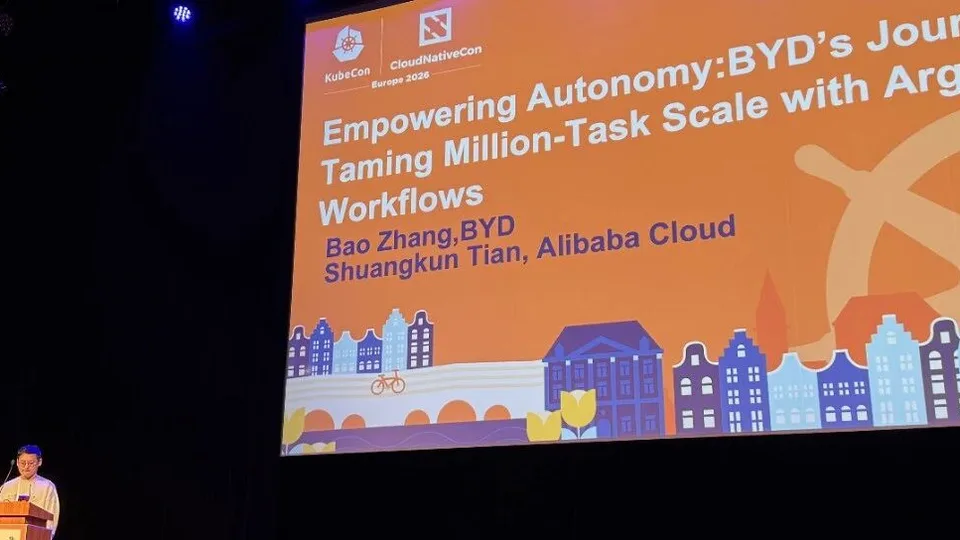
Facing over 1 PB of daily sensor data, BYD replaced Airflow with a multi‑cluster Argo Workflows and Argo CD architecture, integrated Ray for GPU workloads, and achieved 20‑40 k concurrent workflows, an 11‑fold efficiency boost, 30% cost reduction, and near‑99% success rates.
The article outlines a step‑by‑step framework for writing a high‑concurrency system design paper, covering project background, performance challenges, six concrete technical solutions—including multi‑level caching, async processing, rate limiting, database optimization, microservice decomposition, and elastic scaling—and how to quantify their impact with real data.
This article explains why Java memory tuning in Kubernetes goes far beyond setting -Xmx, covering cgroup limits, off‑heap memory, thread stacks, direct buffers, and practical production methods to prevent OOM kills and ensure stable, high‑performance services.
The article analyzes the shortcomings of Kubernetes' native delete handling and presents a production‑grade double‑ring protection system that separates authorization and validation, adds buffering, auditing, and risk scoring, and provides detailed design, Go implementation, scaling, and observability guidelines for safe delete operations.
To solve fragmented monitoring in Java microservices, the article details how to construct a production‑grade observability platform using OpenTelemetry, covering unified data models, collector architecture, tracing, metrics, logging, sampling strategies, Kubernetes deployment, and practical guidelines for scaling, governance, and root‑cause analysis.
This article walks readers through using Terraform for Infrastructure as Code, covering installation, core concepts, workflow, remote state management, modular design, variable handling, sensitive data protection, production best practices, troubleshooting, and advanced topics such as Terragrunt, CDK, policy-as-code, testing, multi‑cloud deployment, and import strategies.
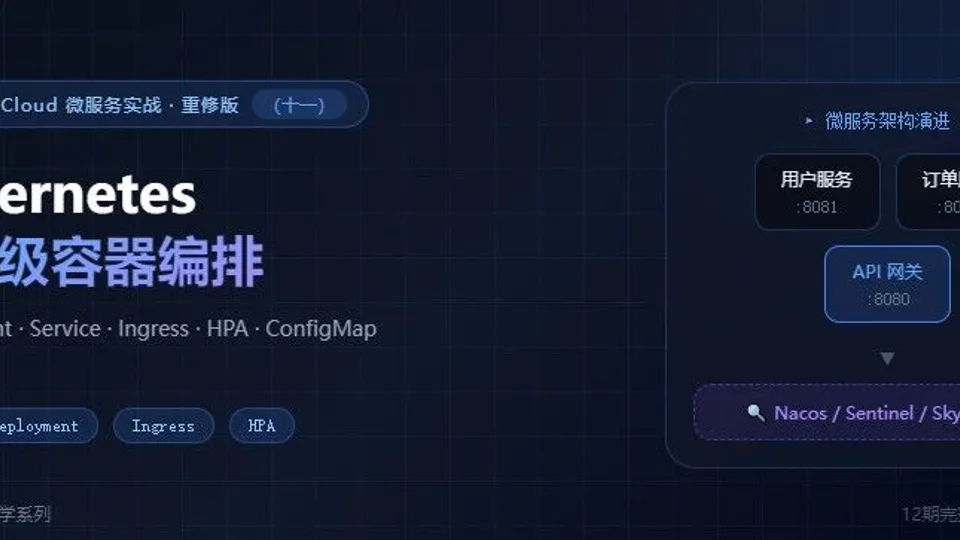
This article walks through migrating a Spring Cloud microservice suite from local Docker Compose to a production‑grade Kubernetes deployment, covering namespace setup, ConfigMaps, Secrets, service deployments, auto‑scaling, rolling updates, self‑healing, load balancing, Docker image builds, deployment scripts, common operational commands, and validation steps.
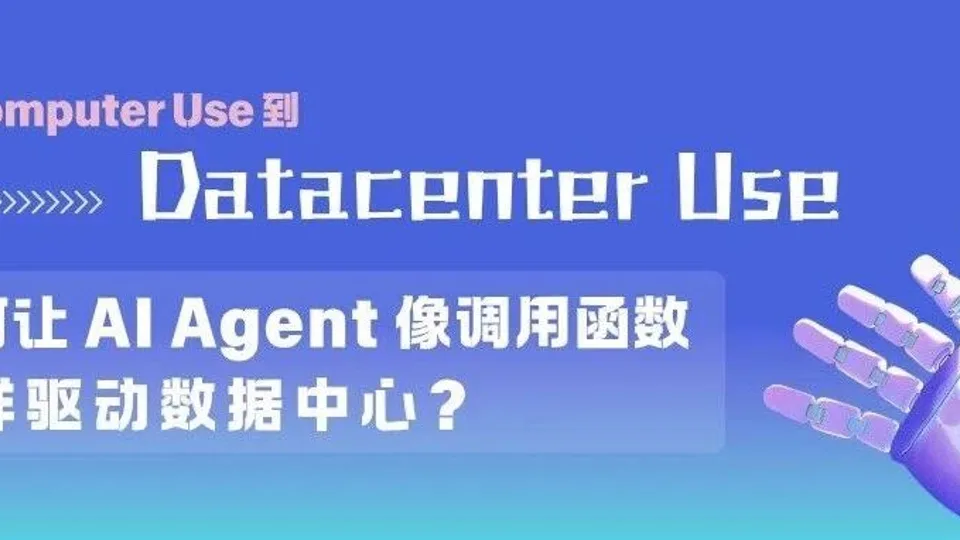
The article analyzes how AI agents require datacenter‑scale compute beyond a single virtual machine, explains why existing cloud‑native stacks cannot meet this demand, and details Ant Group's AKernel and openYuanrong solution—including three technical pillars, performance benchmarks, a tiny development team, and a streamlined deployment workflow that turns any developer into a "Build Your Own Cluster" operator.
After building the order, stock, and point services along with Nacos, Seata, Sentinel, Prometheus, Grafana, and SkyWalking, this guide shows how to package all components into Docker images and use a single Docker Compose command to start the entire microservice system with one click, while addressing common pitfalls.
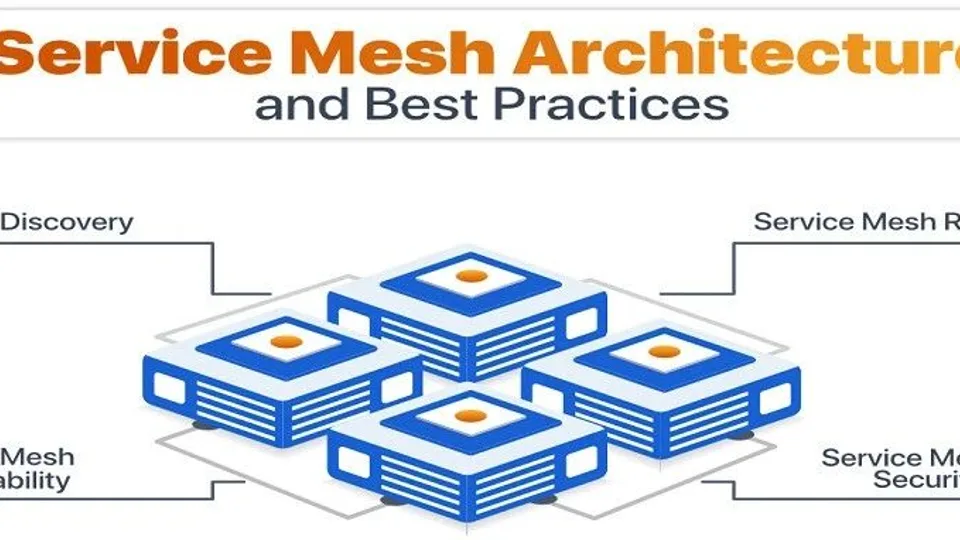
The article explains Service Mesh as a cloud‑native architecture that separates control and data planes, details its sidecar proxies, core components like Istio Pilot and Citadel, and outlines key capabilities such as traffic management, security, observability, and resilience to help exam candidates master the topic.
After solving distributed transactions with Seata, this tutorial shows how to add complete observability to Spring Cloud microservices by integrating Micrometer, Prometheus, and Grafana, covering metrics pillars, configuration, custom business metrics, dashboard setup, alert rules, validation steps, and common pitfalls.
Renewing kubeadm control‑plane certificates requires more than running a single command; you must understand the PKI topology, differentiate certificates from kubeconfigs, back up files and etcd snapshots, perform rolling updates per node in HA clusters, refresh kubeconfigs, restart static pods in the correct order, and verify health at multiple layers.
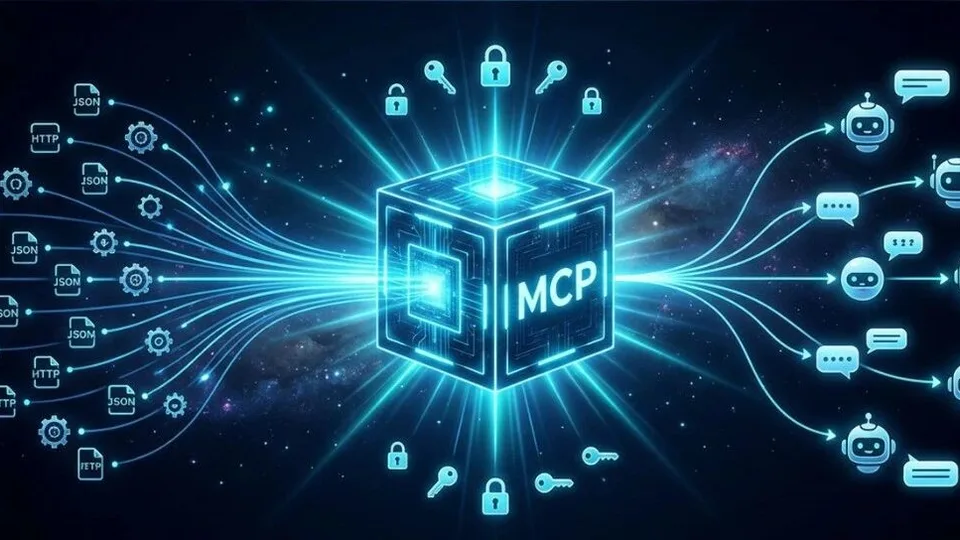
Enterprises with hundreds of RESTful APIs often cannot expose them to AI agents, not because models are weak but because tool integration is cumbersome; the article shows how the MCP Gateway enables zero‑code conversion of existing interfaces, centralizes authentication, logging, and protocol translation, and supports multi‑backend scenarios for seamless AI ecosystem access.
After solving service fault tolerance with Sentinel, this guide shows how to add SkyWalking to a Spring Cloud microservice stack, configure the OAP, UI and Java agents, verify trace data, and troubleshoot common issues, enabling precise latency analysis and error localization across services.
The article outlines how Tencent Cloud's TDSQL‑C tackles the four core pain points of traditional databases—elasticity, tuning difficulty, cost waste, and operational complexity—by adopting a storage‑compute‑separated, Serverless architecture, AI‑driven predictive scaling, a self‑learning optimizer, and the AI Navigator management system, delivering up to 30% performance gains and 20% cost reduction in real‑world use cases.
This article guides ops engineers and development leads through three essential questions—architecture suitability, team capability, and cost‑benefit analysis—to determine whether migrating to Kubernetes adds real value or just extra complexity.
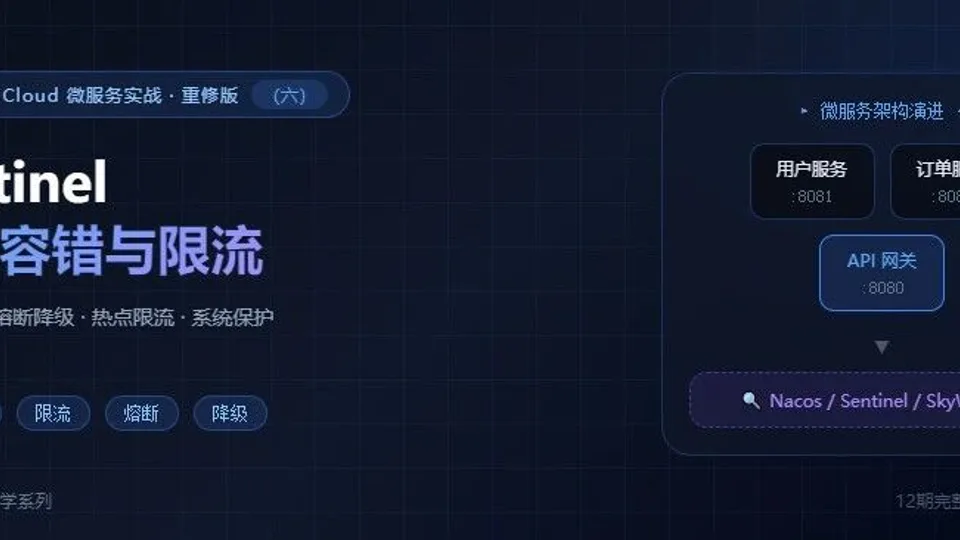
This article walks through adding Alibaba Sentinel to a Spring Cloud microservice suite to protect against service outages, traffic spikes, and slow calls by configuring rate limiting, circuit breaking, and fallback mechanisms across user, order, and gateway services, with full Docker‑compose setup and testing steps.
The article explains how traditional microservice architectures embed network concerns such as time‑outs, retries, circuit breaking, traffic monitoring and mTLS in application code, why this leads to code coupling, upgrade difficulty and duplicated effort, and how Istio’s sidecar‑based service mesh cleanly separates those concerns while providing traffic management, observability and security features.
This article explains Service Mesh architecture, detailing the control plane and data plane separation, Sidecar deployment pattern with iptables traffic interception, xDS protocol for dynamic configuration, and core capabilities including traffic management, zero-trust mTLS security, and automated observability via metrics, logs, and distributed tracing.
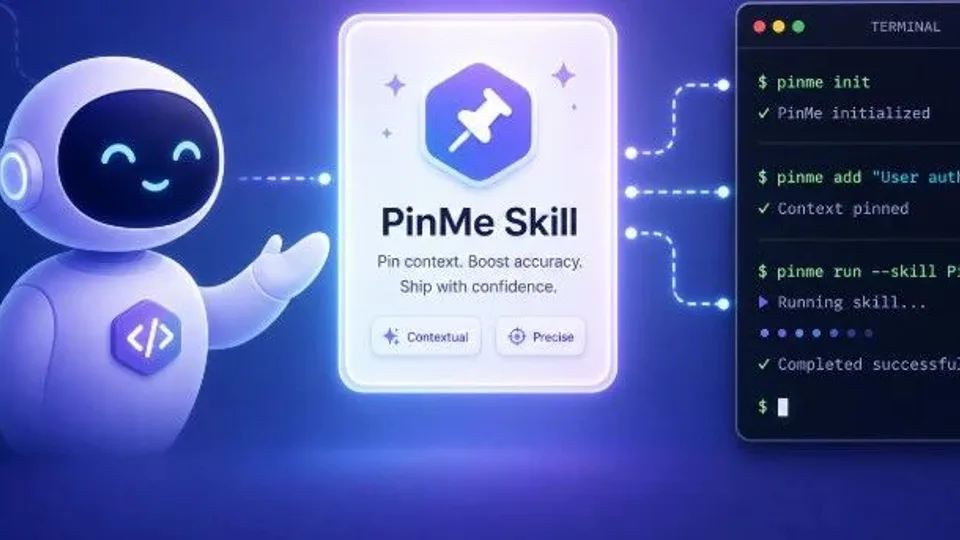
PinMe is a zero‑configuration CLI that lets developers launch a front‑end, Cloudflare Worker backend, and D1‑style database with one command, supports layered updates, static‑only uploads, and even exposes a Claude Code skill for AI‑driven automation.