This article examines the challenges of pixel‑perfect UI reconstruction and semantic code generation for consumer‑facing front‑end projects, and presents a hybrid rule‑algorithm and large‑language‑model architecture that streamlines design‑to‑code (D2C) and requirement‑to‑code (P2C) workflows, integrates IDE plugins, and dramatically improves developer productivity.
The article examines almostnode, a 250KB open‑source library that enables a near‑complete Node.js environment to run entirely in the browser, compares it with StackBlitz WebContainers, and discusses how AI tools like Claude helped build its lightweight runtime.
WebClaw provides a web‑based client for the open‑source OpenClaw AI programming assistant, offering browser access via WebSocket, token or password authentication, and MIT‑licensed source code, with simple installation steps and a gateway that supports OpenAI‑compatible APIs.
The article explains how to create personal AI profile files (soul.md) and project memory logs (memory.md) to eliminate repetitive introductions, improve code suggestions, and speed up debugging for Vue + Vite developers, with concrete before‑after examples, step‑by‑step configuration for Claude Desktop and OpenCode, and measurable productivity gains.
The article examines why front‑end testing was once ignored, outlines how AI can automate test creation, proposes a practical three‑layer testing stack (Vitest, Playwright, Chromatic), provides prompt templates and code examples, and offers review guidelines and business arguments for adopting AI‑driven testing.
This article compares AJAX and the modern Fetch API, detailing their origins, core principles, code examples, browser compatibility, progress monitoring, cancellation, error handling, and performance considerations, and offers practical guidance on choosing the right technique for different project scenarios.
This article records the end‑to‑end practice of using the AI coding tool Cursor to deliver the front‑end of a red‑packet sign‑in page’s "single‑product rebate" feature, covering requirement breakdown, AI‑generated design and code, popup animations, feed insertion, deduplication, debugging, and final verification.
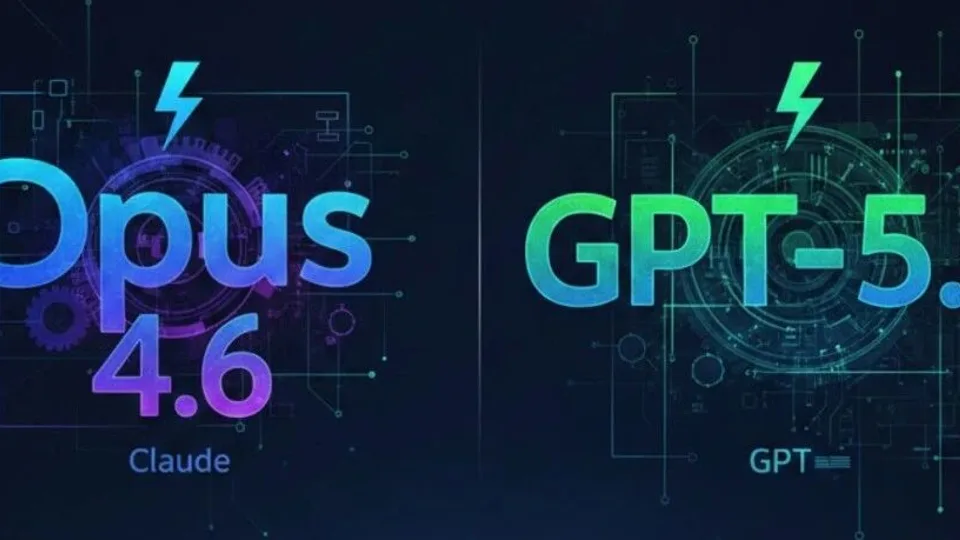
The article compares Anthropic’s Claude Opus 4.6 and OpenAI’s GPT‑5.3‑Codex, analyzing their terminal‑automation, agentic collaboration, and UI‑design capabilities through benchmarks like Terminal‑Bench 2.0 and OSWorld, and advises front‑end developers which model better fits their workflow and project needs.
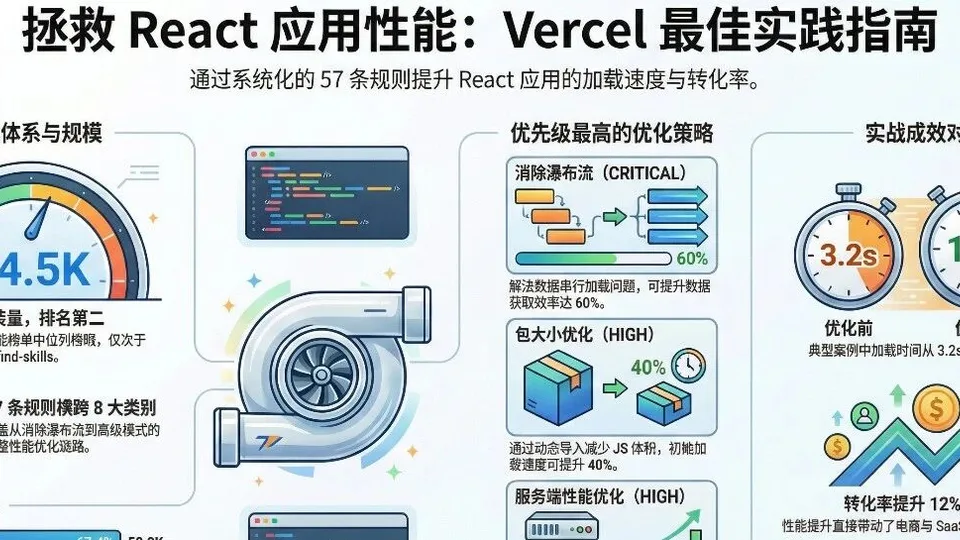
This article analyzes the Vercel‑provided vercel-react-best-practices skill—installed weekly by 74.5K users—detailing its 57 optimization rules across eight priority categories, and demonstrates through real‑world case studies how it cuts first‑paint time from 3.2 seconds to 1.8 seconds, shrinks JavaScript bundle size, and improves conversion rates, while also covering installation, configuration, and advanced usage tips.
This article presents a comprehensive mock‑data tool for front‑end/back‑end separation that solves request interception, flexible rule matching, business‑semantic data generation via AI, and team‑wide sharing, detailing its architecture, core implementations, code snippets, usage workflow, and future roadmap.
This article explains why front‑end recording and replay are essential for diagnosing invisible bugs, introduces the open‑source rrweb tool and its core modules, compares it with video and screenshot methods, and provides step‑by‑step guidance for installing, configuring, recording, replaying, and optimizing rrweb in Vue 3 applications.
Vite 8 introduces a hidden, AI‑friendly .md view for documentation, letting developers fetch clean Markdown by appending “.md” to URLs, which enables tools like Cursor to automatically parse migration guides, reduce copy‑paste errors, and dramatically cut AI hallucinations while delivering faster builds via Rolldown, Oxc, and Lightning CSS.
This article presents a comprehensive case study on unifying multiple legacy backend systems by building a modern Vue‑based front‑end, combining native iframe integration with the qiankun micro‑frontend framework to achieve a single entry point, smooth migration, reduced costs, and an evolvable architecture for enterprise applications.
This article recounts a frontend team's six‑month evolution with AI coding tools—from initial trial and error to systematic prompt engineering, case‑study implementations, and a disciplined workflow that turns AI into a controllable productivity partner while preserving core engineering skills.
The author reverse-engineers WeChat Official Account's editor by inserting all available components into a test article, previewing it, and analyzing the resulting HTML with AI assistance to document every supported tag, attribute, CSS property, and official component.
This article explains how to apply a global CSS grayscale filter to make every element on a website appear in shades of gray, discusses compatibility considerations, and provides a concise code example that works across major browsers.
Anthony Fu, a Vue core team member, released the antfu/skills GitHub repository—a curated collection of AI agent skills split into opinionated personal presets and up‑to‑date official documentation, enabling shared, on‑demand prompts for Vue, Nuxt, Vite, and related tools.
The article examines common AI coding failures with Three.js—outdated APIs, math miscalculations, and shader glitches—and introduces the open‑source threejs‑skills repository, which supplies AI agents with best‑practice, performance‑tuned knowledge to dramatically improve 3D development outcomes.
The article explains how the emerging concept of “Skills” provides AI agents with structured, framework‑specific best‑practice knowledge for React and Vue, turning AI from a simple code generator into a virtual colleague that writes code according to official guidelines and real‑world experience.
The community‑driven vue‑skills project applies a multi‑model verification process—baseline, skill, and killing‑zone tests using models like Claude 3.5 Sonnet and Claude 3 Haiku—to filter Vue‑specific rules, keeping only high‑entropy, capability‑or‑efficiency insights and syncing them via Skills Hub.