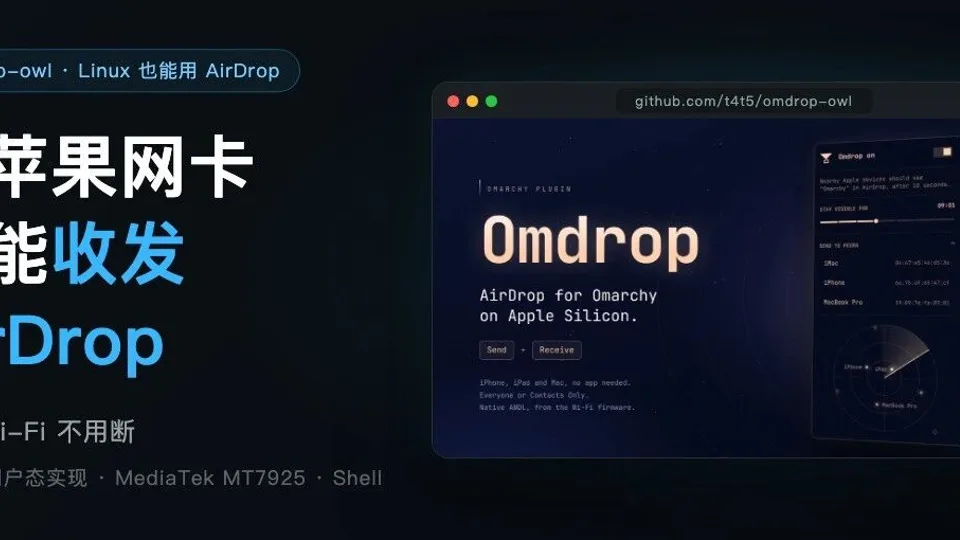
The omdrop-owl project enables bidirectional AirDrop file transfer between Linux (on MediaTek MT7925 Wi-Fi) and Apple devices by running the AWDL protocol in userspace, piggybacking on the existing Wi-Fi channel so the network connection stays active, with installation steps, hardware compatibility details, and known limitations documented.
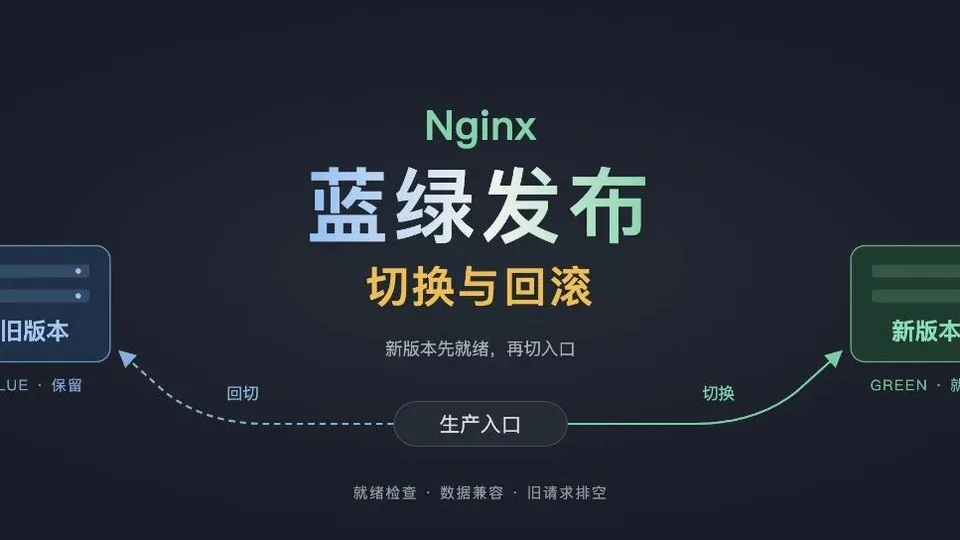
This article details a practical blue-green deployment workflow using Nginx and Docker on a single Linux server, covering health checks, version verification, candidate validation, atomic Nginx upstream switching, rollback procedures, database compatibility, static asset versioning, and graceful shutdown of old instances.
The author retraces the complete journey from provisioning a server to launching a personal website, detailing six phases covering domain registration, security hardening, Docker and Nginx deployment, SSL, and a lightweight portfolio site, concluding that personal branding is the visible manifestation of a long-term technical foundation rather than mere packaging.
This article outlines a four-step framework for mastering AIOps: understanding the evolution from manual to intelligent operations, building a robust data foundation with metrics, logs, and traces, mastering core algorithms like anomaly detection and root cause analysis, and implementing a closed-loop system measured by key metrics such as MTTD and MTTR.
This comprehensive guide details how to build a production-grade enterprise operations assistant using Dify, covering knowledge base segmentation strategies, hybrid retrieval with reranking, workflow orchestration for document and real-time data queries, multi-tier permission boundaries, audit logging, and operational practices for deployment, testing, and continuous improvement.
This guide details a production-ready Linux server initialization workflow covering pre-checks, network setup, time sync, security hardening (SSH, firewall, SELinux), monitoring with Prometheus Node Exporter, log collection via Filebeat, validation steps, and rollback procedures for CentOS 7/RHEL 7 and Ubuntu 20.04.
After Ubuntu's unattended-upgrades silently upgraded the kernel overnight, NVIDIA kernel modules vanished, causing nvidia-smi failures and Kubernetes GPU plugin crashes; the fix requires reinstalling DKMS packages for the new kernel and locking kernel versions to prevent recurrence.
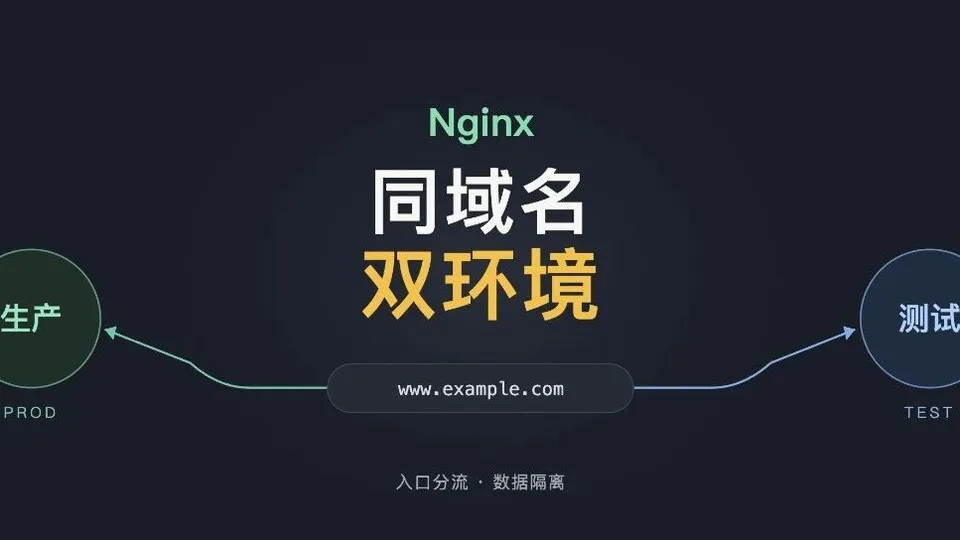
This guide shows how to use Nginx to route production and test traffic on the same domain using IP allowlists, a test cookie, and Basic Auth, while isolating sessions, caches, and dependencies to prevent cross-environment contamination.
This article uses a service release scenario to distinguish DevOps and SRE, explaining how DevOps emphasizes collaborative delivery pipelines and feedback loops while SRE focuses on service-level objectives, error budgets, and eliminating toil through software engineering, showing both perspectives can apply to the same automation.
A comprehensive guide to automating HTTPS certificate renewal with certbot, covering ACME validation, deploy hooks for Nginx reload, independent expiry monitoring with multi-level alerts, and troubleshooting common failures like validation path redirects and certificate chain issues.
The article explains that successful data backup restoration does not guarantee business continuity because hidden dependency chains — authentication, configuration, messaging — must be recovered in the correct order, citing standards such as GB/T 20988-2025, NIST SP 800-34, and CISA guidelines.
This article argues that manufacturing procurement must evolve from transactional price negotiation to strategic early involvement in product design, detailing frameworks for supplier selection, execution, and performance evaluation, distinguishing direct vs. indirect material strategies, clarifying ERP vs. SRM roles, and predicting AI-driven automation of routine orders.
This guide covers claude-swap, an open-source CLI tool that stores credentials for multiple Claude Code accounts, enables instant switching, auto-switches when usage nears limits, runs simultaneous accounts in separate terminals, and provides a TUI panel and macOS menubar for visual management.
A comprehensive guide to diagnosing and resolving Linux disk space alerts, covering block vs inode exhaustion, deleted-but-open files, log rotation, filesystem reserved space, read-only recovery, and safe cleanup practices with command examples and monitoring strategies.
This guide provides a systematic approach to diagnosing Linux server slowdowns by distinguishing CPU, memory, disk, and network bottlenecks through evidence-based metric analysis, command-line tools, and practical examples covering load interpretation, PSI, I/O latency, and safe remediation practices.
At 10M QPS, serial restarts of 4,200 instances take 47 hours while naive parallel restarts cause cascading failures; this article details the evolution from graceful single-node shutdown and warm startup to batched parallel orchestration with health gates, restart-storm mitigation, stateful-service handling, and adaptive platform automation.
A comprehensive guide to diagnosing CPU spikes on Linux servers, covering system-level analysis with top/vmstat, process/thread identification via ps/pidstat, stack tracing with jstack/perf/py-spy, container/Kubernetes resource limits, and real-world case studies including regex bottlenecks, cron job spikes, and CPU throttling.
This comprehensive guide covers deploying Node Exporter for Linux server monitoring, detailing key CPU, memory, disk, and network metrics with PromQL queries, alert rule examples for Prometheus Alertmanager, Grafana dashboard setup, and best practices for reducing false positives.
This guide explains why applications receive ENOSPC errors even when df shows available space, covering seven scenarios — inode exhaustion, mount point confusion, reserved blocks, quota limits, deleted but open files, tmpfs/container storage limits, and filesystem metadata issues — with diagnostic commands for each root cause.