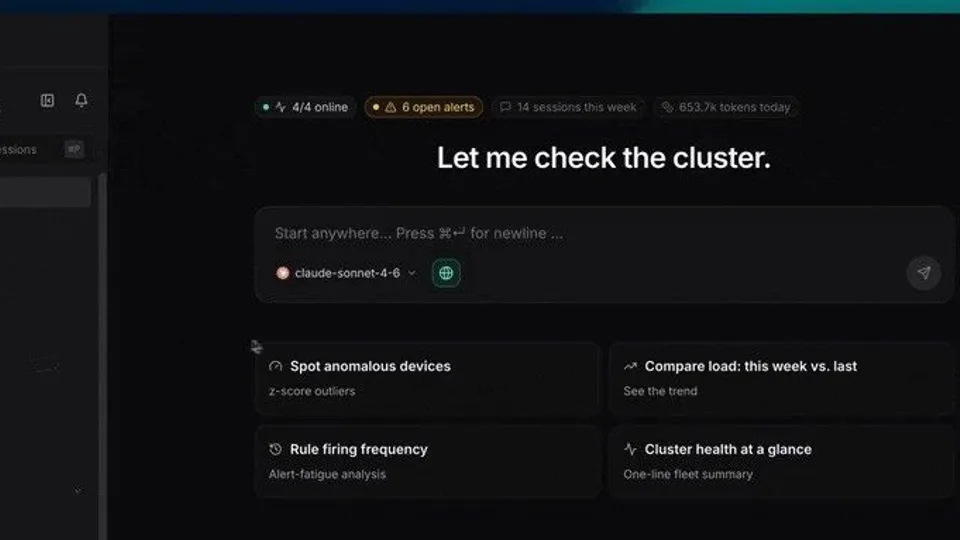
The article reviews Ongrid, an open-source AI operations agent that automates alert investigation by querying metrics, logs, and traces, maps service topology for impact analysis, supports multiple LLMs, enforces read-only actions with approval gates, manages Kubernetes clusters, includes a built-in monitoring stack, workflow orchestration, knowledge base, and skill catalog, and provides installation steps and use cases.
Huawei Cloud DWS introduces an AI diagnostic feature using a three-layer Agent-CLI-Skill architecture that automates the data warehouse troubleshooting loop—collection, analysis, root-cause reasoning, and reporting—turning expert DBA knowledge into reusable, pluggable skills that cut diagnosis time from hours to minutes.
This comprehensive guide compares frp, WireGuard, and Tailscale for internal network penetration, detailing deployment steps, configuration examples, troubleshooting tips, real-world latency and bandwidth benchmarks, and scenario-based recommendations to help operations engineers select the optimal solution.
An experienced operations engineer shares the key skills that differentiate senior professionals, including troubleshooting methodology, automation, cloud-native technologies, monitoring systems, security practices, business alignment, SRE principles, AI-assisted operations, and continuous learning, emphasizing that Linux is merely the foundation.
This guide details a 10-step framework for safely deploying changes to LLM model, prompt, and tokenizer components using canary releases, traffic routing, automated metrics comparison, and instant rollback mechanisms with Kubernetes, Istio, and Prometheus.
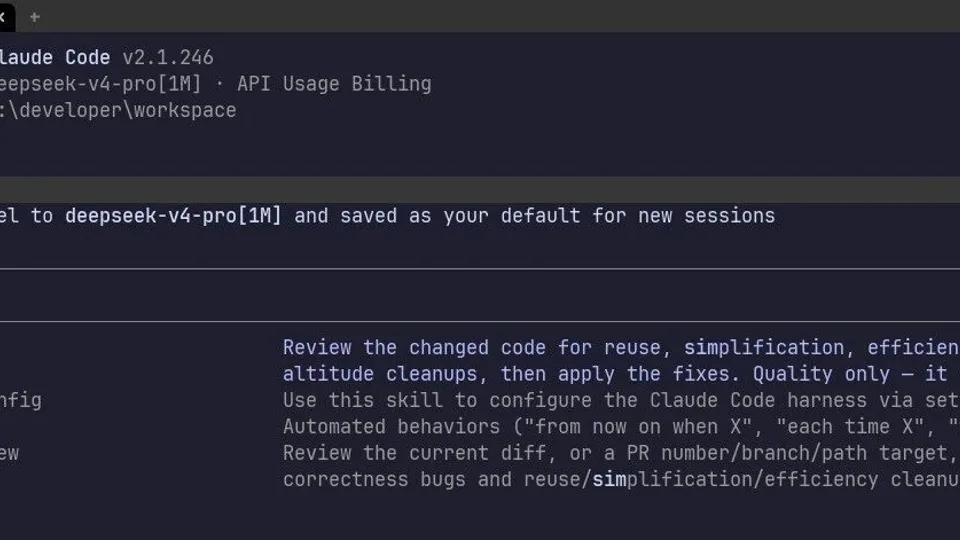
This article reviews WezTerm, a GPU-accelerated Rust terminal with built-in multiplexing, Lua configuration, and session persistence, demonstrating its superiority over Windows Terminal for running AI coding agents like Claude Code and Codex on Windows through practical configuration examples and a live session persistence test.
Based on 27 real projects across finance, healthcare, and government, this article compares JMeter, k6, Gatling, Locust, and Artillery across programmability, observability, scalability, and engineering integration, revealing why k6 and Locust excel in cloud-native DevOps while JMeter remains viable for Java-heavy teams.
This tutorial walks through the complete SSL certificate lifecycle: purchasing a free test certificate on Alibaba Cloud, validating domain ownership via DNS TXT records, downloading Nginx-formatted certificate files, configuring Nginx inside a Docker container with proper volume mounts, testing configuration with nginx -t, opening port 443, and verifying HTTPS redirect from HTTP.
This article outlines nine CI/CD gatekeeping practices — from security-first pipelines and microservices adoption to commit frequency, single deployment paths, environment parity, test prioritization, avoiding duplicate builds, automation sequencing, and on-demand containerized test environments — to prevent risky releases and improve delivery reliability.
This guide walks operations engineers through IP addressing, binary‑decimal conversion, classful and private address ranges, subnet masks and CIDR notation, gateway functions, VLAN concepts, routing tables, DNS basics, Docker/Kubernetes networking, firewall rules, and practical troubleshooting steps, all illustrated with concrete commands and examples.
A detailed guide to upgrading OpenClaw from 2026.7.1-2 to 2026.8.1 on macOS, covering diagnosis of a misconfigured installation, Node.js version conflicts, choosing the install.sh path for automatic Node 26 provisioning, step-by-step backup and migration, post-install LaunchAgent reconstruction, and troubleshooting ServiceWorker cache causing QClaw branding.
This guide explains why Docker Compose v1 is obsolete, details the pitfalls of manually installing the v2 CLI plugin, and recommends using Ubuntu's apt package docker-compose-v2 for automatic updates, network reliability, and seamless migration with zero container downtime.
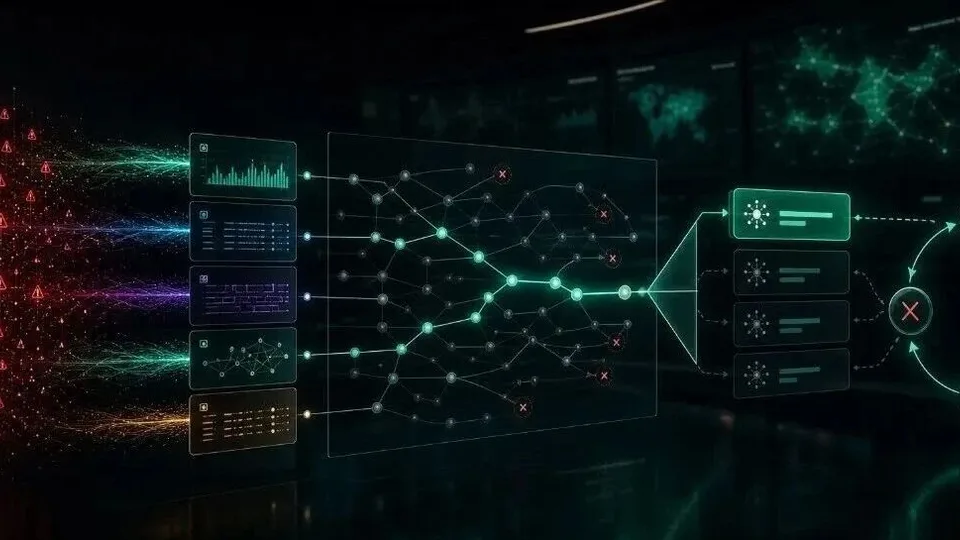
When a transaction‑success rate dropped at 02:13 AM and 186 alerts flooded the on‑call channel, engineers struggled to piece together fragmented evidence, highlighting why manual root‑cause analysis is slow at scale and how an evidence‑driven automated pipeline can narrow investigation space, rank candidates with confidence, and keep humans in the loop for safe remediation.
As data platforms become increasingly intelligent, operational complexity rises due to heterogeneous workloads and finer‑grained configurations, but Tencent Cloud's TCInsight introduces system intelligence with specialized agents that automate selection, migration, usage and tuning, cutting migration time by 50%, reducing resource waste by 15% and shrinking fault‑diagnosis from hours to minutes.
In today’s fast‑paced agile and micro‑service environments, performance regression testing is often treated as optional, leading to severe TPS drops and hidden degradations; this article details five typical misconceptions, backs them with real‑world examples, and offers concrete practices to make performance regression a continuous, cross‑team responsibility.
This guide shows how to use the 86Box emulator on a modern 12th‑gen Intel Core CPU to recreate a 1990s PC, install Windows XP, and configure hardware components step by step, while noting performance expectations and required BIOS settings.
This comprehensive guide provides a systematic troubleshooting framework for slow HTTPS handshakes, covering TCP/TLS timing separation, certificate chain validation, OCSP stapling, cipher suite selection, session reuse, and packet capture analysis with practical commands for Nginx and Apache.
This comprehensive guide explains Linux's permission model, demonstrates numeric and symbolic chmod usage, details chown operations, introduces ACL for fine‑grained control, and provides troubleshooting steps and security best practices for production environments.
RHEOVELA addresses the structural conflict that temporary AI agents cannot sustain long‑running enterprise tasks by persisting process instances through event sourcing, atomic idempotent command pipelines, and unified work items, ensuring reliable recovery, auditability, and continuity despite crashes, upgrades, or network failures.
The article reveals that the hype around AI Agents masks a set of mature Linux system management features—user isolation, least‑privilege permissions, sandboxed workspaces, sudo restrictions, systemd daemons, cron scheduling, journald logging, SSH access, Docker containers, auto‑restart, multi‑process coordination, and Redis caching—showing that understanding Linux gives developers a clear advantage.