This article compiles expert perspectives from Zhihu on why Linux became the dominant server OS, covering historical Windows Server vulnerabilities, IIS performance limitations versus Apache and Nginx, licensing costs, containerization advantages, and the path-dependent ecosystem effects that cemented Linux's position.
The article details three Codex quota recovery types — periodic, official one-time reset, and paid instant reset for Plus/Pro — and gives a step-by-step troubleshooting sequence: check Settings → Usage & billing on desktop, the Usage page on web, or run /usage in CLI to see actual limits, reset eligibility, and next recovery time.
This article provides a comprehensive guide to configuring Nginx as a load balancer for multiple large language model instances, covering upstream equivalence checks, algorithm selection, proxy settings for streaming, health checks, logging, rate limiting, session affinity, config change procedures, maintenance draining, troubleshooting common errors, and validation standards.
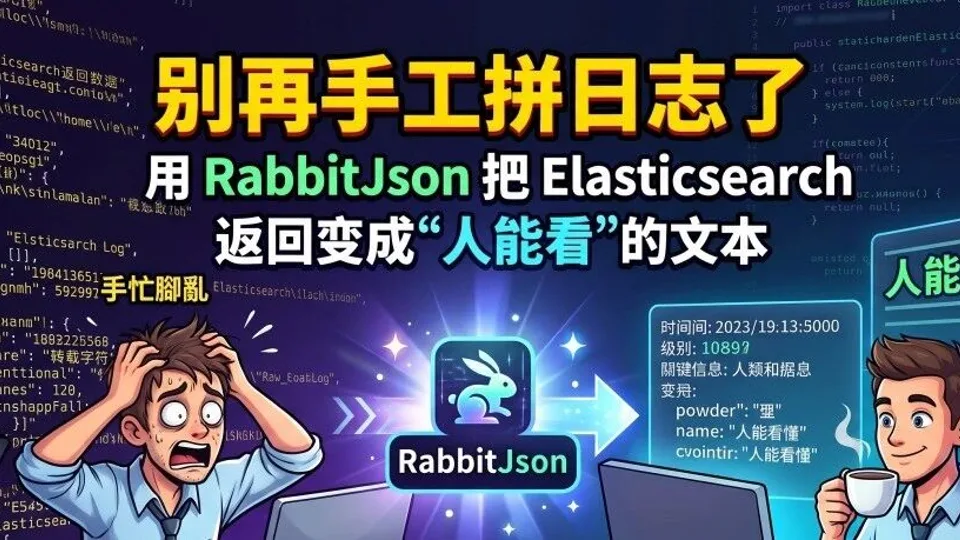
This article introduces RabbitJson, a free browser-based tool that converts Elasticsearch query results into human-readable text — such as on-call alert reports, postmortem timelines, and _bulk delete scripts — using a simple two-step model of array path extraction and template rendering, eliminating the need for throwaway jq or Python scripts.
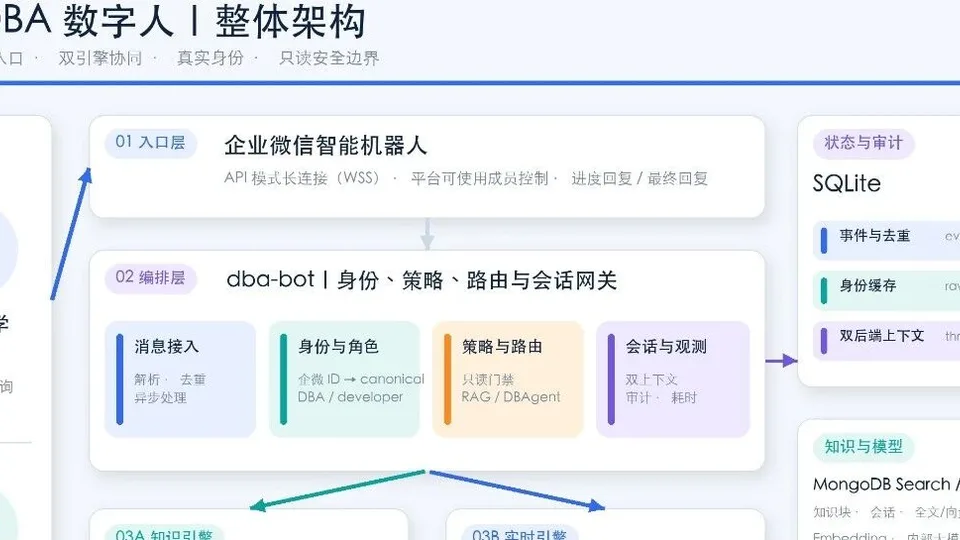
The article details the architecture of a DBA Digital Human that combines a RAG knowledge engine for documentation queries with a DBAgent for real-time database diagnostics, routed via a WeCom bot with identity-based access control, SQLite audit logging, and strict read-only safety boundaries.
Yidian Tianxia built a multi-agent IT operations system on Alibaba Cloud AgentCore, achieving 68-87% efficiency gains across four scenarios and reducing root-cause analysis from 40 to 8 minutes by replacing ad-hoc AI chat with a Leader-Worker agent architecture, unified data layer, quality gates, and continuous self-evolution loops.
This article details a Service Delivery Skill that uses an AI agent to orchestrate CI/CD pipelines across seven platforms, employing a project deployment ledger for traceability, strict safety boundaries (create-only, no auto-push), and a phased approach with placeholder images to initialize deployment targets before building business images.
This comprehensive guide explains the distinct causes of Nginx 502, 503, and 504 errors, provides a five-step diagnostic methodology, details root cause analysis for each error code, shares hardened configuration patterns, and warns against common pseudo-fixes that mask underlying issues.
A comprehensive guide to deploying Keepalived with Nginx for high availability, covering VRRP mechanics, health-check design, split-brain prevention, failover testing, and cloud-environment nuances, with concrete configs and verification steps.
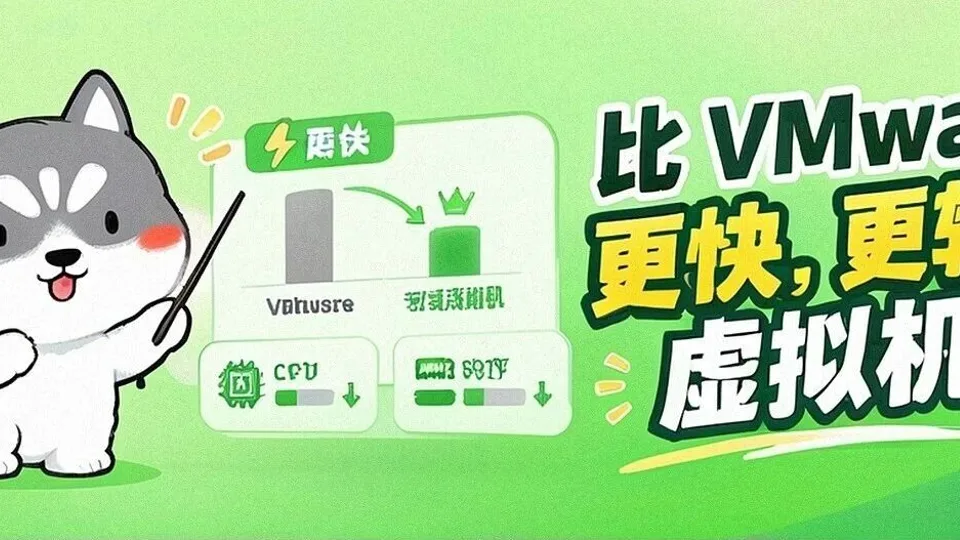
This tutorial introduces Multipass, Canonical's open-source CLI tool for quickly launching and managing Ubuntu virtual machines on Linux, Windows, and macOS, covering installation, image selection, VM lifecycle commands, cloud-init automation, and a comparison with VMware.
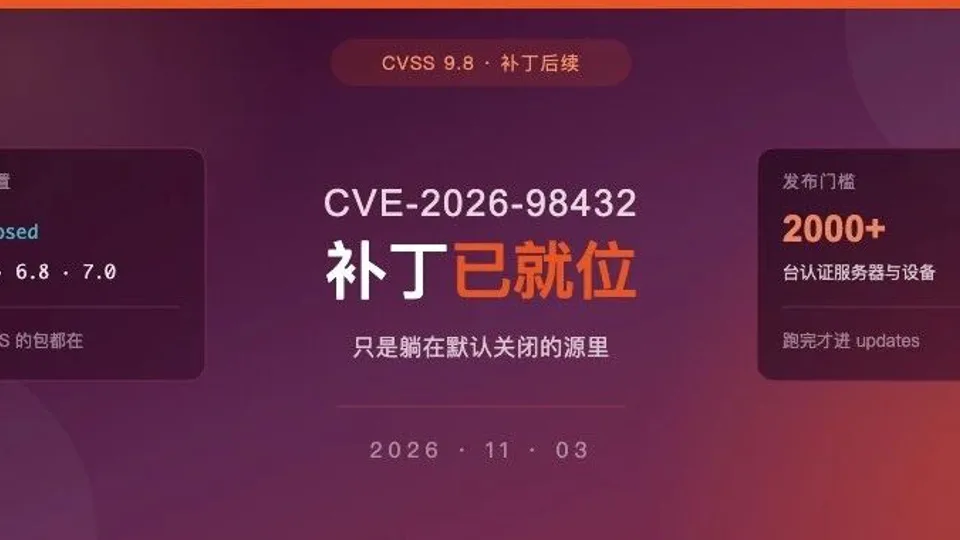
Ubuntu has patched CVE-2026-98432 (CVSS 9.8) for 22.04, 24.04, and 26.04 LTS, but the fixed kernels sit in the -proposed repository awaiting a two-week certification cycle on over 2,000 devices; 26.10 already includes the fix. Disabling MPTCP is not a valid mitigation, and older releases require an Ubuntu Pro subscription. Admins can wait for updates, enable -proposed for a kernel-only upgrade, or block IP options at the firewall.
A comprehensive guide to managing Kubernetes ConfigMaps and Secrets in production, covering creation patterns, consumption methods, update strategies, troubleshooting workflows, governance, encryption at rest, RBAC, admission control, and external secrets integration with concrete commands and real-world failure scenarios.
A comprehensive guide to diagnosing and recovering from DNS resolution failures that cause service outages, covering real-world incident analysis, layered troubleshooting steps, runtime-specific behaviors, configuration tuning, monitoring strategies, and preventive design patterns for Linux and Kubernetes environments.
This article explains why Linux servers trigger OOM kills even when free memory appears available, covering global OOM, cgroup limits, Kubernetes OOMKilled, systemd-oomd, NUMA constraints, and application-level memory errors, with a step-by-step evidence-based troubleshooting methodology.
This article establishes a four-tier alert classification framework and provides concrete PromQL queries for user-facing errors, latency percentiles, saturation signals, and resource risks, showing how to route only actionable alerts via Alertmanager while demoting noisy host metrics to dashboards.
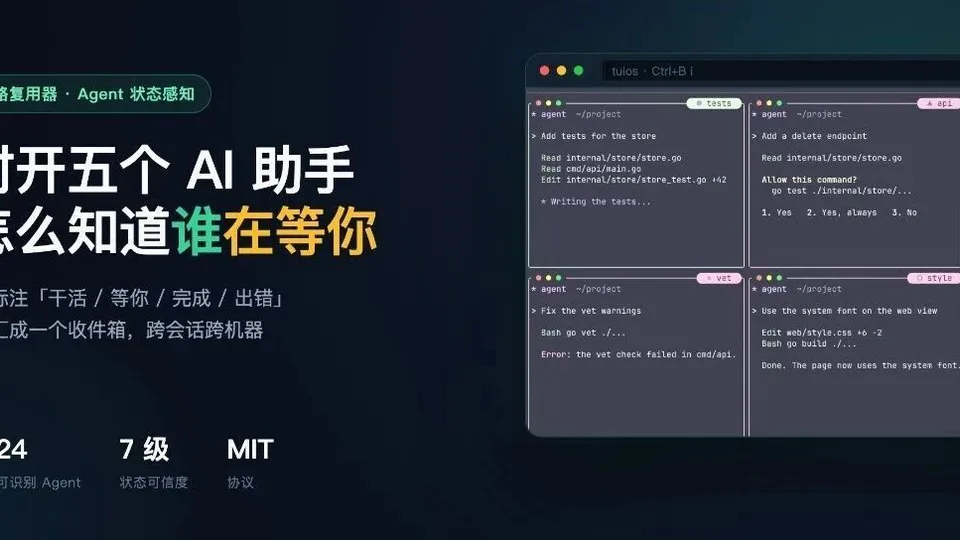
TUIOS is a Go-based terminal multiplexer that treats AI agent states as first-class citizens, using a seven-level credibility hierarchy to detect whether agents are working, waiting for input, done, or errored, aggregating all waiting items into a cross-session inbox, and enabling agent-to-agent messaging with security hardening.
This article provides a comprehensive guide to TCP three-way handshake, four-way teardown, and troubleshooting common connection failures using Linux tools like ss, tcpdump, and curl, emphasizing evidence-based diagnosis over theoretical concepts.
This article provides a comprehensive six-step methodology for diagnosing high CPU usage on Linux servers, distinguishing between real, fake, and stolen CPU time, and demonstrating practical commands like mpstat, perf, and bpftrace through real-world scenarios including regex backtracking, GC storms, lock contention, and container throttling.