The article explains how product managers, especially in B2B finance, should adopt a user‑thinking mindset that aligns user needs with product goals, using concrete methods for requirement discovery, scenario‑driven design, proactive compliance guidance, and iterative validation to deliver efficient, accurate, and controllable solutions.
In the AI era, product managers face anxiety over AI‑generated code, discover that lacking modular thinking leads to buggy, bloated scripts, and realize they must evolve from superficial UI designers into logical architects who can guide AI with solid engineering fundamentals.
The article outlines when to begin AI‑assisted product prototyping, presenting three “don’t‑draw” rules, three conditions for optimal timing, a four‑dimension tool selection method, a three‑stage workflow, and why product managers’ core skills remain indispensable despite AI advances.
This article evaluates three AI‑powered prototyping tools—FigmaMake, Moqups AI, and Cursor—through hands‑on testing, detailing their strengths, limitations, and the product‑manager personas each tool best serves.
When AI intelligence becomes as cheap as tap water, product managers must stop over‑engineering prompts and start designing intent‑driven, low‑friction experiences that embed emotional value, responsibility and human‑in‑the‑loop safeguards, as illustrated through CRM, error‑message and UI examples.
Product managers often drown in endless, unproductive meetings that waste time and dilute focus, but by recognizing why communication turns into squabbling, categorizing meetings, leveraging user data, and protecting creative time, they can reclaim productivity and keep their product‑centric mindset.
A product manager without coding skills shows how AI‑driven prompts and no‑code platforms can turn a simple contract‑template idea into a working prototype, troubleshoot bugs, and iterate features, illustrating the practical steps and mindset for independent development.
A product manager spent three weeks obsessively perfecting a B2B SaaS inventory sync feature, missed the launch window, and realized that perfectionism is rooted in fear of failure; the article explains why embracing imperfection, focusing on core pain points, cost, and iteration leads to better outcomes.
In the AI-driven age, product managers must shift from routine execution to high‑impact roles by mastering three AI‑resistant skills, adopting a "review‑deep dive" workflow, and evolving from employee to founder mindset to stay above the rising Fermi‑level of automation.
A product manager overwhelmed by manual competitor research discovers that configuring AI agents with specialized Skills—such as web‑browsing, code‑interpretation, and workflow automation—can turn a three‑hour, labor‑intensive task into a five‑minute, fully automated process, reshaping the role of PMs from operators to architects.
The article walks product managers through three core analytical tools—the Eisenhower four‑quadrant time‑management matrix, the Mandala‑style nine‑grid thinking method, and the five‑layer user‑experience model—explaining their principles, step‑by‑step application, and real‑world examples to boost decision‑making and product quality.
The article compares classic product managers and AI product managers across service targets, skill sets, responsibilities, collaboration patterns, work focus, workflow, and data analysis, helping professionals choose the right career path and companies allocate talent effectively.
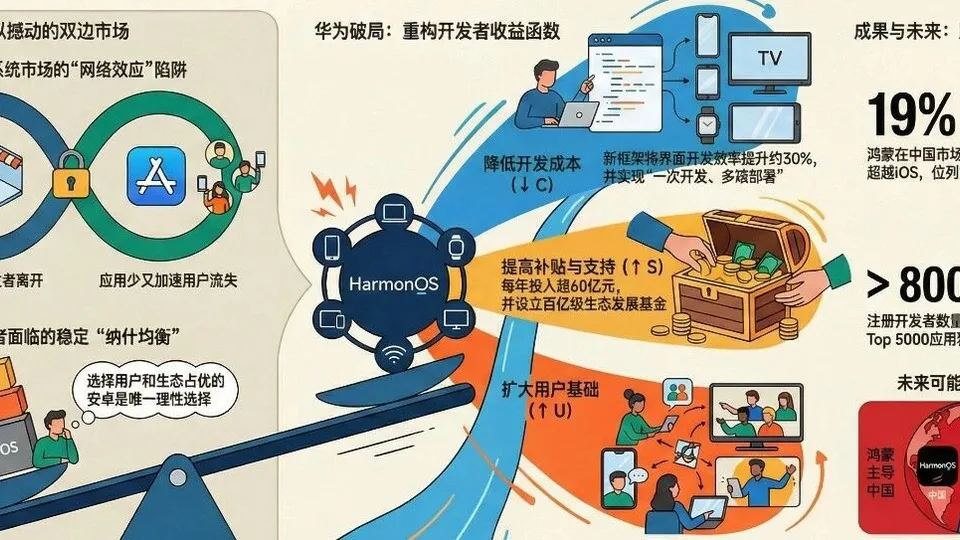
This article applies two‑sided market theory and game‑theoretic modeling to examine HarmonyOS’s ecosystem growth, Huawei’s strategic levers, and three possible long‑term equilibrium scenarios, supported by recent market data and ecosystem metrics.
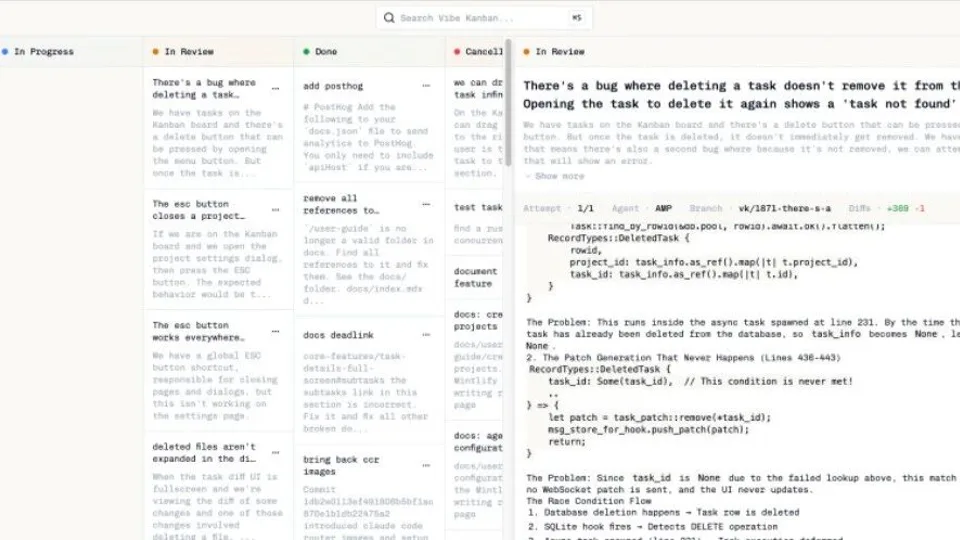
Vibe Kanban is an open‑source central dispatch system that lets multiple AI coding assistants work in parallel without file conflicts, offering visual reviews, Git Worktree isolation, and simple one‑command installation to dramatically boost developer productivity.
The article explains why most product requirements are driven by stakeholders, then offers three practical rules—creating a "cold storage" for stale items, prioritizing by money, life, and face, and setting strict entry gates—to keep the demand pool manageable and aligned with business goals.
The author, a product manager with no coding background, describes how AI‑driven prompts and no‑code platforms enabled them to prototype a contract‑template tool, troubleshoot bugs, and iterate features, illustrating a step‑by‑step workflow that turns product ideas into runnable apps without writing code.
Amid slowing growth and noisy data, product managers face three crises—demand fog, value vacuum, and capability gaps; the article offers a step‑by‑step framework with real‑world cases to clarify user needs, align actions with business goals, strengthen technical and analytical skills, and make data‑driven decisions that turn feature work into measurable value.
A product manager with around five years of experience reaches a career crossroads where execution alone no longer yields growth, requiring a shift toward strategic ownership, data‑driven decision making, business impact, and influence to advance toward senior or expert roles.
The article outlines how AI is reshaping the product manager role in higher education, urging professionals to shift from simple requirement translation to becoming AI‑educated value architects, upgrade core data‑driven and technical collaboration skills, redesign user experiences for probabilistic outputs, mitigate replacement risks, and follow a three‑stage growth roadmap.
AI product managers are shifting from static PRDs to dynamic evaluation frameworks—Evals—that define product quality through automated tests, golden conversations, and LLM judges, enabling continuous iteration, error-driven requirement discovery, and architecture decisions in complex AI systems.