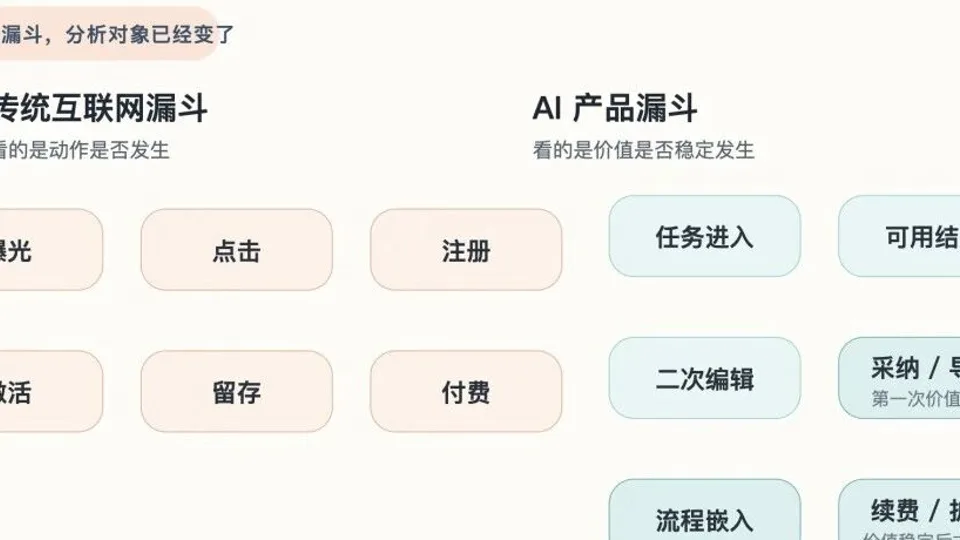
In the AI era the classic funnel of exposure‑click‑register‑retain‑pay no longer reflects value creation, so product managers must shift the focus to effective task entry, first usable results, mid‑funnel adoption, retention of high‑impact tasks, and stable commercial metrics.
The article analyzes the rapid rise of AI product manager roles, compares 2024 and 2025 job descriptions, cites market forecasts showing multi‑billion‑dollar growth, outlines three strategic tracks—efficiency, personalized experience, and AIGC creation—and provides concrete tactics for adapting to the new AI‑driven product landscape.
The article analyzes how the rapid rise of AI—highlighted by ChatGPT, GPT‑4, Claude and Gemini—is reshaping product management, exposing the erosion of traditional skills, and proposes a concrete roadmap for product managers to evolve into strategic, ethically aware AI‑enabled product architects.
This article explains why AI workspaces become tangled, then guides you through three practical steps—organizing by project folders, converting key materials to PDFs, and categorizing by department—to create a tidy, reusable knowledge garden that boosts efficiency for individuals and teams.
A product manager recounts a day packed with pointless meetings, analyzes why corporate communication devolves into endless squabbles, and offers a practical framework for distinguishing essential discussions from wasteful rituals while reclaiming time for real product work.
The article explains how AI agents transform product design, breaks down the four core modules—Planner, Memory, Actor, and Tools—illustrates their collaboration with a market‑analysis case study, and offers practical design guidelines and common pitfalls for product managers entering the AIGC era.
An AI product manager discovers that chasing model hype without understanding the business creates embarrassment, and learns to map SOPs, align AI with real metrics like GMV, and turn AI into a profit‑driving tool rather than a self‑indulgent showcase.
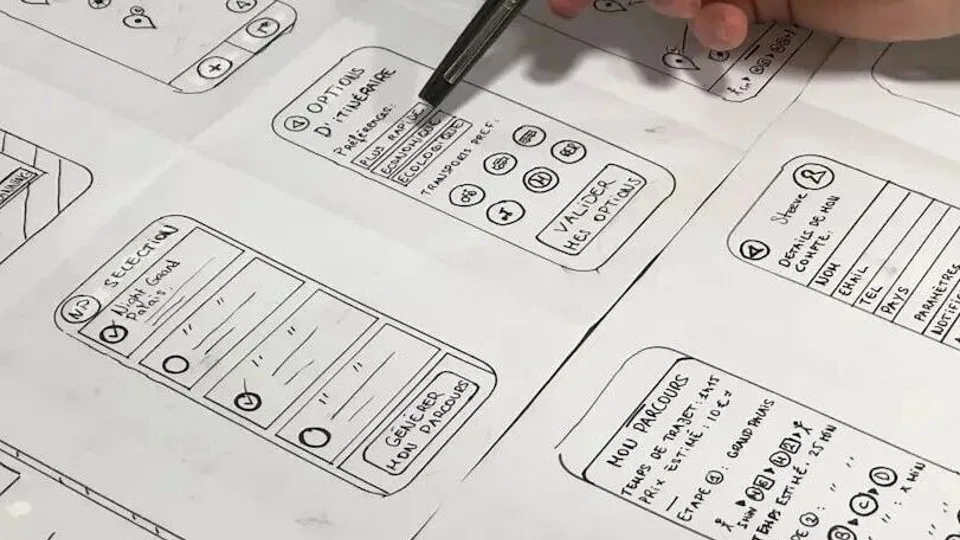
The article outlines three "don't draw" rules for prototype design, defines three concrete conditions that signal the optimal time to start AI‑assisted prototyping, presents a four‑dimensional tool‑selection framework, and details a three‑stage AI workflow backed by real‑world case studies and quantitative results.
Product managers transitioning to AI must shift from feature‑centric thinking to a data‑driven mindset, treating models as probabilistic systems, defining ground truth, analyzing bad cases, and building multi‑dimensional evaluation metrics such as safety, consistency, and usefulness to ensure reliable, user‑focused AI outputs.
This comprehensive handbook details the end‑to‑end process for AI hardware products, covering nine essential selection questions, development phases, project‑management lifecycle, quality‑control standards, user‑experience scoring, maintenance procedures, after‑sales policies, and product retirement guidelines.
Algorithm engineers often resent product managers who treat models as black‑box wish‑lists, ignore data feasibility, and issue vague demands, leading to broken trust, wasted effort, and stalled projects, but adopting feature‑focused communication, concrete metrics, and realistic experiment timelines can turn a problematic partnership into a productive collaboration.
The article dissects four common AI implementation pitfalls that trap product managers, explains why treating AI as a KPI leads to role confusion, and offers concrete screening criteria, embedded process redesign, and a mindset shift to move from execution tool to strategic decision‑maker.
This article breaks down the evolving roles of traditional product managers and AI‑focused product managers, comparing their target users, skill sets, responsibilities, collaboration patterns, workflows, and data‑driven approaches to help professionals choose the right career path and organizations allocate talent effectively.
The article outlines practical guidelines for product teams on when to introduce AI into prototype design, presenting three "don't draw" and three "must draw" rules, a four‑dimensional tool‑selection framework, a three‑stage AI‑driven workflow, and why product managers remain indispensable despite AI advances.
The article examines the anxiety and hype surrounding AI, argues that product managers should shift from building AI‑native apps to embedding AI capabilities, defines the "business‑AI translator" role, and provides concrete frameworks, scenarios, and step‑by‑step methods for discovering and validating AI‑enabled opportunities in everyday product work.
JetBrains' IntelliJ IDEA 2026.1 EAP 3 introduces a long‑awaited feature that moves deleted files to the system recycle bin instead of permanently erasing them, while also delivering a host of Spring, Java, Kotlin, editor, AI, platform, and performance enhancements for developers.
The article explains why product management is not a low‑threshold job and outlines several personality traits and habits—such as chronic indecision, treating the role as a mere requirement relay, over‑reliance on personal taste, excessive agree‑ableness, and low emotional intelligence—that make certain individuals poorly suited for the position.
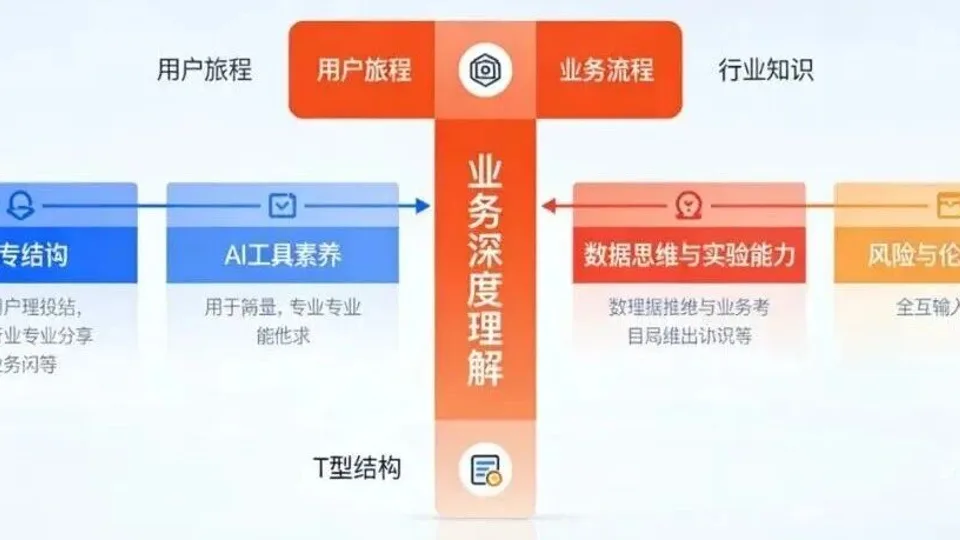
The article breaks down the core competencies an AI product manager needs in 2026—product sense, solid technical understanding, deep human insight, and the ability to balance diverse stakeholder interests while driving projects to completion without formal authority.
The article argues that the scarcity of excellent product managers stems from the need for relentless, hands‑on immersion in their domain—illustrated by a product manager who constantly buys, uses, and resells the latest smartphones (and similar behavior in automotive)—to maintain sharp industry sensitivity and genuine evaluation authority.
The recent plunge in software stocks reveals that large‑model AI is eroding the core value of traditional SaaS, forcing a shift from GUI‑driven products to language‑based interfaces, prompting firms to focus on token efficiency, plugin architectures, and outcome‑based pricing to survive.