A product manager explains why Axure and similar prototyping tools are becoming less practical for B‑to‑B projects, discusses low‑code delivery, compares Sketch, Axure, and MoDao, and offers concrete fixes for common Axure layout issues.
The article explains product thinking as a mindset that starts from user value, illustrates it with real‑world observations and the iPhone home‑button story, and offers practical ways to develop the skill through critical product use, user conversations, interdisciplinary reading, and continuous practice.
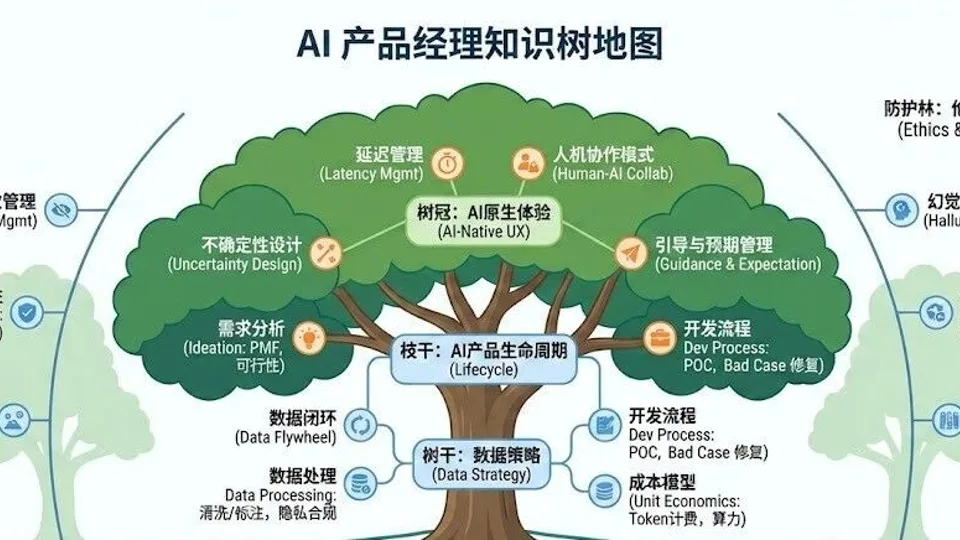
The article outlines a knowledge‑tree framework for AI product managers, covering foundational concepts, data strategy, privacy, vector databases, the distinct AI product lifecycle, user‑experience challenges, and a step‑by‑step learning roadmap.
The article walks through a six‑step framework—defining the product, setting value‑based metrics, acquiring and labeling data, choosing and evaluating models, building an MVP, and creating a growth loop—to guide AI product managers from concept to launch while emphasizing practical trade‑offs and real‑world examples.
The article reveals a ruthless value formula for AI products, dissects why traditional requirement gathering collapses, and presents ten actionable "weapons"—from qualitative pain‑focused interviews to causal data analysis, competitive value‑wheel breakdowns, pricing tests, and first‑principle self‑questioning—backed by real‑world case studies, to help AI product managers create, not just satisfy, demand.
Product managers fearing AI should stop chasing new models and instead focus on how to embed homogeneous AI into unique user scenarios, leveraging proprietary data, agent capabilities, and friction‑free interactions to create real competitive moats.
The article examines how widespread AI anxiety among executives forces product teams to translate lofty, sometimes unrealistic AI visions into concrete, user‑centered features, detailing the design philosophy of "precise echo", the clash over perceived "fabrication", and the evolution toward a more exploratory "soul insight" approach.
The article outlines a product director’s three core duties—defining a product‑group strategy, allocating and supervising product work, and handling daily operations—then walks through creating a roadmap, assigning tasks, monitoring development, and continuously evaluating product value.
The article shows how product managers can avoid the disappointment of a feature that looks perfect but gets no users by building a complete data‑driven loop that combines user‑behavior and business metrics, walks through a real e‑commerce recommendation case, outlines data‑collection pitfalls, metric‑design methods, hypothesis‑driven analysis, testing procedures and concrete steps to turn insights into iterative product improvements.
The article reveals that many AI product managers can talk about AIGC and agents but stumble when asked to design a rigorous evaluation system, illustrating the problem with a chatbot case study and presenting a detailed 1+3 multi‑dimensional framework to guide product definition, development, and iteration.
The article outlines how AI product managers can develop technical insight—shifting from a purely execution role to a strategic one—through four steps of mindset change, capability building, hands‑on practice, and strategic scaling, using concrete frameworks, data‑driven decision tools, and real‑world case studies.
The article examines how the wave of AI anxiety among executives reshapes product logic, detailing a three‑act saga of a precise‑echo AI requirement generator, a boss‑driven “fabrication” critique, and the evolution to a “soul‑insight” version, while offering concrete translation tactics and a taxonomy of boss behaviors.
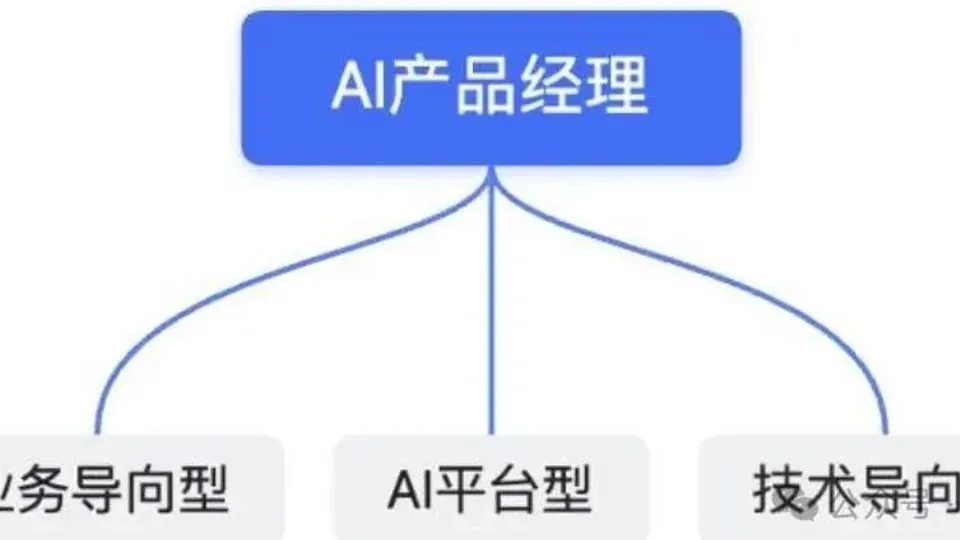
The article breaks down three AI product manager roles—business‑oriented, platform‑centric, and technical—detailing their core responsibilities, essential skills, industry examples, recruitment profiles, transition strategies, and future demand trends, helping professionals choose the right path.
The article outlines the various product manager positions—PM, TPM, MPM, DPM, UXPM, GPM, PPM, and HPM—detailing their responsibilities, required skills, career progression, and the benefits of cross‑functional expertise for building successful products.
The article dissects why AI products often flop by applying a value‑cost formula, then offers ten concrete tactics—from redefining user interviews and running tech‑shock focus groups to data‑driven quant analysis, competitive deconstruction, pricing tests, and self‑questioning frameworks—so product managers can shift from feature‑driven thinking to value‑driven innovation.
In an interview, Toutiao’s new CEO Chen Lin, who rose from product manager to C‑level, explains that empathy, logical thinking, and imagination are essential for product managers, and describes how data transparency, critique sessions, and talent‑focused organization building drive sustained product success at ByteDance.
The article shows how Gemini (even the older Gemini 2.5) can cut a product manager's documentation workload by over 90% through FeatureList drafting, Mermaid diagram generation, and HTML‑based PRD creation, while arguing that failing to embed large‑model tools will make product managers redundant.
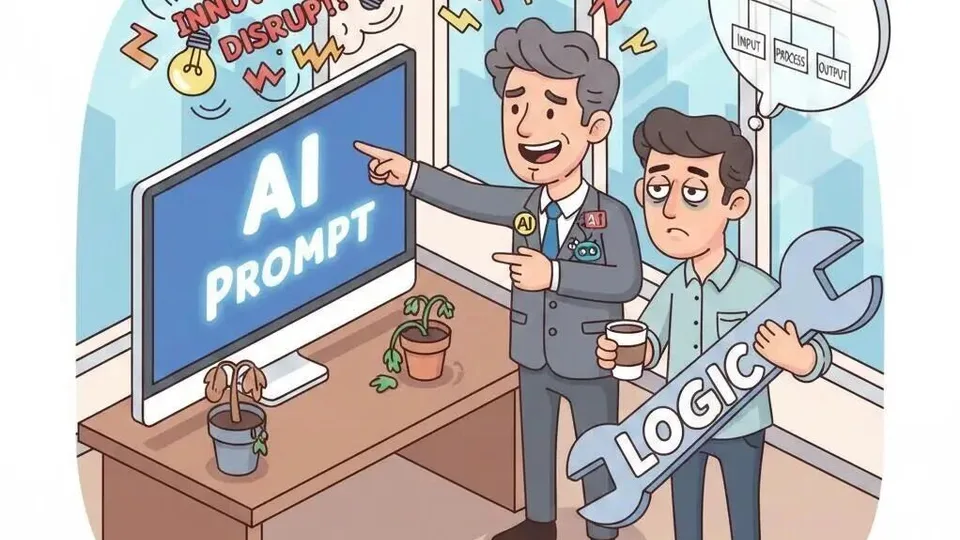
The article examines why AI product managers repeatedly fall into three traps—over‑relying on prompt engineering, blindly adopting Retrieval‑Augmented Generation, or costly fine‑tuning—by presenting real‑world failures, debunking myths, and offering a five‑layer decision framework with cost, data, resource, and risk analysis to choose the right solution.
Many B2B product managers with three years of experience end up only drawing prototypes and writing documents, but to advance their careers they must develop four core competencies—business understanding, customer insight, product architecture, and industry/value‑chain knowledge—before the critical 3‑5‑year window closes.
The article outlines a six‑step framework for turning an AI idea into a marketable product, covering goal definition, metric selection, data acquisition, model design, MVP creation, and growth‑loop engineering, while emphasizing practical trade‑offs and real‑world examples.