The author shares a three-layer directory system (Raw Materials, Work-in-Progress, Finalized Assets) with strict naming conventions (date-topic-status) and a knowledge base for persistent context, enabling AI to reliably retrieve and reuse content across sessions and devices.
ArchHarness is an open-source MIT-licensed tool that codifies the checkable half of architecture reviews — PASS/WARN/BLOCK gates, SHA-256 artifact provenance, and versioned contracts — into a deterministic CLI integrated with AI coding assistants and CI pipelines, supporting six cloud platform standards.
The article examines five viewpoints from reader comments on QA transitioning to development roles, contrasting checks-and-balances advocates who cite aviation and audit redundancies with integration proponents pointing to Microsoft's 2014 SDET merger where roles blended but work structure barely changed, while DORA 2025 and GitLab data show AI-generated code shifting bottlenecks to verification, raising the circular risk of AI verifying AI, and questioning who ultimately owns quality metrics.
The article argues that AI's distributed cognitive power renders traditional matrix organizations obsolete, proposing a mycelium-inspired model with strong protocol-based cores, autonomous frontends, shared platforms, open ecosystems, and governance by rules rather than hierarchy, enabled by carbon-silicon symbiosis.
In this interview, CTO Weng Yifei shares insights on making architecture decisions under resource constraints, contrasting big-tech and startup environments, managing technical debt, integrating AI responsibly, and building governance mechanisms for sustainable technology adoption. He emphasizes controlling complexity, establishing lightweight AI governance, evaluating true ROI beyond local efficiency, and designing auditability for probabilistic systems.
A veteran developer reflects on how AI tools like Cursor and Claude Code have shifted their workflow from coding to design and verification, boosting confidence, but worries that juniors who only prompt AI will miss the crucial learning process of debugging, understanding system boundaries, and developing judgment—especially when business pressures prioritize short-term efficiency over long-term talent development.
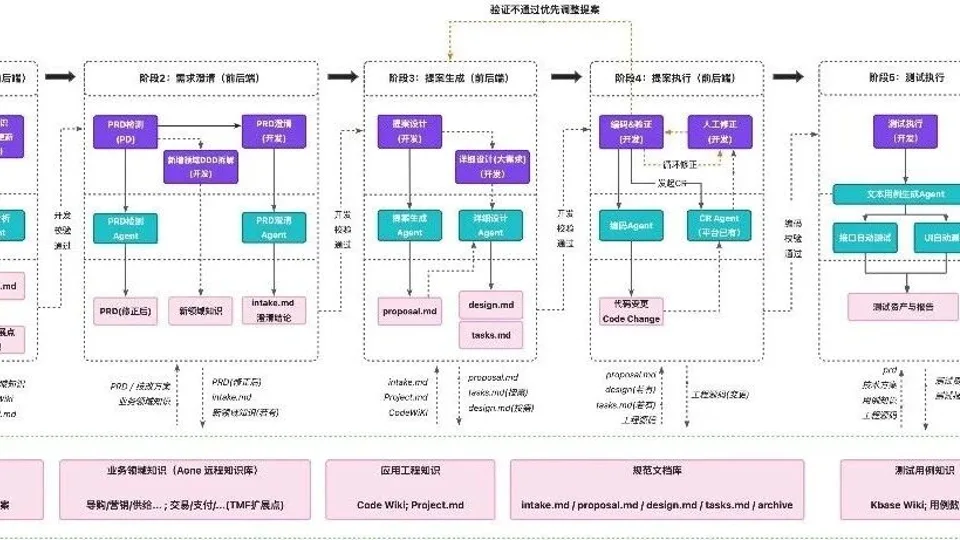
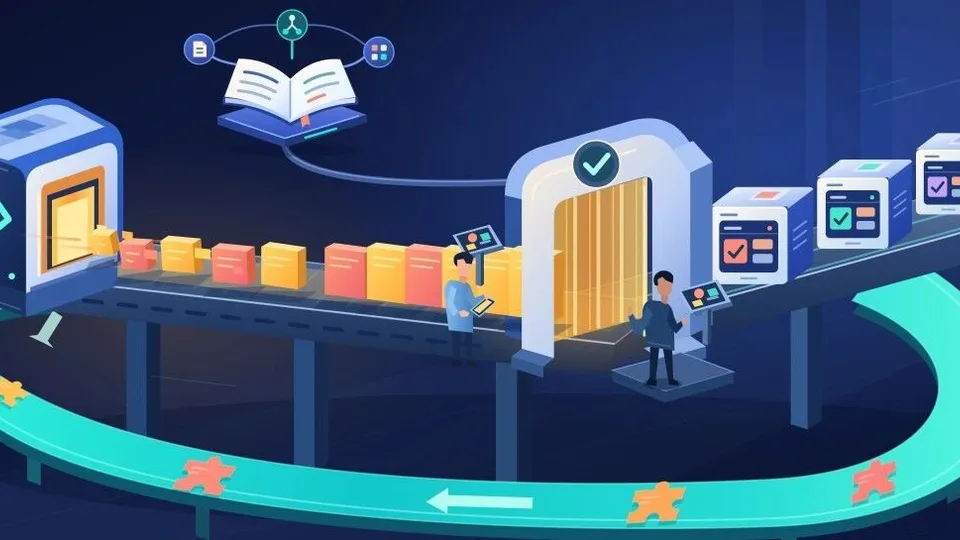
Taobao and Tmall's overseas technology team shares their transition to an AI-native R&D paradigm using Specification-Driven Development (SDD) and Agent-driven collaboration via DingTalk groups, achieving 85% AI coding adoption and reducing end-to-end delivery cycles by 20-30% for medium-large requirements while maintaining quality baselines.
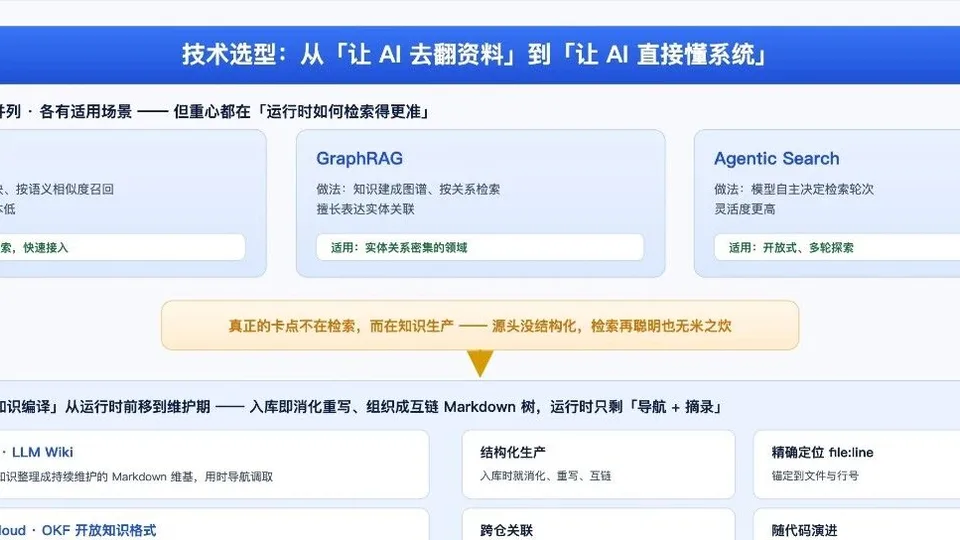
JD Haibo built a three-layer AI knowledge base (project-domain matrix, role-specific views, executable skills) using the OKF specification, auto-generating structured docs from code, integrating with Harness for context-aware AI assistance, and validating via AB tests showing 44% faster requirement analysis with better coverage.
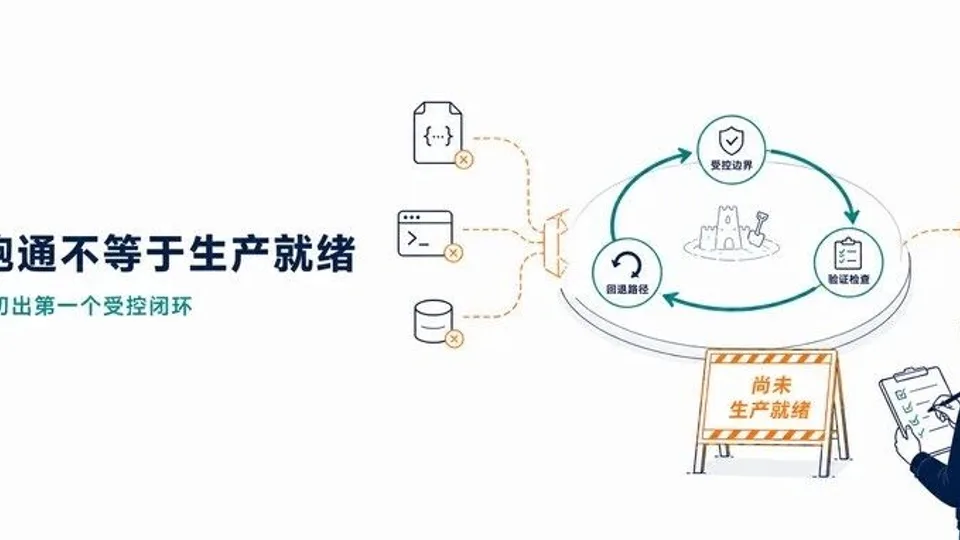
This article explains how Forward Deployed Engineering (FDE) bridges the gap between prototype and production by defining a controlled, runnable, verifiable loop, classifying prototypes by validation goals, establishing iteration gates, and requiring explicit keep/discard/block lists before scaling.
This article examines how AI-assisted development accelerates code reviews while silently eroding the original business intent, arguing that teams must shift review focus from code correctness to preserving decision traceability, exception handling, and accountability through lightweight 'intent anchors' in pull requests.
This article reframes technical debt as a financial instrument with principal, interest rates, and amortization schedules, providing a framework for engineering teams to quantify hidden costs, categorize debt types, maintain a shared debt ledger, and negotiate repayment plans with stakeholders to sustain delivery velocity.
Qunar shares its engineering methodology for AI-driven large-scale refactoring of a 150K-line high-concurrency core system, achieving 70% efficiency gains (100PD to 30PD), 70% latency reduction, and 45% resource savings through Harness-Loop constraints, task decomposition, shadow traffic validation, and phased rollout.
This article analyzes how AI transforms R&D from a skill-driven to an intent-driven paradigm, detailing four stages of AI autonomy, productivity gains in speed, quality, and throughput, organizational shifts toward end-to-end builders and agent layers, management evolution into system architects, and the emergence of Frontline Deployment Engineers (FDE) as frontend developers expand scope.
The article explains how ontology reviews surface business governance conflicts over definitions like 'customer' and 'revenue,' and provides a framework to distinguish identity, roles, granularity, facts, and rules; assign confirmation authority by domain, cross-domain, and management levels; implement decisions via versioned decision cards; and validate through concrete test cases rather than forced unification.
The article analyzes why faster AI coding doesn't proportionally accelerate enterprise software delivery, identifying bottlenecks in requirements, context engineering, verification, and CI/CD, and proposes layered testing, knowledge management, and human-in-the-loop processes to align the entire pipeline with AI speed.
AI-generated flowcharts create polished visuals but often hide ambiguous handoffs, missing decision verbs, and unclear exception paths, leading teams to mistake visual connectivity for real collaboration clarity; the article urges distinguishing information, suggestions, and decisions on arrows while mapping task, judgment, and feedback layers to prevent offline rework.
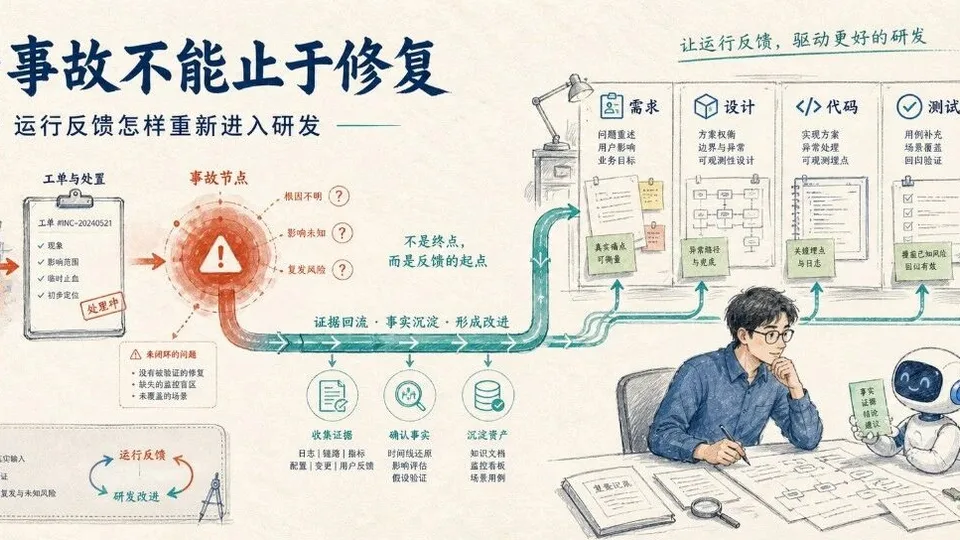
This article explains how AI-native SDLC transforms production incidents into continuous development feedback by using deterministic detection for anomalies, AI-assisted diagnosis for evidence gathering, risk-tiered automation paths, protected regression tests from failures, and multi-layer asset updates — all while keeping humans accountable for decisions and releases.
This article explores why updated knowledge bases often still surface outdated answers, explaining how older content's completeness and familiarity outweigh newer, conditional rules, and argues for embedding version context, applicability conditions, and source traceability into AI-generated answers to maintain trustworthiness.
This tutorial demonstrates how to use OpenSpec and OpenCode for spec-driven AI-assisted development by building a fund real-time valuation desktop app with Tauri, covering project planning, UI design with Pencil, OpenSpec's three-phase workflow, and incremental feature implementation.
This article analyzes the Forward Deployed Engineer (FDE) model used by Palantir to achieve $4M average contract values, explaining when companies need FDEs versus traditional sales, how FDEs differ from outsourcing via platform-backed reusable primitives, and why the AI agent era makes FDEs critical for bridging the gap between high technical potential and non-technical buyers.