The article analyzes risks of AI-generated 'vibe coding' where engineers lose internal code understanding, detailing consequences like hidden architectural decay, loss of tacit production knowledge, and inability to debug complex failures, then proposes practical strategies: defining white-box boundaries, independent verification, limiting change scope, retaining takeover capability, preserving dark knowledge, and reallocating engineering time toward constraint design and failure recovery.
This article demonstrates how to transform ambiguous stakeholder statements like 'make it good, faster, and repeatable' into structured, traceable requirements with explicit conditions, responsibilities, verification methods, and evidence handling, using a coffee-making scenario as a teaching example.
This article uses hand-drip coffee as a case study to demonstrate mission engineering task analysis: decomposing tasks, specifying inputs/outputs/start conditions/completion criteria for each step, linking dependencies via quality gates, handling missing items, and distinguishing material independence from resource contention, all while remaining implementation-agnostic.
This article explores the psychological mechanisms behind loss-chasing behavior, referencing prospect theory and the break-even effect, and provides a practical framework to distinguish evidence-based adjustments from emotional doubling down, including pause triggers, risk budgets, post-loss reviews, and recovery conditions to prevent escalating losses.
The article proposes a framework for managing AI agent development rules that retains essential constraints like goals, boundaries, and acceptance criteria while loading project facts and technical guidance per task, and validates rule removal through fixed-task evaluation after model upgrades.
This article uses a morning coffee scenario to illustrate mission engineering's three-tier metric framework (MOS, MOE, MOP), showing how to define verifiable success criteria, separate stakeholder acceptance from process completion, and create traceable metric definitions that link overall outcomes to specific performance measurements.
This article explains how structured thinking (pyramid principle, decomposition) and systems thinking (feedback loops, delays, iceberg model) differentiate architects from technical experts, using frameworks like SWOT, PDCA, STAR, WBS, and a Meituan outage case study to illustrate practical application for complex problem-solving and system design.
This article uses pour-over coffee to illustrate mission engineering's scenario and vignette framework, showing how to define participants, goals, time constraints, starting conditions, verified facts, assumptions, and measurement boundaries so that weekend and rushed weekday mornings can be fairly compared and improved.
Haskell core developer turion shares a practical workflow for using LLMs without losing programming satisfaction: humans write code while AI handles planning, research, and automated review via a GAN-like pipeline, avoiding over-reliance on frontier models and token anxiety, and preserving code ownership and mental well-being.
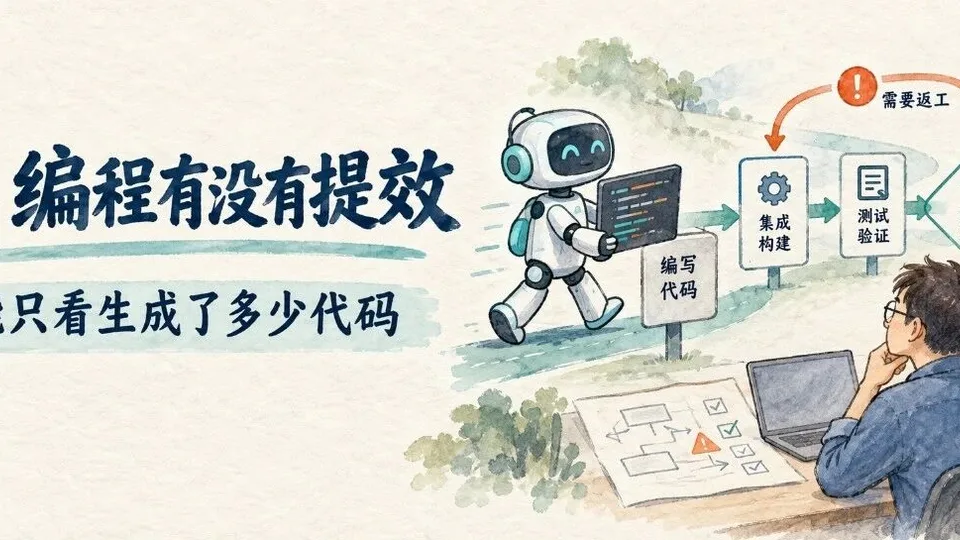
The article argues that AI programming efficiency should be measured by task acceptance, rework, and defects—not code volume or tokens—and proposes a practical framework tracking human interventions, shared improvements, and maintenance costs to assess true team productivity gains.
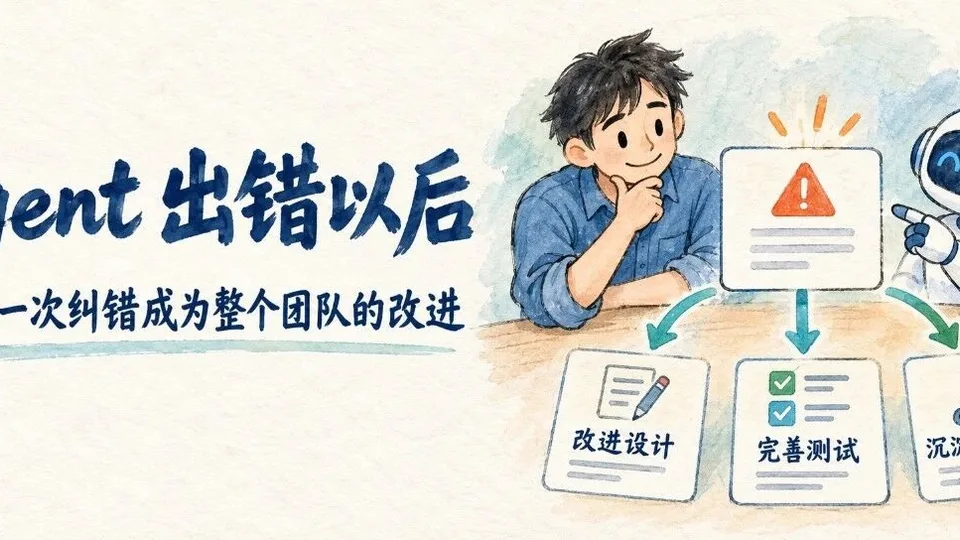
The article presents a systematic framework for converting AI agent errors into reusable team capabilities by tracing root causes across requirements, design, context, implementation, and testing, then codifying fixes as templates, executable test cases, and maintained tools with defined scope and validation steps.
This article explains why technical professionals often confuse business stakeholders by dumping details without structure, and teaches structured thinking (organizing information into problem maps) and pyramid thinking (conclusion-first communication) with a practical formula (Conclusion + Evidence + Solution) and layered expression techniques for different audiences.
The author shares insights from QECon Shanghai, arguing that as AI accelerates code generation, verification becomes the critical bottleneck; continuous validation across the lifecycle, expanded test scope, organizational feedback loops, and token-aware metrics are needed to turn raw generation speed into sustainable engineering capability.
The article argues that individual AI proficiency does not guarantee team delivery sustainability, advocating for clear role responsibilities, handover exercises to validate shared capabilities, hiring for AI usage plus engineering judgment and collaboration, and risk-based automation decisions to build organizational capability in the Agent era.
The article outlines a seven-step strategic mechanism (planning, project consolidation, demand management, resource allocation, ownership, transparent execution, tooling) and organizational mechanisms (strategic control, modular units, decision/synergy/innovation mechanisms) to align million-person organizations, using a large Chinese enterprise case study.
The author shares three real AI automation pipelines — daily AI briefing, weekly material audit, and Friday report draft — detailing each pipeline's function, time saved, specific failures encountered (missing time ranges, hallucination, file location issues), and a four-step pre-deployment checklist for reliable automation.
This article explores why technical leads often become consumed by meetings, analyzing how organizational structures force them into coordination roles, why meetings become default problem-solving tools, and how effective leads shift from firefighting to building mechanisms that reduce dependency on individuals.
The author argues that schools teach harmful C++ habits like omitting braces, declaring variables at function tops, and skipping initialization, while overemphasizing rarely-used algorithms over real projects, delaying hands-on coding for years, and prioritizing theoretical coursework over skill-building projects like game clones that develop practical expertise.
This article analyzes why employees abandon enterprise AI tools after launch, presenting a three-level adoption framework and a six-barrier diagnostic table, then details practical steps—embedding AI in workflows, building verifiable trust, clarifying accountability, training for independent judgment, and tracking a metrics scorecard—to iteratively validate real productivity gains before scaling.