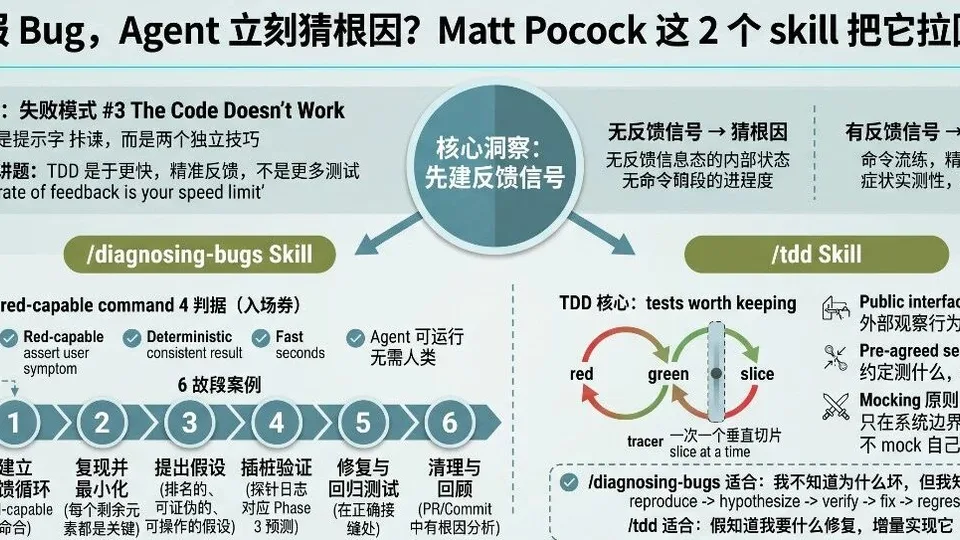
The article dissects Matt Pocock’s /tdd and /diagnosing-bugs skills, showing how explicit feedback signals, red‑capable commands and a six‑phase linear debugging flow prevent agents from guessing root causes and improve the reliability of AI‑assisted bug triage.
The article explains how to turn a well‑written spec into reliable AI‑driven code by introducing Harness Engineering’s five‑layer architecture, five precise human‑intervention moments, three‑tier third‑party documentation, and a detailed 24‑week rollout plan that boosts success rates and reduces release failures.
The article argues that enterprise architecture (EA) and ontology are not competing concepts but layered partners: business architecture defines governance boundaries while ontology provides semantic definitions, and ontology initiatives fail when they skip EA's foundational governance step.
The article argues that AI will not replace test developers but can lower the high technical, business, organizational, and value‑proof costs that have kept the ideal test‑development role out of reach, enabling a shift from script writing to systematic quality‑capability building.
The article outlines a practical framework for managers to balance delegation and oversight by confirming direction up front, monitoring risks during execution, and avoiding micromanagement, while adapting communication frequency to project urgency and team maturity.
The article analyzes the bottlenecks of current AI‑assisted coding, proposes a 2.0 end‑to‑end delivery framework that combines a Spec‑driven pipeline with a Harness constraint system, introduces multiple specialized agents, and outlines traceability, verification, and continuous‑improvement mechanisms to achieve industrial‑grade software production.
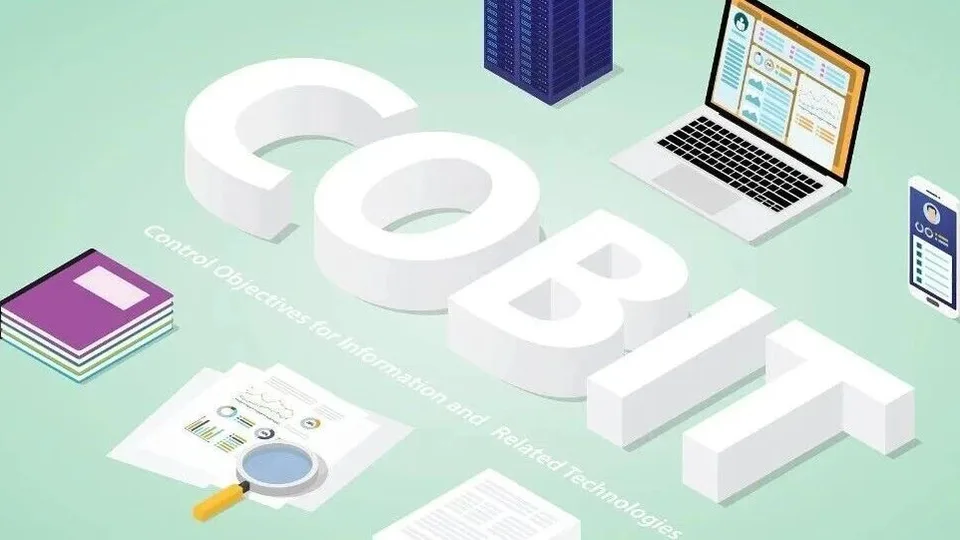
This article breaks down COBIT 2019's five domains (EDM, APO, BAI, DSS, MEA) and 40 governance/management objectives, mapping each to real-world pain points, control points, and implementation priorities for IT governance from strategic planning to daily operations.
The article explains why simply stating a higher score is insufficient when reviewers question modest improvements, and provides a structured rebuttal framework that emphasizes statistical significance, performance on harder scenarios, additional benefits such as lower cost or higher stability, and the intrinsic value of small gains.
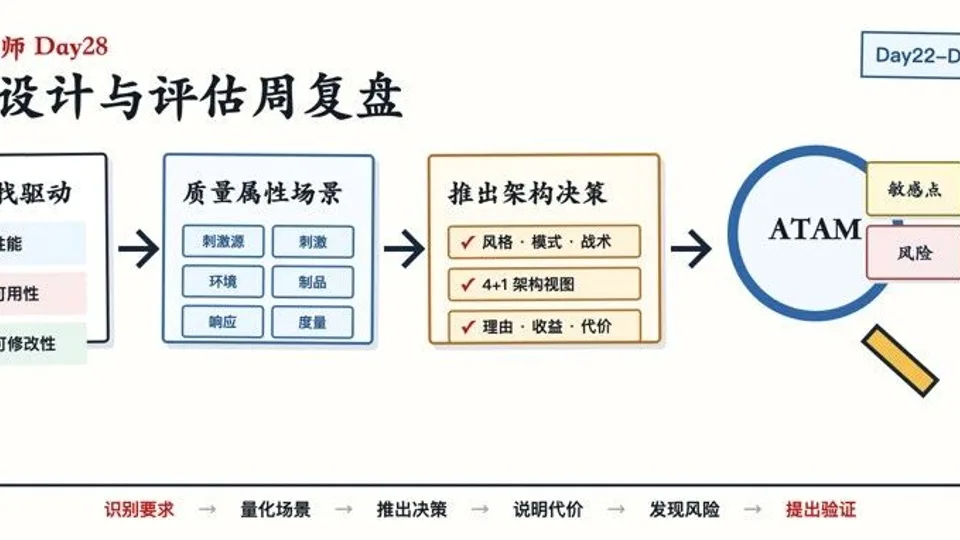
This article links the six previous days of architecture training into a complete reasoning chain, applies it to a city‑wide emergency command platform case, and walks through stakeholder analysis, quality‑attribute scenarios, architectural decisions, 4+1 view modeling, ATAM evaluation, and scoring guidance.
A team that relied entirely on AI tools like Codex to rush a multi‑channel customer‑service chatbot into production ended up with unreadable code, endless bug‑fix loops, performance crashes, and a loss of engineering control, illustrating the hidden risks of AI‑only development.
The article examines Anders Hejlsberg’s four‑decade journey from Turbo Pascal to Go, showing how his focus on cutting developer wait time, embracing platform realities, and minimizing migration cost created lasting language successes rather than relying on pure technical elegance.
This article breaks down COBIT 2019's seven interlocking components—Process, Organizational Structure, Principles & Policies, Information, Culture, People & Skills, and Tools—with concrete enterprise case studies showing how each resolves specific governance pain points like chaotic project intake, unclear accountability, and unmeasured value, enabling systematic digital transformation.
The article argues that AI lowers code generation cost but amplifies the need for clear requirements, architecture, and verification; it advocates Spec-Driven Development (SDD) with controlled agents and test feedback loops, and shares a practical workflow separating design, implementation, and testing roles to ensure systems are correctly designed, implemented, and validated.
The article outlines a systematic approach to selecting Superpowers skills across development stages, risk levels, task coupling, and problem types, provides concrete scenario examples and a decision table, and highlights common pitfalls to avoid over‑use or mis‑application of these skills.
The article outlines why reviewers question weak baseline choices, shows common ineffective replies, and provides a structured, evidence‑based rebuttal template that acknowledges the issue, details existing baseline coverage, adds missing experiments when possible, and explains any unavoidable limitations.
Although AI can generate code at lightning speed, many software teams see little improvement in delivery time because the bottlenecks shift to testing, review, approvals, and deployment, requiring a holistic process overhaul rather than just faster coding.
The article analyzes why AI coding agents succeed in simple tasks but falter on cross‑module work, argues that the core issue is missing state management, and proposes a step‑by‑step evolution—from extracting plans to multi‑agent governance—to make Agentic Engineering production‑ready.
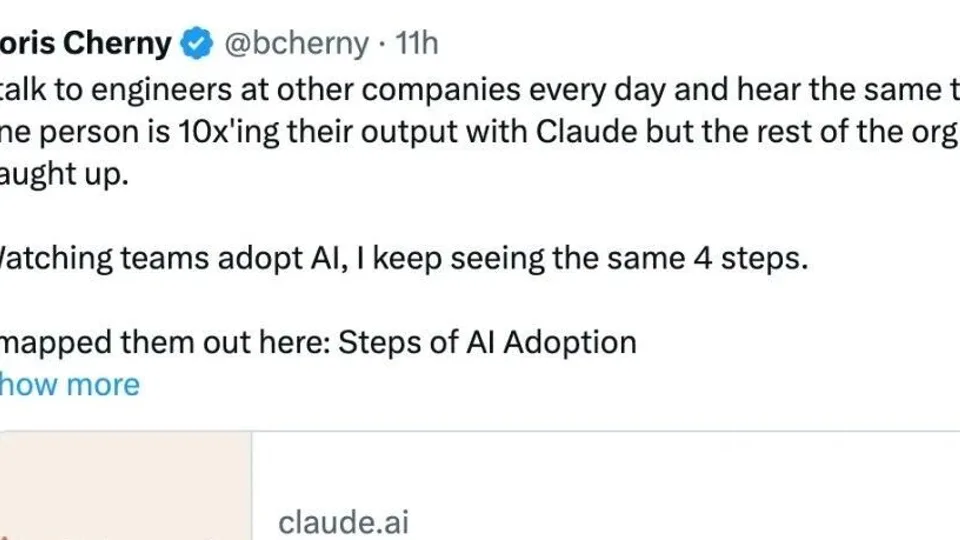
The article analyzes Claude Code’s five adoption stages, showing how organizations shift roles from gated access to AI‑native workflows, and explains that the real accelerator is a robust verification system rather than a more powerful model.
After working with four CTOs, the author highlights three valuable habits learned from three of them—systematic planning, staying hands‑on with code, and aligning technology decisions with business needs—that continue to shape his management approach today.
When reviewers criticize missing experiments or analysis, the most persuasive rebuttal avoids empty promises and instead supplies concrete new results, detailing the experimental setup, key numbers, and how these findings reinforce the paper's original conclusions.