The article examines why top performers often fail as managers by revisiting the Peter Principle, presenting a two‑dimensional ability‑transfer model, and offering three practical dimensions—initial management skill, ability‑transfer coefficient, and organizational fit—to help individuals assess their suitability for leadership roles.
Despite an 80% token price drop and a 20‑fold surge in global token usage, many enterprises face exploding monthly token bills, with 70% of AI projects merely placating managers; the article analyzes token economics, efficiency breakthroughs, and a task‑centric workflow that can halve costs and boost productivity.
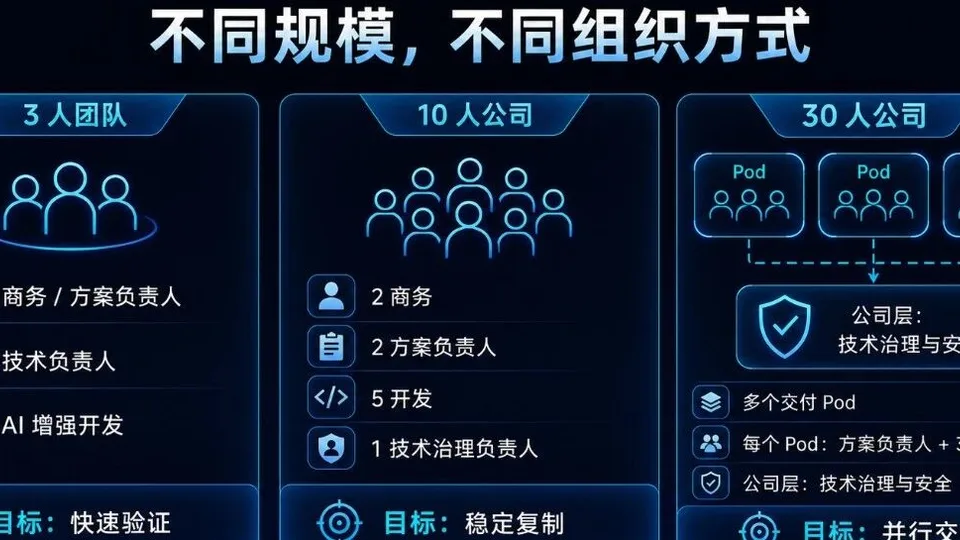
This article analyzes how organizational structure must evolve across three company sizes during AI transformation: 3-person teams focus on rapid validation with composite roles, 10-person companies need stable replication through shared governance and templates, and 30-person companies require autonomous delivery pods with centralized governance to enable parallel execution while maintaining standards.
The article argues that the demand for IT to understand business better than business departments is a manipulative myth; true business understanding in digital transformation means grasping underlying business logic — why processes exist — and seamlessly integrating digital systems so they become invisible, enabling cross-departmental alignment without overstepping boundaries.
The article identifies five common managerial pitfalls—micromanaging like a surveillance camera, ignoring process in favor of outcomes, using fines to force discipline, publicly shaming while privately praising, and letting mood dictate decisions—and explains how each erodes trust, productivity, and team health.
The author reflects on Linus Torvalds’ autobiography, highlighting four key insights—collaborative teamwork over solo coding, purposeful laziness and delegation, the value of steady long‑term productivity over sleepless bursts, and focusing on real user needs rather than technology for its own sake.
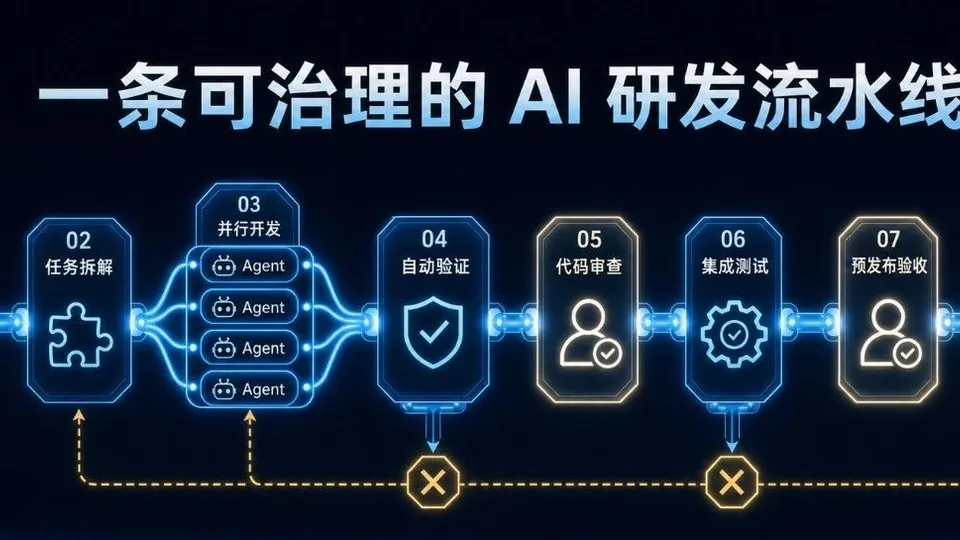
The article argues that AI development pipelines should not automate everything from requirement to production, but instead establish a governed delivery system with eight stages—requirement specification, task decomposition, parallel development, automated verification, code review, integration testing, pre-release acceptance, and production release—where quality gates and human decisions ensure reliability over speed.
This article presents an 8-step GitHub Copilot workflow—pick a tool, enable YOLO mode, prototype rapidly, plan methodically, implement with Autopilot, iterate with human review, cross-model rubber-duck review, and commit—demonstrated through building a date-picker web component, showing how to achieve repeatable, high-quality results using only Copilot's built-in features.
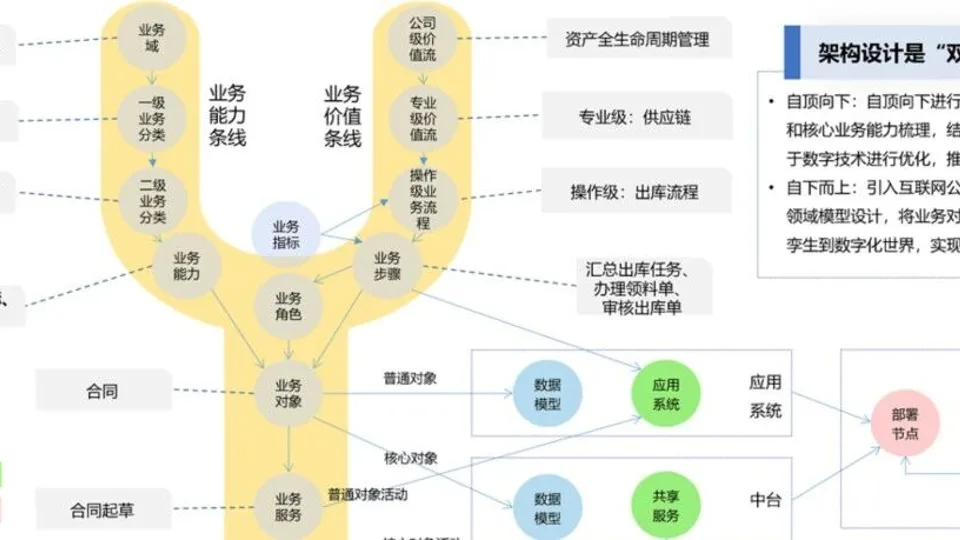
This article outlines four methods for identifying business capabilities—top-down via value streams, bottom-up from process activities, around business object lifecycles, and referencing industry models—and explains how to combine them, manage granularity, and link capabilities to value streams, processes, and IT systems using Huawei's Y-model framework.
The article argues that AI agents are transforming specialized development roles into unified delivery owners who orchestrate multiple agents to achieve business goals, requiring skills in task decomposition, parallel scheduling, multi-layer result review, and quality control rather than just coding.
This guide outlines a detailed 24‑week, 360‑hour preparation roadmap for the System Architecture Designer certification, targeting working professionals and beginners, dividing the study into six phases—from entry to adjustment—each with specific weekly tasks, learning topics, practice exams, and milestones to achieve a 70+ score.
The article argues that small tech companies should replace traditional departmental structures with four responsible owners—Business, Solution, Development, and Technical Governance—to shorten delivery chains and clarify accountability, while AI Agents handle execution under defined rules, context, and review mechanisms.
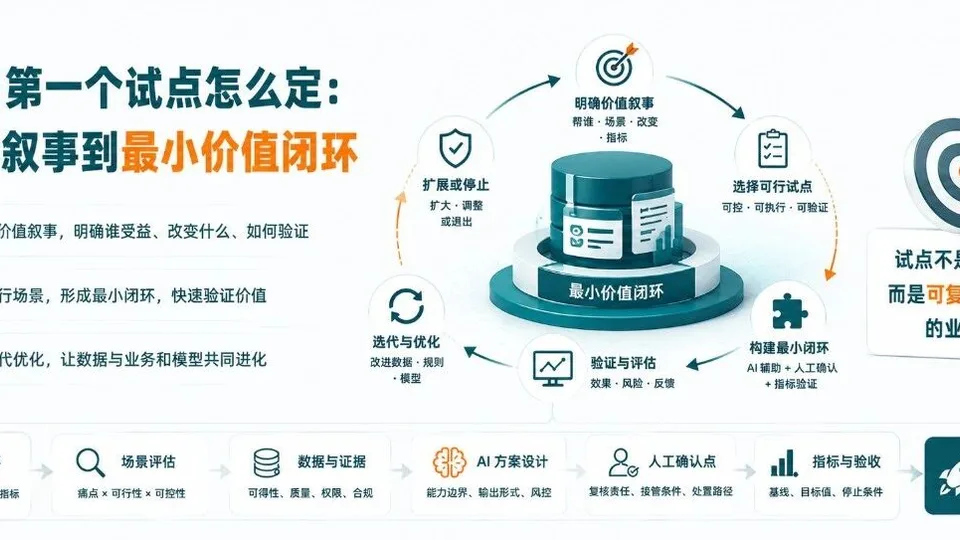
The article argues that the first AI pilot should start with a value narrative defining role, scenario, current state, target state, and verifiable metrics, then select a scenario meeting five feasibility conditions to run a minimum value loop of role, action, AI assistance, human confirmation, and metrics, enabling a go/expand/adjust/stop decision.
This article evaluates two critiques of enterprise ontology and TOGAF ADM, validating their observed pain points — redundant modeling and expert dependency — while correcting the conclusion that the theories are flawed, arguing instead that failures stem from scenario mismatch, mechanical adoption, and missing governance, and offering tailored implementation guidelines.
The article explains how seemingly simple requirement tweaks can trigger extensive code rewrites, cascade effects across modules, missed deadlines, and morale issues, and it proposes structured change‑management processes and maintainable code practices to mitigate these hidden costs.
The article outlines why reviewers question experimental fairness, identifies common concerns such as data splits, training epochs, backbone consistency, random seeds, hyper‑parameter search, and compute budget, and provides concrete examples of ineffective and effective rebuttal phrasing to demonstrate a thorough, verifiable response.
This guide presents 28 curated rebuttal cases covering common reviewer criticisms—such as perceived complexity, lack of novelty, insufficient experiments, and misunderstandings—and offers a structured three‑question framework, detailed response strategies, and an open‑source repository to help researchers craft concise, persuasive replies across top AI conferences.
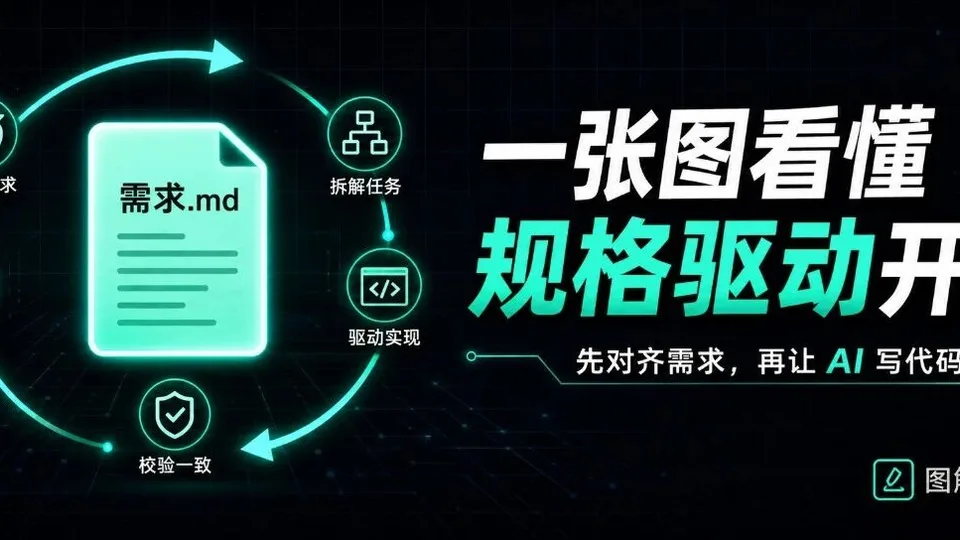
The article explains a specification‑driven development workflow that anchors AI‑generated code to a living requirements document through six closed‑loop stages—requirement authoring, clarification, code generation, cross‑compilation, download verification, and issue fixing—highlighting three iterative cycles and six human decision points that keep the process traceable and safe for industrial control projects.
A junior engineer recounts how his Norwegian tech firm first forced developers to code exclusively with AI, then imposed strict token budgets and bonuses, leading senior staff to abandon AI tools, revealing that financial incentives, not actual productivity gains, dominate corporate AI adoption decisions.
The article details an AI‑driven QA Skill that restructures server‑side smoke pre‑review into a nine‑step, evidence‑based workflow, separates new and legacy projects, reuses rule modules, and reduces a typical two‑day manual effort to just 3 minutes while preserving review credibility.