The article analyzes why huge channel budgets in fast‑moving consumer goods often produce no impact, identifies three core problems—competitor poaching, opaque channel costs, and cross‑region leakage—and shows how a simple store‑opening QR‑code scan can instantly reward shop owners, capture real‑time data, and restore brand control over the distribution network.
The article examines how big data moves retail beyond merely spotting trends to actively shaping pricing, inventory, real‑time monitoring, and strategic decisions, illustrating dynamic pricing, intelligent stock management, and live dashboards with examples from airlines, hotels, and Double‑11 sales.
The article explains how big‑data techniques such as collaborative filtering, time‑aware recommendations, and behavior‑sequence profiling transform e‑commerce and retail by revealing individual consumer intent, boosting conversion rates by up to 30% and enabling more precise pricing and inventory decisions.
This article analyzes JD Retail's approach to automating AB experiment workflows by introducing a data‑weaving framework that unifies metric definitions, streamlines logical data modeling, and enables scalable, real‑time DAG orchestration across multiple experiment scenarios.
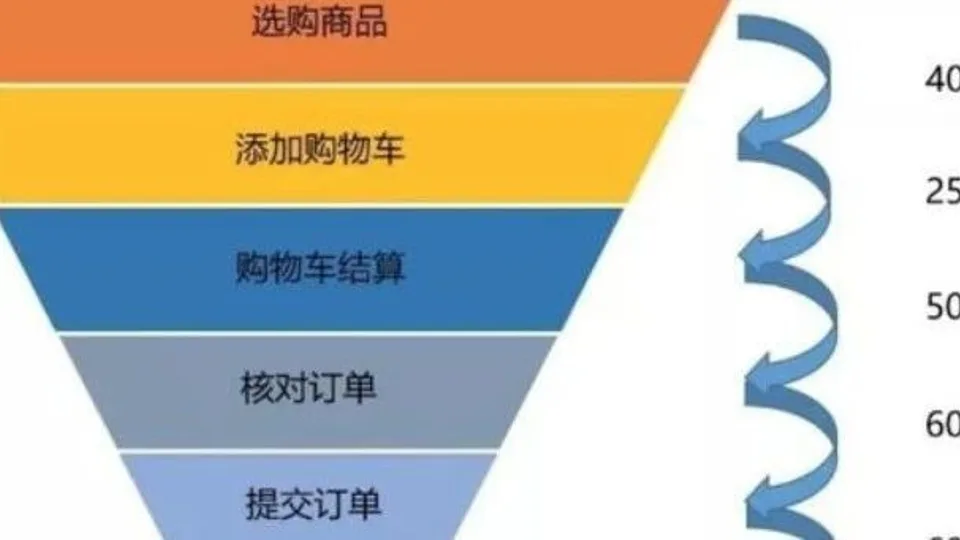
This article explores how retailers can leverage big‑data analytics across people, products, and places—both offline and online—to build comprehensive indicator systems, apply methods like ABC, RFM, association and funnel analysis, and drive smarter decision‑making in the evolving retail landscape.
This article explains the importance of a store tagging system in retail, outlines a four‑step design process—including business research, data requirement analysis, hierarchical label construction, and implementation—and demonstrates its applications in site selection, inventory allocation, user segmentation, and intelligent decision‑making.
Data analysis must be tightly linked to business needs, as illustrated by a Pareto analysis of a food specialty store that reveals a 55% user contribution to 80% sales, prompting strategic decisions on customer segmentation, value distribution, and growth tactics beyond traditional 20/80 expectations.
The paper proposes a deep meta‑learning framework that generates spatio‑temporal representations for retail sales forecasting, especially during large shopping festivals, by combining amortization networks, shared statistical structures, and alternating spatial‑temporal training to achieve robust and accurate predictions despite scarce historical data.
This article presents a comprehensive analysis of a global supermarket's four‑year sales dataset, covering data collection, preprocessing, exploratory visualizations, sales, quantity, profit, market segmentation, product performance, customer segmentation, RFM modeling, and actionable recommendations to improve revenue and customer retention.
Alibaba’s search division showcases how AI transforms traditional retail by digitizing in‑store foot traffic, employing camera‑based person detection, re‑identification, RFID‑enhanced product interaction, and edge‑optimized models to generate real‑time customer insights, heatmaps, and personalized recommendations that bridge offline and online shopping experiences.
This article details Alibaba's end‑to‑end solution for digitizing offline retail foot traffic, combining existing surveillance cameras, RFID tags, and advanced AI techniques such as lightweight YOLO detection, knowledge distillation, and multi‑level pedestrian re‑identification to capture, analyze, and act on shopper behavior for both business operations and personalized in‑store experiences.
At KDD 2018 in London, JD presented ten research papers—including a reinforcement‑learning based recommendation system called DEERS—highlighting its big‑data and AI capabilities across retail, supply‑chain, healthcare, and smart‑city applications while fostering industry‑academic collaboration.
The article analyzes the challenges of declining online traffic and low in‑store conversion, then details how Tencent Cloud’s AI‑driven retail suite—covering scientific site selection, commercial‑area insights, computer‑vision store management, one‑code product tracking, and brand sentiment analysis—offers data‑powered solutions for modern retailers.
The article details Suning’s Beidou system, an AI‑driven solution that combines video, WiFi and facial recognition to accurately count and analyze customer flow, improve store operations, and enable intelligent services such as personalized recommendations, automated payment, and safety monitoring for modern retail environments.