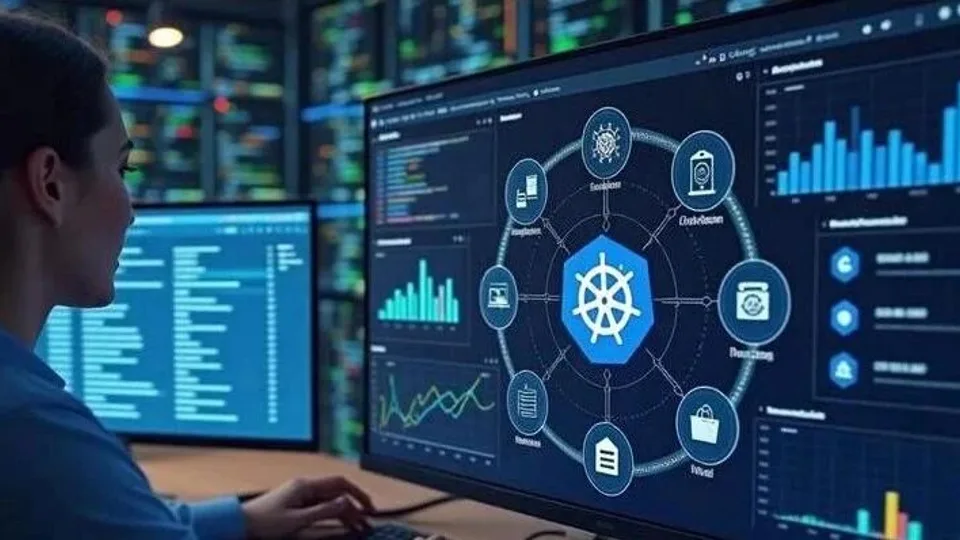
The article describes a self‑built K8s‑RAG‑AIOps tool that uses an offline vector knowledge base and the DeepSeek‑v4‑pro model to automatically retrieve internal SOPs, collect live cluster data via SSH, and generate a complete, executable fault‑diagnosis report, dramatically speeding up Kubernetes troubleshooting while keeping data secure.
This article presents a production‑grade, step‑by‑step solution for offline Docker image distribution in enterprise environments, covering OCI image fundamentals, layer reuse, digest‑based governance, a multi‑domain architecture with Harbor, Skopeo, Crane and Trivy, and practical scripts for building, exporting, validating, importing, and pre‑warming images across large Kubernetes clusters while ensuring security, compliance, and high‑concurrency performance.
A high‑traffic e‑commerce monolith was split into 13 microservices, causing order latency to jump from 300 ms to 1.2 s, P99 over 8 s, and throughput to halve, and the article analyzes why this happens and presents ten fatal anti‑patterns with concrete remediation steps.
This article walks through a real‑world ETCD failure, explains why ETCD is the control‑plane brain, details the three‑layer ETCD architecture, exposes common backup pitfalls, and provides a production‑grade backup‑restore workflow—including snapshot API usage, Go implementation, verification steps, and post‑restore validation—for reliable Kubernetes disaster recovery.
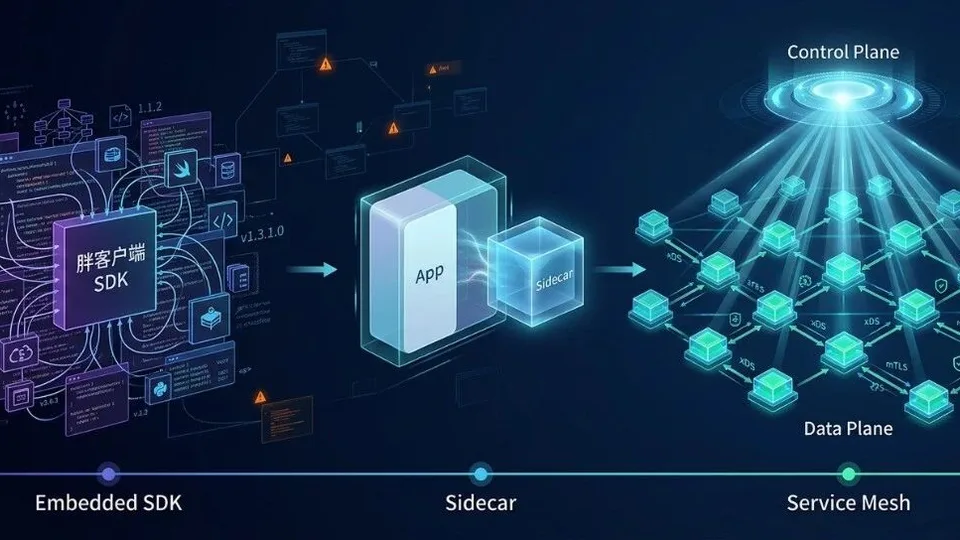
The article examines how embedding service‑governance logic in application processes creates multi‑language, upgrade, coupling, and resource "taxes," and how moving that logic to sidecar proxies and a centralized Service Mesh shifts those costs while delivering language‑agnostic, upgrade‑decoupled, zero‑trust, and declarative traffic management, albeit with new performance, resource, and operational overheads.
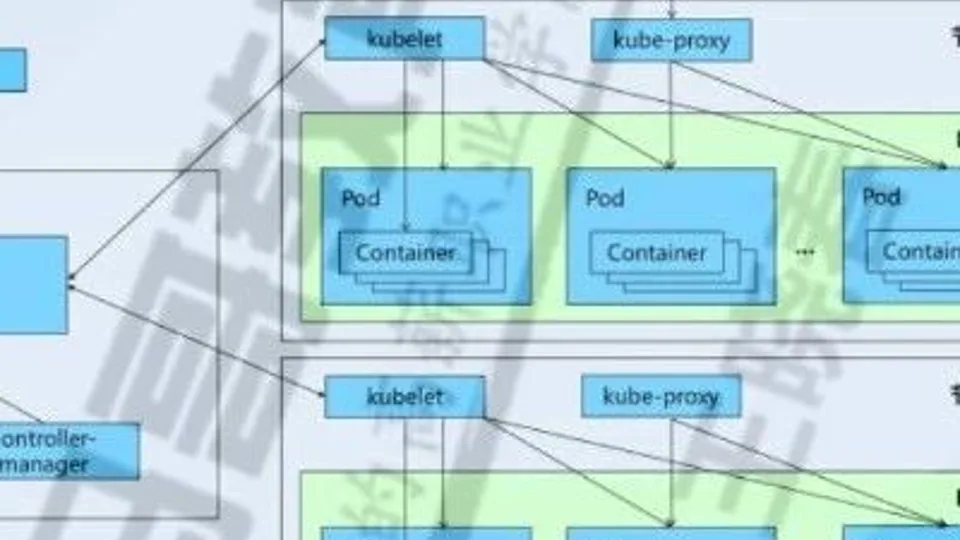
This article explains how to manually assemble a Kubernetes 1.36 cluster using binary files, detailing the overall architecture, core components, and the roles of master and worker nodes, while providing a free 55‑page PDF with step‑by‑step instructions.
The article analyses why XXL‑Job’s separate registration, configuration, and weak sharding cause state inconsistency, observability gaps, and duplicate processing, then proposes JobFlow – a lightweight scheduler that removes redundant components, adds full‑traceId tracing, true sharding with distributed locks, exponential retry, and cloud‑native configuration managed by Nacos, all illustrated with concrete code snippets and deployment diagrams.
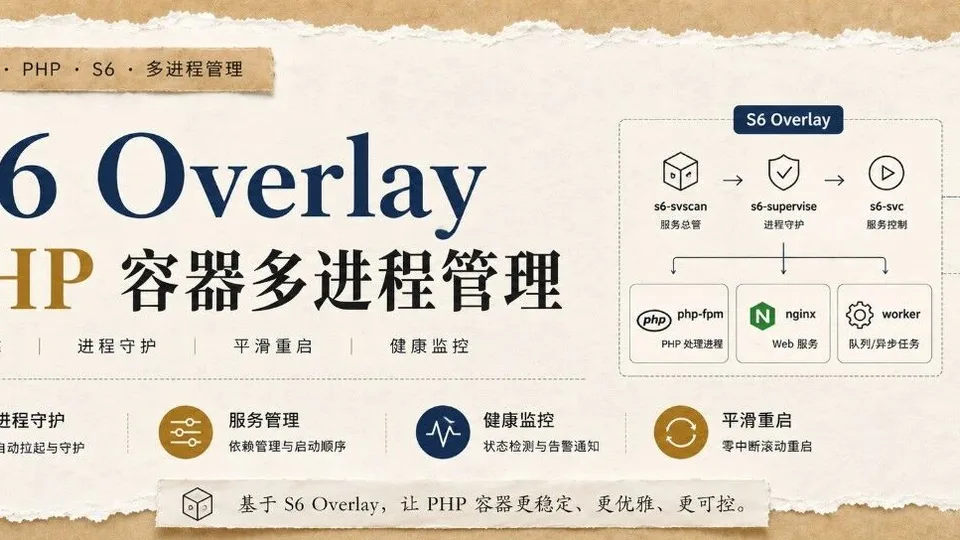
The article explains how S6 Overlay, a lightweight C‑based process supervisor designed for containers, coordinates PHP‑FPM and a reverse‑proxy (NGINX or Apache) within a single Docker image, detailing its health‑check behavior, custom initialization steps, and comparing its benefits and drawbacks against traditional Supervisor.
The article explains how manual Kubernetes YAML quickly becomes unmanageable in microservice environments and demonstrates how Helm provides templating, parameterization, versioning, dependency management, and lifecycle hooks to create a standardized, automated, production‑grade deployment pipeline that can handle billions of requests across multiple services.
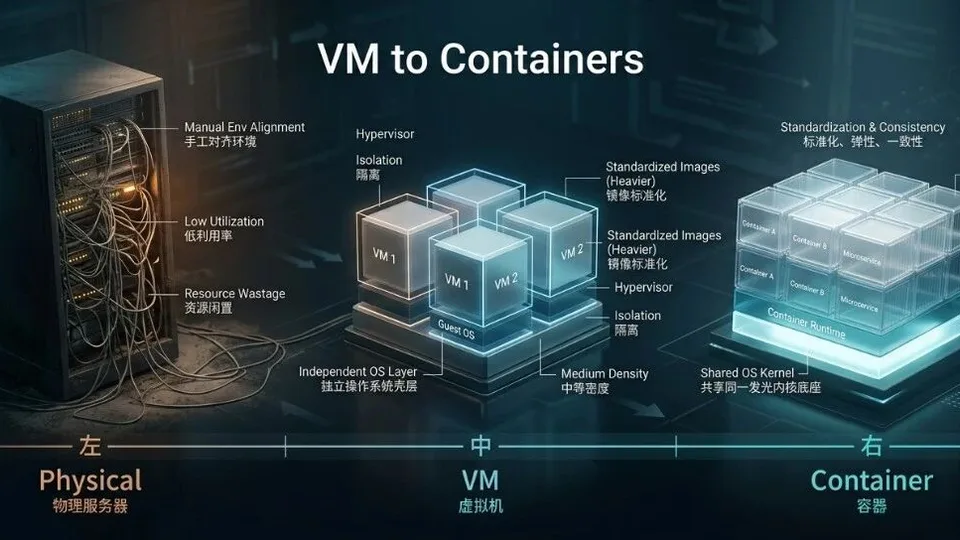
Containers replace heavy VMs by sharing the host kernel, using namespaces for isolation and cgroups for resource limits, while immutable layered images lock down the runtime environment, enabling millisecond‑scale scaling, higher density, and standardized deployment that solves the elasticity, cost, and consistency challenges of million‑QPS services.
The article explains how ACK One Fleet upgrades the AI Agent Sandbox from a single‑cluster Kubernetes setup to a multi‑cluster architecture, addressing capacity limits, fault‑domain risks, and scheduling inefficiencies while providing global capacity control, water‑level balancing, fault‑tolerant failover, and faster sandbox startup through E2B and CRD integrations.
This article details a real‑world migration of an e‑commerce order system from a Kubernetes‑based microservice stack to a Serverless architecture using API Gateway, Lambda, SQS, EventBridge, DynamoDB and Step Functions, achieving roughly 70% cost reduction and 90% lower operational overhead.
The article examines how to construct a container‑based sandbox infrastructure for multi‑agent AI systems, covering isolation mechanisms, lifecycle management, resource scaling, checkpoint/commit techniques, the OpenKruise Agents project, ecosystem integration, and production case studies with performance metrics.
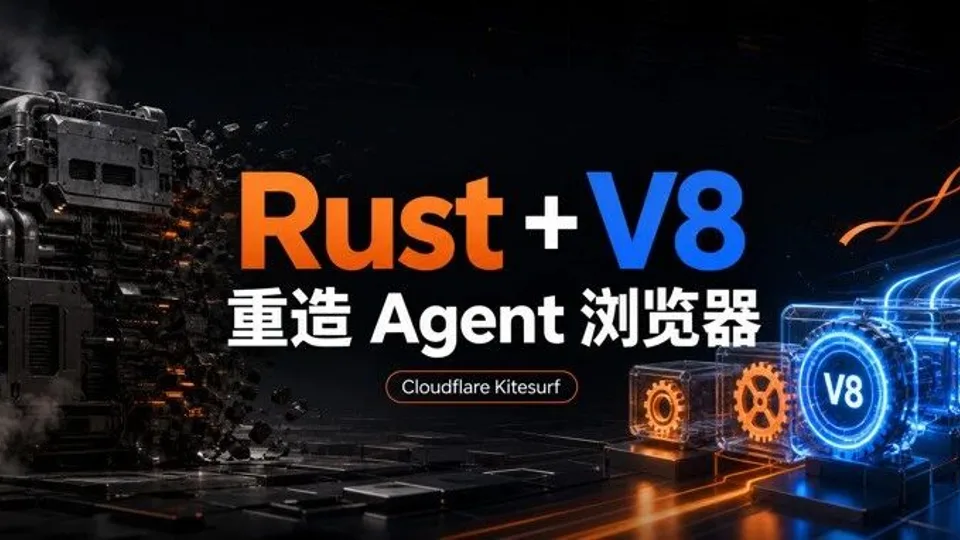
The article examines Cloudflare's Kitesurf, a lightweight Rust‑and‑V8 based browser engineered for server‑side agents, detailing its stripped‑down architecture, performance trade‑offs versus Chromium, rapid 12‑week development aided by AI, and its implications for cost‑effective automated web tasks.
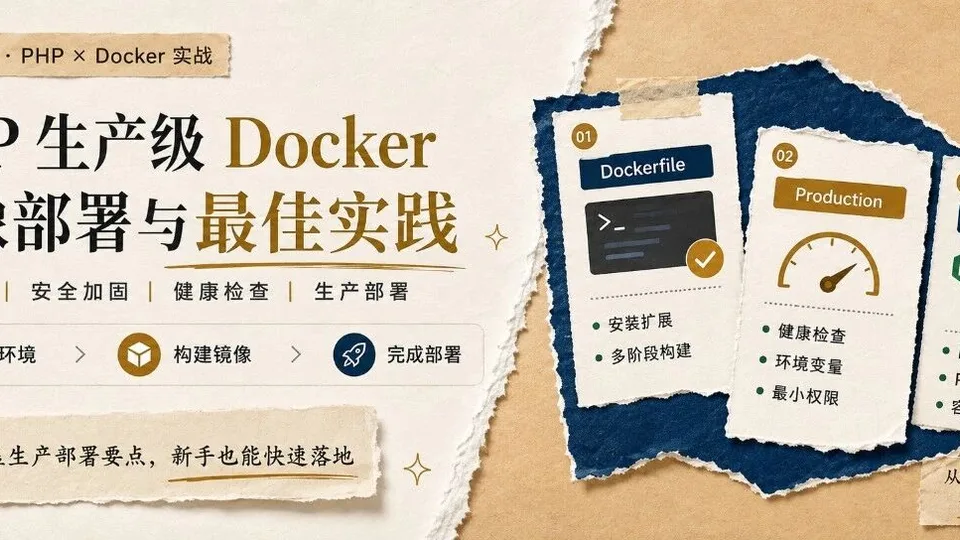
The official PHP Docker image lacks Composer, production‑grade security, and runs as root, so most teams fork it and create fragile internal images; serversideup/php builds on the official image by adding environment‑driven configuration, non‑root execution, S6 process management, FrankenPHP support, built‑in health checks, and performance optimizations that deliver up to 484 requests per second versus 68 for the vanilla image.
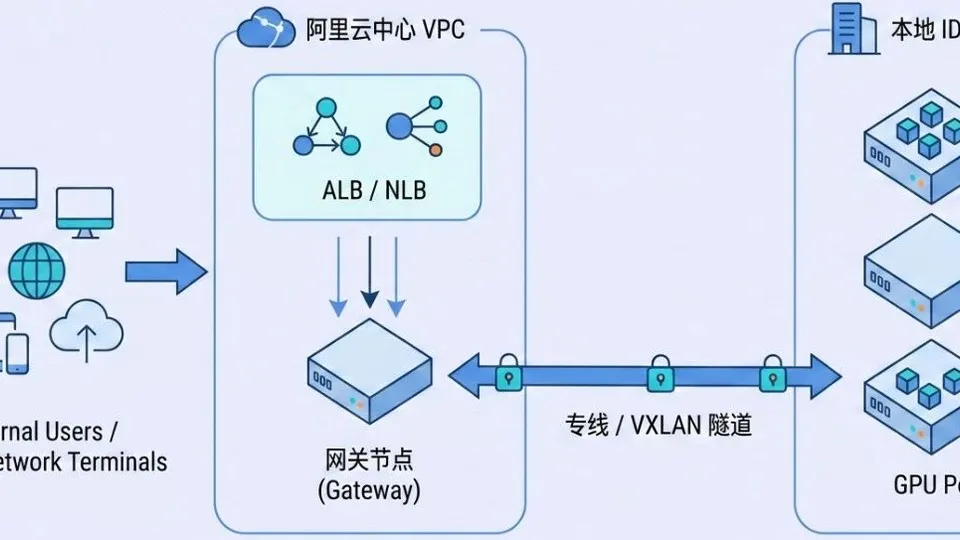
The ack‑hybrid‑nodes‑gateway component introduces a VXLAN‑based overlay gateway that lets pods in an on‑premise IDC communicate bidirectionally with pods in a central VPC, eliminating the need for BGP or extensive network re‑engineering while providing automatic tunnel management and high‑availability.
Running AI workloads on Kubernetes introduces five production‑grade challenges—complex GPU and accelerator management, workload‑aware scheduling, inference autoscaling beyond CPU metrics, multi‑layer observability, and Day 2 governance—requiring platform teams to extend their capabilities beyond traditional container operations.
ACK Pro introduces a provisioned control‑plane mode that replaces reactive scaling with preset performance tiers, guaranteeing deterministic capacity for thousands of nodes and tens of thousands of Pods, and a real‑world AI training case shows reduced pod‑startup latency, eliminated HTTP 429 errors, and about 30% faster training cycles.
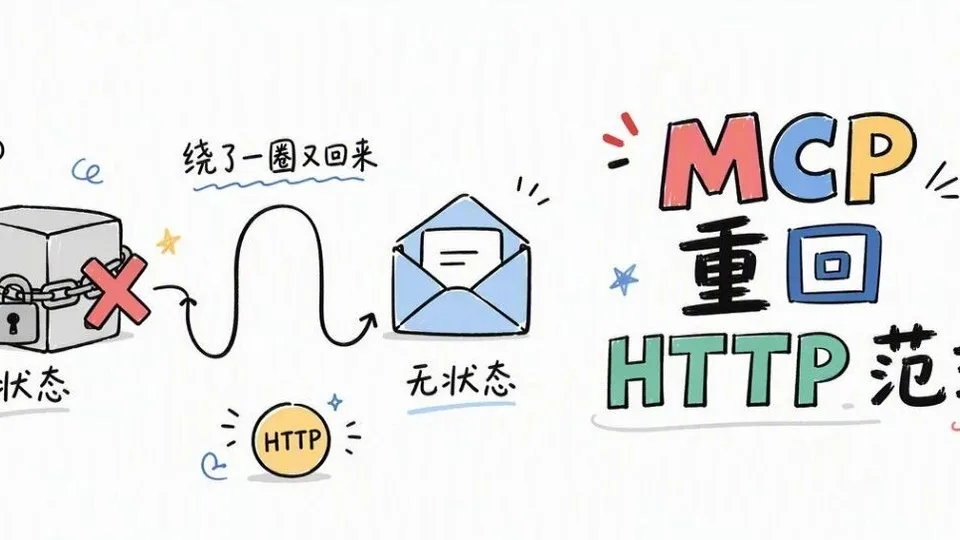
The latest MCP update abandons stateful handshakes for a stateless request/response model, easing scaling and load‑balancing, yet community complaints about context crowding and cost persist, revealing that solid architecture design and engineering practice remain the most limited assets in the AI era.
This guide walks Kubernetes operators through a systematic, step‑by‑step process for diagnosing nodes stuck in the NotReady state, covering kubelet status reporting, common failure reasons, detailed command‑line checks, root‑cause analysis, remediation steps, verification, and long‑term preventive measures.