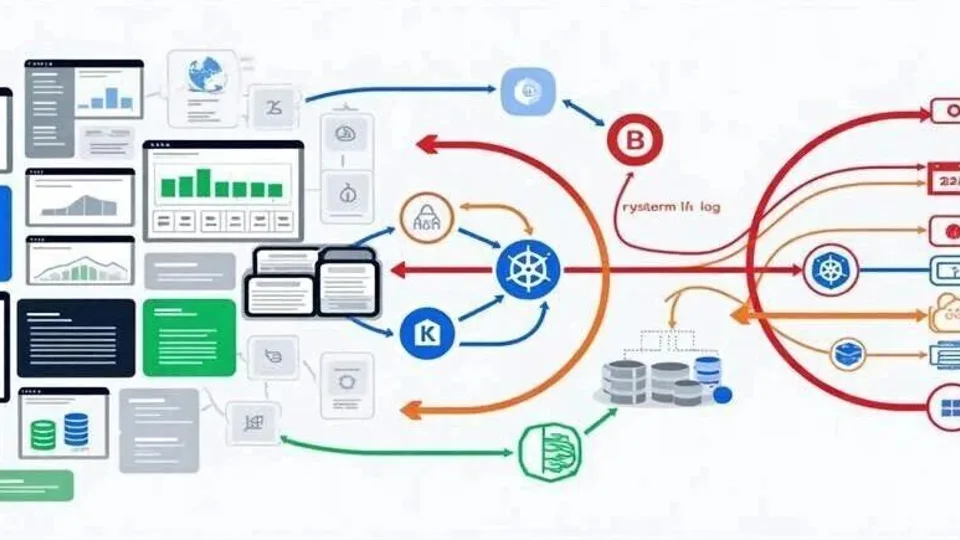
This article explains the three pillars of Kubernetes observability—metrics, logs, and traces—clarifies how they differ from traditional monitoring, and provides concrete guidance on selecting tools, deploying Helm charts, configuring ServiceMonitors, linking data via TraceID, and avoiding common pitfalls.
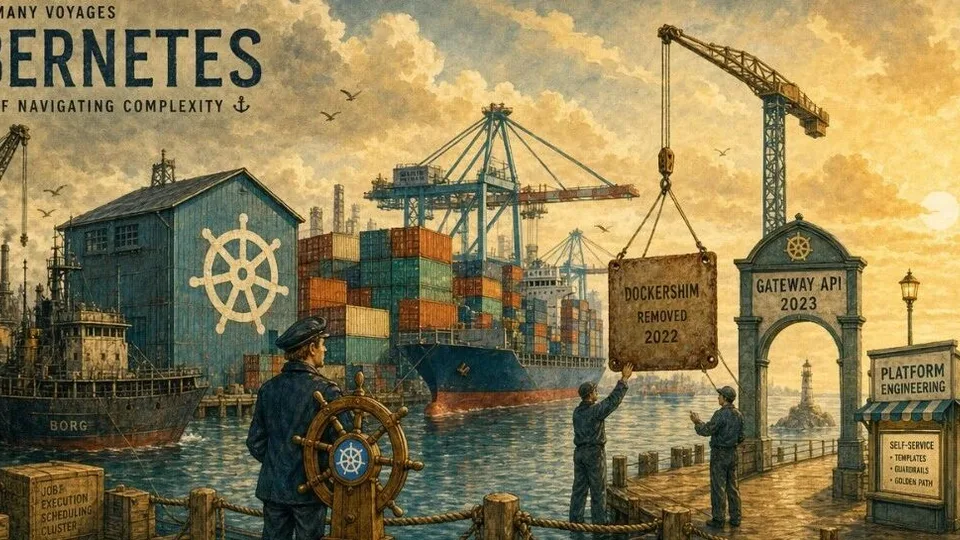
This article traces Kubernetes from its roots in Google’s Borg system through Docker’s rise, the open‑source launch, CNCF stewardship, key feature milestones like Deployments, CRDs, and Gateway API, and explains why it became the default cloud‑native orchestration platform.
This article analyses why traditional CI/CD pipelines become a bottleneck when services grow to hundreds, outlines a production‑grade, four‑plane architecture for Kubernetes that delivers declarative, auditable, concurrent, rollback‑able, gray‑scale, and extensible high‑frequency deployments, and provides concrete examples, code snippets, and a step‑by‑step rollout plan.
The article analyzes why traditional script‑based API tests fail in microservice environments and proposes a Skill‑oriented, DAG‑driven distributed automation engine that unifies HTTP calls, database verification, message validation, retries, and observability into a scalable, governable platform.
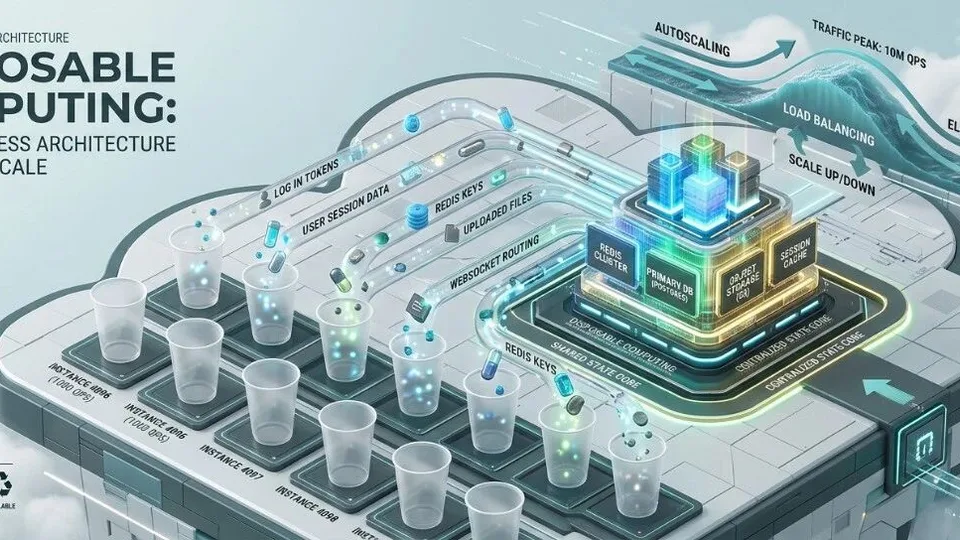
The article analyzes how local state—such as in‑memory sessions, caches, files, and long‑lived connections—breaks elastic scaling, outlines four concrete paths to externalize that state (Redis, JWT, object storage, and gateway separation), and explains the resulting scalability benefits, trade‑offs, and performance considerations.
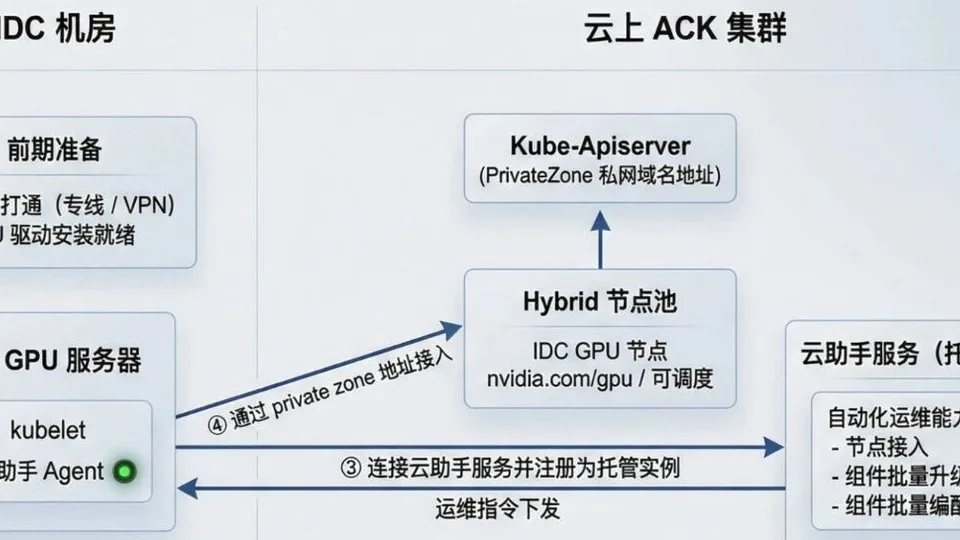
This article explains how many enterprises can integrate idle on‑premise GPU servers into an Alibaba Cloud Kubernetes (ACK) cluster using Hybrid Node Pools, achieving a single control plane, shared scheduling, unified monitoring, and centralized logging to improve utilization and simplify operations.
When my manager suddenly demanded a production‑grade, highly available Kubernetes cluster integrated with a private Harbor registry, I followed a comprehensive step‑by‑step guide to finish the entire setup within a few hours, and now share the 83‑page manual for anyone to replicate.
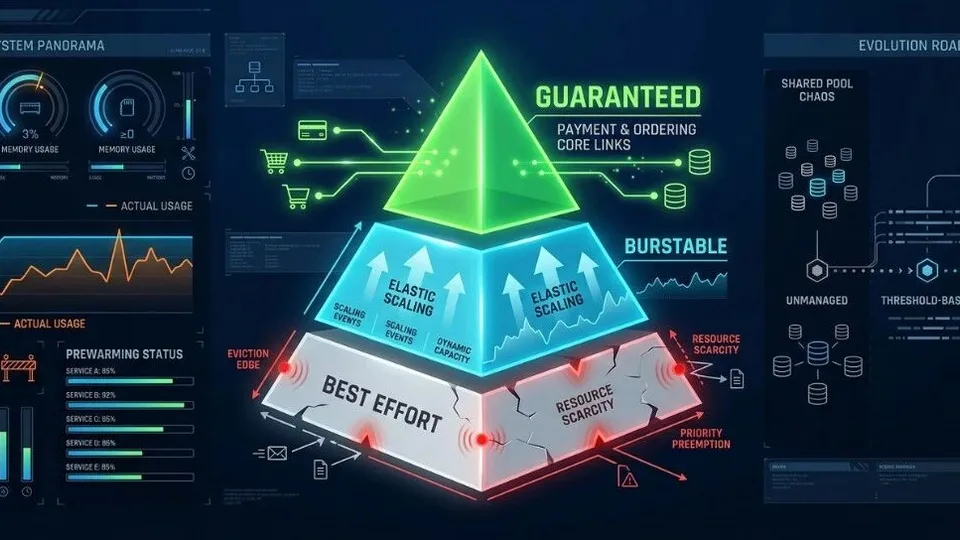
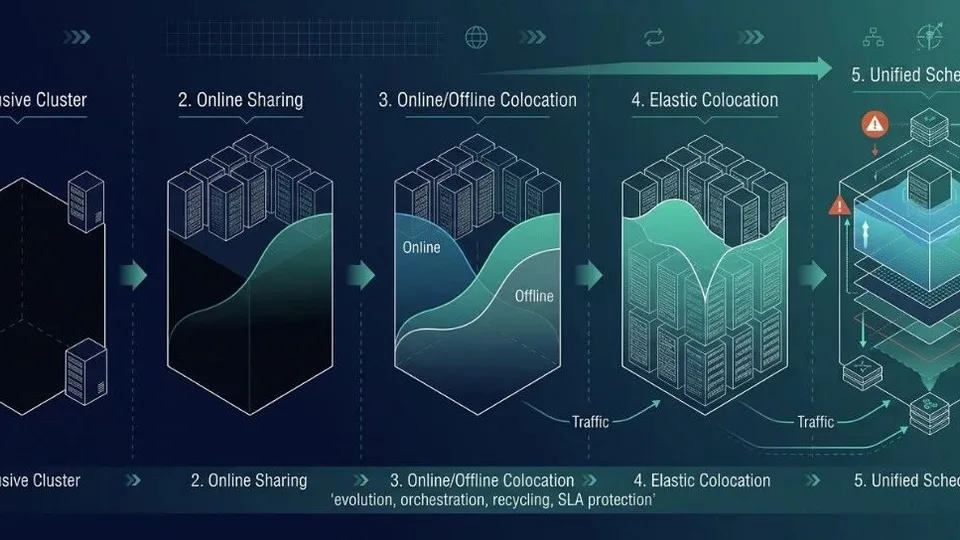
The article explains how a noisy‑neighbor batch job can cripple a payment service at ten‑million‑QPS scale, then details five practical reservation techniques—quotas, reserved instances, isolation, priority preemption, and elastic prediction—while weighing their trade‑offs and showing how overcommit and offline mixing recover idle capacity for both high guarantee and high utilization.
This guide explains why a GPU‑enabled node may show devices with nvidia‑smi yet keep Pods pending, walks through the complete node‑to‑container GPU path, and provides step‑by‑step procedures for device discovery, Device Plugin configuration, isolation models (full‑card, time‑slicing, MIG), scheduling constraints, quota management, multi‑GPU training, troubleshooting pending Pods, and monitoring with DCGM metrics.
This article provides a concise, step‑by‑step reference of the most frequently used kubectl commands—including get, describe, logs, exec, apply, port‑forward, rollout, scale, and delete—showing exact syntax and typical use cases for managing Kubernetes resources.
This guide explains how to achieve robust multi‑tenant isolation in a shared Kubernetes cluster by combining Namespace with the Hierarchical Namespace Controller (HNC), covering isolation dimensions, permission and network policies, resource quotas, hierarchy design, verification steps, and high‑risk operation safeguards.
ChangjieTong transformed its SaaS‑based, multi‑tenant finance cloud platform by building a five‑layer observability stack on Alibaba Cloud CloudMonitor 2.0, integrating a UModel digital‑twin, and deploying AI‑driven inspection, self‑healing and capacity‑prediction loops, which lifted SLA from 99.9% to 99.995% and cut average fault‑resolution time from over 10 minutes to under 30 seconds.
The article explains how moving from exclusive, peak‑sized clusters to a mixed‑tenant architecture—leveraging time‑shifted workloads, cgroup and hardware isolation (LLC, memory bandwidth), QoS tiers, elastic throttling and dynamic over‑commit—can raise CPU utilization from under 20% to over 45% and cut costs by about 30%, while introducing significant operational complexity and stability risks.
This article provides a concise, step‑by‑step guide to the most frequently used Docker commands for development, including container creation, inspection, image management, logging, execution, networking, and file copying, with clear examples and parameter explanations.
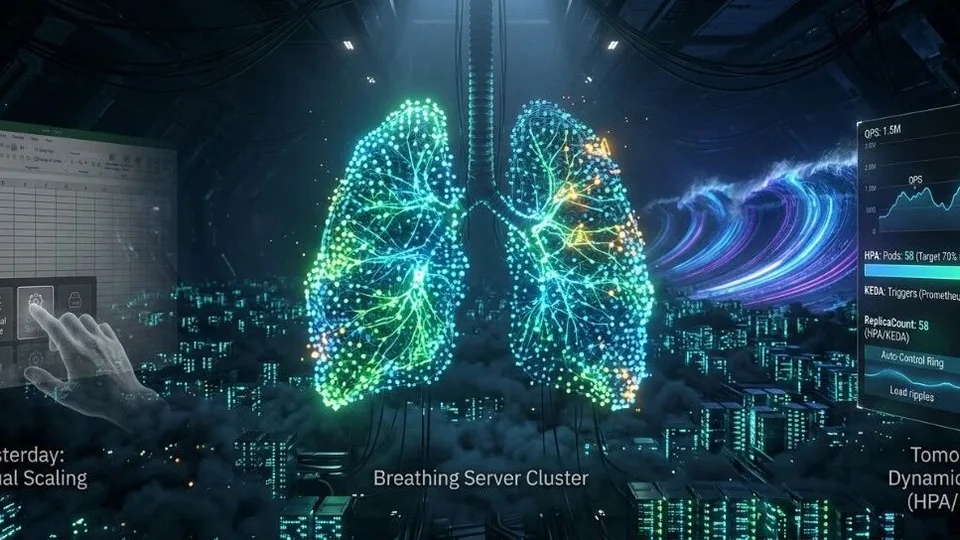
The article analyzes why manual capacity adjustments break down at ten‑million‑QPS scale, then walks through metric‑driven autoscaling, anti‑flapping algorithms, headroom planning, predictive scaling, stateful service challenges, and multi‑dimensional strategies to achieve a cost‑stable dynamic balance.
This article explains how node affinity, pod affinity/anti‑affinity, and topologySpreadConstraints differ, shows how to diagnose pending Pods, provides best‑practice YAML examples, and integrates these rules with PDBs, PriorityClasses, metrics, and rollback procedures for reliable, highly available workloads.
This article presents a production‑grade comparison of three Kubernetes Ingress controllers—NGINX, Traefik, and APISIX—by defining a four‑layer evaluation framework, detailing pre‑deployment checks, configuration examples, testing scripts, performance metrics, and rollout/rollback procedures to help teams select the most suitable solution.
The ACM FSE‑2026 industry paper introduces a replication‑free failover mechanism for cloud‑native stateful services like Apache RocketMQ, using protocol‑level write isolation and multi‑attach storage to achieve second‑level recovery without extra data copies, while maintaining low cost and near‑native throughput.
This production-hardened guide shows how to replace Eureka/Nacos with Kubernetes-native Service/EndpointSlice for service discovery, use ConfigMap/Secret for configuration with dynamic refresh, and implement zero-downtime deployments via preStop hooks and Spring Boot graceful shutdown — complete with RBAC hardening, fault-drill baselines, and a 7-point production checklist.
The MCP protocol’s fifth major version switches from a stateful bidirectional model to a stateless request/response design, adding new headers, auth hardening, deprecating legacy features, updating SDKs, and gaining broad cloud and tool support, while outlining migration steps for production users.