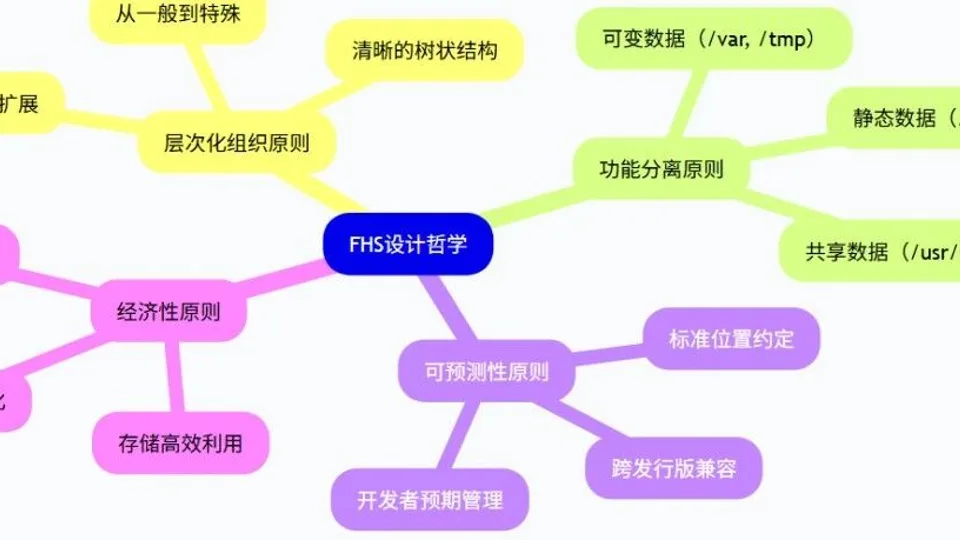
The article explains how Linux’s single‑root filesystem, governed by the Filesystem Hierarchy Standard (FHS), resolves early Unix directory chaos through hierarchical organization, functional separation, predictability, and economic design, and details the responsibilities of each standard directory.
The article explains how to treat a personal knowledge base as a content‑operating system, outlining a simple folder structure, step‑by‑step workflows for ingesting, processing, and practicing information, and showing how the resulting knowledge, experience, and viewpoints can continuously fuel high‑quality content creation.
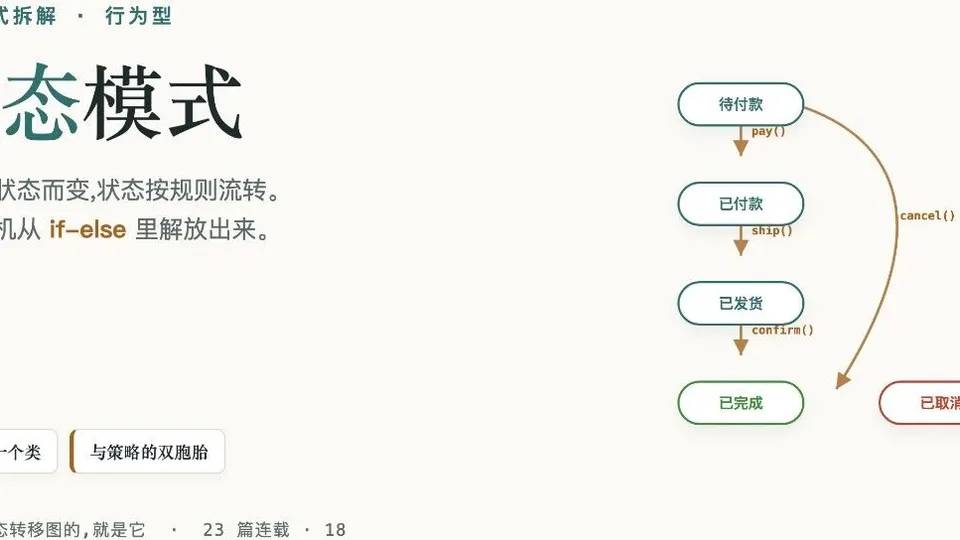
The article demonstrates how the State design pattern replaces tangled if‑else state checks with dedicated state classes, using an order lifecycle example to compare it with Strategy, explain role responsibilities, transition driving mechanisms, and guidelines for when to apply the pattern.
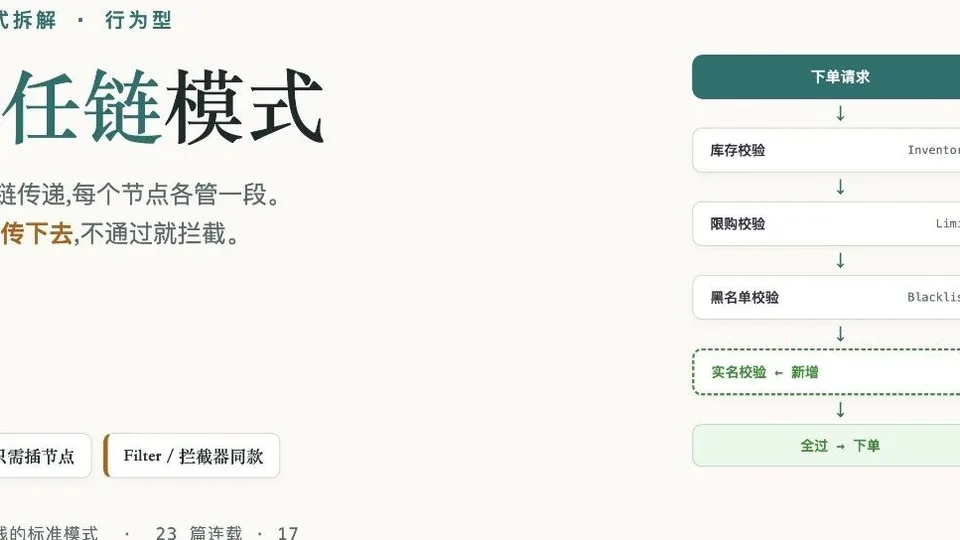
The article explains the Chain of Responsibility design pattern, showing how to replace tangled nested if‑checks in order‑validation logic with a series of independent handler objects linked together, and demonstrates its implementation, variations, real‑world uses in filters, interceptors, and guidelines for when the pattern is appropriate.
The article uses a cafeteria line analogy to introduce CPU scheduling, then systematically explains FCFS, SJF, Round Robin, priority scheduling, and multilevel feedback queues, highlighting their mechanisms, advantages, drawbacks, and real‑world implementations in Windows, Linux, and macOS/iOS.
The article recounts how the iconic Unix grep command was born in the early 1970s, tracing its roots from the ed editor, a linguist's need to analyze the Federalist Papers, and the clever reuse of existing code that led to the name derived from an ed command.
This article explores space-based architecture, a pattern that replaces central databases with replicated in-memory data grids to achieve extreme scalability, detailing its components, caching strategies, data synchronization mechanisms, collision risks with quantitative formulas, and trade-offs in simplicity, testability, and cost.
The article explores the Linux kernel’s most impressive designs—including the CFS scheduler, VFS abstraction, memory management tricks, extensible networking stack, driver framework, signal handling, and container foundations—illustrating how they solve real‑world constraints across diverse platforms.
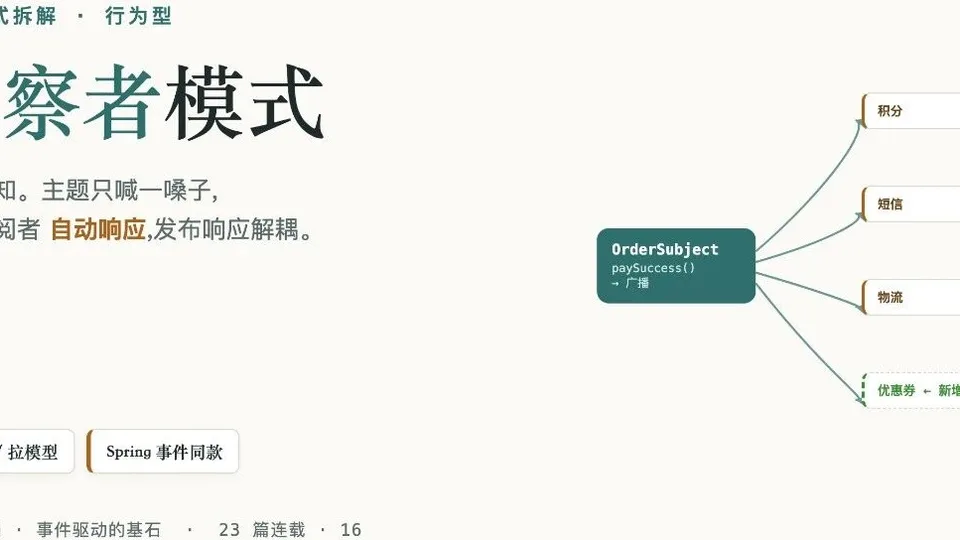
The article explains the Observer pattern by first showing the problems of hard‑coding post‑payment actions, then detailing how defining a subject, observer interface, and concrete observers decouples the system, discusses push vs pull notification models, and illustrates real‑world uses in Spring events, GUI listeners, and message queues.
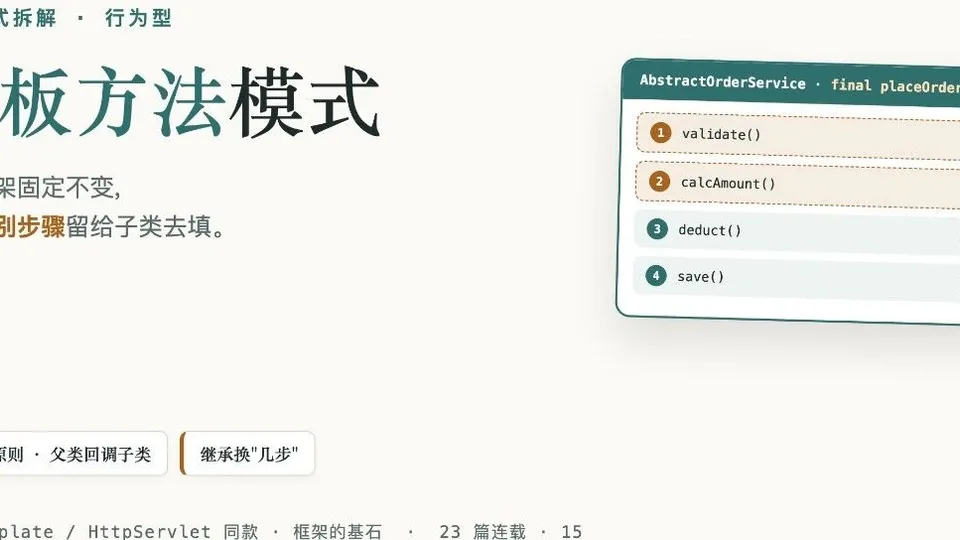
The article explains the Template Method design pattern, showing how to lock a fixed process skeleton in a parent class while delegating variable steps to subclasses, contrasting it with the Strategy pattern and illustrating its use in real‑world frameworks.
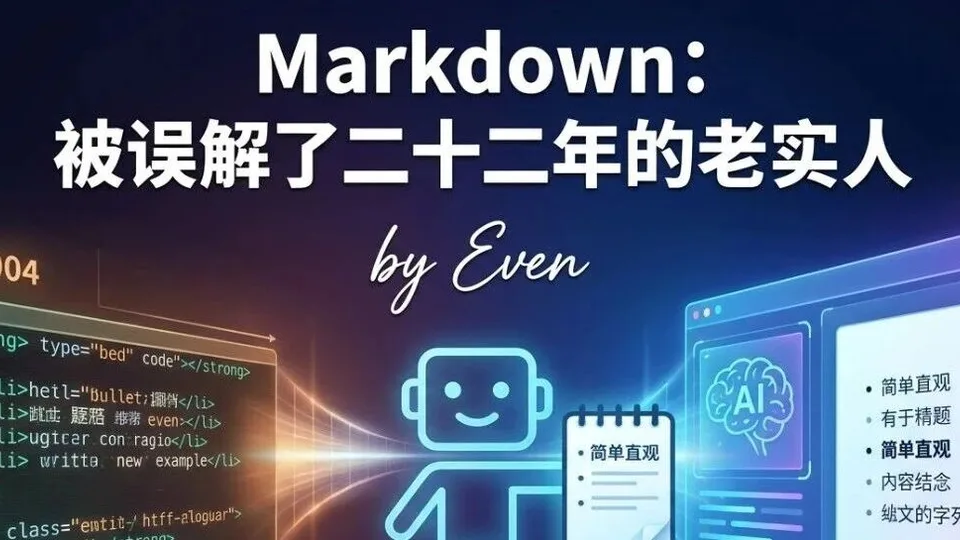
The article revisits Markdown’s origin, explains how its lightweight syntax saves characters and tokens for large language models, debunks the myth that it must replace HTML, and argues that Markdown is a practical intermediate format rather than a mandatory skill for developers.
The article explains deadlock by describing two programmers who each hold a meeting room and wait for the other, defines deadlock and its four necessary conditions, provides real‑world analogies, shows a Python threading example that deadlocks, and outlines prevention, avoidance, detection, and best‑practice strategies.
The article proposes a three‑step approach—study best‑practice designs, evaluate them against your specific context, and select the most suitable solution—illustrated with a comparison of using a message queue versus Spring’s event system for simple order‑notification needs.
Linux favors tar.gz because it follows the Unix philosophy of single‑purpose tools, preserves file permissions and metadata, is universally available without extra installation, offers flexible compression options, and benefits from a mature ecosystem, whereas ZIP loses metadata and 7Z requires extra tools and is slower.
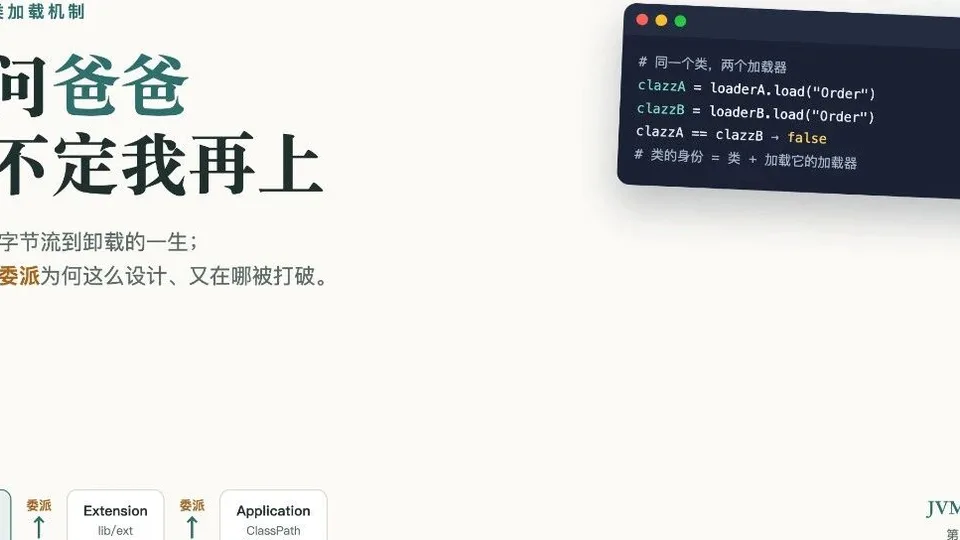
This article walks through the full lifecycle of a Java class—from loading, verification, preparation, and resolution to initialization, usage, and unloading—explains active versus passive references, the parent‑delegation model, JDK 8‑to‑17 module‑system changes, and shows how to write a custom ClassLoader for class isolation.
The article explains processes as independent execution units and threads as lightweight CPU‑scheduled workers, using a boss‑and‑employees metaphor, code samples in Python and Java, practical scenarios, common pitfalls like race conditions and deadlocks, and guidance on when to choose multiprocessing versus multithreading.
FFmpeg 9.0, codenamed “Lei” to honor Chinese audio‑video developer Lei Xiaohua on the tenth anniversary of his death, continues the project’s evolution from a simple codec suite to a ubiquitous multimedia backbone powering video editing, streaming, and AI pipelines, while tracing its rich history and community contributions.
The article debunks the claim that C++23’s deducing this rewrites the ABI, showing that the this pointer has always been the first register argument, while the new explicit object parameter introduces only symbol‑level changes, const‑propagation nuances, mutable pitfalls, and a copy‑by‑value overhead for large objects.
This article reviews 'Software Architecture: The Hard Parts', highlighting eight key architectural challenges including trade-offs, data-architecture tensions, service granularity, database decomposition, distributed data access, contract design, code reuse, and error handling in distributed systems.
Most hidden thread‑safety bugs in Java stem from instruction reordering and memory‑visibility issues rather than simple atomicity conflicts; this article dissects the hardware‑level reordering, JMM’s happens‑before rules, and memory‑fence mechanisms, illustrating each concept with concrete code examples and classic concurrency pitfalls.