This article explores why 1980s games like Contra could deliver rich graphics, music, and gameplay within just 128KB by examining data size perception, tile‑based graphics, limited audio chips, and ultra‑compact code techniques that contrast sharply with modern app bloat.
This article explores the fundamental physics and mathematics behind game development, covering object motion models, scrolling techniques, collision detection, ray casting, screen transition effects, and provides Python code examples to illustrate how these concepts are implemented in practice.
The Fast Inverse Square Root algorithm, invented by John Carmack for Quake III Arena, uses a clever magic constant and Newton‑Raphson iteration to compute 1/√x far faster than traditional methods, dramatically reducing floating‑point workload in real‑time graphics.
This article presents a comprehensive guide to automating audio testing in first‑person shooter games, covering common audio bugs, a step‑by‑step recording workflow, feature extraction techniques, similarity metrics, and practical toolchains such as Soundcard, fmedia, VBCable, and librosa.
The article describes how Bilibili created OneSDK and a macOS packaging tool that automatically selects and inserts the appropriate regional game SDKs, unifying APIs, eliminating manual configuration, and cutting integration effort by roughly 60% through Ruby‑based project manipulation and a Flutter UI.
This article explains how 1980s game developers squeezed full‑screen scrolling, rich music, and extensive gameplay into just 128 KB by using tile‑based graphics, specialized audio chips, and ultra‑compact code, revealing the technical tricks behind classic titles like Contra.
The guide explains how game publishers can modify Android App Bundles—using bundletool to decompile, update icons (including adaptive ones), change app names across languages, and adjust base or PAD resources—then re‑package the AAB for Google Play compliance.
This article analyzes Bungie's transition from a traditional boxed‑product approach to a live‑service model in Destiny 2, outlining the challenges, metrics, cultural shifts, and practical lessons such as prioritizing speed over position, data‑informed design, and avoiding over‑delivery.
The iconic 1990s real‑time strategy game Red Alert has had its original C++ source code released on GitHub, offering modders a rare glimpse into Westwood’s legacy code while explaining the historical context, the limited scope of the release, and why Red Alert 2 remains unavailable.
This tutorial demonstrates how to generate a realistic snowflake falling animation in Python by first using the Turtle module to draw individual snowflakes and then employing Pygame to animate multiple snowflakes with random positions, sizes, and speeds, including installation guidance for Pygame.
This tutorial walks you through installing Pygame, setting up the game window, loading assets, defining tank and bullet sprites, implementing the main loop, and running a complete Python‑based 2D tank battle game with full source code.
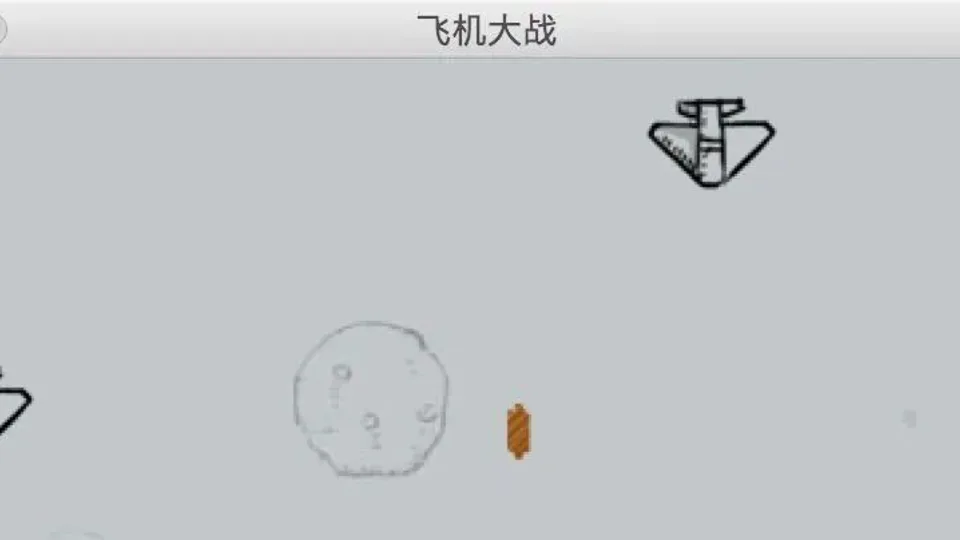
This article introduces a compact Python airplane shooting game, explains its main components such as player, enemies, bullets, and game loop, and provides complete, well‑commented source code so beginners can read, run, and extend the project.
This step‑by‑step guide shows how to capture facial photos, process them with Metashape, create a 3D model, and import it into Unreal Engine's MetaHuman system to generate a realistic digital human without any cost.
A developer shares insights from a game company interview, explaining why microservice architectures often clash with the low‑latency, state‑heavy requirements of real‑time multiplayer games and when they might still be appropriate.
This article explains the rules of the popular Chinese card game Zha Jin Hua, demonstrates how to generate a standard deck, deal cards to multiple players, evaluate hand types, calculate scores with multipliers, run large‑scale simulations for frequency analysis, and provides the complete Python source code for the entire workflow.
The article explains the concept of context and recontextualization, illustrates how designers apply these ideas to game worlds, outlines mechanical and knowledge‑based recontextualization techniques, and provides concrete examples from titles like Hitman 2 and Naraka: Bladepoint to show how thoughtful design can broaden player experience, improve feedback loops, and create richer, more immersive gameplay.
This article presents a comprehensive guide to building a classic Snake game in Python using the Pygame library, covering game rules, overall design, required libraries, detailed function explanations, and the complete source code for both normal and wall‑through modes.
This article provides a step‑by‑step tutorial on building a match‑3 (candy‑crush style) game, covering basic rules, core matching and removal algorithms in JavaScript, and a complete implementation in Cocos Creator with grid layout, touch handling, swap animation, piece falling, and refill logic.
Japanese game developer KMS migrated from Azure to Tencent Cloud, adopting a cloud‑native architecture with Tencent’s Elastic Microservice platform that provides timed and metric‑based scaling, CI/CD pipelines, and batch upgrades, resulting in roughly 50% cost savings, 15% performance gains and 50% latency reduction.
This tutorial walks through the fundamentals of Cocos Creator 3.x, explaining core concepts such as scenes, nodes, prefabs, components, and assets, then demonstrates how to build a 2D plane‑shooting game with background scrolling, player control, bullet firing, enemy spawning, collision detection, death animations, and final build steps.