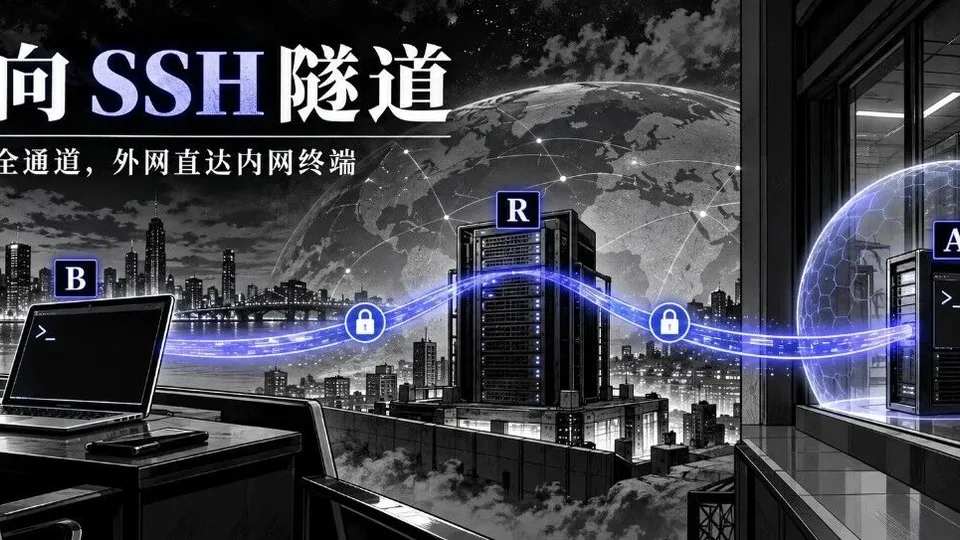
This guide explains how to set up a reverse SSH tunnel through a public relay server to securely access internal network terminals directly from external machines, eliminating repeated bastion host logins while maintaining security through loopback binding and key-based authentication.
This article teaches operations engineers how to use LLMs to generate custom Shell and Python scripts for common tasks like log cleanup, server inspection, Nginx restarts, and port checks, providing a reusable prompt template and four ready-to-run script examples that avoid copyright issues and fit specific environments.
This article details the evolution from cold to hot backup in same-city disaster recovery, covering fault domain analysis, RPO/RTO definitions, data replication strategies, capacity planning, traffic switching challenges, control plane resilience, and phased implementation approaches for systems handling ten million QPS.
A comprehensive guide to Linux kernel parameter tuning via sysctl, covering network, memory, and filesystem subsystems with a systematic workflow: baseline capture, bottleneck identification, single-parameter changes, validation, persistence, and rollback — illustrated with real production post-mortems.
This article explains how periodic router restarts clear accumulated temporary states, resolve Wi-Fi slowdowns by re-scanning channels, enhance security by interrupting malicious connections, and recommends monthly restarts as a low-effort maintenance habit while noting limitations like firmware updates and hardware constraints.
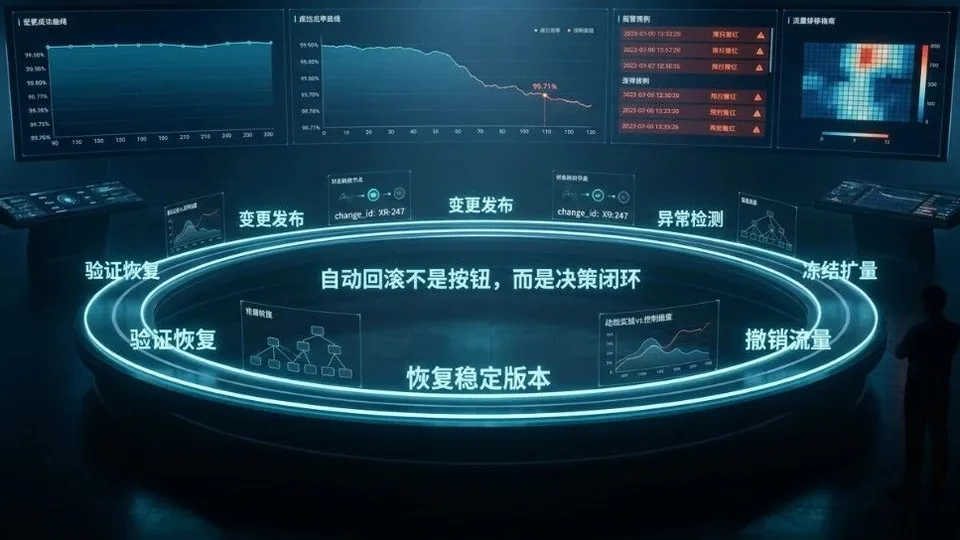
This article details how to build reliable automated rollback systems for high-throughput architectures by establishing change identity, causal evidence through experiment/control groups, tiered rollback actions, state-machine execution, data compatibility matrices, verification budgets, and guardrails—progressing from manual processes to closed-loop autonomy.
The article explains that AI Agents can analyze manufacturing anomalies and create work orders, but real resolution requires distinct ownership for containment, diagnosis, disposal, and quality closure, with clear cross-shift handover and verification criteria, not just automated analysis.
This article compares LVS (Layer 4) and Nginx (Layer 7) load balancers, explaining why LVS achieves higher throughput by only inspecting IP headers while Nginx terminates TCP connections for HTTP-aware routing, health checks, and request retry — at the cost of added latency and configuration complexity.
This article details a complete disk I/O alert investigation in production, covering core concepts like IOPS vs throughput, iostat/iotop analysis, and five real-world cases including MySQL missing indexes, log misconfiguration, backup conflicts, Redis persistence, and filesystem mount options, providing a reusable troubleshooting methodology.
A comprehensive guide to diagnosing DNS resolution latency and failures, covering resolv.conf configuration, ndots and search domain pitfalls, caching layers, Kubernetes DNS specifics, and practical troubleshooting steps with command-line tools.
This comprehensive guide covers end-to-end RAG system operations, from vector database selection and workload profiling to HNSW parameter tuning, filtering strategies, index freshness monitoring, embedding upgrades, capacity planning, backup validation, and troubleshooting methodologies with concrete examples and evaluation frameworks.
This guide covers the top 10 Nginx and API gateway production faults—including 502/504 errors, retry storms, load imbalance, rate limiting failures, CORS issues, and 499 errors—with root cause analysis, configuration fixes, and a step-by-step SOP for rapid diagnosis and long-term prevention.
This article explains why decommissioned systems often leave behind active 'digital tails'—lingering APIs, accounts, and data connections—and argues that proper retirement requires three distinct farewells: business, operational, and evidentiary, moving beyond simple asset inventories to manage default trust and relationship context.
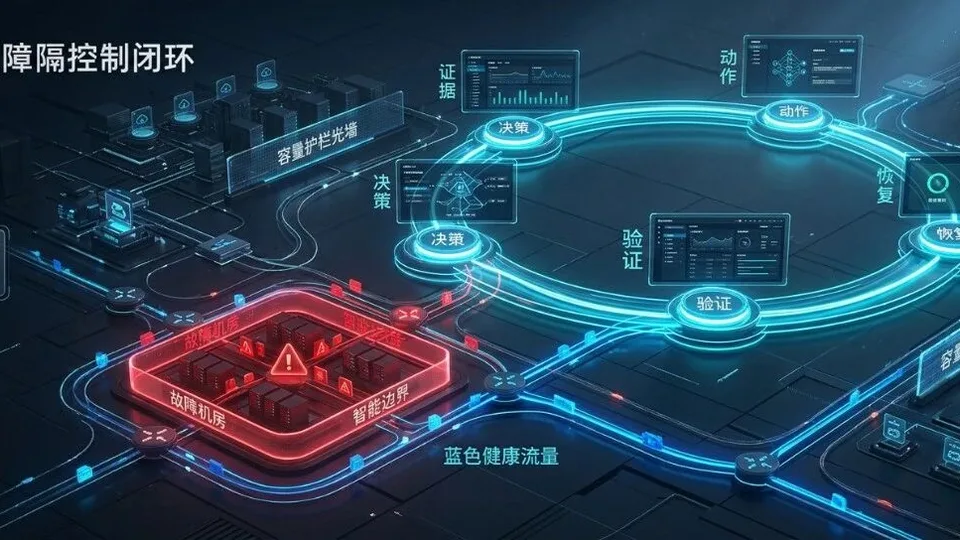
This article details a complete control-loop design for automatic fault isolation in 10M QPS systems, covering evidence-based detection, capacity-aware action planning, guardrails, phased rollout from shadow mode to autonomy, and evaluation metrics for speed, correctness, and safety.
This comprehensive guide explains why a server may respond to ping but fail HTTPS access, detailing a systematic layered approach covering DNS, proxy, TCP, TLS, HTTP, and application layers with concrete commands and case studies.
Ubuntu 26.10 adjusts OOM scores to prioritize killing applications over critical desktop services like GNOME Shell and D-Bus, disables systemd-oomd for user sessions, and provides immediate workarounds like zram and manual OOMScoreAdjust.
This comprehensive guide covers LVM fundamentals (PV/VG/LV/FS), PE/LE concepts, metadata management, and practical scenarios including online expansion, dangerous shrinking, disk migration via pvmove, snapshot backups, cache/thin provisioning, metadata recovery, and production best practices with exact commands and rollback procedures.
This article presents 30 key supply chain formulas across sales, inventory, procurement, production, and logistics, emphasizing that consistent data definitions and real-time updates are more critical than the formulas themselves for effective supply chain management.
This comprehensive guide covers NVIDIA MIG (Multi-Instance GPU) on A100/H100, detailing hardware-level GPU partitioning, instance creation and binding, Kubernetes/Docker integration, isolation verification, monitoring, and rollback procedures for production multi-tenant model serving.
This article explains that observability is not centralized logging but a practice of defining business outcomes (SLIs/SLOs), correlating metrics, logs, and traces via stable business identifiers, designing actionable alerts, structuring dashboards along business flows, separating observability responsibilities, halting automation when evidence is unreliable, and using runtime data to continuously correct architectural assumptions.