The article argues most rewrites satisfy programmer aesthetics, not business needs; stable legacy code encodes hard-won bug fixes; rewrites risk reintroducing old bugs; four concrete criteria justify rewrites: unsupported dependencies with vulnerabilities, knowledge silos, measurable productivity decline, or business outgrowing architecture; AI lowers rewrite cost but not the risk of lost context.
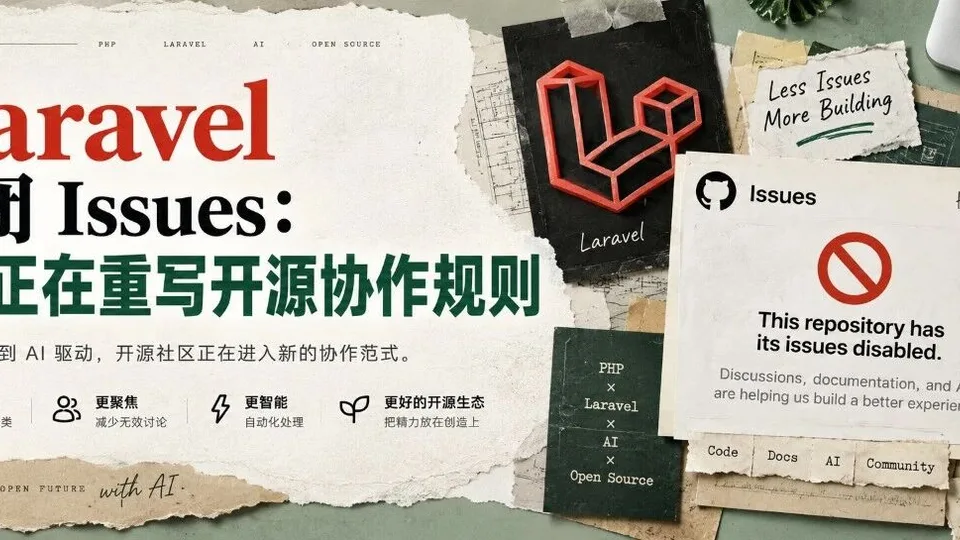
Laravel founder Taylor Otwell closed Issues on most first-party packages, requiring contributors to submit pull requests — even AI-generated ones — instead of filing bug reports, arguing that AI has lowered the barrier to fixing code and shifted maintenance burden back to reporters.
The article analyzes how companies use minimal raises and title promotions as 'low-cost expectation management,' leveraging the anchoring effect to extract extra work, and advises employees to accept the title as leverage, gather market data, and negotiate fair compensation or gain transferable experience.
This analysis of Tencent's open-source TeamAI CLI examines its three-layer architecture for unifying AI coding tool configurations across teams via Git, detailing the production-ready Team Execution layer, Beta Team Context and Team Improvement layers, tool compatibility across 11 AI assistants, and practical guidance on when the tool adds value versus when it's overkill.
dotpm is an Obsidian plugin that stores projects and tasks as plain Markdown files with YAML frontmatter, providing Gantt, Kanban, and table views with dependency scheduling, time tracking, and custom fields — all without cloud lock-in, using Git or any file sync for collaboration.
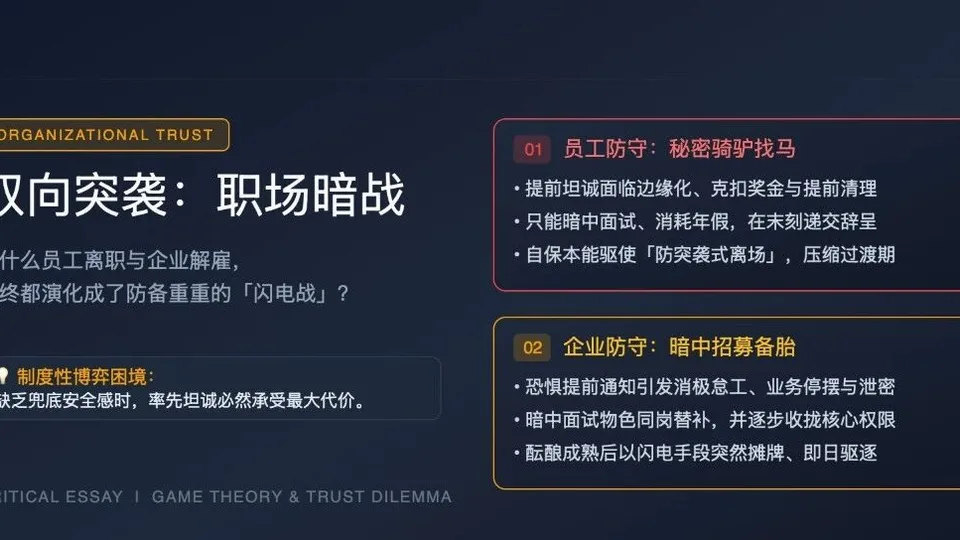
This article analyzes the 'mutual ambush' phenomenon where employees secretly job-hunt and companies secretly hire replacements, using game theory to show it's a Nash equilibrium driven by trust deficits, and proposes a three-layer framework of safety, tour-of-duty contracts, and alumni networks to rebuild organizational transparency.
Vivo database lead Wang Le shares a decade of experience spanning Oracle-to-MySQL migration, domestic database replacement, gh-ost bug fixes, and building automation platforms, revealing how DBAs can evolve into technical leaders through continuous learning and long-term thinking.
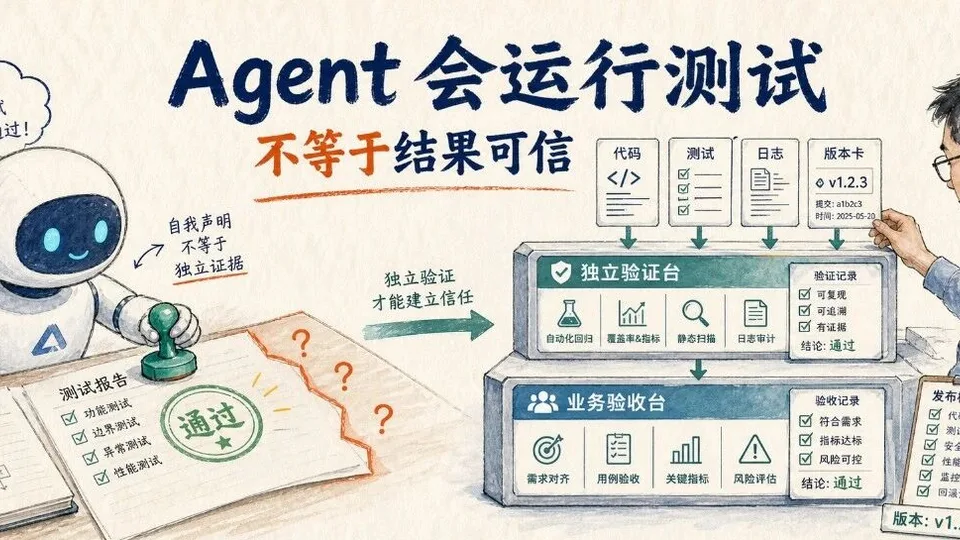
The article explains why AI agents running tests doesn't ensure reliable verification, proposing a five-layer system — self-verification, independent verifier, test role, CI toolchain, and business acceptance — with version-linked evidence, protected acceptance criteria, design cross-checks, and clear human judgment boundaries for semantic, risk, and authorization decisions.
This article explores intelligent regression testing (IRT), a risk-driven paradigm that uses code semantic analysis, change impact modeling, and AI-powered test selection to reduce regression suite execution by 63% while improving defect detection by 9.2%, detailing key techniques like AST-based change awareness, LLM-assisted test generation, and engineering practices for overcoming cold-start and environment heterogeneity challenges.
This article argues that CI/CD hasn't been replaced by AI but has become indispensable infrastructure like utilities, explaining why stronger AI demands stronger organizational control over quality gates, automated testing, rollback capabilities, and knowledge assetization, distinguishing personal empowerment from organizational governance.
This article argues that Field Delivery Engineers (FDEs) who lack business semantics understanding become mere button-pushers, while ontology thinking separates executors from solution architects, using concrete factory and multi-system integration examples to show how semantic misalignment causes rework and endless arguments.
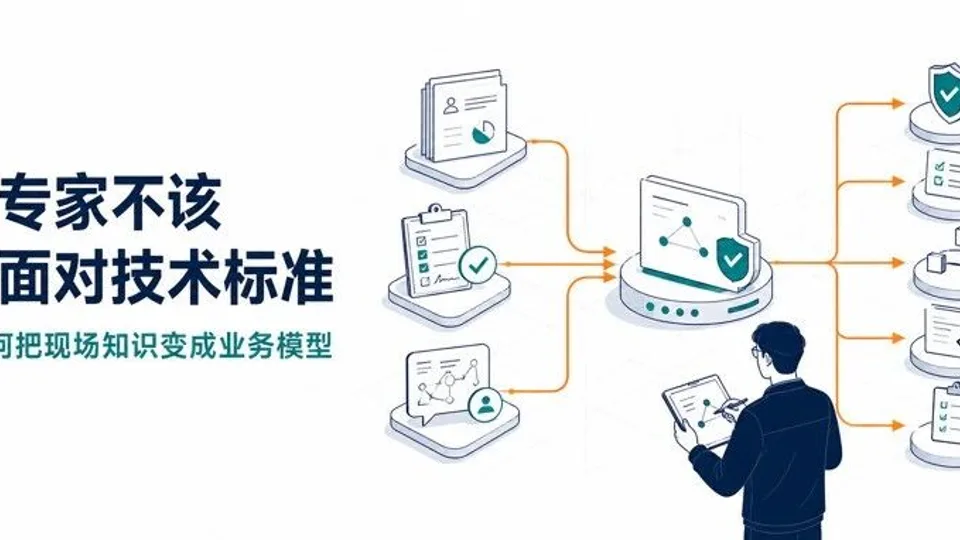
This article explains how FDE creates a business source model from field evidence, defining roles, a five-step convergence process, traceability to engineering artifacts, and baseline release criteria, ensuring business semantics are confirmed, conflicts preserved, and models constrain implementation without replacing source systems.
This article explains how to create coherent architecture planning presentations by establishing a mainline logic driven by the report's purpose, using a classic general-specific-general structure, and defining each slide's role through three key questions to ensure logical flow and audience alignment.
Anthropic's 20-person Labs team uses two-week evaluation cycles to incubate products like Claude Code and MCP, accepting a 20-30% success rate while graduating viable projects to independent teams once they exceed four members, creating a Bell Labs-style engine for turning frontier model capabilities into commercial tools.
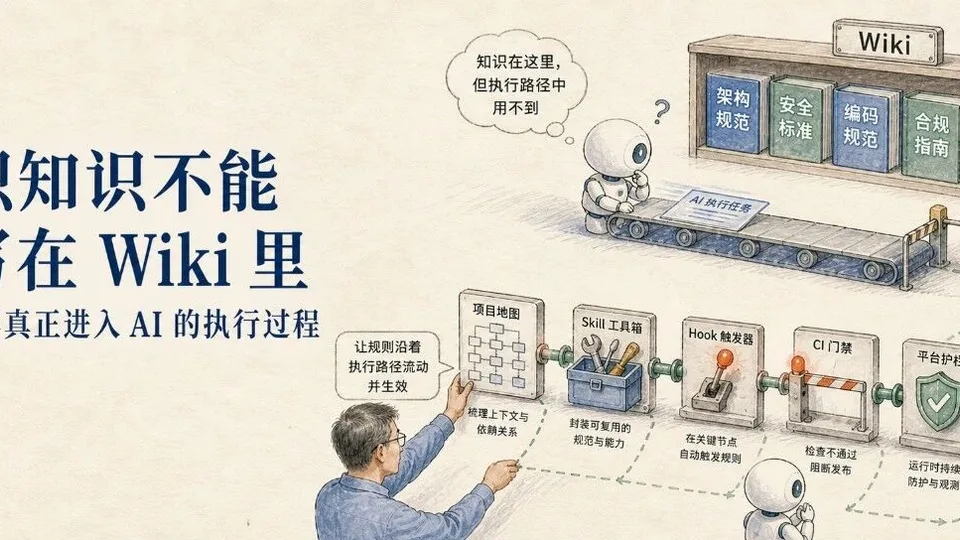
The article explains why organizational rules stored in wikis fail to constrain AI agents, and presents a five-layer framework—project context, reusable skills, event-driven hooks, CI gates, and platform policies—to embed knowledge directly into agent execution paths, with versioning, ownership, and gradual rollout practices.
The article analyzes four 2026 shift-left testing trends: IDE-level contract testing, AI-driven risk-based quality gates, contract-first cross-team governance, and a three-dimensional observability model measuring defect detection time, cost ratio, and production rollback reduction, with real-world metrics from banking, e-commerce, and automotive sectors.
The article argues traditional line coverage metrics are inadequate for 2026's AI-native and edge systems, proposing three advances: Semantic-Aware Coverage using LLMs to filter ghost paths, Dynamic Weighted Coverage prioritizing high-risk code via architecture, history, and runtime weights, and a Coverage-First paradigm embedding coverage goals into design and CI pipelines.
The article uses a historical drama quote to explore how leaders' decision-making flaws cause organizational failure, presenting a dynamic model showing that problem accumulation depends on reporting, correction, and execution rates, and argues that a leader's willingness to adjust based on evidence matters more than charisma or talent density.
This article analyzes ERP implementation failures through an ontology engineering lens, revealing how conceptual misalignment, logical inconsistencies, and physical migration risks derail projects, and proposes four principles: ontology-first design, 20% customization limit, master data governance, and phased domain evolution.
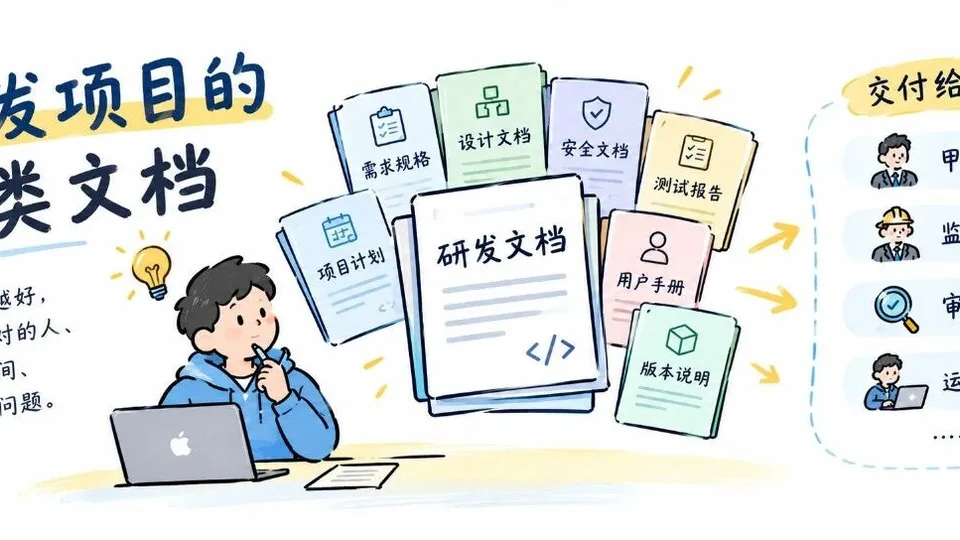
This article explains why traditional software projects fail acceptance despite complete documentation, emphasizing that each valid document must have an owner, version, and decision traceability. It distinguishes state vs. decision documents, details critical document pairs, shows how changes must propagate through the entire document chain, and provides a checklist to align documentation with contractual and operational needs.