This article enumerates ten uncommon, compaction‑related problems encountered in large‑scale Paimon deployments, explains their root causes—such as RPC timeouts, snapshot expiration, file corruption, and write conflicts—and provides concrete configuration tweaks and operational steps to resolve each issue.
The article analyzes how AI large models can transform data‑warehouse development through three practical scenarios—automated modeling, intelligent data cleaning, and ops optimization—while exposing five frequent implementation traps and offering concrete best‑practice recommendations to achieve cost reduction, efficiency gains, and quality improvement.
This article details Hisense's journey to create an AI‑ready multimodal data platform, covering the challenges of integrating diverse business systems, the shift from a Hadoop‑based architecture to a cloud‑native data lake, the JuData governance and development platform, and six practical scenarios that demonstrate unified ingestion, metadata management, rule‑based quality control, intelligent asset retrieval, and future AI‑driven DataOps capabilities.
This article examines how Alibaba Cloud’s MaxCompute platform has been transformed for AI workloads, detailing its multi‑layer architecture, multimodal data storage, SQL AI functions, the Python‑based MaxFrame framework, and real‑world deployments in large‑model preprocessing, autonomous driving, and multimodal image labeling.
The article shows that Polars, a query‑compiling DataFrame library, can accelerate ten‑million‑row GroupBy workloads by 6‑10× compared with Pandas, explains the underlying optimizer, Arrow columnar engine and Rust parallelism, provides a 20‑item syntax map, three real migration scenarios, streaming for out‑of‑memory data, and AI‑pipeline use cases, and offers a step‑by‑step migration guide.
This guide compiles the most frequent interview pitfalls for data warehouse roles, covering SQL join and aggregation errors, window function misuse, subquery versus CTE performance myths, dimensional modeling mistakes, SCD implementation traps, layered design issues, data quality handling, ETL traps, Hive and Spark performance questions, real‑time warehousing considerations, and effective interview strategies.
OPPO tackles explosive multimodal data growth by unifying metadata with Gravitino and boosting I/O performance using the open‑source Curvine cache, delivering a four‑layer data‑lake architecture that resolves data islands, metadata chaos, and bandwidth bottlenecks while achieving near‑commercial query speeds.
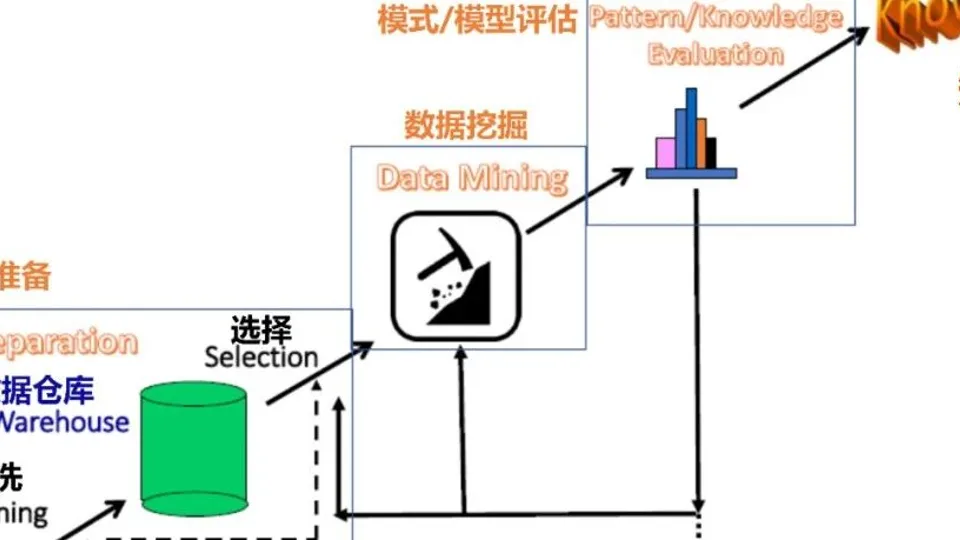
The article clarifies how data analysis, data mining, and data statistics differ in purpose, workflow, and methods, helping readers choose the right approach for business problems, predictive modeling, or scientific decision‑making while avoiding common pitfalls caused by concept confusion.
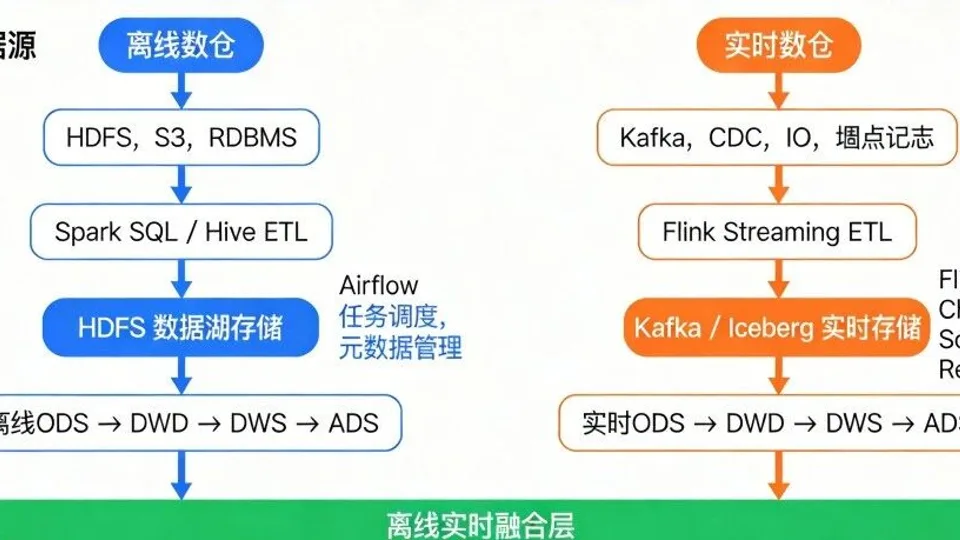
The article details Xiaohongshu's evolution from a simple ClickHouse‑based analytics layer to a Lambda‑enabled 2.0 stack and finally a Lakehouse‑based 3.0 architecture, showing how each iteration reduced infrastructure complexity, resource consumption and development effort by roughly one‑third while supporting trillions of daily events and AI‑driven use cases.
The article explains how a bitmap‑driven high‑table design (SelectDB) overcomes wide‑table storage bloat and latency to enable millisecond‑level crowd selection for tens of millions of users with hundreds of tag dimensions, while supporting dynamic tag expansion.
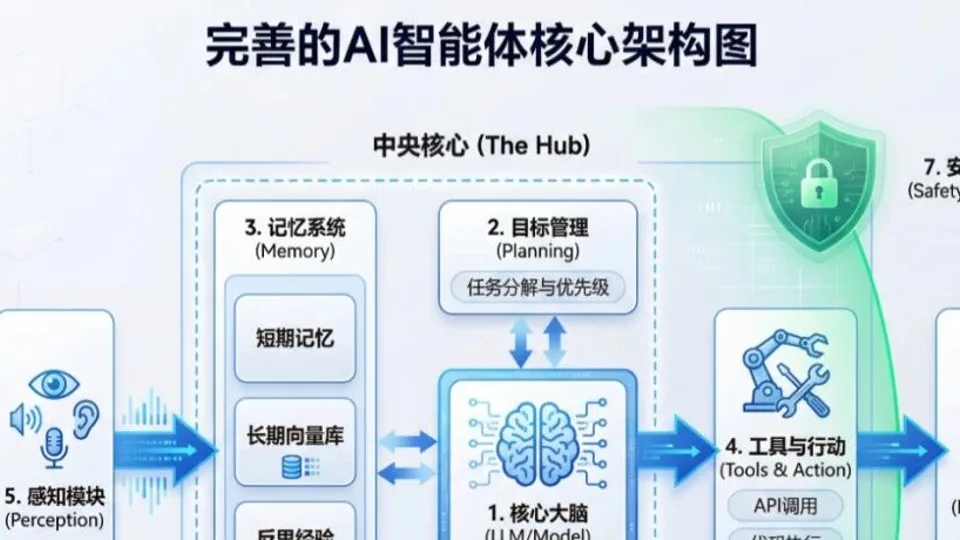
Facing a projected 85% of enterprises deploying internal agents within two years, Alibaba Cloud proposes an Agent-Ready big‑data AI infrastructure—comprising a unified data lake, real‑time processing, high‑dimensional vector retrieval, elastic model serving, and comprehensive security governance—that has already cut data‑development cycles from hours to 5‑10 minutes in internal model‑training and Taobao flash‑sale scenarios.
The article explains how Kuaishou partnered with Apache Hudi to overhaul its ODS‑based data lake, addressing latency, storage cost, and complexity for AI and BI workloads, detailing the evolution from mysql‑to‑hive to mysql‑to‑hudi 1.0 and 2.0, the resulting performance gains, cost savings, and future roadmap.
This article reviews two SIGMOD 2026 papers—MASC, which redefines multi‑query subgraph matching by maximizing shared computation to achieve up to two orders of magnitude speedup, and PrivHop, which combines 2‑hop labeling with secure multi‑party computation to enable privacy‑preserving shortest‑path queries on million‑node graphs with roughly a million‑fold reduction in runtime and communication.
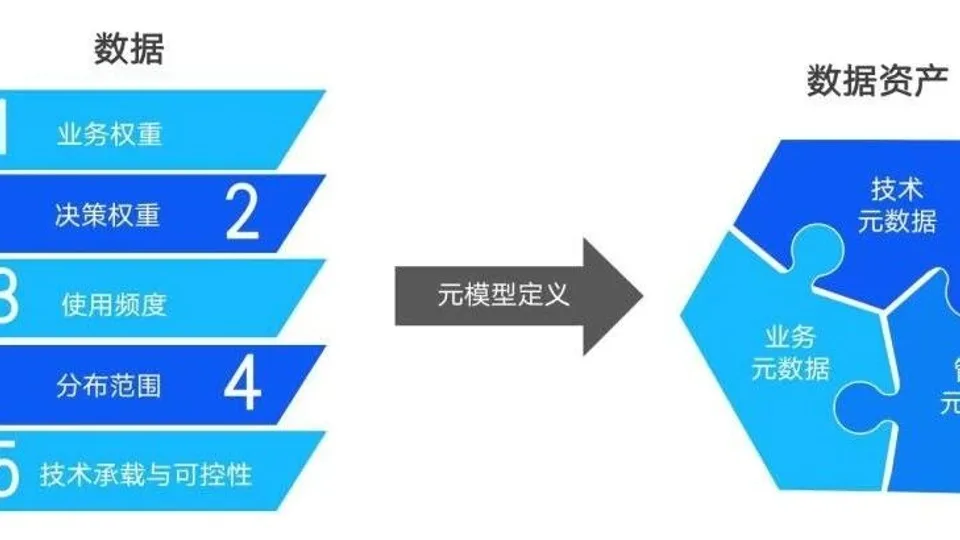
Most data‑governance initiatives fail not because of lacking technology but because they add friction; the article explains how companies mistakenly focus on rules, platforms, and processes, and offers a step‑by‑step approach—identifying high‑value tables, minimal metadata, targeted quality rules, and fast issue diagnosis—to make governance truly useful.
This playbook provides enterprise‑level data warehouse engineers, ETL developers, data modelers, and data‑team managers with a complete, logical, and actionable set of standards, processes, and best‑practice guidelines covering architecture, development principles, role responsibilities, end‑to‑end workflow, metadata, security, performance metrics, and team collaboration.
The article explains why a data middle platform is a prerequisite for AI initiatives, outlines its functional architecture—data asset, tool platform, and application layers—and details the technical stack from ingestion and storage to compute, governance, and service layers, providing concrete examples and best‑practice recommendations.
The article outlines the evolution of big data in banking, compares management models for heterogeneous data, describes the shift from data engineering to knowledge engineering, introduces LLMOps for high‑quality knowledge bases, and details how integrating AI and data can enable a “one‑sentence bank” that answers queries and executes tasks.
This article walks through the challenges of computing membership tiers in real time for trillion‑event traffic, explains why traditional batch pipelines fall short, and presents a complete production‑grade Apache Flink design—including event modeling, state layout, bucket aggregation, rule hot‑updates, exactly‑once guarantees, and operational monitoring.
The article examines the challenges of multimodal data in modern lakehouses and presents a three‑tool stack—Gravitino, Daft, and Lance—that provides unified metadata, distributed multimodal compute, and high‑performance storage, while detailing security governance, integration paths, and future directions.