This article explores data quality challenges in real-time data warehouses, covering timing agreements for late-arriving data, reconciliation techniques using Flink and Paimon, SQL-based checking strategies, alerting with actionable details, and iterative quality validation processes.
Tencent Cloud's big data platform introduces computing intelligence as a unified paradigm for structured SQL and multimodal AI workloads, detailing engines Meson, Xpark, TCRay, and ES that enable GPU-accelerated SQL, distributed multimodal processing, unified CPU/GPU scheduling, and evaluatable RAG for agent-ready data platforms.
This article presents a complete Python workflow for Sentinel-2 L2A imagery, covering automated download, preprocessing, 47 remote sensing indices calculation, index applications, and GB/T 21010-2017 compliant 8-class land cover classification with a PySide6 visualization interface.
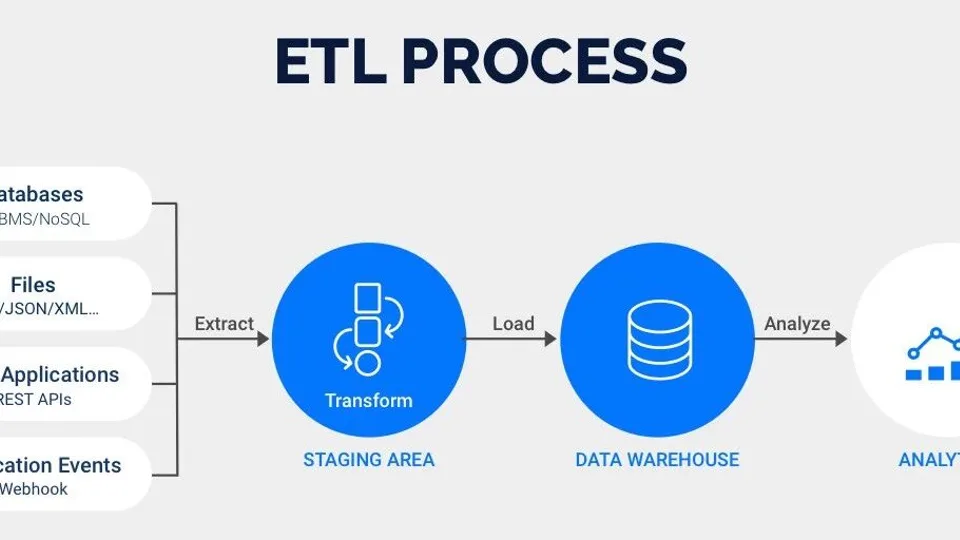
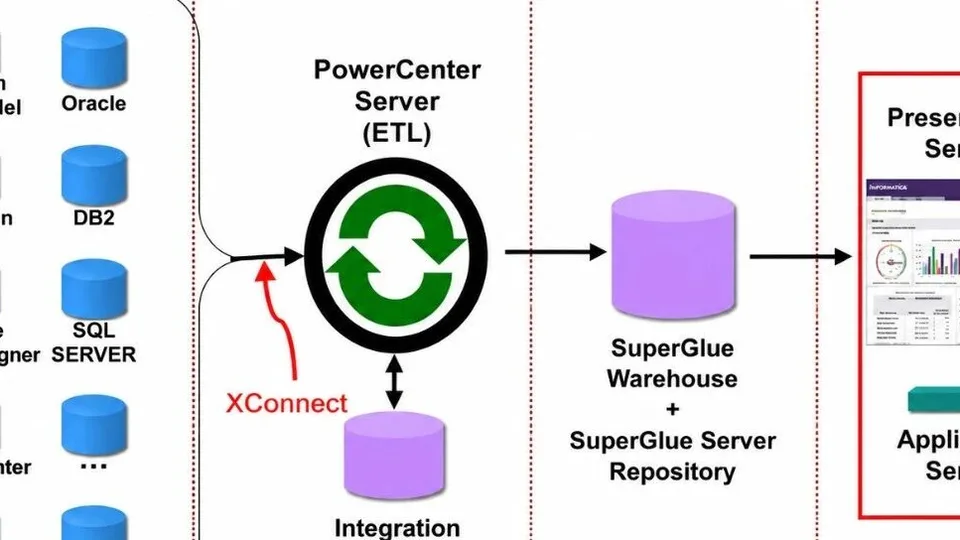
This article explains the core differences between ETL, ELT, and ETLT data integration patterns, emphasizing that the key distinction is where transformation occurs—before or after loading—and provides five decision criteria for choosing the right approach based on data latency, raw data retention, compute costs, and business logic volatility.
This article details a three-stage big data pipeline—collection, computation, and application—used by a ride-hailing platform to build user and vehicle profiles, enable intelligent order matching that boosts click-through rates by 30%, and create a self-reinforcing data flywheel that continuously improves service quality.
This article explains the eight core modules of data governance—standards, metadata, catalog, quality, master data, assets, lineage, and security—detailing how each solves specific problems and why they must integrate into a continuous lifecycle loop rather than exist as isolated tools.
DataLeap consolidates fragmented metric definitions, business rules, and SQL templates into a governed, AI-understandable knowledge base, enabling conversational analytics with 90% recall and stability through semantic integration, layered knowledge engines, and an evaluatable data flywheel.
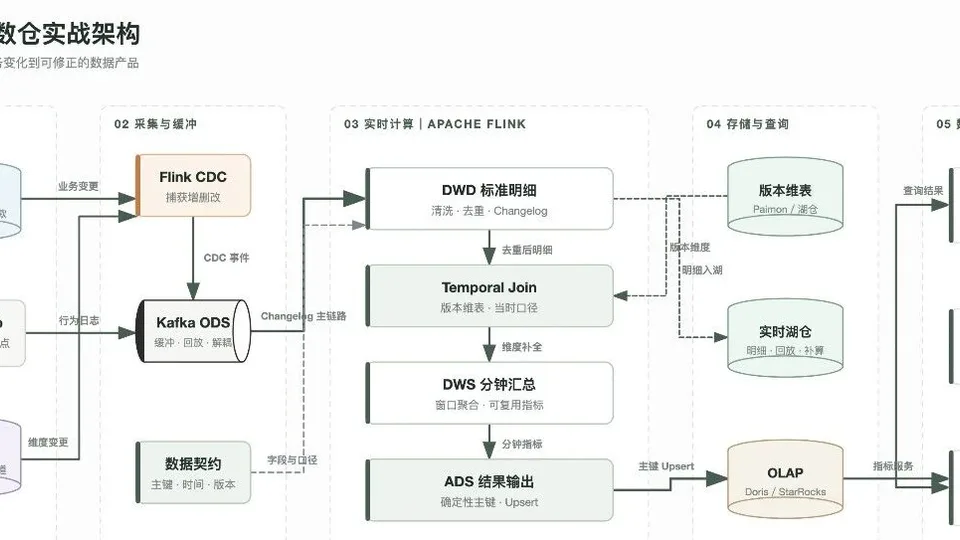
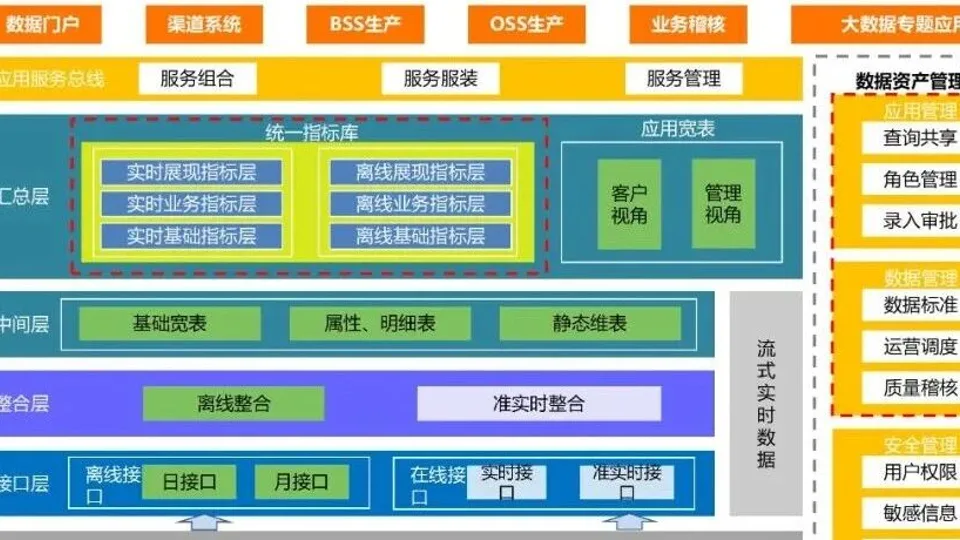
This article details the end-to-end architecture of a real-time data warehouse, covering data ingestion via CDC and Kafka, stream processing challenges like deduplication and event-time handling, layered modeling (ODS/DWD/DWS/ADS), unified metric definitions, and critical production monitoring for latency, lag, data reconciliation, and consistency with offline results.
Xinfēi Technology, a fintech data‑intelligence provider, cut its multi‑country data‑warehouse rollout from three months to about two weeks by adopting Alibaba Cloud’s DataWorks Data Agent, which unified data ingestion, task development, quality configuration, lineage analysis and release verification, introduced Skills and an enterprise semantic layer, and achieved up to six‑fold efficiency gains across ODS, DWD, DWS, DQC and reporting.
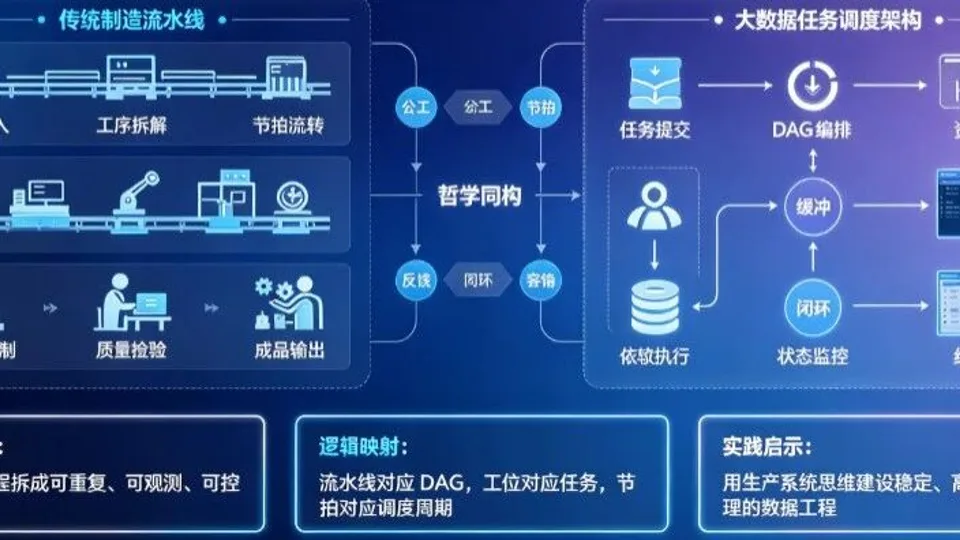
This article reveals the deep structural isomorphism between manufacturing assembly lines and data pipeline orchestration, mapping five shared design philosophies, a 15-dimension logical correspondence, bidirectional lessons, and six practical mental models for data engineers to adopt factory-floor thinking.
This article argues that enterprise Data Agents require a seven-layer data architecture—source, preparation, object, semantic, permission, execution, and verification—rather than simply connecting databases to LLMs, detailing how each layer resolves ambiguity, ensures stability, enforces security, and enables trustworthy analytical reasoning.
A data developer with two years each in B2C and B2B e-commerce compares how user focus, metric priorities, team structures, and data warehouse modeling differ between consumer-facing and enterprise-facing products, illustrating with concrete project examples like APP health dashboards and lead allocation systems.
The article explains that metric management is not just cataloging metrics but governing their full lifecycle—business definitions, calculation rules, responsibility assignment, data lineage, and versioned change control—to ensure metrics are trustworthy, traceable, and sustainably governed across business, data, and technical layers.
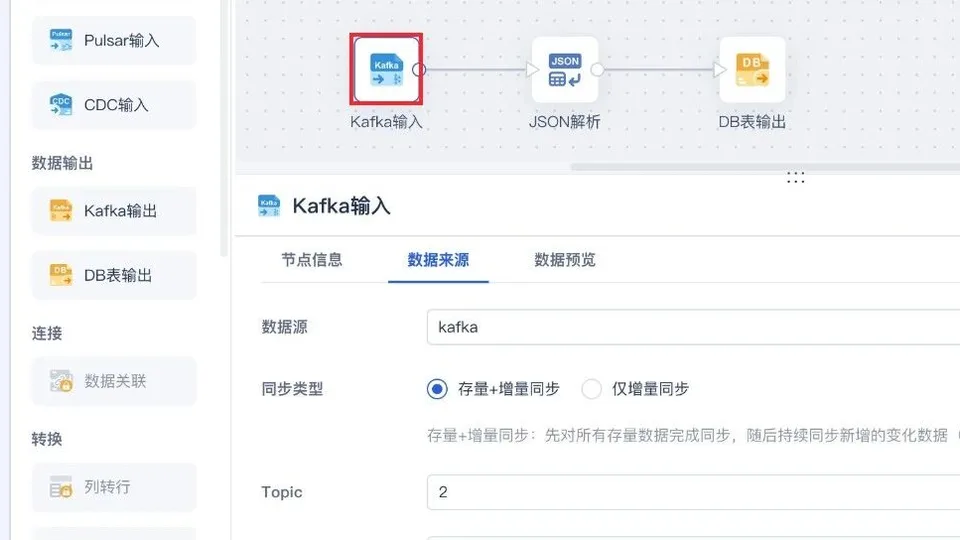
This article details how to build a production-ready real-time data warehouse using Flink, covering CDC ingestion, event-time processing, dimension joins, upsert aggregation, state TTL, checkpoint tuning, exactly-once verification, and a pre-launch checklist for reliability.
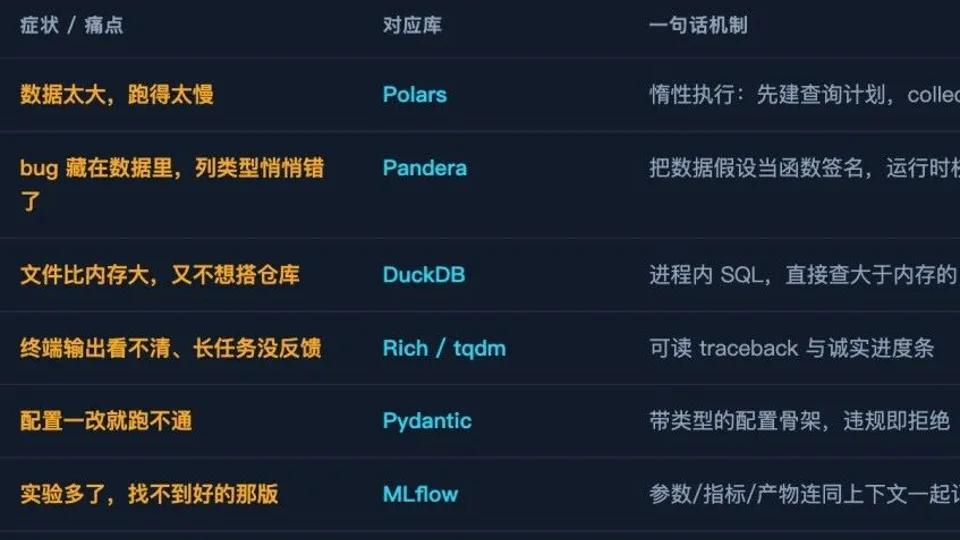
The article presents a curated list of ten Python libraries—Polars, Pandera, DuckDB, Rich, Pydantic, MLflow, tqdm, pyinstrument, RapidFuzz, and sqlite-utils—each chosen for its ability to eliminate specific bottlenecks, reduce errors, and turn guesswork into verifiable steps in data workflows, complete with concrete code examples and practical trade‑offs.
Baidu's PFS L3 rearchitects parallel file storage for AI production loads with a hybrid data engine (Aries + BlockServer), scalable metadata foundation (MetaDB), high-performance client (RapidFC), RDMA network tuning, transparent tiering to object storage, and AgenticFS for multi-tenant Agent workloads, proven in RL training saving 30k GPU-hours weekly.
The article explains why real‑time data‑warehouse projects often fail in production and presents a complete, production‑ready solution that layers ODS, DWD, DWS and ADS using Flink CDC to capture MySQL changes, Kafka for buffering and replay, and Doris for OLAP storage, with detailed guidance on architecture, state handling, fault‑tolerance and operations.
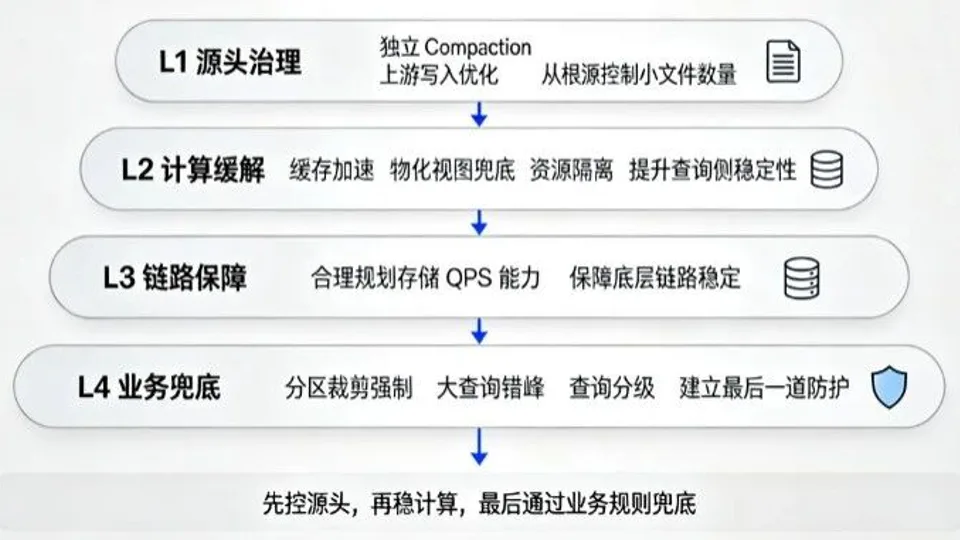
This article analyzes why identical StarRocks queries on Paimon external tables run fast in early morning but slow dramatically during daytime peaks, identifying five layered root causes from file fragmentation to storage pressure, and provides a systematic troubleshooting methodology plus a four-layer optimization framework covering source governance, compute caching, storage scaling, and business scheduling.
This article explains how data governance establishes reliable data standards and quality to support metrics library planning, while metrics libraries define business-driven KPIs that guide governance priorities, creating a virtuous cycle where governance ensures metric accuracy and metric outcomes measure governance effectiveness, ultimately maximizing data value.
This article systematically analyzes Apache Fluss's four merge engines—Default (LastRow), FirstRow, Versioned, and Aggregation—covering core principles, supported operations, behavior examples, applicable scenarios, and a production selection guide for real-time data warehousing.