This article dissects a real‑world e‑commerce deployment failure, identifies common misconfigurations in Kubernetes Deployments, and presents a comprehensive, production‑ready guide that covers controller principles, rolling‑update sequencing, readiness semantics, capacity planning, HPA tuning, graceful shutdown, progressive delivery, GitOps integration, and a checklist of best‑practice patterns to achieve zero‑downtime releases capable of handling million‑level concurrent traffic.
The article explains why 502/499 errors still appear during rolling updates, analyzes the misalignment between traffic removal and process exit, and provides a production‑grade, four‑stage termination protocol with concrete Kubernetes configurations, Go and Spring implementations, observability metrics, and validation practices.
This comprehensive guide walks you through essential kubectl commands, the four‑layer operational model, control‑plane components, deployment strategies, pod debugging, networking, storage, RBAC, high‑concurrency tuning, and GitOps automation, turning everyday Kubernetes tasks into a production‑grade engineering workflow.
This article presents a step‑by‑step guide to designing and implementing a production‑grade Kubernetes platform with GitOps, observability, capacity governance, fault‑injection, and SRE practices, showing how to achieve unified delivery, reliability, and low‑cost operation for high‑concurrency business services.
This article walks through a real‑world performance bottleneck on a high‑traffic e‑commerce platform, explains step‑by‑step deep tuning of Nginx Ingress Controller, compares it with Envoy Gateway, and provides concrete configurations, benchmark results, monitoring rules, and best‑practice recommendations for Kubernetes Ingress optimization.
This tutorial walks through cloning Docker's official Todo App sample, explains the project layout, provides multi‑stage Dockerfiles for a Node.js backend and a Vue/React frontend with Nginx, configures Nginx for SPA routing and API proxy, defines a docker‑compose stack, and shows how to build, run, and scan the images with Docker Scout.
This guide outlines Docker's three security pillars—image, runtime, and network—by recommending official images, regular updates, vulnerability scanning, non‑root users, read‑only filesystems with tmpfs, capability dropping, secrets management, and tools like Docker Scout and Trivy, followed by a concise checklist.
This article demonstrates how to apply Docker's official recommendations—multi‑stage builds, build‑cache mounts, and non‑root users—to create production‑grade images, reduce layer count, and cut CI/CD build times roughly in half.
This article explains how Docker can streamline local development by isolating environments, using Docker Compose for multi‑service setups, enabling instant code changes with bind mounts or the official develop:watch feature, and simplifying database connections and common dev commands.
This article explains Docker’s default bridge, host, and none networks, shows how containers on the same bridge can reach each other via IP or service name using Docker’s embedded DNS, demonstrates custom network creation for isolation, covers port mapping, host access, and troubleshooting techniques.
This guide explains why container file systems are transient, compares three Docker storage methods, and demonstrates how to use named volumes—both via the CLI and docker‑compose—to ensure data remains intact after removing containers, with a MySQL persistence example.
This article shows how to shrink Docker images and speed up builds by using multi‑stage builds, ordering instructions for layer caching, fine‑tuning .dockerignore, merging RUN commands, picking lightweight base images, and running containers as a non‑root user, with concrete code examples and build‑time measurements.
This comprehensive guide walks operators through the entire Kubernetes workflow from creating a Deployment to exposing a Service, explaining core resources, control loops, scheduling, networking, rolling updates, troubleshooting steps, best‑practice configurations, performance tuning, and security hardening.
This guide walks through installing Docker Desktop on macOS, verifying the installation, optionally configuring registry mirrors, then demonstrates running the hello‑world image, launching an interactive Ubuntu container, and starting NGINX in detached mode with port mapping, explaining each command and flag.
The article introduces Code Container, an open‑source Docker‑based solution that gives AI coding assistants like Claude Code, OpenCode, and Codex full root and network privileges within isolated containers, explains its lightweight design, installation steps, workflow, and how it boosts productivity while maintaining system safety.
This guide walks through deploying a demo application on Kubernetes, then demonstrates how to implement canary releases and blue‑green deployments using Nginx Ingress annotations for header‑based, IP‑based, and weight‑based traffic splitting, complete with YAML manifests and verification commands.
This comprehensive Docker guide explains the technology’s rapid adoption in China, walks through installation, image management, data handling, networking, security, underlying Linux mechanisms, Docker Compose, and Mesos integration, providing step‑by‑step examples for ops engineers and backend developers.
Kube-OVN v1.16.0 introduces major enhancements such as BGP/EVPN‑enabled VPC egress, a tiered SecurityGroup with expanded priority range, per‑NIC DHCP control, multi‑network NetworkPolicy annotations, full‑NIC hot migration for KubeVirt, static IP/MAC per interface, and numerous reliability, performance, and Helm chart upgrades.
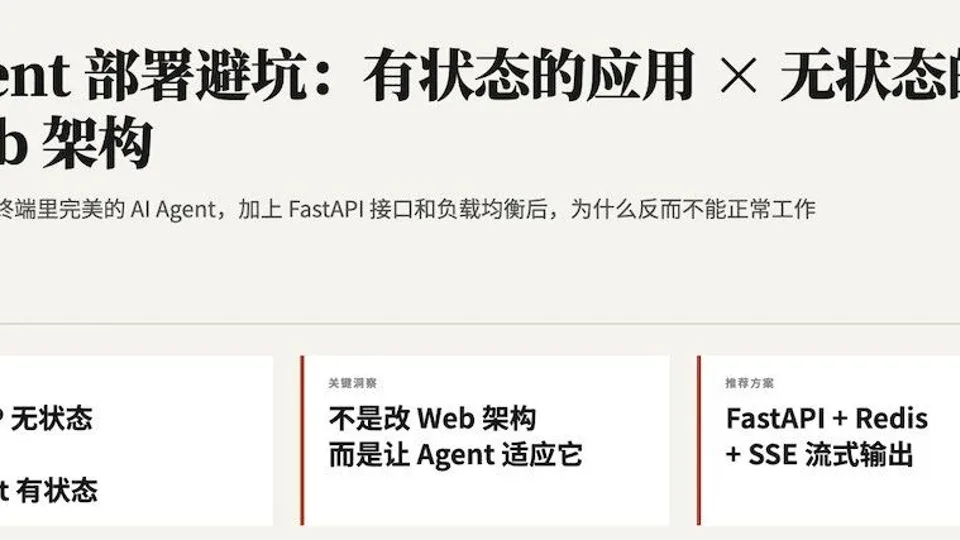
This article analyzes the fundamental conflict between stateful AI agents and the inherently stateless, distributed nature of modern web services, explores time, state, and execution model mismatches, and presents a practical Agent‑as‑API solution using FastAPI, Redis, SSE, and Kubernetes to achieve scalable, fault‑tolerant deployments.
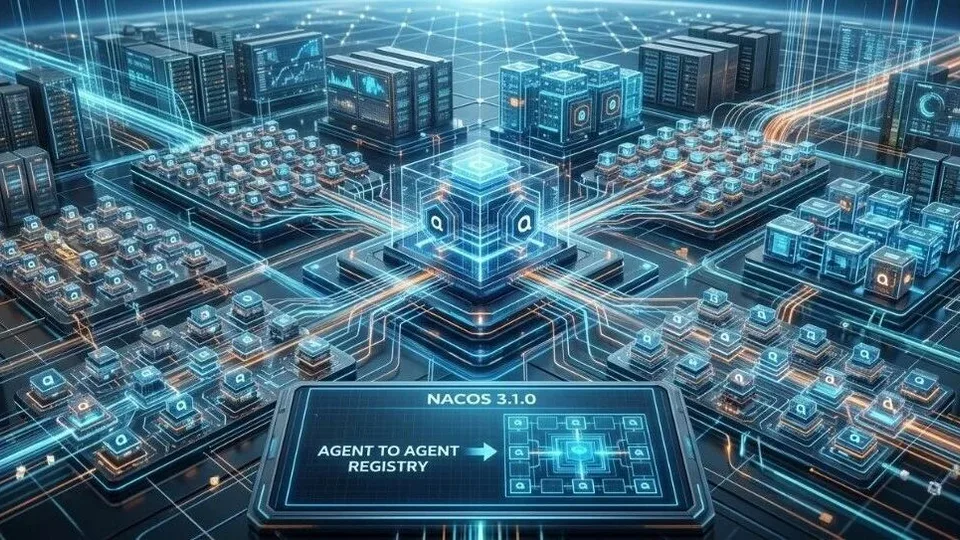
Nacos 3.1.0 adds an A2A Registry that treats AI Agents as first‑class services, offering namespace isolation, version control, and automatic discovery so teams can govern, version, and scale agents just like traditional microservices.