This article explains how StarRocks queries Paimon Variant data, covering the differences between regular Parquet JSON and Variant, the three-phase read architecture, Shredding optimization for hot paths, practical SQL examples using get_variant_* functions, and a decision framework for choosing between JSON, Plain Variant, Shredded Variant, and formal typed columns.
Sonar-TS introduces a training-free framework for natural language querying of massive time series databases, defining the new NLQ4TSDB problem, creating the NLQTSBench benchmark, and using a search-then-verify approach with symbolic indexing and code-based verification to find pattern matches across millions of data points.
OpenSearch has evolved from an AWS fork of Elasticsearch into a Linux Foundation-hosted, Apache 2.0-licensed search platform with architectural innovations like segment replication, read-write separation, GPU-accelerated vector indexing, and native gRPC, delivering 9.5x query performance gains while offering full-stack free features and vendor-neutral governance.
Hologres evolves from a real-time data warehouse into an AI data infrastructure, integrating multimodal data via Object Tables and Dynamic Tables, providing AI Functions for hybrid search within SQL, an AI Assistant for automated warehouse operations, and a long-term memory service for cross-session agent recall.
This comprehensive guide covers MySQL read-write separation from fundamentals to production implementation, including master-slave replication principles, replication lag causes and three enterprise-grade solutions, one-master-multi-slave architecture patterns, MHA automatic failover, Sharding-JDBC middleware configuration, and five critical production pitfalls to avoid.
The article examines a MySQL experiment where three transactions (A, B, C) interact on the same row, showing why transaction B’s UPDATE on a primary‑key field proceeds without waiting while transaction C’s UPDATE of the primary key blocks, due to the interplay of row‑level locks, gap locks, and the internal delete‑plus‑insert transformation of indexed updates.
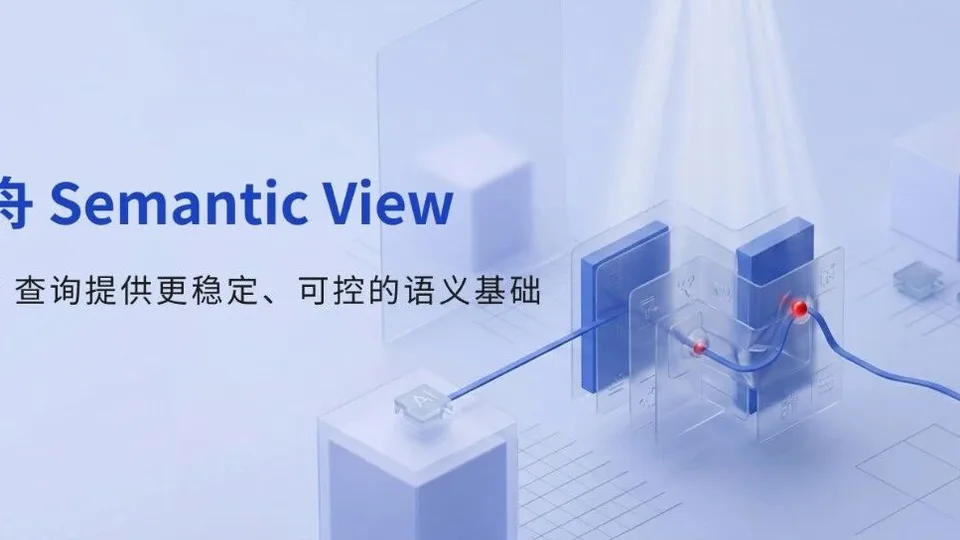
This article explains why syntactically correct AI-generated SQL often fails to reflect business logic, introduces StarRocks' Semantic View as an executable 'information contract' that defines metrics, relationships, and synonyms, and demonstrates with a fishing gear example how it enables deterministic SQL expansion for both AI agents and BI tools.
Many developers write messy SQL or generate slow reports because they don’t know built‑in functions; this guide compiles the most frequently used string, date, math, and conversion functions—complete with ready‑to‑copy examples—to handle 99% of everyday data‑processing scenarios.
This article explains what MySQL sharding and partitioning are, when they are necessary, outlines four splitting patterns, details four sharding key strategies, shows a production‑ready Sharding-JDBC configuration, and discusses five common distributed challenges with practical solutions.
OpenSearch, originally a fork of Elasticsearch, has become an independent Apache‑2.0‑licensed search and analytics platform governed by the Linux Foundation; its five‑layer architecture, segment replication, read/write separation, GPU‑accelerated vector indexing, and strong community growth deliver up to 9.5× query speed and make it a compelling choice over Elasticsearch.
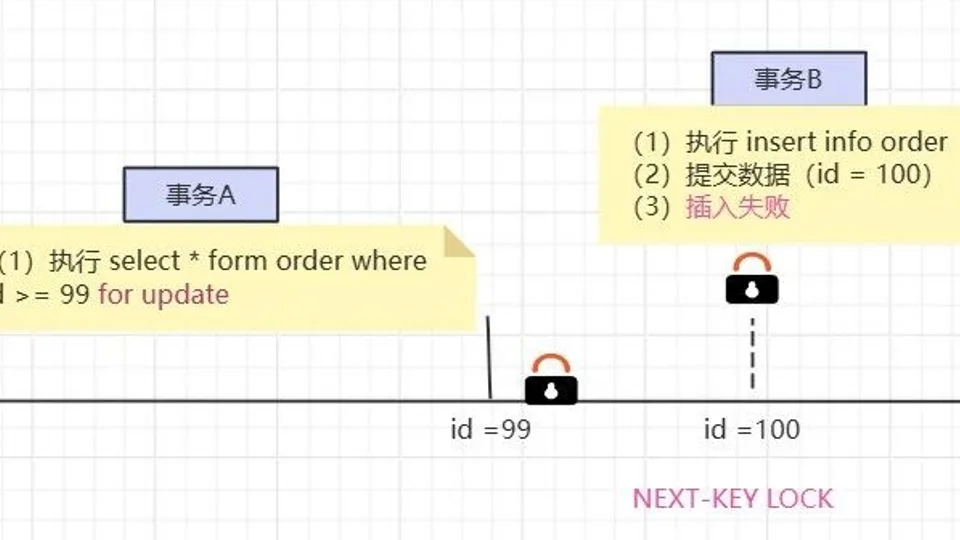
This article explains how MySQL's Repeatable Read isolation level prevents phantom reads by combining MVCC snapshot reads for consistent views and Next-Key Locks (record + gap locks) to block inserts during current reads like UPDATE, detailing the ReadView mechanism, version chains, and a concrete phantom read scenario.
The article explains how the old pattern of GET‑ing an entire JSON string from Redis, deserializing it in Java, modifying a single field and writing it back is inefficient and error‑prone, and shows how Spring Data Redis 4.2’s RedisJsonTemplate lets you update or read individual JSON paths directly, reducing code, network traffic and race‑condition risks.
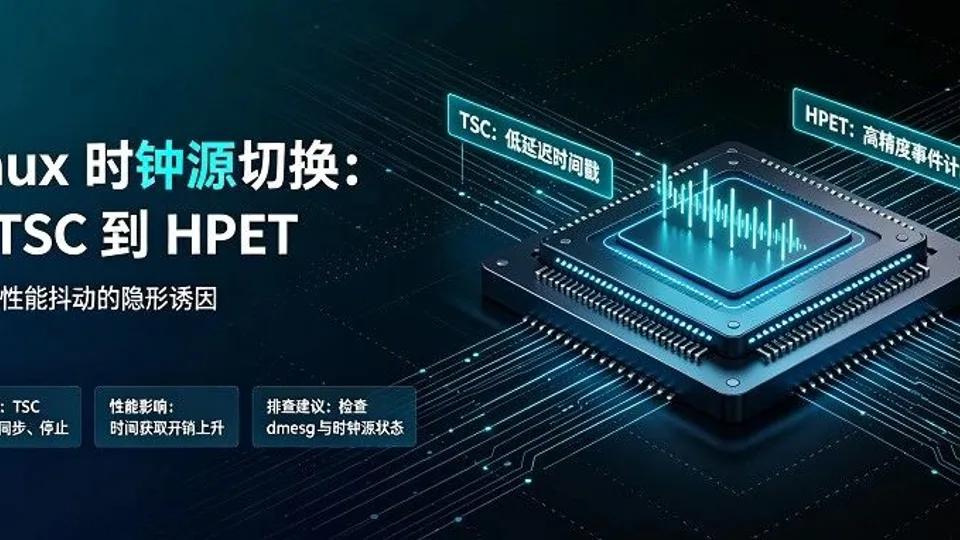
This article explains why Linux kernels automatically switch from the high-performance TSC clock source to the slower HPET timer, details the technical differences between them, quantifies the 10-50% database throughput drop caused by the switch, and provides step-by-step troubleshooting commands to detect and resolve the issue.
The article recounts how an API that originally used OFFSET pagination suffered 2‑3 seconds response time, and after rewriting the query to Keyset (Seek) pagination—adding a secondary sort key for stability and exploring cursor pagination, index‑only OFFSET, and materialized views—the same endpoint now responds in under 200 ms, with detailed benchmark comparisons.
This guide explains what the MySQL slow query log records, why it is essential for production, when and how to enable it temporarily or permanently, key parameters to tune, how to simulate slow queries, interpret log fields, use mysqldumpslow for aggregation, follow a step‑by‑step optimization pipeline, and avoid common pitfalls.
The article explains why ElasticSearch excels at full‑text search and analytics while MySQL remains the reliable storage engine, compares their underlying data structures, outlines real‑time write behavior, lists scenarios where ES should not be used, and describes a production double‑store architecture with asynchronous sync.
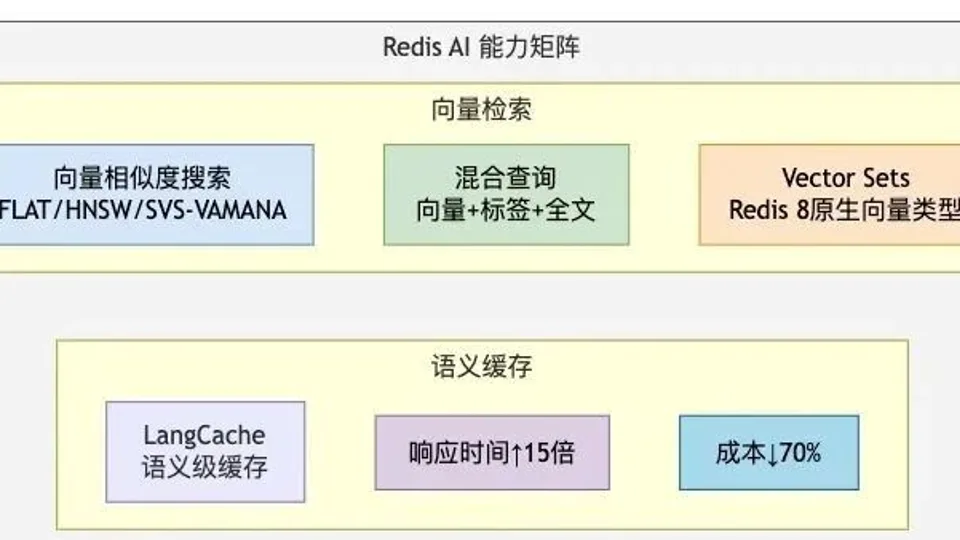
This article details Redis's evolution into a comprehensive AI data infrastructure, covering its four core capabilities—vector search with hybrid queries, native Vector Sets data type, LangCache semantic caching for 70% LLM cost reduction, and Redis Iris context engine for AI agent memory—with technical implementations, performance benchmarks, and use-case recommendations.
This comprehensive guide covers nine essential ElasticSearch query types including match_all, term, terms, range, prefix, wildcard, regexp, bool compound queries, and fuzzy queries, with practical code examples for each method.
The article outlines GoldenDB’s evolution from a secure, commercial‑grade core database to an AI‑enabled, multi‑modal data platform, detailing its architecture, dual "DB for AI" and "AI for DB" strategy, autonomous operation framework, and the broader shift toward databases as intelligent, self‑evolving infrastructure.
The article explains that MySQL’s EXPLAIN command acts as a SQL health check, detailing each of its 12 fields—especially type, key, rows, and Extra—while providing real‑world examples, a step‑by‑step diagnostic workflow, and common pitfalls to help developers reliably tune and troubleshoot queries.