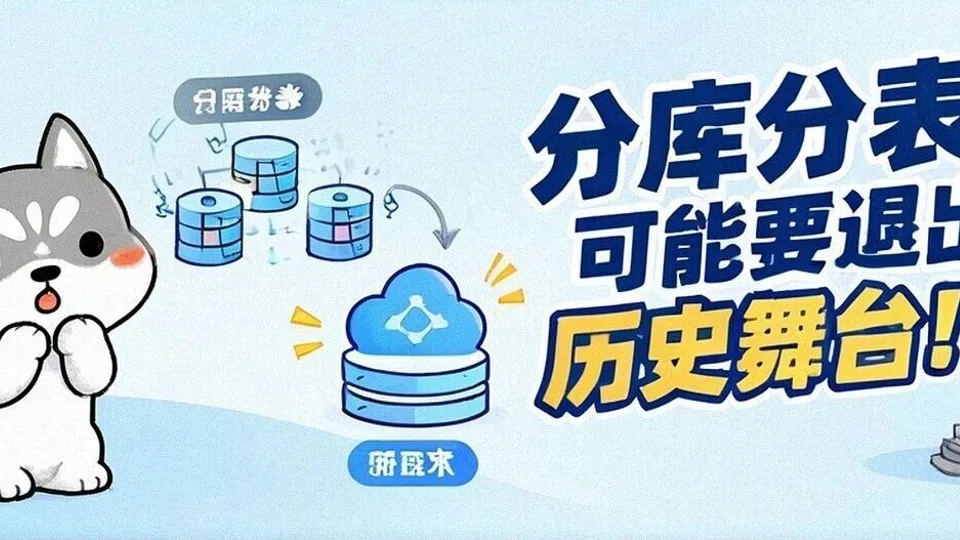
This article details the design and implementation of a custom database sharding component built on MyBatis plugin architecture, covering sharding strategies, read/write policies (double-write/double-read), SQL parsing and rewriting for COUNT/SUM/ORDER BY, routing algorithms with distributed locks, parameter mapping handling, and solutions to migration challenges like ORDER BY alias errors and aggregate query merging.
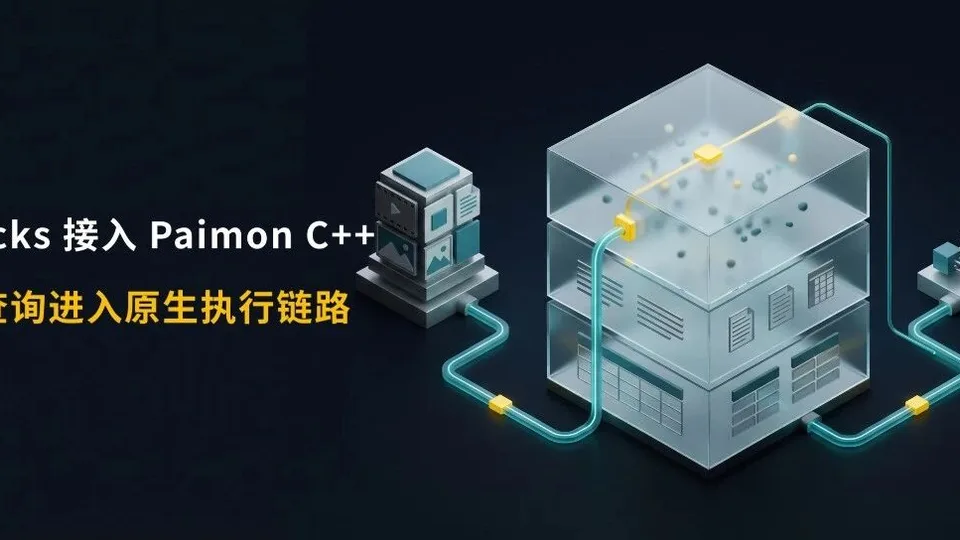
StarRocks integrates Paimon C++ (paimon-cpp) to enable native C++ execution paths for querying Apache Paimon tables, eliminating JNI overhead, supporting primary key merges and delete handling, and achieving 1.4-3.4x speedups in benchmarks while reusing StarRocks' caching, memory management, and query profiling.
TypeSafe AI's Jev model integrates into SQL databases and data pipelines for high-volume semantic classification, achieving 100K classifications in 40 seconds at $0.50, but Dataiku tests reveal a 26% miss rate on critical routing decisions, highlighting trade-offs between speed, cost, and accuracy for production use.
This guide provides a systematic methodology to diagnose and resolve MySQL replication lag spikes, covering evidence collection, replication status analysis, parallel replication tuning, large transaction mitigation, topology isolation, safe configuration changes, replica rebuild procedures, and proactive monitoring setup.
A comprehensive reference of 100 practical T-SQL commands for SQL Server 2016-2022 DBAs, organized into ten categories covering instance basics, space management, session analysis, locking, performance tuning, indexes, Always On, backup/recovery, permissions, and daily health checks.
StarRocks adopts Apache Paimon's C++ implementation (paimon-cpp) to replace JNI calls for primary-key merges and delete-vector handling, cutting cross-language overhead and reusing StarRocks' cache, memory management, and Query Profile; benchmarks show 1.4–3.4× speedups on primary-key counts and wide-table aggregations.
This comprehensive guide details 20 critical technical checks for migrating from MySQL 5.7 to 8.0, covering authentication plugins, character sets, reserved words, strict SQL modes, replication setup, backup validation, and cutover procedures with executable SQL and bash examples.
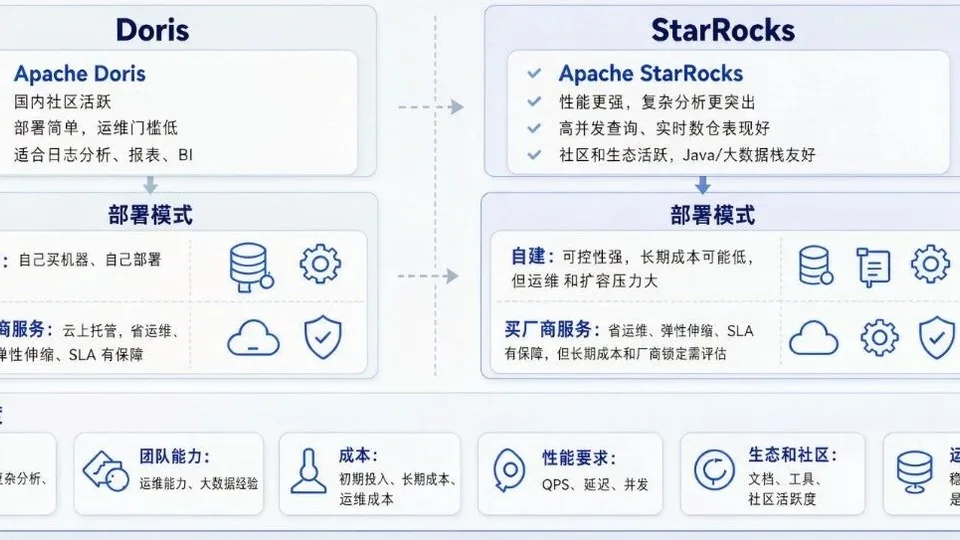
This article provides a practical decision framework for choosing between Apache Doris and StarRocks for real-time OLAP workloads, comparing their architectural origins, licensing, optimal use cases, and guiding teams through self-hosted versus managed deployment decisions based on organizational capacity and query profiles.
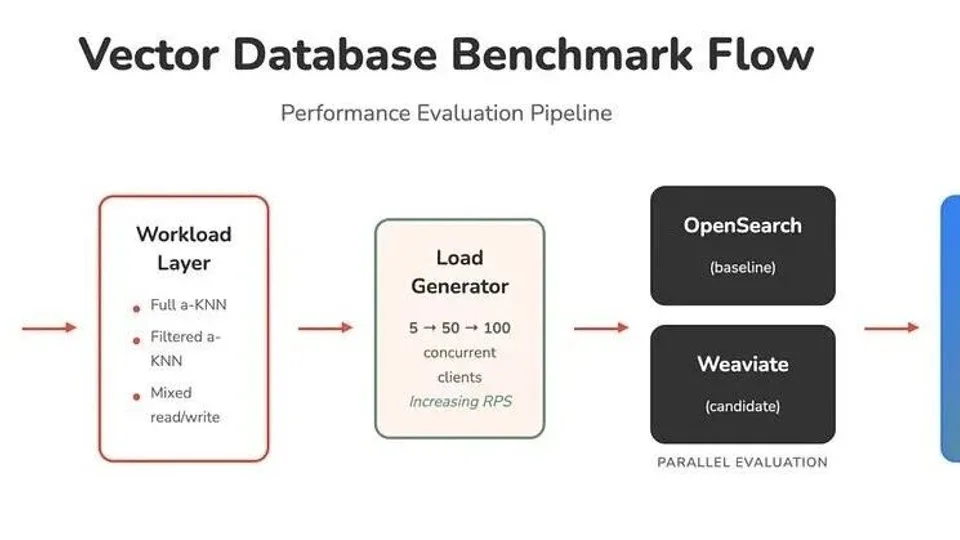
Booking.com benchmarked OpenSearch and Weaviate with 100M embeddings across pure KNN, filtered search, and mixed read/write workloads, finding Weaviate's integrated storage-engine design delivered stable low latency at high concurrency and writes, cutting compute costs by 40%.
The article explains why OFFSET/LIMIT pagination causes full table scans and linear performance degradation with large offsets, demonstrates a 100k-row benchmark where cursor-based pagination using primary keys runs in 0.01s versus 12.80s for OFFSET, and recommends keyset pagination for scalable systems while noting limitations for tables without unique sequential columns.
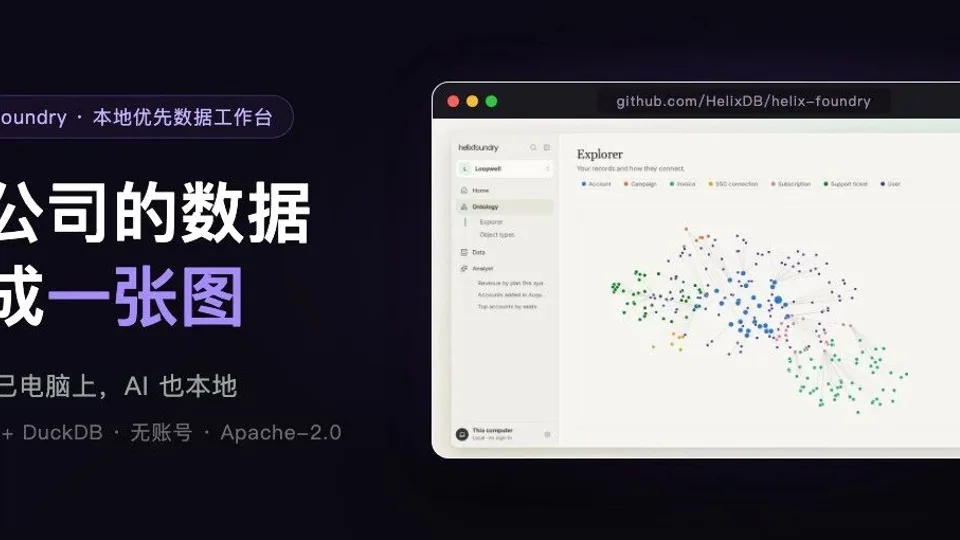
Helix Foundry connects Postgres, Stripe, WorkOS, and PostHog into a unified ontology graph on your laptop, runs analytical queries via DuckDB, and answers questions with a local LLM — all without accounts, deployment, or cloud dependencies.
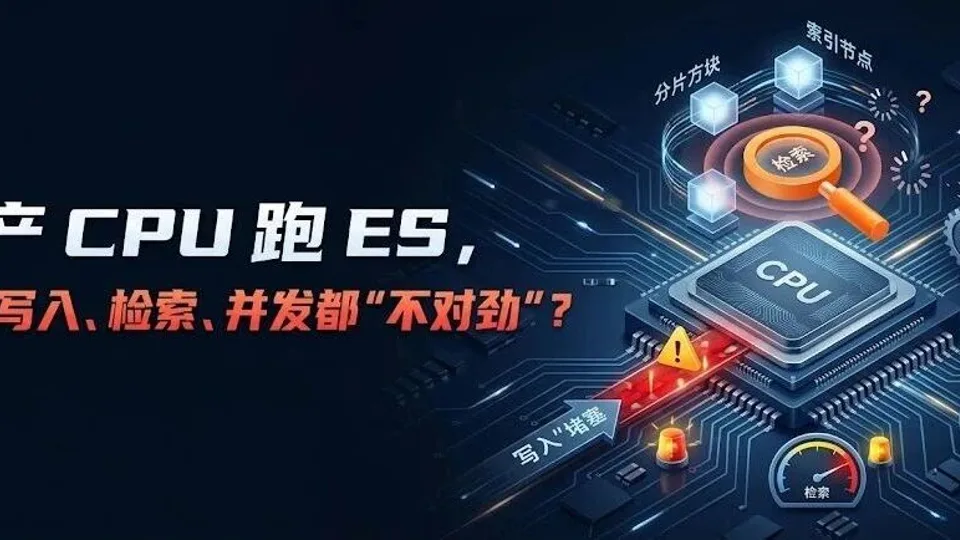
The article analyzes why Elasticsearch underperforms on Chinese ARM-based CPUs — citing weak single-core performance, complex NUMA topologies, JDK selection pitfalls, version compatibility gaps, and unfair benchmarking — and evaluates Easysearch as a supported alternative with vendor-backed compatibility across major domestic chips and OSes.
MySQL 9.0 introduces a native VECTOR data type for storing embeddings, while MySQL AI (enterprise) and HeatWave GenAI (cloud) add in-database semantic search, RAG with citations, and AutoML for classification—all accessible via SQL, enabling AI workloads without moving data out of the database.
This article explains how database indexes accelerate queries by leveraging sorted data structures and binary search, detailing disk I/O mechanics, clustered vs. non-clustered indexes, index trade-offs on write performance, and common SQL optimization pitfalls like OR conditions and leading wildcards that cause index invalidation.
This article explains MySQL full-text search using inverted indexes as an alternative to LIKE % queries, covering index creation, natural language, boolean, and query expansion modes with syntax examples and performance considerations.
WeChat uses SQLite for chat storage because its embedded, zero-process design fits mobile constraints; ACID transactions and B+tree indexes ensure message durability and fast pagination; WAL enables concurrent reads/writes; SQLCipher encrypts per-device; sharding by session mitigates single-writer limits, offering a blueprint for local-first apps.
This article explains Lance's Stable Row ID feature, which assigns persistent logical identifiers to rows so they survive compaction and updates, reducing index maintenance costs at the expense of extra mapping storage and lookup overhead.
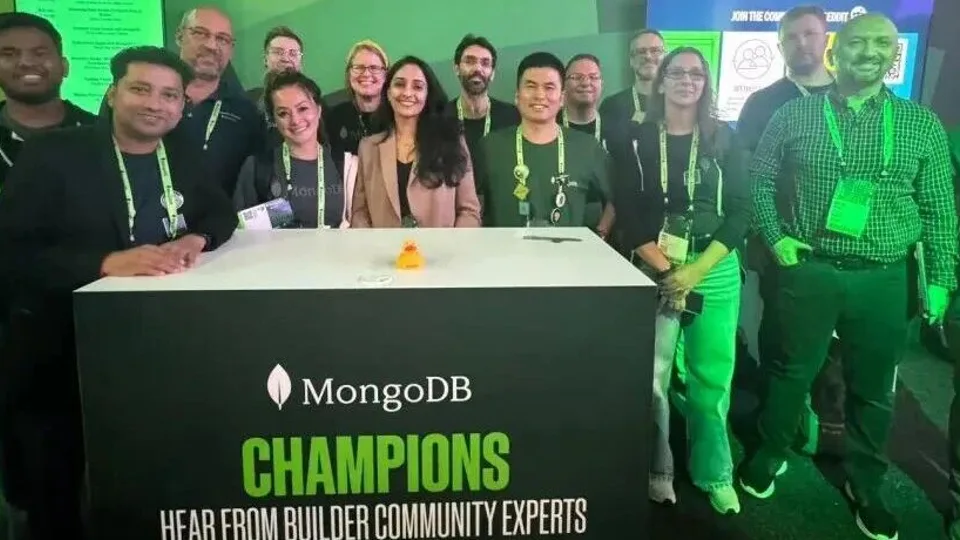
A MongoDB Community Champion reports from MongoDB.local NYC, analyzing how the sudden CEO change contrasts with the cohesive launch of MongoDB 9.0, Atlas Infinite, and Atlas Agent Engine as a unified AI data platform strategy.
This article explains how TiDB, a distributed NewSQL database, combines horizontal scalability with ACID transactions and MySQL compatibility, eliminating the need for manual sharding middleware while supporting both OLTP and OLAP workloads through its HTAP architecture.