The article uses a meeting room booking system to illustrate software architecture, showing how dividing responsibilities between booking and notification modules, and choosing synchronous vs asynchronous collaboration, affects system behavior, user feedback, and implementation complexity, distinguishing architectural decisions from implementation details.
This article explains what servers are, how they differ from personal computers, covers server types (tower, rack, blade), roles (web, database, file), compares physical vs cloud servers, and details key features like redundancy, ECC memory, remote management, and virtualization.
The article argues that code elegance and vibe coding are progressive, not opposing: elegance ensures maintainability at the code level, while vibe coding accelerates idea-to-code; in AI-assisted development, elegance moves from internal code details to system-level boundaries, interfaces, and architecture, which AI cannot fully handle.
This article explains construction performance guarantee insurance parties and processes, traces ontology's evolution from philosophy to semantic web standards, and demonstrates building an ontology model for the insurance business with classes, properties, axioms, instances, and versioning for amount changes.
Linux 7.3 introduces AMD Zen 6 processor support, dynamic per-core energy performance preferences, rewritten GPU reset for older Radeons, system memory fallback for low-VRAM gaming, and fixes reducing KSM and zsmalloc lock latency from 705ms to 2ms, plus RISC-V extensions, Apple M3 boot support, and new hardware drivers.
This illustrated guide explains TCP and UDP protocols, covering TCP header structure, flow control via sliding windows, congestion control algorithms (slow start, congestion avoidance, fast retransmit/recovery), three-way handshake and four-way handshake mechanics with sequence numbers, SYN flood attacks, and a detailed TCP vs UDP comparison across connection model, reliability, and header overhead.
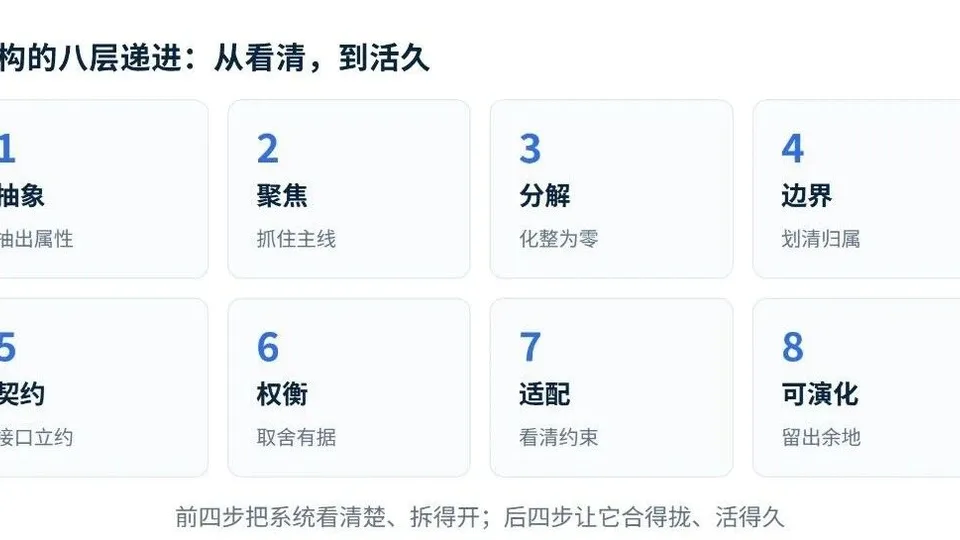
This article distinguishes architecture from architecture diagrams and outlines eight interconnected capabilities every architect needs: abstraction to identify key attributes, focus to prioritize constraints, decomposition by design decisions, boundaries to assign ownership, contracts to decouple implementations, trade-offs as explicit prioritization, adapting to constraints as design inputs, and evolvability as the compound result of the previous seven.
A concise vector reallocation example demonstrates how C++ permits use-after-free bugs that Rust catches at compile time via borrow checking, then explores ownership, move semantics, and thread-safety differences between the two languages.
This article explains how to select video formats for AI production by distinguishing containers, codecs, and encoding parameters, covering MP4, MOV, MKV, WebM, and streaming formats, with practical guidance on editing intermediates, audio formats, bitrate calculations, and FFmpeg commands for remuxing and transcoding.
This article explains Java String immutability, the hidden object creation behind '+' concatenation across JDK versions, StringBuilder and StringBuffer internals, constant pool behavior, and the invokedynamic optimization in JDK 9+, with bytecode examples and performance best practices.
This article details the complete computer boot sequence from pressing the power button through POST, BIOS/UEFI initialization, bootloader execution, and OS loading, comparing MBR vs GPT, Windows vs Linux bootloaders, and explaining modern fast-boot technologies and common troubleshooting steps.
This article explains how JavaScript's reduce method loses precision when summing large or many numbers due to floating-point rounding, introduces the new ES2026 Math.sumPrecise() method that avoids intermediate rounding errors, demonstrates its accuracy with examples like summing 1e20, 0.1, -1e20 and 1000 times 0.1, and notes current browser support.
This article explains Linux file permission fundamentals, covering file type indicators, owner/group/other permission bits, and practical usage of chown, chgrp, and chmod with both numeric and symbolic modes through concrete command examples.
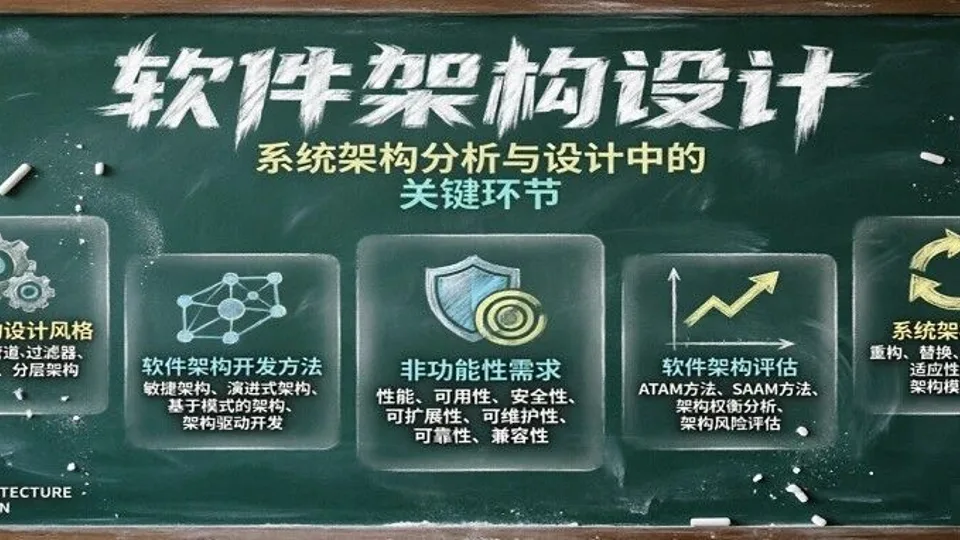
This article presents five case analysis questions from the May 2026 System Architecture Designer exam, covering time-series databases, MQTT QoS levels, concurrency control strategies, knowledge graph construction, and pipe-filter architecture for intrusion detection, with detailed reference answers for each scenario.
This article dissects Java Lambda implementation, revealing how invokedynamic and LambdaMetafactory dynamically generate hidden classes at runtime, why non-capturing lambdas are singletons, how captured variables become final field copies, and the performance implications versus anonymous inner classes.
Domestic Chinese server CPUs using chiplet architectures create many fine-grained NUMA nodes per socket, each needing local memory; unlike Intel's monolithic single-NUMA-node design with mature interconnects and kernel optimizations, partial memory population forces remote access over slower chiplet interconnects, causing severe performance drops.
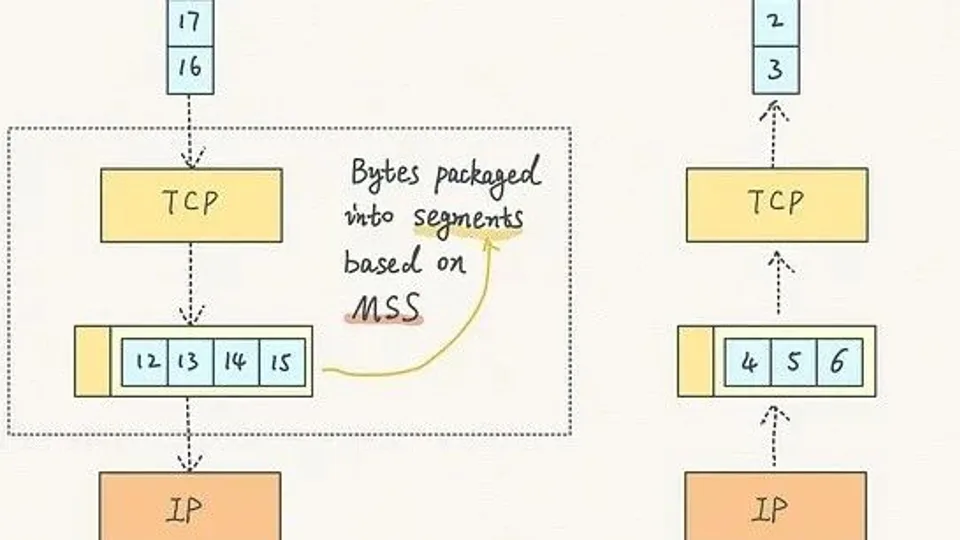
This article explains TCP retransmission mechanisms with visual examples, covering MSS calculation (1460 bytes), sequence number wraparound solved by timestamps, fast retransmit triggered by three duplicate ACKs, and SACK for selective acknowledgment of non-contiguous data segments.
This article demonstrates the evolution from synchronized/wait/notify to Lock/Condition for producer-consumer patterns, showing how notifyAll causes spurious wakeups with multiple threads and how Condition enables precise signaling via separate condition queues for producers and consumers.