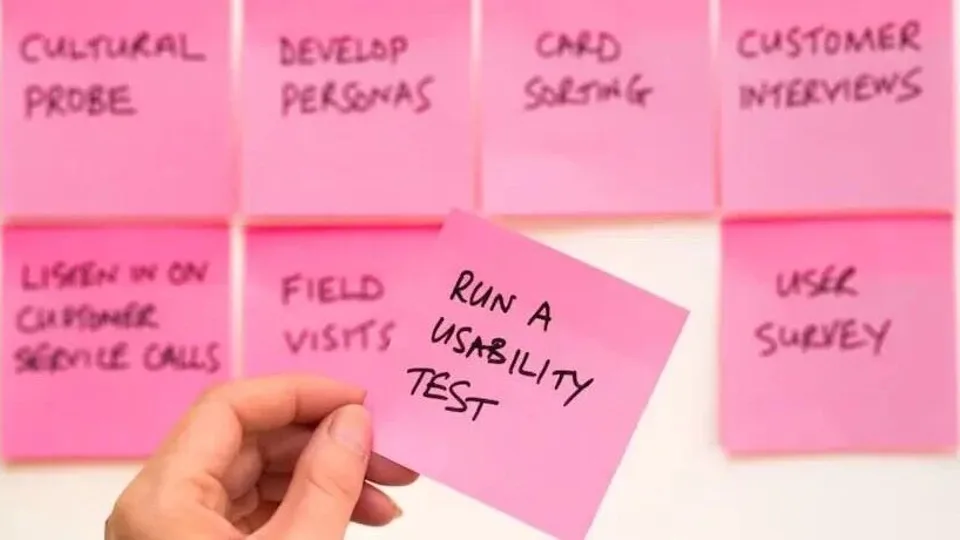
This article presents a four-stage framework for effective requirement research used by senior product managers, covering requirement collection via five methods, fake requirement filtering through scenario restoration and boundary analysis, requirement splitting and risk detection, and solution extraction using exhaustive enumeration and a 5W1H1V validation framework.
This article analyzes the AI Product Manager role across three specializations — model/platform, application/business, and embodied/hardware — detailing daily responsibilities like prompt tuning, RAG implementation, and cost optimization, required competencies including technical boundaries and evaluation skills, salary ranges from ¥200K to ¥1M+, and a practical learning path with pitfalls to avoid.
This article presents a five-dimension capability model for AI product managers — Technical Understanding, Prompt Engineering, Data Thinking, Product Design, and Commercial Execution — each with five proficiency levels, enabling self-assessment in 10 minutes with concrete improvement paths and 2026 trend predictions.
This article introduces the 5-2-1 time management framework for product managers: spend 1 hour daily clarifying work direction with stakeholders, 2 hours on important but non-urgent improvements and self-growth, and 5 hours on focused execution using prioritization, iterative delivery, and deadline-driven efficiency.
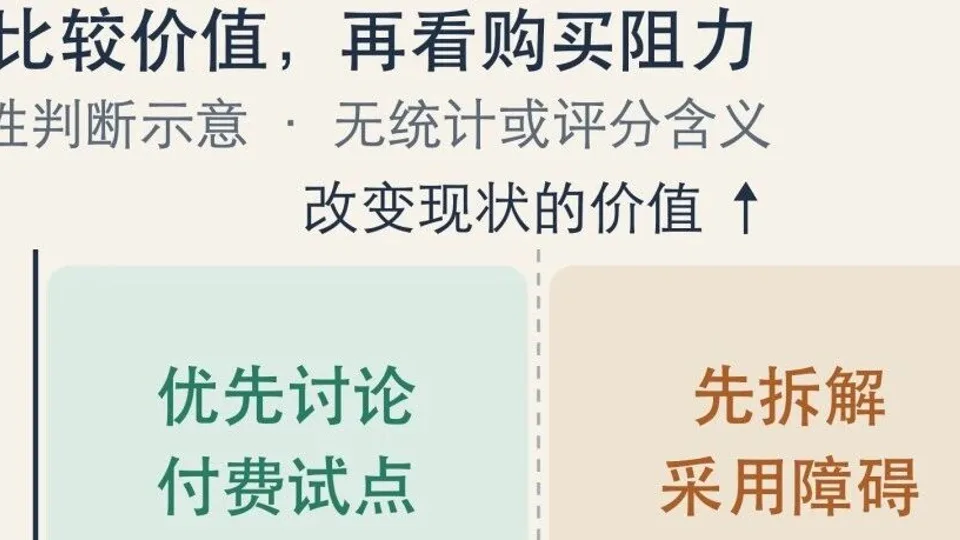
This article outlines a practical framework for technical entrepreneurs to identify paying customers by narrowing demand to specific tasks, conducting structured interviews, comparing against existing alternatives, designing paid pilots with clear deliverables, and validating unit economics before scaling.
The article explains why product managers' resumes fail when applying to AI roles, identifies transferable skills, outlines a 30-day personal project plan to demonstrate AI product capabilities, and advises targeted applications over mass submissions.
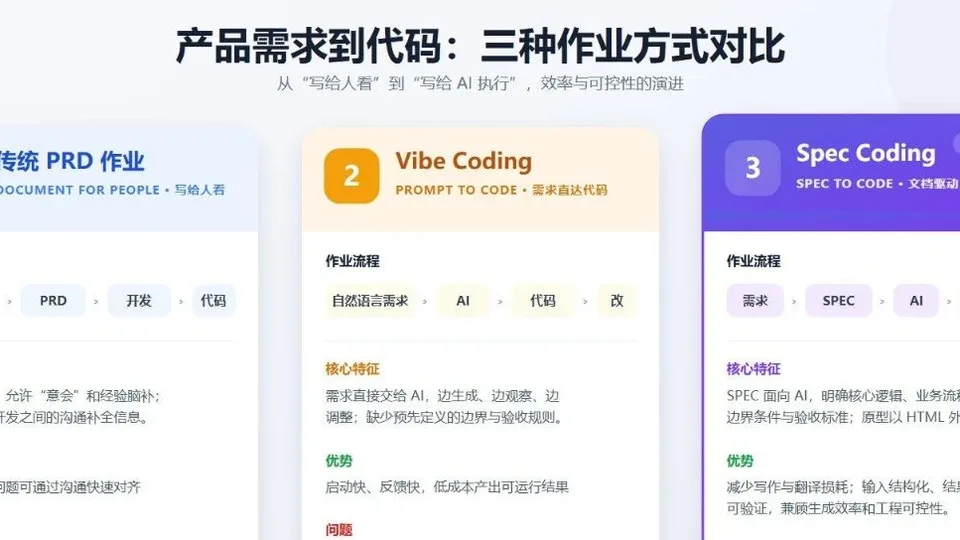
The article argues that traditional PRDs are obsolete because AI now consumes requirements; it introduces SPEC — precise, boundary-locked specs for AI — and shows how Spec Coding lets product managers handle five requirements in one morning, shifting PM value from document writing to strategic judgment.
The author shares a verified transition path from traditional B-end product management to AI product management, covering technical understanding of API interactions, core frameworks like LangGraph and Dify, RAG product design, tool design, open-source product teardowns, and a five-step hands-on learning roadmap culminating in an MVP project.
In the early 1990s, Apple's Newton failed at natural handwriting recognition, while Jeff Hawkins' Palm Computing succeeded by inventing Graffiti, a single-stroke alphabet users learned in 15 minutes, enabling a $299 PalmPilot that outsold Newton and defined handheld computing until touchscreens made natural recognition viable.
This article outlines 24 essential AI skills for product managers, detailing 14 ready-to-use LLM skills covering PRD generation, user story mapping, pricing, sprint planning, and compliance, plus 10 open-source skill packs from GitHub, with a three-step method to integrate them into any LLM workflow and six best practices for effective adoption.
A developer advocating simplicity builds a mood-tracking mini-program but gradually adds photos, location, weather, travel logs, and anniversaries, illustrating how personal needs drive feature creep and the difficulty of product restraint.
The article analyzes how GPT-6 Astra's Computer-Use capability shifts AI from chat to action, requiring product managers to redesign workflows for agent handoff, establish human-AI collaboration principles (visibility, pause points, takeover), and build vertical data flywheels to train domain-specific agents.
The article argues that increasingly precise risk scores fail to provide the contextual evidence business users need to act confidently, advocating for explainable interfaces that surface reasoning, uncertainties, and handoff clarity alongside scores, referencing NIST's trustworthy AI principles.
This article argues that moving AI products from demos to reliable B2B production requires a five-layer architecture — model, knowledge, rules, system, and process — rather than just a stronger model, detailing each layer's responsibilities, three collaboration scenarios, a task definition card for requirements, cross-functional team alignment, layered acceptance criteria, and common architectural imbalances to avoid.
The author shares how urban planning skills transfer to AI product management, emphasizing systemic problem diagnosis, multi-objective trade-offs, decision-making under uncertainty, and designing for human-AI collaboration, arguing that planning mindset applies to designing intelligent systems.
This article outlines a comprehensive learning path for AI product managers, covering seven essential competencies: foundational ML concepts, prompt engineering, fine-tuning techniques, RAG architecture, AI agent design, prototyping with tools like Cursor, and evaluation systems for continuous model improvement.
This article explains the architecture and design principles of an AI outbound call middle platform, covering dialogue trees, knowledge base layers, business goal setting, data closed-loop metrics, compliance requirements, and key technical components like ASR, NLU, and TTS.
This article outlines a complete AI-assisted workflow for user insight, covering comment structuring, SPEC sentiment analysis, RICE prioritization, four-layer ticket analysis, APSE journey mapping, key node identification with ICSAR/IIER, SPEED process diagnosis, and SSSS improvement planning, with ready-to-use prompt templates and an education app case study.
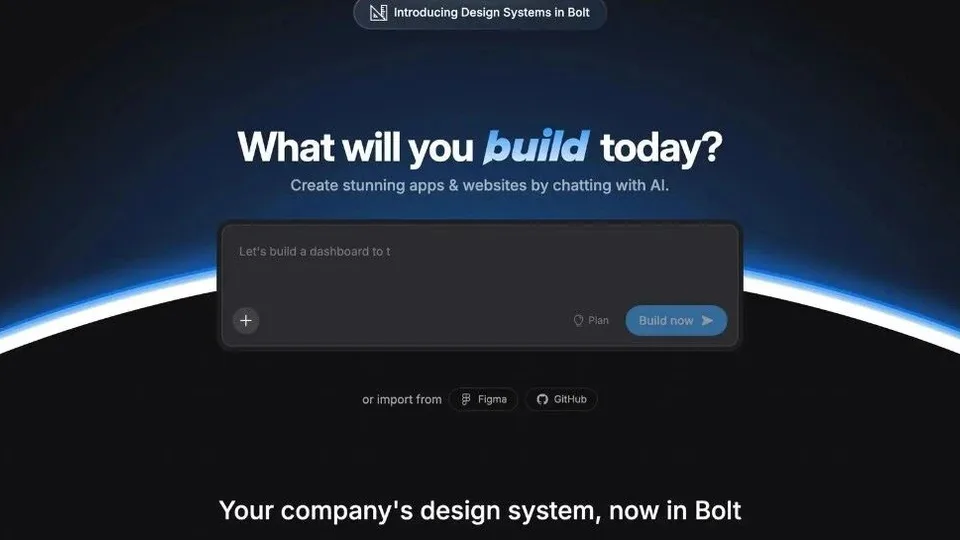
This guide explains why product managers no longer need design skills to create prototypes, detailing a four-step AI-driven workflow and comparing four tools—UXbot, Whimsical, Visily, and Bolt—that enable zero-design-background PMs to generate interactive multi-page prototypes and export production-ready code.
This article outlines five essential competencies for outstanding product managers: deep problem analysis that uncovers root user needs, decisive decision-making with accountability, macro trend perception especially around AI transformation, continuous cross-disciplinary learning across technology and business, and high emotional intelligence for effective stakeholder communication and alignment.