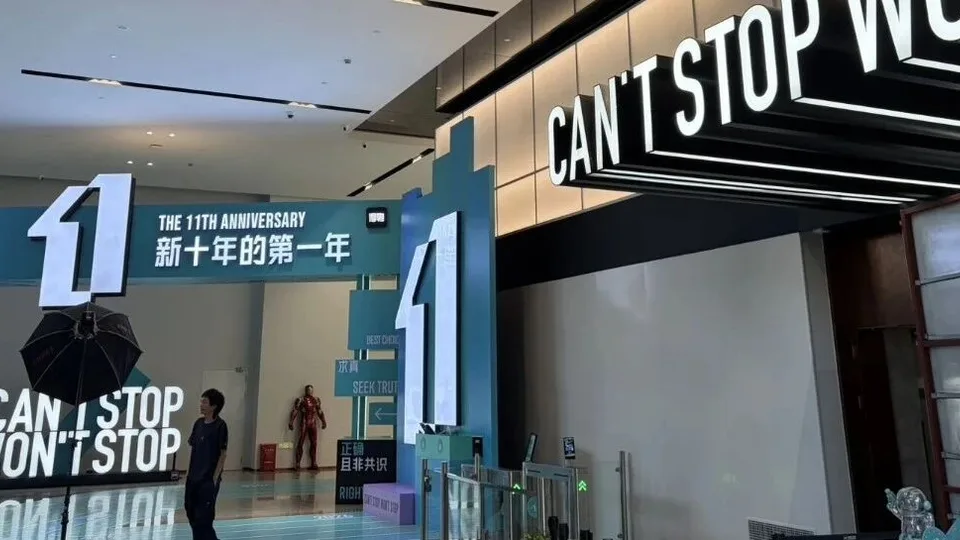
Dewu's 11th anniversary letter reveals a product philosophy that surfaces product disadvantages prominently, alongside price trends and AI-driven negative insights, sacrificing short-term conversion for long-term user trust.
A 15-year product manager details how using WorkBuddy for PRD drafting, red-team design reviews, and data analysis shifted his role from execution to judgment, revealing AI as a thinking lever rather than a replacement.
This guide breaks down a product manager's daily work into a three-step core loop, shows how responsibilities shift across junior, mid-level, and senior roles, and details a four-phase launch workflow with time allocations, frameworks like ICE/RICE and 5 Whys, plus essential tools and common pitfalls to avoid.
The article argues that increasing system notifications and AI-generated summaries create an illusion of awareness but lack clear responsibility assignment, impact context, deadlines, and consequences, causing critical decisions to stall; it proposes transforming notifications into accountable action items with defined owners, time bounds, and escalation paths, separating broadcasts, todos, and escalations into distinct channels.
This article outlines AI evolution from rule-based systems to autonomous agents, explains core concepts like LLMs, Transformers, and RAG, and provides a practical framework for building AI products, including problem definition, vendor selection, evaluation loops, industry applications, and risk governance for product managers.
An AI product manager shares five counter-intuitive insights from recent field experience: decision-makers avoid trade shows, trust requires deep conversations not quick demos, personal strength lies in hour-long consultations, technical details can be delegated but business judgment cannot, and customer acquisition must shift from broad outreach to deep referral-based strategies.
This article explains why treating requirement documents as mere feature lists leads to endless revisions, and introduces a three-dimensional framework — user value, business logic, system implementation — plus AI-assisted analysis and a rigorous definition of done to produce executable, high-quality specs.
A B2B product manager shares a practical AI workflow — PRD four-step method, Skill reuse, and Context/Harness engineering — that reduced requirement work from 34 to 15 person-days while maintaining quality, with detailed case studies, boundaries, and learning strategies.
This comprehensive guide covers product management fundamentals including problem-centric product definition, market research methods, competitive analysis frameworks, requirements prioritization with KANO and RICE models, MVP design principles, product structure and flowchart techniques, and core product manager responsibilities and thinking patterns.
This article defines MCP as atomic tools for deterministic needs and Skill as orchestration workflows for dynamic multi-step tasks, provides a selection framework based on requirement certainty, outlines technical division of labor between business developers and product/AI teams, recommends a phased integration approach, and answers seven common product manager questions about implementation.
This article defines product sense as the composite judgment ability to make consistently better decisions under uncertainty, breaking it down into five dimensions: perceiving true problem essence, judging under constraints, anticipating trend shifts like AI, continuously evolving cognitive models, and influencing cross-functional execution — explaining why this skill separates great product managers from average ones.
A product manager with no design background explores how AIGC and Vibe Design are reshaping product development, detailing Generative UI scenarios, the Vibe Design–Vibe Coding loop, and a practical AI-tool workflow to define product 'soul' over features.
This article presents a three-layer framework for AI product managers to create architecture diagrams that align executives, R&D, business units, and product teams by mapping functional penetration, scenario aggregation, and capability support layers with concrete examples and maturity ratings.
The article introduces seven reusable Codex Skills that structure the product discovery workflow — from cleaning feature requests and designing unbiased interview scripts to building opportunity-solution trees, prioritizing features with evidence, defining measurable dashboards, and generating visual concepts — enabling product managers to embed their methodology into repeatable AI workflows rather than relying on ad-hoc prompts.
The Harley‑Davidson × Pro‑Ject turntable integrates the brand’s Bar & Shield logo into the chassis, using solid MDF, polished aluminum, glass platter, and a 915 g weighted tonearm to create a cohesive mechanical aesthetic that goes beyond mere surface branding.
The article explains why thorough requirement and business research is the first step for product managers, then details distinct strategies for B2C products—questionnaires, data tracking, and competitive analysis—and for B2B products—deep interviews, role‑rotation immersion, and industry analysis.
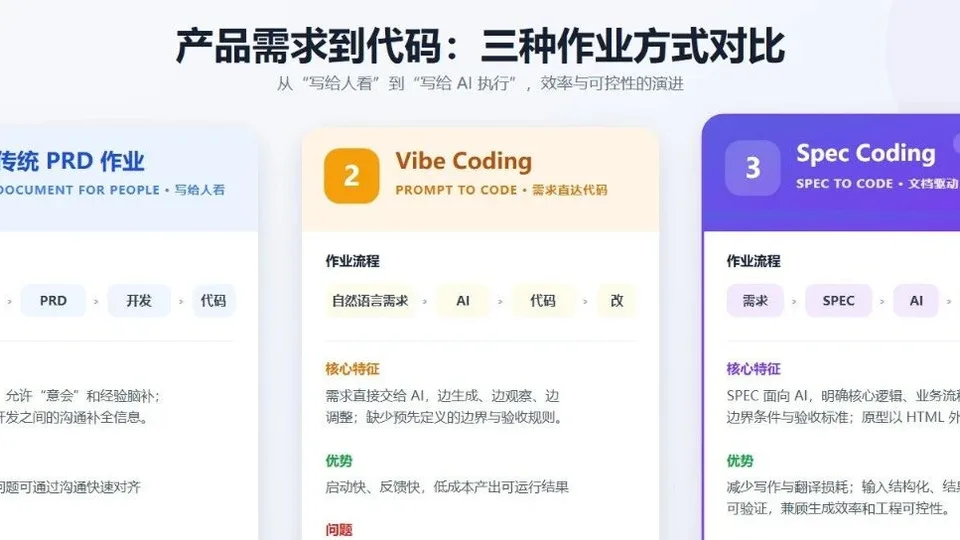
The article analyzes how AI shifts the demand‑output interface from humans to machines, compares traditional PRDs, Vibe Coding, and SPEC‑driven workflows, shows SPEC’s efficiency gains and higher information density, and argues that product managers must focus on judgment rather than document expression.
The article explains that AI demos often impress, but real‑world B‑side deployments fail because relying solely on large models ignores essential layers—knowledge, rules, system integration, and workflow—so a five‑layer architecture is needed to deliver verifiable, executable business outcomes.
The article breaks down product design, waterfall, and agile development, explains their distinct goals, processes, and trade‑offs, and uses a detailed campus‑ordering system case study to compare timelines, costs, risks, and common pitfalls, helping teams choose the right methodology.
The article outlines a data‑and‑feedback‑driven six‑step product iteration loop, illustrates each phase with a real‑world campus ordering app case study across three rounds, and highlights common pitfalls and practical remedies to turn chaotic releases into measurable growth.